Nel 2021 abbiamo esplorato la lingua italiana, ma anche dei gioielli culturali.
In 2021 we explored the Italian language, but also some cultural jewels.
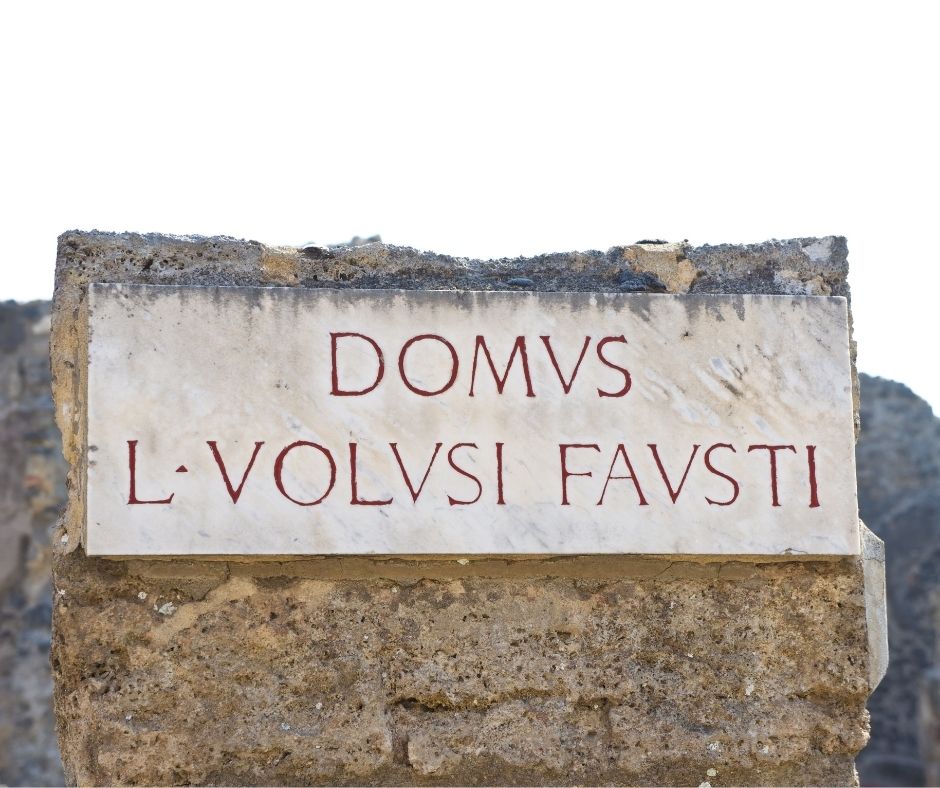
“Domus volusi fausti”, una scritta davanti a una casa tra le rovine di Pompei – “I wanted a happy home”, a sign in front of a house in the ruins of Pompeii.
Rintracciamo il percorso fatto insieme quest’anno attraverso la bellissima lingua italiana, la magica cultura, l’infinito vocabolario e, dulcis in fundo, i viaggi nella magnifica terra italiana.
Quale ti è piaciuto di piu?
Let’s trace the journey made together this year through the beautiful Italian language, the magical culture, the infinite vocabulary and, last but not least, traveling to the magnificent Italian land. Which one did you like the most?
Da nord a sud, il paesaggio italiano è costellato di bellissimi castelli un tempo molto importanti. A differenza dei castelli delle fiabe, molti di loro non hanno avuto un lieto fine. Infatti queste antiche strutture sono state abbandonate per secoli lasciando tracce indelebili della vita di chi le ha vissute. La maggior parte di noi ha sognato di vivere in un castello fin dall’infanzia, ma in realtà possederne uno richiede alti costi di manutenzione. Questo spiega perché innumerevoli castelli in Italia sono stati abbandonati e lasciati in rovina. Orami vivono in armonia con il paesaggio circostante e non hanno mai perso il loro fascino. Il territorio italiano ha prodotto una varietà di stili di castelli in base all’epoca e al territorio in cui sono stati eretti. Questi sono alcuni dei castelli abbandonati più affascinanti che si trovano in dieci diverse regioni italiane.
From North to South, the Italian landscape is dotted with beautiful Castles that were once very important.. Unlike the castles in fairy tales, many of them have not had a happy ending. In fact these ancient structures have been abandoned for centuries leaving behind indelible traces of the lives of those who lived in them. Most of us have dreamed of living in a castle since childhood, but in reality owning one requires high maintenance costs. This explains why countless castles in Italy have been abandoned and left in ruins. They now live in harmony with the surrounding landscape and have never lost their charm. The Italian land has produced a variety of styles of castles based on the era and the territory in which they were erected. These are some of the most fascinating abandoned castles found in ten different Italian regions.
Castello di Binetto – Puglia
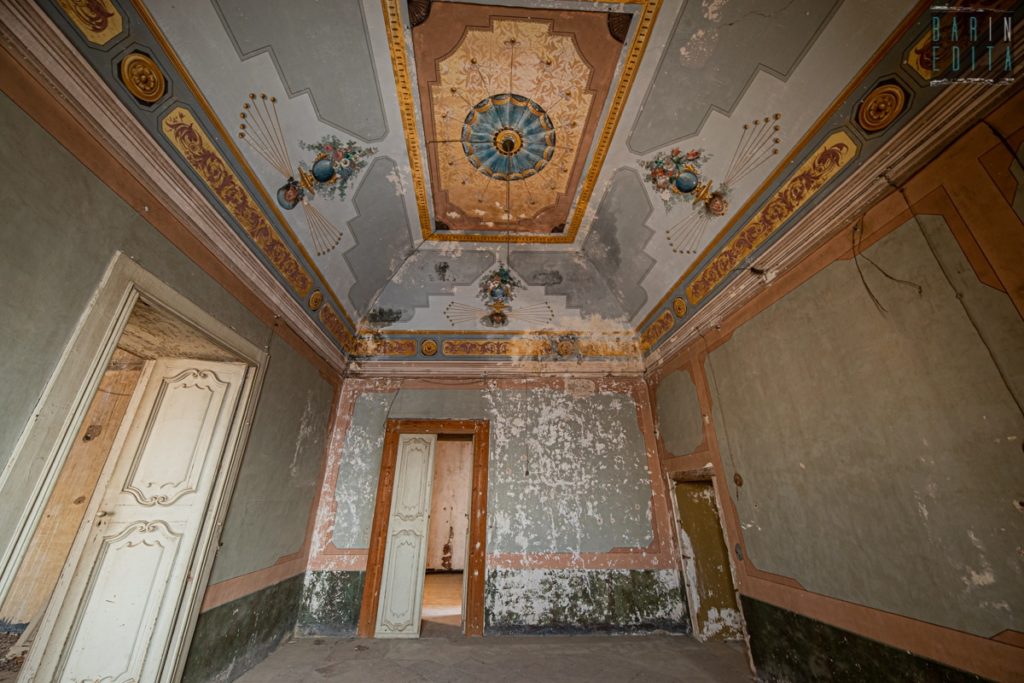
Il Castello di Binetto è un maestoso palazzo baronale settecentesco in un piccolo borgo a sud-ovest di Bari in Puglia, nel sud Italia. Disabitato da decenni, porta ancora il nome del suo capostipite, Salvatore D’Amel, che ne restaurò ed elevò il piano nobile. Ne fece quindi la sua residenza principale. La sua famiglia, che a metà Ottocento prese anche il cognome Melodia, abitò nel palazzo per più di duecento anni, fino alla metà del ‘900, quando divenne definitivamente disabitato. La sua imponente facciata grigia si staglia sulla piazza principale del paese. Entrando nel castello si trovano saloni riccamente decorati, androni con arcate, soffitti a cassettoni e altari nascosti. La struttura cela anche un suggestivo e labirintico sottosuolo. Purtroppo la struttura non è in ottime condizioni e alcuni elementi strutturali sono addirittura crollati a causa dei molti anni di abbandono. Tuttavia, il suo innegabile fascino eclissa il degrado del castello.
Castello di Binetto – Puglia / https://www.barinedita.it
The Castle of Binetto is a majestic eighteenth-century baronial palace in a small village south-west of Bari in Puglia, in southern Italy. It has been uninhabited for decades and still bears the name of its forefather, Salvatore D’Amel, who restored and elevated its noble floor. He then made it his main residence. His family, who also took the surname Melodia in the mid-19th century, lived in the building for more than two hundred years, until the mid-20th century, when it became definitively uninhabited. Its imposing gray facade stands out on the main square of the town. Upon entering the castle one finds abundantly decorated halls, hallways with arcades, coffered ceilings, and hidden altars. The structure also conceals an evocative and labyrinthine underground. Unfortunately the structure is not in excellent condition and some structural elements have even collapsed due to the many years of neglect. However, its undeniable charm eclipses the deterioration of the castle.
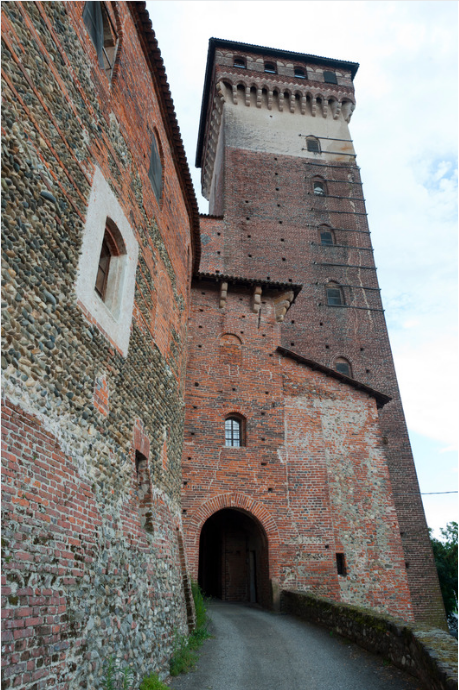
Castello di Rovasenda – Piemonte
Il castello abbandonato di Rovasenda, in Piemonte, ha una storia originale. In realtà è una copia perfetta, anche se molto più bella, di un castello medievale del 1170 che si trova a soli 200 metri di distanza. Nasce da una lite familiare sui diritti di successione. Il conte, parente che vantava diritti di eredità sull’originario castello, per ripicca ne fece una copia fedele. La posizione di questo castello medievale abbandonato è segreta per preservarne l’integrità e la sicurezza, tuttavia sorge in una piccola radura tra gli alberi e le colline piemontesi. Nonostante si trovi in uno stato di quasi totale abbandono, stupiscono la struttura e le sale completamente affrescate con scene bucoliche o che narrano la storia del paese. Presenta quattro torri merlate, fossato, ponte levatoio e porta con grata retrattile. Il cortile interno, ora sommerso dalla vegetazione, racchiude uno splendido pozzo artesiano in pietra e ferro. Come in ogni castello non mancano finestre policrome, stemmi nobiliari e passaggi segreti.
Castello di Rovasenda – Piemonte
The abandoned Rovasenda Castle in the region of Piemonte has an original story to it. It is actually a perfect copy, albeit much more beautiful, of a medieval castle from 1170 which is located just 200 meters away. It was born from a family quarrel over inheritance rights. Out of spite, the count, a relative who boasted inheritance rights over the original castle, made a faithful copy of It. The location of this abandoned medieval castle is secret to preserve its integrity and safety, however it stands in a small clearing among the Piedmontese trees and hills. Although it lies in a state of almost total abandonment, the structure and the completely frescoed rooms displaying bucolic scenes or narrating the history of the town are astounding. It has four crenelated towers, a moat, a drawbridge, and a door with a retractable grill. The internal courtyard, which is now submerged by vegetation, encloses a splendid artesian well in stone and iron. As in every castle there is no shortage of polychrome windows, noble coats of arms, and secret passages.
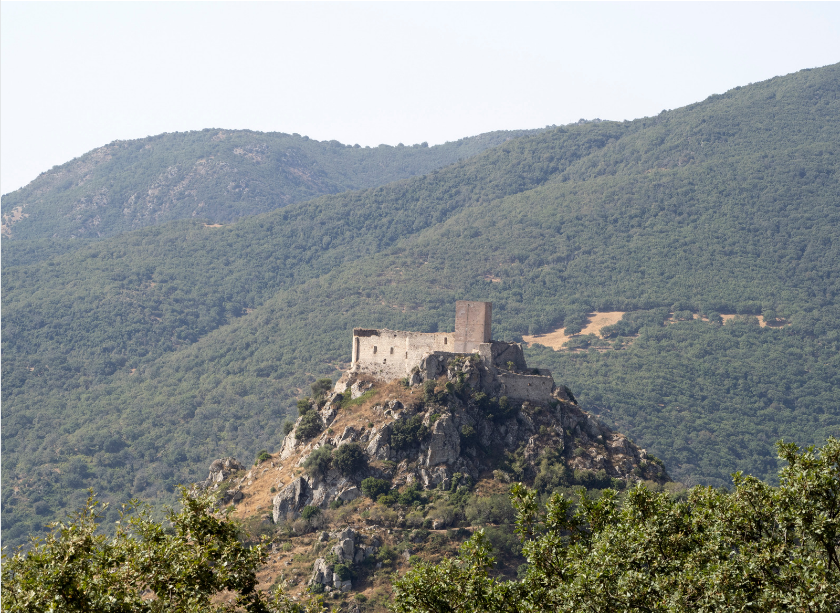
Castello di Burgos – Sardegna
Questo castello fortezza medievale sorge su un picco granitico nella parte settentrionale della Sardegna ed è ricco di memorie storiche e racconti leggendari. E’ conosciuto anche come Castello del Goceano, dal nome di un’area storica che la rocca domina da 650 metri di altezza. Prende però il nome dal grazioso paesino che sorge ai suoi piedi. L’imponente struttura fu edificata intorno al 1134 per volontà di Gonario I di Torres. Da sempre considerato uno dei manieri meglio protetti, passò di proprietà per oltre 300 anni attraverso molteplici violente battaglie tra sardi, pisani e aragonesi. Intorno al 1478 il castello fu abbandonato e gli elementi del tempo hanno prevalso. Il castello di Binetto è costituito da una triplice cinta muraria a forma di ‘U’ realizzata con blocchi di granito e pietra. La massiccia torre principale a due piani si eleva per 16 metri al centro del cortile. Nel cortile si accede ad un vano interrato, una grande cisterna voltata a botte intonacata, destinata all’acqua piovana. A nord della torre si trovano i resti di una serie di stanze per truppe e servi. Il castello è visibile da lontano ed emana un fascino legato al Medioevo sardo.
Castello di Burgos – Sardegna
This medieval fortress castle stands on a granite peak in the northern part of Sardinia and is rich in historical memories and legendary tales. It is also known as the Goceano Castle, the name of a historical area that the fortress overlooks from 650 meters above. However, it takes its name from the pretty village that stands at its feet. The imposing structure was built around 1134 by the will of Gonario I of Torres. It has always been considered one of the best protected manors and changed ownerships for over 300 years through multiple violent battles among Sardinians, Pisans and Aragonese. Around 1478 the castle was abandoned and the elements of time have prevailed. The castle of Binetto consists of a triple ‘U’ shaped wall made with blocks of granite and stone. The massive two-storey main tower rises for 16 meters at the center of the courtyard. In the courtyard is the entrance to an underground compartment, a large plastered barrel vaulted cistern, intended for rainwater. North of the tower are the remains of a series of rooms for troops and servants. The Castle is visible from afar and exudes a charm linked to the Sardinian Middle Ages.
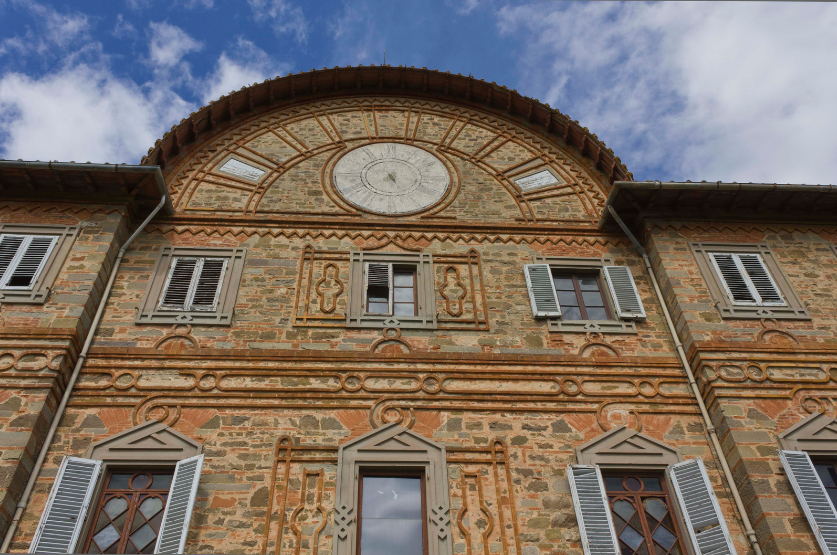
Castello di Sammezzano – Toscana
Il Castello di Sammezzano in Toscana risale all’epoca romana. È circondato da un grande parco e si trova nel comune di Reggello vicino a Firenze. In tempi moderni il castello è stato utilizzato come ambientazione per diversi film e video musicali italiani. Il feudo appartenne nei secoli a molte importanti famiglie: gli Altoviti, i Medici, che lo vendettero infine a Sebastiano Ximenes. La famiglia Ximenes d’Aragona ne fu proprietaria fino alla morte dell’ultimo erede, Ferdinando, nel 1816. Lo stile dell’edificio principale rispecchia lo stile eclettico moresco della famiglia Ximenes D’Aragon che eseguì lavori di ristrutturazione nel 1605. Ha una struttura imponente di notevole volumetria, con bastione e scala d’ingresso. Mentre non ci sono più tracce delle scale di accesso. Il suo parco circostante è stato realizzato a metà dell’ottocento ed è uno dei più vasti della Toscana.
Castello di Sammezzano – Toscana
The Castle of Sammezzano in Tuscany dates back to Roman times. It’s surrounded by a large park and is located in the town of Reggello near Florence. In modern days the castle has been used as a setting for several Italian films and music videos. The estate belonged to many important families during the centuries: the Altovites, the Medicis, who finally sold it to Sebastiano Ximenes. The Ximenes d’Aragona family owned it until the last heir, Ferdinand, died in 1816. The style of the main building reflects the eclectic Moorish-style of the Ximenes D’Aragon family who carried out renovations in 1605. It has an imposing structure of considerable volume, with bastion and entrance stairs. While there are no longer traces of the access stairs. Its surrounding park was built in the middle of the nineteenth century and is one of the largest in Tuscany.
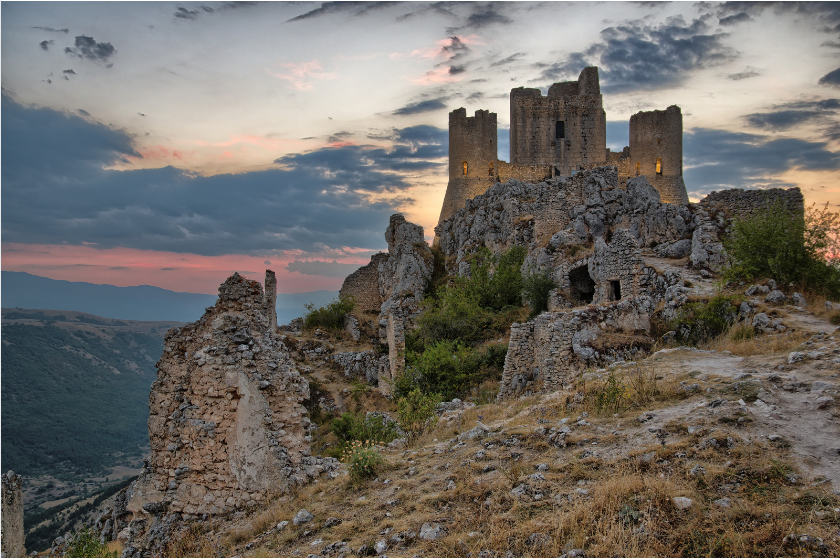
Castello di Rocca Calascio – Abruzzo
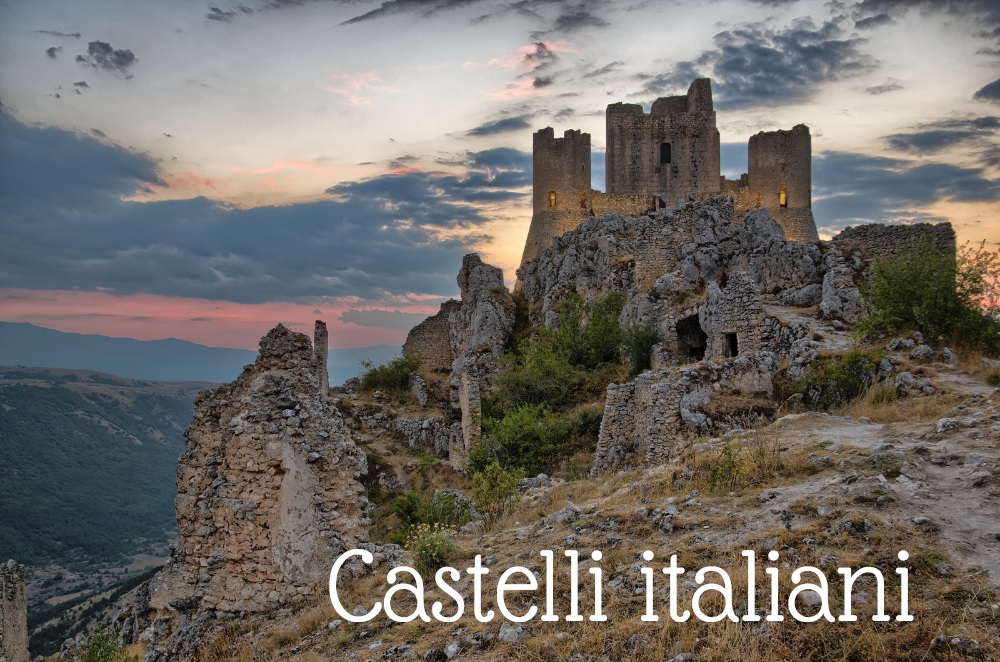
Il Castello di Rocca Calascio in Abruzzo ha ottenuto fama internazionale grazie a film famosi come Ladyhawke (1985) e Il nome della rosa (1986). Il Castello di Rocca Calascio fu costruito nel XII secolo ma fu gravemente danneggiato durante il terremoto del 1703. Questo evento fece scendere la maggior parte degli abitanti del paese ai piedi della rocca verso il paese di Calascio. Come molti altri castelli, il Castello di Rocca Calascio veniva utilizzato come punto di osservazione militare. E, per la sua posizione molto favorevole dal punto di vista difensivo, era in comunicazione con altre torri e castelli vicini, fino all’Adriatico. La struttura è in pietra bianca con bugne squadrate e composta da una struttura centrale. Presenta una cinta muraria merlata in ciottoli, e quattro torri angolari a base circolare. Al castello si accede dal lato orientale tramite una rampa di legno. Il castello è completamente disabitato dal Novecento ed è stato oggetto di una serie di restauri conservativi tra il 1986 e il 1989, finalizzati al suo recupero architettonico-funzionale.
Castello di Rocca Calascio – Abruzzo
The Castle of Rocca Calascio in Abruzzo gained international fame thanks to famous films such as Ladyhawke (1985) and The Name of the Rose (1986).The castle of Rocca Calascio was built in the 12th century but it was severely damaged during the earthquake in 1703. This event caused most of the inhabitants of the village at the foot of the fortress to descend towards the town of Calascio. Similar to many other castles, the Castle of Rocca Calascio was used as a military observation point. And, because of its very favorable position from a defensive point of view, it was in communication with other nearby towers and castles, up to the Adriatic. The structure is in white stone with squared ashlars and composed of a central structure. It has a crenelated pebble wall, and four corner towers with a circular base. There is an access to the castle on the eastern side via a wooden ramp. The castle has been completely uninhabited since the twentieth century and was the subject of a series of conservative restorations between 1986 and 1989, aimed at its architectural-functional recovery.
Castello di Civita Superiore – Molise
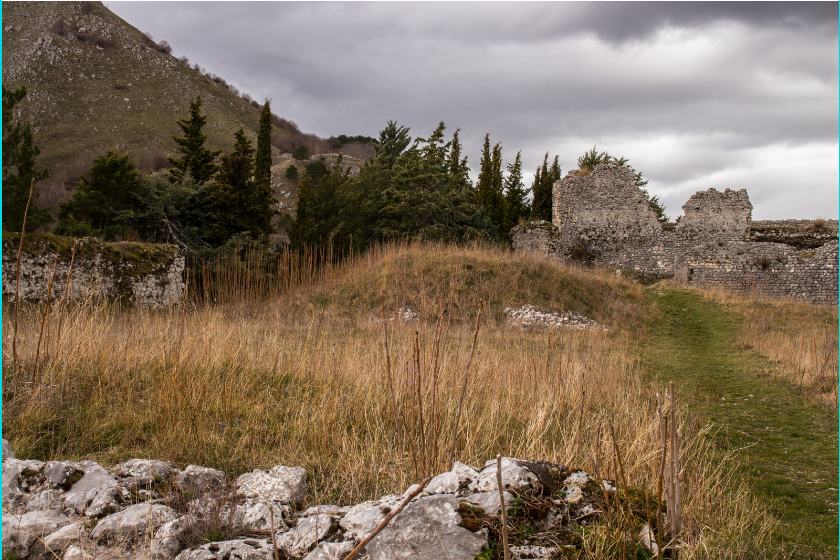
Un’escursione sull’Appennino da Bojano, comune del Molise in provincia di Campobasso, conduce ad un antico borgo noto come Civita. Questa zona fu uno dei centri più importanti della storia dell’Italia meridionale. In cima a Civita si trova Civita Superiore dove giacevano i ruderi della grande fortezza del Castello. Già nel 1053 il conte Rodolfo de Moulins rafforzò ulteriormente la fortezza introducendo una delle pagine più importanti della storia del Molise. Il Castello di Civita Superiore è tra le più importanti testimonianze storiche, artistiche e architettoniche della storia italiana. Mentre i reperti di epoca sannitica mostrano la presenza di questo magnifico popolo nella valle, quelli di epoca medievale si concentrano a Civita Superiore, a testimonianza del cosiddetto inglobamento. I primi lavori di fortificazione iniziarono intorno al IX secolo ad opera dei Longobardi come difesa contro le incursioni barbariche che nel tempo fecero di Bojano un punto di riferimento per la Contea.
Castello di Civita Superiore – Molise
A hike up the Apennine Mountain from Bojano, a municipality of Molise in the province of Campobasso, leads to an ancient town known as Civita. This area was one of the most important centers in the history of southern Italy. At the top of Civita is Civita Superiore where the ruins of the great Castle fortress lay. Count Rodolfo de Moulins further strengthened the fortress back in 1053 introducing one of the most important pages in the history of the Molise region. The Castle of Civita Superiore is among the most important historical, artistic and architectural testimonies in Italian history. While the finds from the Samnite era show the presence of this magnificent population in the valley, those from the Middle Ages are concentrated in Civita Superiore, as evidence of the so-called embedding. The first fortification works began around the 9th century by the Longobards as a defense against the barbarian incursions who ended up, over time, making Bojano a point of reference for the County.
Castello di Stazzano Vecchio – Lazio
Nascosto nella campagna della regione Lazio si trova il segreto Castello Di Stazzano Vecchio, nella piccola città dimenticata di Stazzano Vecchio immerso nei suoi magnifici boschi e nascosto agli occhi del pubblico. Ancora oggi Stazzano Vecchio non è citato né descritto in nessuna guida turistica dedicata al Lazio e per il particolare status di “proprietà privata” del sito il castello non è aperto al pubblico. Anche le indicazioni stradali sono oscure, il che rende difficile trovare il sito. Non si sa molto del castello. L’antropizzazione del Castello potrebbe essersi verificata in epoca costantiniana, e le fortificazioni costruite in epoca altomedievale, forse su iniziativa della vicina Abbazia di Farfa e successivamente ricostruite dai Savelli e dagli Orsini. Del castello restano l’antico mastio quadrato e quattro torri circolari con fossato laterale. A causa del terremoto del 24 aprile 1901, misurato all’ottavo grado della scala Mercalli, seguito da secoli di declino causato da epidemie di malaria, Stazzano fu definitivamente abbandonato.
Hidden in the countryside of the Lazio region is the secret Castle Of Stazzano Vecchio, in the small forgotten town of Stazzano Vecchio immersed in its magnificent woods and concealed from the public eye. Still today Stazzano Vecchio is not mentioned nor described in any tourist guide dedicated to Lazio and due to the special “private property” status of the site the castle is not open to the public. The driving directions are also obscure making it difficult to find the site. Not much is known about the castle. Anthropization of the Castle may have occurred in the Constantinian era, and fortifications were built in the early Medieval period, perhaps on the initiative of the nearby Farfa Abbey and later reconstructed by the Savellis and Orsini. All that remains of the castle are the ancient square keep and four circular towers with a moat on the side. Due to the earthquake of April 24, 1901, measured at the eighth degree of the Mercalli scale, followed by centuries of decline caused by malaria epidemics, Stazzano was definitively abandoned.
Castello di Beldiletto -Marche
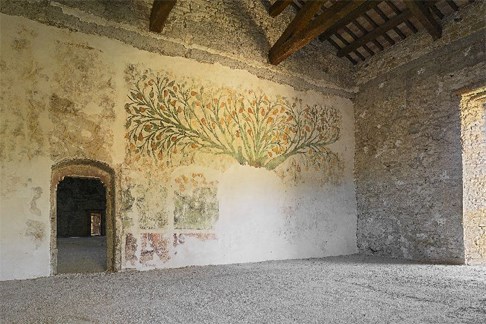
Il Castello di Beldiletto fu costruito nel 1371 ed è il primo esempio in Italia di castello trasformato in villa rinascimentale. Si trova nelle Marche nella zona paludosa all’interno della Riserva della Polverina. Rievoca il periodo massimo della dinastia dei Varano e un tempo una parte importante del sistema difensivo della regione. Il nome “Bel-diletto”, “delizia”, fu dato al castello nel Rinascimento, quando era di moda dare nomi evocativi alle residenze dove i signori trascorrevano molte ore piacevoli. Fu edificato da Giovanni II di Berardo da Varano su un preesistente castrum. Ha forma rettangolare con torri angolari a base quadrata e terrapieno sui quattro lati. In origine era circondato da un ampio e profondo fossato, alimentato dalle acque del vicino fiume, e accessibile tramite un ponte levatoio che conduceva ad un’aula voltata a botte. Entrambi furono smantellati da Giulio Cesare Varano che lo modificò per la vita di corte. Infatti nel 1464 fu trasformata in villa fortificata. Sessanta personaggi storici quasi a grandezza naturale, ormai quasi del tutto illeggibili, evocanti la cultura della poesia cavalleresca, furono dipinti nella grande sala. Dopo il 1528 il palazzo cambiò molti proprietari e fu abbandonato a causa dei costi di ristrutturazione.
Affreschi del Castello di Beldiletto -Marche / https://www.turismo.marche.it
The Castle of Beldiletto was built in 1371 and is the first example in Italy of a castle transformed into a Renaissance villa. It’s located in the Marche region in the marshland within the Polverina Reserve. It is reminiscent of the greatest period of the Varano dynasty and once an important part of the defensive system of the region. The name ‘Bel-diletto’, “delight”, was given to the castle in the Renaissance, when it was fashionable to give evocative names to residences where the lords spent many pleasant hours. It was built by Giovanni II di Berardo da Varano on a pre-existing castrum. It has a rectangular shape with square based corner towers and embankment on its four sides. Originally it was surrounded by a large and deep moat, fed by the waters of the nearby river, and accessible via a drawbridge that led to a barrel-vaulted hall. Both were dismantled by Giulio Cesare Varano who modified it for court life. Infact in 1464 it was transformed into a fortified villa. Sixty historical figures nearly life-size, now almost completely illegible, evoking the culture of chivalrous poetry, were painted in the great hall. After 1528 the palace changed many owners and was abandoned due to renovation costs.
Castello di Cly – Valle D’Aosta
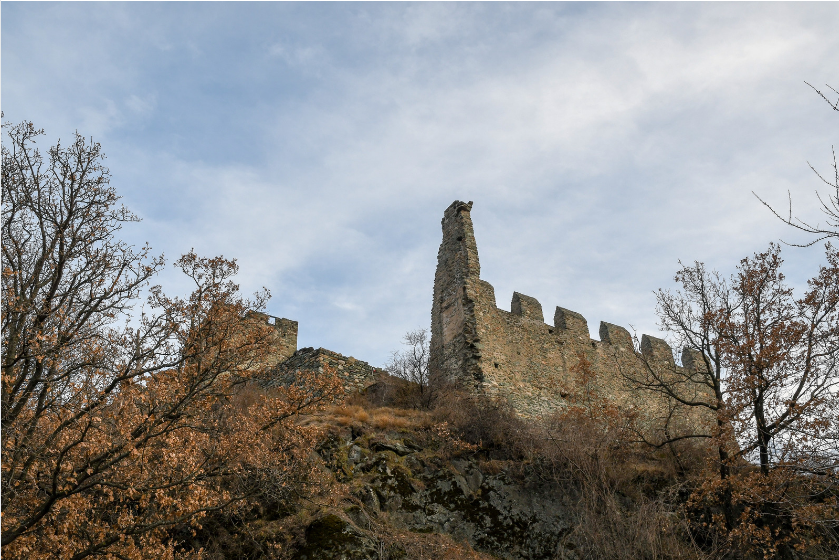
La Valle D’Aosta è una regione ricca di castelli e uno dei più antichi è il Castello di Cly. È probabile che risalga al 1207 quando fu menzionato per la prima volta nelle fonti storiche. Appartiene allo stile primitivo dei castelli valdostani, costituito da un massiccio mastio centrale circondato da un’imponente cinta muraria, che racchiudeva al suo interno anche una serie di altri edifici oltre al mastio. Le mura, ancora quasi integralmente conservate, erano sormontate da una merlatura e racchiudevano un’area di circa 2800 mq. All’interno delle mura si trovano anche i resti di una chiesa romanica dedicata a San Maurizio. Il castello può essere suddiviso in due parti principali: la parte occidentale era destinata ad ospitare civili in caso di attacco; quella a sud-est ospitava le stanze del Signore e della sua corte, le stalle e un grande salone. Anche questo castello cadde in decadenza nonostante sia stato acquistato dal comune e dall’associazione “Il Manero di Cly” che organizza diverse manifestazioni culturali ed eventi storici.
Castello di Cly – Valle D’Aosta
Valle D’Aosta is a region rich in castles and one of its oldest is the Castle of Cly. It is likely to date back to 1207 when it was first mentioned in historical sources. It belongs to the primitive style of Valle d’Aosta castles, consisting of a massive central donjon surrounded by an imposing wall, which enclosed within it also a series of other buildings in addition to the keep. The walls, still almost entirely preserved, were surmounted by a battlements and enclosed an area of approximately 2800 square meters. The remains of a Romanesque church dedicated to San Maurizio also lie within the walls. The castle can be divided into two main parts: the western part was intended to house civilians in the event of an attack; the one to the south-east housed the rooms of the Lord and his court, the stables and a large hall. This castle also fell into decline although it was bought by the municipality and the association “Il Manero di Cly” which organizes various cultural events and historical events.
Castel Lodrone – Trentino-Alto Adige
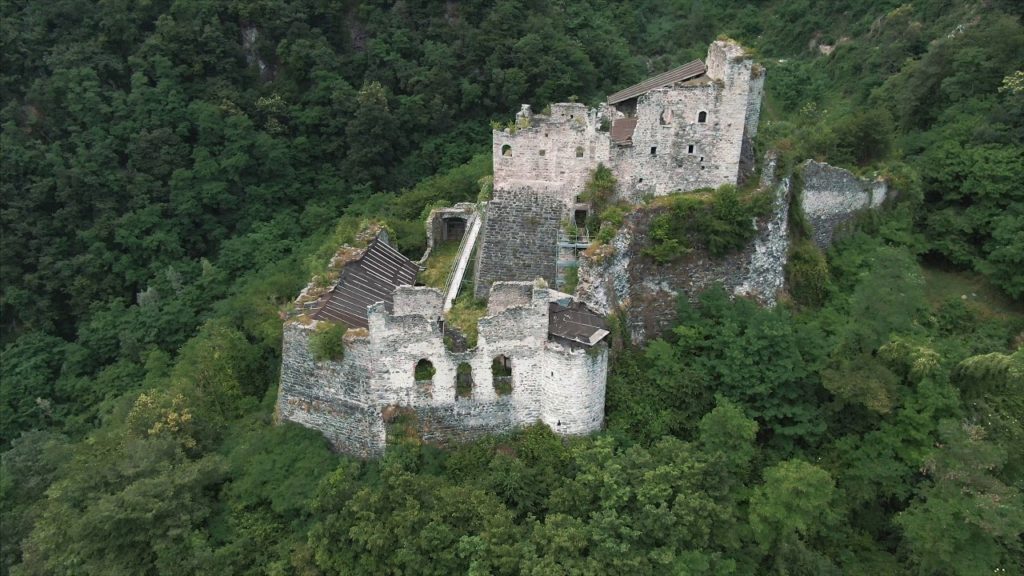
Nella regione settentrionale del Trentino-Alto Adige sorge il castello di Lodrone, noto dal 1600 anche come Santa Barbara per ricordare la cappella di Santa Barbara situata nel castello. Fu la più antica sede della famiglia Lodron e venne menzionata per la prima volta alla fine del XII secolo quando Calapino di Lodrone, feudatario dei Conti di Appiano, vi si stabilì nel 1185. A partire dal XVI secolo fu progressivamente abbandonata quando i conti preferivano le residenze più comode costruite sulle rive dei fiumi Caffaro e Lodrone. Rappresenta una tipologia in cui i caratteri militari prevalgono su quelli residenziali. Si trattava infatti di una vera e propria roccaforte, pensata e costruita soprattutto come strumento di guerra. La difesa esterna è compatta, in molti punti spessa oltre due metri e alta circa sei metri senza aperture. La cinta muraria segue una linea spezzata strettamente collegata alla torre per fungere da castello-torre con perimetro poligonale e sperone proteso verso il monte. Un’unica porta permetteva l’accesso al cortile e un’altra conduceva alla torre. Le strutture interne sono quasi interamente crollate. Verso sud e verso est il complesso era completato da edifici, probabilmente destinati a servizi, e da una torre semicircolare. Sul lato nord c’era una torretta che fungeva da estremo meccanismo di difesa.
Castello di Lodrone – Trentino-Alto Adige
In the northern region of Trentino-Alto Adige stands the castle of Lodrone, also known as Santa Barbara since 1600 to recall the chapel of St. Barbara located in the castle. It was the oldest seat of the Lodron family and was mentioned for the first time at the end of the 12th century when Calapino di Lodrone, feudal lord of the Counts of Appiano, settled here in 1185. Starting from the 16th century it was gradually abandoned when the counts preferred the more comfortable residences built on the banks of the Caffaro and Lodrone rivers. It represents a typology in which military characteristics prevail over residential ones. It was in fact a real stronghold, conceived and built above all as a war instrument. The external defense is compact, in many points over two meters thick and about six meters high without openings. The wall follows a broken line closely connected to the tower in order to function as a castle-tower with a polygonal perimeter and a spur extending towards the mountain. A single door allowed access to the courtyard and another led to the tower. The internal structures have almost entirely collapsed. Towards the south and east the complex was completed by buildings, probably intended for services, and by a semicircular tower. On the north side was a turret which served as an extreme defense mechanism.
Eccoci alle prese con uno dei verbi meno studiati dagli studenti di lingua italiana e meno usati nella lingua parlata: Il futuro anteriore (o futuro composto). Allora perche studiarlo mi chiederai? Tecnicamente il futuro anteriore è un tempo verbale che esprime fatti proiettati nel futuro ma avvenuti prima di altri. In poche parole illustra il rapporto temporale tra due eventi futuri. Non viene comunemente insegnato agli stranieri per la sua apparente complessità. Comunque esiste anche in inglese e concide con il future perfect.
Ma come vedremo negli esempi che seguono, il futuro anteriore ha un ruolo importante. Ha una funzione tanto importante da essere fondamentale nei testi giuridici.
Il futuro anteriore è molto simile nella sua costruzione al passato prossimo, con l’unica differenza che il verbo ausiliare (essere o avere) usa il futuro semplice.
Tabella del futuro anteriore di verbi regolari in: -are, -ere, -ire
Parl-are
Ricev-ere
Part-ire
Io
Avrò parl-ato
Avrò ricev-uto
Sarò part-ito/a
Tu
Avrai parl-ato
Avrai ricev-uto
Sarai part-ito/a
Lui/Lei
Avrà parl-ato
Avrà ricev-uto
Sarà part-ito/a
Noi
Avremo parl-ato
Avremo ricev-uto
Saremo part-iti/e
Voi
Avrai parl-ato
Avrete ricev-uto
Sarete part-iti/e
Loro
Avranno parl-ato
Avranno ricev-uto
Saranno part-iti/e
Quando si usa l’ausiliare “essere” ricordati di concordare il futuro anteriore con il soggetto: Maschile singolare: Fra un mese, sarò partito per l’Italia. Femminile singolare: Fra un mese, sarò partita per l’Italia. Maschile plurale: Fra un mese, saremo partiti per l’Italia. Femminile plurale: Fra un mese, saremo partite per l’Italia. Misto maschile/femminile plurale: Fra un mese, saremo partiti per l’Italia.
Quando si usa il futuro anteriore?
Si usa per parlare di un’azione futura che si è gia conclusa prima di un’altra azione futura: Domani a mezzogiorno saremo già arrivati al mare. – Tomorrow at noon we will already have arrived by the seaside.
Si usa nei casi in cui si esprime ipotesi o dubbio sul passato: Non è venuta al lavoro ieri, sarà stata malata. – She didn’t come to work yesterday, she must have been sick.
Nella lingua parlata il futuro anteriore viene spesso sostituito con il futuro semplice e il passato prossimo:
(1) Quando arriveranno gli ospiti, inizieremo a pranzare. Invece di: Quando saranno arrivati gli ospiti, inizieremo a pranzare. – When the guests will have arrived, we’ll start eating lunch.
(2) Quando avete finitodi usare il passapomodoro, ce lo prestate? Invece di: Quando avrete finito di usare il passapomodoro, ce lo presterete? – When you will have finished using the tomato press, will you lend it to us?
Due alternative al futuro anteriore usate nel linguaggio parlato:
1. dopo + participio passato
Dopo che avrò studiato guarderò un film. = Dopo aver studiato guarderò un film. – After having studied, I’ll watch a film
2. forse + passato prossimo
Maria non mi ha chiamato, si sarà dimenticata. = Maria non mi ha chiamato, forse si è dimenticata. – Maria didn’t call me, maybe she forgot.
Tocca a te! Prova a scrivere delle frasi nei commenti usando il futuro anteriore!
English version:
Here we are tackling one of the verbs less studied by students of the Italian language and less used in the spoken language: Il futuro anteriore (o futuro composto). So why study it you might ask me? Technically, the il futuro anteriore is a verbal tense that expresses facts projected into the future but that occurred before others. In a nutshell, it illustrates the temporal relationship between two future events. It’s not commonly taught to foreigners due to its apparent complexity. However, it also exists in English and coincides with the future perfect.
But as we will see in the examples that follow, the futuro anteriore plays an important role. It has such an important function that it’s fundamental in legal texts.
The futuro anteriore is very similar in its construction to the passaro prossimo/present perfect, with the only difference that the auxiliary verb (essere/to be or avere/to have) uses the simple future.
Futuro anteriore, chart of regular verbs in: -are, -ere, -ire
Parl-are
Ricev-ere
Part-ire
Io
Avrò parl-ato
Avrò ricev-uto
Sarò part-ito/a
Tu
Avrai parl-ato
Avrai ricev-uto
Sarai part-ito/a
Lui/Lei
Avrà parl-ato
Avrà ricev-uto
Sarà part-ito/a
Noi
Avremo parl-ato
Avremo ricev-uto
Saremo part-iti/e
Voi
Avrai parl-ato
Avrete ricev-uto
Sarete part-iti/e
Loro
Avranno parl-ato
Avranno ricev-uto
Saranno part-iti/e
When using the auxiliary “essere/to be” remember that il futuro anteriore agrees with the subject: Masculine singular: Fra un mese, sarò partito per l’Italia. Feminine singular : Fra un mese, sarò partita per l’Italia. Masculine plural: Fra un mese, saremo partiti per l’Italia. Feminine plural: Fra un mese, saremo partite per l’Italia. Mixed masculine/feminine plural: Fra un mese, saremo partiti per l’Italia.
When is il futuro anteriore used?
It is used to talk about a future action that has already ended before another future action: Domani a mezzogiorno saremo già arrivati al mare. – Tomorrow at noon we wil already have arrived by the seaside.
It is used in cases where hypotheses or doubts about the past are expressed: Non è venuta al lavoro ieri, sarà stata malata. – She didn’t come to work yesterday, she must have been sick.
In spoken language, il futuro anteriore is often replaced with the futuro semplice/simple future and the passato prossimo:
(1) Quando arriveranno gli ospiti, inizieremo a pranzare. Instead of: Quando saranno arrivati gli ospiti, inizieremo a pranzare. – When the guests will have arrived, we’ll start eating lunch.
(2) Quando avete finitodi usare il passapomodoro, ce lo prestate? Invece di: Quando avrete finito di usare il passapomodoro, ce lo presterete? – When you will have finished using the tomato press, will you lend it to us?
Two alternatives to il futuro anteriore used in spoken language:
1. dopo + participio passato
Dopo che avrò studiato guarderò un film. = Dopo aver studiato guarderò un film. – After having studied, I’ll watch a film
2. forse + passato prossimo
Maria non mi ha chiamato, si sarà dimenticata. = Maria non mi ha chiamato, forse si è dimenticata. – Maria didn’t call me, maybe she forgot.
It’s your turn! Try writing sentences in the comments using il futuro anteriore!
A volte scegliere la forma corretta tra ce l’ho, ce lo e c’è lo è un dilemmasia per gli studenti stranieri sia per gli italiani stessi. Il modo migliore per imparare ad usare queste forme correttamente è di capire la loro funzione nella frase.
Prima di tutto rivediamo l’uso del pronome “ci”.
Le diverse funzioni di “ci”
Come pronome diretto corrispondente a noi e a noi:
Ci hanno regalato una caffettiera;
Dalla stazione ci hanno accompagnato a casa;
Come pronome riflessivo:
Ci siamo alzati tardi;
Con valore impersonale, frequente in Toscana, ma in rapida diffusione in tutto il territorio nazionale:
Ci si sente più tardi.
Può anche assumere il significato di qui, in questo luogo; lì, in quel luogo:
Mi piace il mare ecco perché ci vorrei vivere;
Esempi concreti di: ce l’ho, ce lo o c’è lo
1. Quando si scrive ce l’ho?
Quando l’espressione indica possesso e si riferisce a qualcosa già nominato in precedenza per evitare la ripetizione. La forma non contratta è “ce lo ho”. In questo caso “ce” è una trasformazione della particella “ci” per esigenze fonetiche di fronte a lo, la, li, le. Quindi “ce” può svolgere la funzione di avverbio di luogo, particella pronominale, complemento oppure far parte di espressioni peculiari del parlato.
ESEMPIO: Hai una penna? Sì, ce l’ho.
ESEMPIO: Ce l’hofatta!
2. Quando si scrive ce lo? (pronome doppio “a noi lo”)
Anche qui, la particella “ce” deriva da “ci” e svolge la funzione di pronome personale per la prima persona plurale femminile e maschile. Viene seguita da un pronome per evitare la ripetizione.
ESEMPIO: Avete comprato il pane? No, ce lo siamo dimenticato.
ESEMPIO: È pronto il dolce? Sì, ce lo mangiamo dopo cena.
3. Quando si scrive c’è lo
I due elementi “c’è” e “lo” si scrivono così quando appartengono a due periodi diversi, spesso separati anche dalla punteggiatura. “C’è” è il risultato della contrazione della particella “ci” seguita dal verbo “essere”, mentre “lo” è un pronome diretto.
ESEMPIO: Se il pane non c’è lo comprerò domani.
ESEMPIO: A casa il pane non c’è, lo compro io quando torno.
Altri usi di ci:
L’uso del “ci” in eccesso
Nella lingua parlata si può usare “ci” anche “in eccesso” in frasi del tipo:
In questo ristorante ci si mangia bene
Ci e si in questo caso esprimono la stessa cosa, ma nel parlato la ridondanza è ammessa.
Gli esempi diventano un po’ più complessi quando “ci” assume valore dimostrativo:
a ciò: Non ci credo!
su ciò: Su di lui ci puoi contare.
in ciò: Non ci capisco nulla.
Oppure con il significato di con lui, con lei, con loro: “Con lui/lei/loro è tanto tempo che non ci parlo più”.
L’uso del ci attualizzante
Un uso sempre più diffuso nella lingua scritta e nel parlato è il cosiddetto ci attualizzante: “Non c’ho sonno”, “Non c’ho voglia”, “C’ho fame”. Abbondantemente usato nella lingua spontanea, ma che porta i puristi della lingua a interrogarsi sulla correttezza della grafia “c’ho”.
In alcune costruzioni, l’uso di “ci” è obbligatorio: “Ce l’hai la penna? Ce l’ho”. La variante: “Hai la penna?” è completamente accettata, ma di certo non potremmo dire “Sì, ho”.
ENGLISH VERSION:
Sometimes choosing the correct form between ce l’ho, ce lo and c’è lo is a dilemma both for foreign students and for Italians themselves. The best way to learn how to use these forms correctly is to understand their function in the sentence.
First of all, let’s review the use of the pronoun “ci”.
The different functions of “ci”
As a direct pronoun corrisponding to noi and a noi:
Ci hanno regalato una caffettiera;
Dalla stazione ci hanno accompagnato a casa;
As a reflexive pronoun:
Ci siamo alzati tardi;
With an impersonal value, common in Tuscany, but rapidly spreading throughout the national territory:
Ci si sente più tardi.
It can also take on the meaning of here, in this place; there, in that place:
Mi piace il mare ecco perché ci vorrei vivere;
Concrete examples of the 3 forms: ce l’ho, ce lo or c’è lo
1. When do you write ce l’ho?
When the expression indicates possession and refers to something previously mentioned to avoid repetition. The uncontracted form is “ce lo ho” . In this case “ce” is a transformation of the particle “ci” for phonetic needs before lo, la, li, le. Therefore “ce” can perform the function of adverb of place, pronominal particle, complement or be part of peculiar expressions of the spoken word.
EXAMPLE: Hai una penna? Sì, ce l’ho.
EXAMPLE: Ce l’hofatta!
2. When do you write ce lo? (double pronoun “a noi lo”)
Here too, the particle “ce” derives from “ci” and acts as a direct pronoun for the first person plural feminine and masculine. It is followed by a pronoun to avoid repetition.
EXAMPLE: Avete comprato il pane? No, ce lo siamo dimenticato.
EXAMPLE: È pronto il dolce? Sì, ce lo mangiamo dopo cena.
3. When do you write c’è lo
The two elements “c’è” and “lo” are written this way when they belong to two different periods, often also separated by punctuation. “C’è” is the result of the contraction of the particle “ci” followed by the verb “to be”, while “lo” is a direct pronoun.
EXAMPLE: Se il pane non c’è lo comprerò domani.
EXAMPLE: A casa il pane non c’è, lo compro io quando torno.
Other uses of “ci”:
The use of “ci” in excess
In the spoken language you can use “ci” also “in excess” in sentences such as:
In questo ristorante ci si mangia bene
Ci and si in this case express the same thing, but in speech redundancy is allowed.
The examples become a little more complex when “ci” takes on a demonstrative value:
a ciò: Non ci credo!
su ciò: Su di lui ci puoi contare.
in ciò: Non ci capisco nulla.
Or with the meaning of con lui, con lei, con loro: “Con lui/lei/loro è tanto tempo che non ci parlo più”.
The use of actualizing “ci“
An increasingly widespread use in written and spoken language is the so-called actualizing ci: “Non c’ho sonno”, “Non c’ho voglia”, “C’ho fame”. Used extensively in the spontaneous language, but which leads purists of the language to question the correctness of the spelling “c’ho”.
In some sentence structures, the use of “ci” is mandatory: “Ce l’hai la penna? Ce l’ho”. The variant: “Hai la penna?” is completely accepted, but we certainly couldn’t say “Sì, ho” .
Adesso prova a mettere in pratica facendo degli esercizi! Now try practicing by doing some exercises!
Il fenomeno della deurbanizzazione dalle città intelligenti ai villaggi intelligenti
(English follows)
Da Città intelligentia Villaggi intelligenti
In Europa si discuteva già nel 2015 di una ridistribuzione della popolazione presso le zone rurali. Il fenomeno della deurbanizzazione dei borghi accomuna tutto il Vecchio Continente. La tematica però ha assunto maggiore rilievo nel 2020 con l’incremento dello slow tourism, il turismo lento, e del turismo locale. Durante il lockdown si è parlato molto di città intelligenti, smart city, soprattutto quando si attendeva il ritorno alla vita sociale e cittadina. Il dibattito si sposta adesso in periferia. Vediamo che dopo le città, anche borghi e paesini diventano “smart” e prendono il nome di smart village, villaggi intelligenti, ossia borghi e paesini in cui sostenibilità e riqualificazione si incontrano e creano benefici su diversi livelli.
Da un lato secondo gli esperti bisogna iniziare a rendere più autonomi i paesi, dall’altro progettare una decrescita della città. Rivitalizzare le aree rurali e le comunità invece di costruire ex novo, riqualificando ciò che già è presente nel luogo.
Gruppo tematico sui Villaggi intelligenti
Un gruppo tematico (WG) ha analizzato questo argomento dei “Villaggi intelligenti” da settembre 2017 a luglio 2020. Ha esplorato idee e iniziative per rilanciare i servizi rurali attraverso l’innovazione digitale e sociale. Ha esaminato soluzioni per potenziare e rendere più sostenibili i servizi rurali, quali ad esempio la sanità, i servizi sociali, l’istruzione, l’energia, i trasporti o il commercio al dettaglio, grazie all’impiego delle tecnologie dell’informazione e della comunicazione (TIC) e a progetti e azioni locali di tipo partecipativo.
Si è concentrato anche sulla produzione e distribuzione locale di energia alternativa, diminuzione dell’impatto ambientale nel settore alimentare (attraverso la valorizzazione della produzione locale del cibo), e mediante la diminuzione del consumo di suolo.
Ha definito una guida pratica sull’utilizzo di tutti gli strumenti strategici atti a favorire la nascita e lo sviluppo di villaggi intelligenti. Inoltre ha creato un collegamento tra le varie iniziative in corso, che dimostrano il crescente interesse che questo tema suscita a tutti i livelli.
Il primo esempio di Villaggio intelligente
Il primo villaggio intelligente nasce in un borgo toscano che conta poco più di 2500 residenti. Il borgo di Santa Fiora sul Monte Amiata, in provincia di Grosseto ha messo a punto nel 2021 un progetto per trasformarsi nel primo villaggio Intelligente d’Italia. Non solo c’e’ la banda ultralarga per una connessione efficiente e veloce, ma persino un servizio di bici elettrica. Inoltre non mancano l’idraulico e il muratore a domicilio e la possibilità per le famiglie, di assumere una delle baby sitter messa a disposizione da una cooperativa locale. Da un loft si gode della vista dell’affascinante peschiera, voluta dagli Aldobrandeschi per convogliare l’acqua del monte Amiata.
“L’esperienza del Covid-19 – spiega il sindaco di Santa Fiora, Federico Balocchi – ci ha costretto a rivedere l’organizzazione del lavoro sperimentando su larga scala lo smart working. Alcune strutture turistiche d’Italia hanno colto questa opportunità con un’offerta su misura per il lavoratore che cerca un ambiente rilassante, al mare o in montagna. Nel caso di Santa Fiora è un intero comune che si propone come smart working village”. “Crediamo, infatti – aggiunge Balocchi – che il lavoro da remoto, non sia solo una soluzione temporanea per affrontare l’emergenza, ma possa rappresentare il futuro, almeno per certe professioni, mettendo in modo intelligente la persona nella condizione di operare al meglio per la propria azienda e al tempo stesso di essere felice, senza dimenticare che stare bene significa anche essere più produttivi. Con il bando vogliamo offrire un incentivo per stimolare questo tipo di scelta, ma ovviamente l’auspicio è che dopo un periodo di prova, per alcuni Santa Fiora diventi una scelta permanente venendo a vivere definitivamente qui con la famiglia”.
Il vantaggio dei paesi è quello di contenere una comunità in grado di cooperare più facilmente. Infatti la differenza tra villaggi intelligentie città intelligenti va al di là del potenziale sostenibile e digitale.
Ti piacerebbe vivere in un villaggio intelligente?
English version
From Smart Cities to Smart Villages In Europe there was already discussion in 2015 of a redistribution of the population in rural areas. The phenomenon of the deurbanization of the villages unites the entire Old Continent. The issue, however, took on greater importance in 2020 with the increase in slow tourism, turismo lento, and local tourism. During the lockdown there was much talk of smart cities, città intelligenti , especially when the return to social and city life was expected. The debate now moves to the suburbs. We’ve seen that after the cities, even villages have become “smart” and are called smart villages, villaggi intelligenti, where sustainability and redevelopment meet and create benefits on different levels. On the one hand, according to experts, we need to start making the villages more autonomous, on the other, planning a decrease in the city. Revitalizing rural areas and communities instead of building from scratch, therefore redeveloping what is already present in the place.
Thematic Group on Smart Villages A thematic group (WG) analyzed this “Smart Villages” topic from September 2017 to July 2020. It explored ideas and initiatives to revive rural services through digital and social innovation. It explored ways to enhance and make rural services more sustainable, such as health, social services, education, energy, transport or retail, through the use of information and technology technologies. communication (ICT) and community-based local projects and actions. It also focuses on the local production and distribution of alternative energy, reduction of the environmental impact in the food sector (through the enhancement of local food production), and through the reduction of land consumption. It has defined a practical guide on the use of all the strategic tools aimed at favoring the birth and development of smart villages. It has also created a link between the various ongoing initiatives, which demonstrate the growing interest that this topic arouses at all levels.
The first example of an intelligent village The first intelligent village was born in a Tuscan village that has just over 2500 residents. The village of Santa Fiora on Monte Amiata, in the province of Grosseto developed a project in 2021 to become the first Intelligent village in Italy. Not only is there ultra-broadband for an efficient and fast connection, but even an e-bike service. There is also no shortage of plumbers and bricklayers and the possibility for families to hire one of the babysitters made available by a local cooperative. From a loft you can enjoy the view of the fascinating fish pond, commissioned by the Aldobrandeschi to convey the water of Mount Amiata. “The experience of Covid-19 – explains the mayor of Santa Fiora, Federico Balocchi – forced us to review the organization of work by experimenting with smart working on a large scale. Some tourist facilities in Italy have seized this opportunity with a tailor-made offer for the worker looking for a relaxing environment, by the sea or in the mountains. In the case of Santa Fiora it is an entire municipality that proposes itself as a smart working village “. “We believe, in fact – adds Balocchi – that remote work is not only a temporary solution to deal with the emergency, but can represent the future, at least for certain professions, intelligently putting the person in the condition to work at their best for your company and at the same time being happy, without forgetting that feeling good also means being more productive. With the announcement we want to offer an incentive to stimulate this type of choice, but obviously the hope is that after a trial period, for some Santa Fiora will become a permanent choice by coming to live here permanently with the family “. The advantage of the villages is that they contain a community that is able to cooperate more easily, in fact the difference between smart village and smart city goes beyond the sustainable and digital potential.
Ti è mai capitato di voler esprimere un tempo futuro nel passato? Per esempio la frase, “Maria ha detto che faceva i cannelloni il giorno dopo”, indica un’azione futura nel passato di Maria. Questo tipo di imperfetto in italiano (ce ne sono diversi!) si chiama imperfetto prospettivo e, come il condizionale passato, descrive un’azione futura in un contesto di eventi passati.
Have you ever wanted to express a future time in the past? For example, the phrase, “Maria ha detto che faceva i cannelloni il giorno dopo” (“Maria said she was making cannelloni the next day,”) indicates a future action in Maria’s past. This type of imperfect in Italian (there are several!) is called imperfetto prospettivo (perspective imperfect) and, like the past conditional, describes a future action in a context of past events.
E’ molto comune anche per indicare un’intenzione futura che non avverrà, per esempio, “Dopodomani doveva uscire con gli amici, ma è malata.” L’equivalente in inglese è “supposed to” e in francese “J’étais supposé”. La grammatica italiana non annoia mai, vero?
It is also very common to indicate a future intention that will not happen, for example, “Dopodomani doveva uscire con gli amici, ma è malata.” (“The day after tomorrow she was supposed to go out with friends, but she is sick.”) The equivalent in English is “supposed to” and in French “J’étais supposé.” Italian grammar is never boring, right?
Per capire meglio vediamone altri esempi / To understand better, let’s see other examples:
Sonia ci disse che partiva tra un mese. – Sonia told us we was leaving in a month.
Ha scritto nel messaggio che veniva tra due giorni. – He wrote in the message that he was coming in two days.
La prossima settimana riposavo se non dovevo lavorare. – Next week I was going on vacation, if I didn’t have to work.
Mi dissero che andavano in campagna il prossimo fine settimana. – They told me they were going to the country-side next weekend
Tutto chiaro? Adesso tocca a te, prova tu a fare delle frasi! / Now it’s your turn, try making some sentences!
Roma e le altre quattro capitali d’Italia – Storia italiana
(English follows)
Sapevi che Roma è stata due volte capitale d’Italia? La cosa potrebbe non sorprendere poiché nel corso della storia italiana è stata al centro di molteplici vicende che hanno interessato la penisola italiana. Primo fra tutti l’Impero Romano quando la città era veramente l’ombelico del mondo. Successivamente all’interno della Città Stato, che per molti secoli ha posto Roma nel cuore della cristianità. Tuttavia, la città eterna è tra altre quattro città italiane a detenere il titolo di capitale d’Italia.
Torino (1861) La città piemontese Torino fu la prima capitale d’Italia nel 1861 quando fu proclamata l’Unità d’Italia. All’epoca Roma non era nemmeno all’interno dei confini nazionali. Durante la Seconda Guerra d’Indipendenza e la Spedizione dei Mille, guidata da Giuseppe Garibaldi, alcune zone della penisola furono consegnate al Regno di Sardegna governato da Vittorio Emanuele II: la Lombardia, una parte dell’Italia centrale, e tutto il Mezzogiorno, sottratto all’ex Regno delle Due Sicilie. Nel frattempo lo Stato Pontificio era retto da Papa Pio IX che non era disposto a cedere Roma al nuovo Regno d’Italia. Oltre i confini italiani c’era anche il Veneto, che era ancora una roccaforte degli austriaci. Pertanto Torino, già capitale del Regno di Sardegna, fu eletta provvisoriamente come città amministrativa del nuovo Stato.
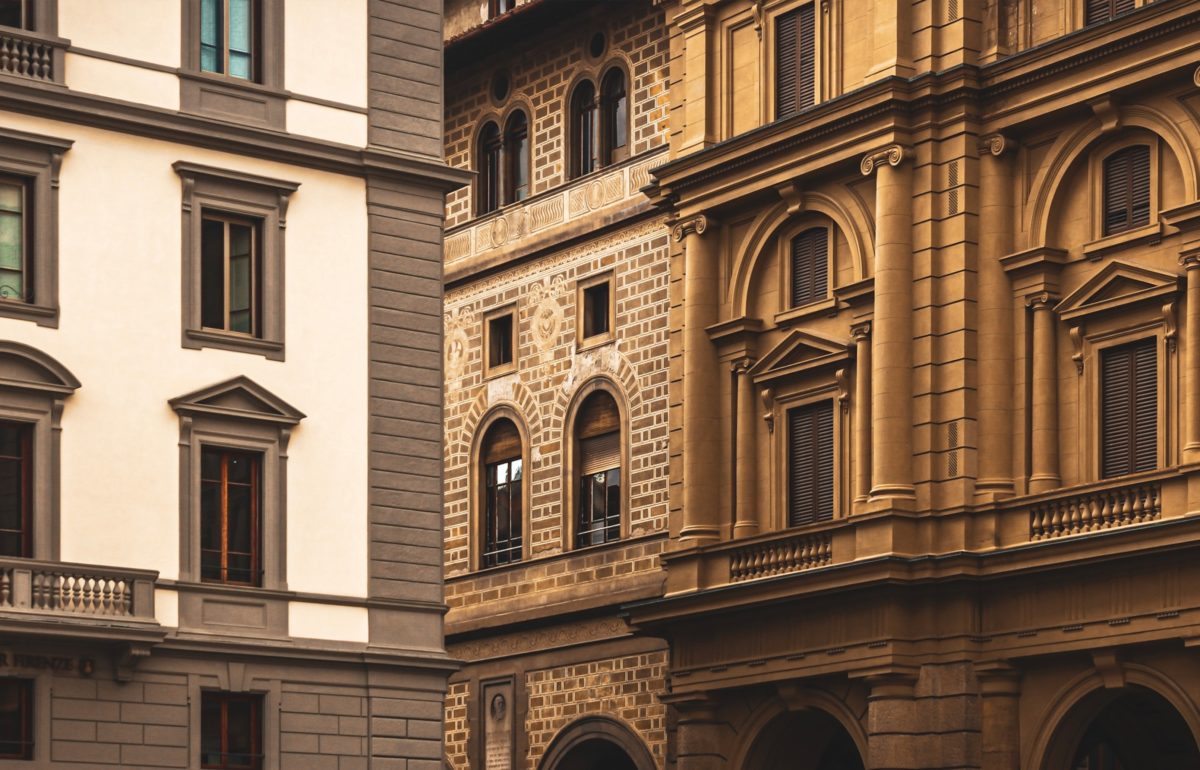
Firenze (1864) Il Papa aveva un alleato molto potente, l’imperatore francese Napoleone III, nipote di Napoleone Bonaparte, che stipulò con gli italiani il 15 settembre 1864 un accordo, la Convenzione di Settembre per assicurare che il Regno d’Italia non prendesse Roma. Di conseguenza la capitale definitiva fu trasferita da Torino a Firenze. Poiché la città, conosciuta come la culla dell’arte, doveva rimanere permanentemente la capitale del giovane Regno italiano, subì importanti opere pubbliche per svolgere il suo nuovo ruolo. Infatti gran parte delle antiche mura del XII secolo furono demolite per far posto a grandi strade e uffici amministrativi. Mentre i maestosi palazzi rinascimentali divennero le sedi dei Ministeri e degli uffici di Stato. Nonostante ciò, il capoluogo fiorentino ebbe vita breve.
Roma (1870) Le promesse fatte a Napoleone III non furono mantenute, infatti l’Italia era desiderosa di impadronirsi di Roma e vi riuscì nel 1870, attraverso la celebre Breccia di Porta Pia. La terza capitale d’Italia fu da qui in poi Roma, durante il periodo monarchico che terminò nel 1946 e dopo la proclamazione della Repubblica nello stesso anno.
Brindisi (settembre 1943 – febbraio 1944) Tuttavia vi furono due brevi eccezioni, note anche come le due capitali della guerra, quando l’Italia fu divisa in due durante la seconda guerra mondiale dopo l’armistizio dell’8 settembre 1943. Il Centro-nord era ancora controllato dai nazifascisti, mentre il Sud era già stato liberato dalle forze alleate, che lottavano per avanzare verso nord. Il 10 settembre il re Vittorio Emanuele III e il governo fuggirono a Brindisi, in Puglia, per continuare a governare il paese facendo di Brindisi la quarta capitale d’Italia.
Salerno (febbraio – luglio 1944) Questo fu il periodo più drammatico della guerra che causò grande devastazione in Italia, ma che portò le forze tedesche al ritiro a nord del fiume Volturno e alla resa di Napoli. Fu così che nel febbraio del 1944 Salerno divenne il centro principale del governo italiano liberato e dove la resistenza reale e il governo. rimasero per 5 mesi.
Roma (1944 -) Infine quando le truppe americane entrarono a Roma tra il 4 e il 5 giugno 1944, la Città Eterna fu finalmente liberata e in grado di riconquistare il suo ruolo storico.
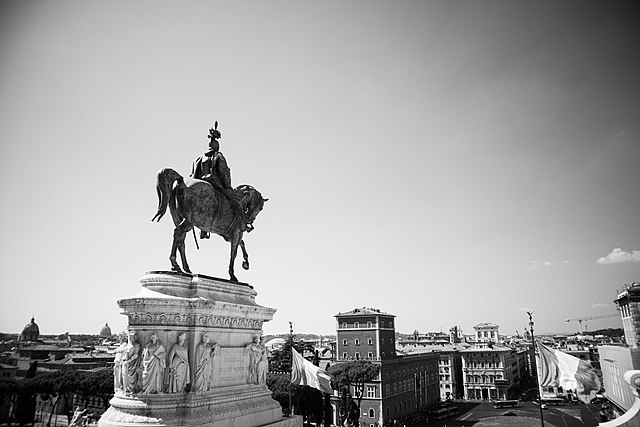
Roma, Piazza Venezia – Monumento equestre a Vittorio Emanuele II
Did you know that Rome has been the capital of Italy twice? This might not come as a surprise since it has been at the centre of multiple events throughout history that have concerned the Italian peninsula. First and foremost the Roman Empire, when the city was truly the belly of the world. And afterwards within the Church State (Città Stato), which for many centuries established Rome as the heart of Christianity. However, the Eternal city is among four other Italian cities to hold the title of capital of Italy.
Turin (1861) The piemontese city Turin was the first capital of Italy in 1861, when the Unification of Italy (l’Unità d’Italia) was proclaimed. At the time, Rome was not even within the national borders. During the Second War of Independence (Seconda Guerra dell’Indipendenza) and la Spedizione dei Mille, lead by Giuseppe Garibaldi, some areas of the peninsula were handed over to the Reign of Sardinia ruled by Vittorio Emanuele II: Lombardy, a part of central Italy, and all of southern Italy (il Mezzogiorno), which was removed from the former kingdom of the two Sicilies (l’ex Regno delle due Sicilie). In the meantime the Papal State (lo Stato Pontificio) was ruled by Pope Pio IX who was not willing to give up Rome to the new Italian Reign. Beyond the Italian confines there was also Veneto, which was still a stronghold of the Austrians. Therefore Turin, already the capital of the Reign of Sardinia, was temporarily elected as the administrative city of the new State.
Florence (1864) The Pope had a very powerful alley, the French emperor Napoleon III, nephew of Napoleon Bonaparte, who stipulated with the Italians on September 15, 1864 an agreement, the Convention of September (la Convenzione di Settembre), to ensure the Reign of Italy would not seize Rome. Consequently the definite capital was transferred from Turin to Florence. Because the city, known as the cradle of art, was supposed to permanently remain the capital of the young Italian Reign, it underwent major public works to fulfill its new role. In fact most of the old 12th century walls were demolished to make room for large roads and administrative offices. While the majestic Renaissance palaces became the seats of the Ministries and the State offices. Despite this, Florence capital lived a short life.
Rome (1870) The promises made to Napoleon III were not kept, in fact Italy was eager to seize Rome and it managed to do so in 1870, through the renowned Breccia di Porta Pia. The third capital of Italy was Rome from here on during the Monarchic period which ended in 1946 and after the proclamation of the Republic in the same year.
Brindisi (September 1943 – February 1944) However there were two short exceptions, also known as the two capitals of the war, when Italy was split in half during WWII after the armistice on September 8, 1943. The Centre-north was still controlled by the Nazi-fascists, while the South had already been liberated by the Allied Forces, who were struggling to advance to the north. On September 10th King Vittorio Emanuele III and the government escaped to Brindisi, in Puglia in order to continue to govern the country making Brindisi the fourth capital of Italy.
Salerno (February – July 1944) This was the most dramatic period of the war that caused great devastation in Italy, which resulted in German forces withdrawing north of the Volturno river and surrendering Naples. So it was in February 1944 that Salerno became the main centre of the liberated Italian government and where the Royal resistance and government remained for 5 months.
Rome (1944 -) Finally when the American troops entered Rome between June 4th and 5th 1944, the Eternal City was finally liberated and able to reconquer its historical role.