Alcuni italiani non amano molto il congiuntivo, mentre il passato remoto è molto diffuso nella lingua parlata. Per alcuni il condizionale resta una sfida e l’imperativo non manca mai soprattutto a tavola: “Mangia!” Comunque secondo me i verbi italiani sono tutti belli a modo loro.
Quali sono i tuoi tempi verbali più o meno preferiti?
Some Italians don’t like the subjunctive (il congiuntivo) very much, while the remote past (passato remoto) is very common in the spoken language. For some, the conditional remains a challenge and the imperative never fails, especially at the table: “Mangia!” (“Eat!”) However, in my opinion the Italian verbs are all beautiful in their own way.
Il postino suonò due volte. Mancavano cinque giorni a Natale. Aveva fra le braccia un grosso pacco avvolto in carta preziosamente disegnata e legato con nastri dorati. «Avanti», disse una voce dall’interno. Il postino entrò. Era una casa malandata: si trovò in una stanza piena d’ombre e di polvere. Seduto in una poltrona c’era un vecchio. «Guardi che stupendo paccone di Natale!» disse allegramente il postino. «Grazie. Lo metta pure per terra», disse il vecchio con la voce più triste che mai. Il postino rimase imbambolato con il grosso pacco in mano. Intuiva benissimo che il pacco era pieno di cose buone e quel vecchio non aveva certo l’aria di spassarsela bene. Allora, perché era così triste? «Ma, signore, non dovrebbe fare un po’ di festa a questo magnifico regalo?». «Non posso… Non posso proprio», disse il vecchio con le lacrime agli occhi. E raccontò al postino la storia della figlia che si era sposata nella città vicina ed era diventata ricca. Tutti gli anni gli mandava un pacco, per Natale, con un bigliettino: «Da tua figlia Luisa e marito». Mai un augurio personale, una visita, un invito: «Vieni a passare il Natale con noi». «Venga a vedere», aggiunse il vecchio e si alzò stancamente. Il postino lo seguì fino ad uno sgabuzzino. Il vecchio aprì la porta. «Ma…» fece il postino. Lo sgabuzzino traboccava di regali natalizi. Erano tutti quelli dei Natali precedenti. Intatti, con la loro preziosa carta e i nastri luccicanti. «Ma non li ha neanche aperti!» esclamò il postino allibito. «No», disse mestamente il vecchio. «Non c’è amore dentro».
– autore: anomino
(English version)
The postman rang twice. It was five days until Christmas. In his arms he had a large parcel wrapped in preciously designed paper and tied with golden ribbons. “Come in,” said a voice from within. The postman entered. It was a shabby house: he found himself in a room full of shadows and dust. Sitting in an armchair was an old man. “Look at that gorgeous Christmas bag!” the postman said cheerfully. “Thank you. Put it on the floor,” said the old man in a sadder voice than ever. The postman was stunned with the big package in his hand. He understood very well that the package was full of good things and that old man certainly didn’t look like he was having a good time. So why was he so sad? ‘But, sir, shouldn’t you make a little celebration of this magnificent present?’ “I can’t… I just can’t,” said the old man with tears in his eyes. And he told the postman the story of her daughter who had married in the next town and had become rich. Every year she sent him a package for Christmas with a note: “From your daughter Luisa and husband.” Never a personal greeting, a visit, an invitation: «Come and spend Christmas with us». “Come and see,” the old man added, and got up wearily. The postman followed him to a closet. The old man opened the door. “But…” said the postman. The closet was overflowing with Christmas presents. They were all the ones from previous Christmases. Intact, with their precious paper and shiny ribbons. “But he didn’t even open them!” exclaimed the shocked postman. “No,” said the old man ruefully. “There is no love inside.”
Ho l’abitudine di fare liste di frasi e aforismi che mi aiutano a trovare ispirazione e motivazione. In questo podcast ti leggo alcune frasi che mi sostengono durante le dure prove della vita. L’imperatore romano e filosofo stoico Marco Aurelio diceva che bisogna abituarsi a sentirsi a disagio. Se non siamo allenati alla durezza della vita, allora non saremo pronti ad affrontarla quando si presenterà. A chi dice che non devo complicarmi la vita, dico che mi alleno. Essere riuscita a risolvere le questioni che si sono presentate mi ha dato molte soddisfazioni. Scegliere il modo più semplice e conveniente non fa per me. Considero la vita una scuola fondamentalmente e mi dà pace sapere che ho tutto ciò che serve moralmente per affrontare qualsiasi cosa.
Queste sono alcune delle frasi. Non le seguo sempre diligentemente, anzi spesso con grande difficoltà! Ma la migliore delle tecniche per avere successo è la ripetizione, vero?
È il nostro atteggiamento all’inizio di un compito che più di ogni altra cosa influenzerà il suo esito positivo.
Pensa, agisci, parla, cammina e comportati in tutti i tuoi affari come farebbe la persona che desideri diventare.
Siamo interdipendenti; è impossibile avere successo senza gli altri. Ed è il nostro atteggiamento verso gli altri che determinerà il loro atteggiamento verso di noi.
È il nostro atteggiamento verso la vita che determinerà l’atteggiamento della vita verso di noi.
Abbi compassione ed empatia per il più piccolo degli animali. E’ una delle virtù più nobili che si possa avere.
La tua mente può contenere solo un pensiero alla volta. E poiché non c’è niente da guadagnare essendo negativi, sii positivo.
Il desiderio più profondo degli esseri umani è di essere necessari, di sentirsi importanti, di essere apprezzati. Offrilo agli altri e te lo restituiranno.
Cerca il meglio nelle nuove idee. Come qualcuno ha detto,”non ho mai incontrato una persona da cui non potessi imparare qualcosa”.
Non perdere tempo prezioso a parlare di problemi personali; probabilmente non ti aiuterà e non può aiutare gli altri.
Abbandonati nel silenzio per poter ascoltare e imparare.
Irradia l’atteggiamento di benessere, di fiducia, di una persona che sa dove sta andando. Questo ispirerà coloro che ti circondano e scoprirai che le cose belle cominceranno a succederti.
Tratta tutti quelli con cui entri in contatto come la persona più importante sulla terra.
Hai delle frasi che t’ispirano a dare il tuo meglio quotidianamenete oppure nei momenti difficili? Condividile nei commenti!
(English version)
I have a habit of making lists of phrases and aphorisms that help me find inspiration and motivation. In this podcast I’ll read some sentences that support me during the hard trials of life. The Roman emperor and Stoic philosopher Marcus Aurelius said that one must get used to feeling uncomfortable. If we aren’t trained in the harshness of life, then we won’t be ready to deal with it when it comes. To those who say I don’t have to complicate my life, I say that I’m training. Being able to resolve the issues that have arise has given me a lot of satisfaction. Choosing the easiest and most convenient way is not for me. I consider life basically a school and it gives me peace to know that I have what it takes morally to face anything.
These are some of the phrases. I don’t always follow them diligently, indeed often with great difficulty! But the best way to be successful is repetition, right?
1. It is our attitude at the beginning of a task that more than anything else will influence its successful outcome.
2. Think, act, talk, walk and behave in all your affairs as the person you wish to become.
3. We are interdependent; it is impossible to be successful without others. And it is our attitude towards others that will determine their attitude towards us.
4. It is our attitude towards life that will determine the attitude of life towards us.
5. Have compassion and empathy for the smallest of animals. It is one of the noblest virtues that one can have.
6. Your mind can only hold one thought at a time. And since there is nothing to be gained by being negative, be positive.
7. The deepest desire of human beings is to be needed, to feel important, to be appreciated. Offer it to others and they will return it to you.
8. Look for the best in new ideas. As someone said, “I’ve never met a person I couldn’t learn something from”.
9. Don’t waste precious time talking about personal problems; it probably won’t help you and can’t help others.
10. Abandon yourself in silence so that you can listen and learn.
11. Radiate the attitude of well-being, of trust, of a person who knows where they are going. This will inspire those around you and you will find that good things will begin to happen to you.
10. Treat everyone you come in contact with as the most important person on earth.
Do you have phrases that inspire you to give your best every day or in difficult moments? Share them in the comments!
Come pronunciare la r in italiano – esercizi di pronuncia
Parliamo della famosa erre (R). È una delle lettere più difficili da pronunciare non solo per studenti stranieri, ma anche per i madrelingua. Infatti non tutti vibrano la “R” allo stesso modo.
I diversi modi di pronunciare la “R” dipendono da fattori interni, la “r moscia”, o anche esterni, per esempio i dialetti regionali e il sistema fonetico di altre lingue che richiedono l’uso di un’altra parte della bocca o della lingua. In inglese britannico per esempio è un suono approssimativo, mentre in italiano è un trillo come anche in americano. Infatti nelle parole butter, better (la R e’ un trillo).
La R moscia, nota anche come “erre francese”, è un modo di articolare la “R”, che invece di essere vibrata nella parte anteriore della bocca si fa vibrare nella parte posteriore.
Proviamo per esempio a dire “Rosa” prima vibrando la parte posteriore, R moscia, e poi la parte anteriore, trillo.
In italiano la lettera “R” è definita una vibrante alveolare, il che significa che per produrre il suono correttola punta della lingua deve vibrare. La lingua si muove con la erre trillata e non è nella gola come la “R” francese.
Inoltre, in base alla posizione della “R” nella parola otteniamo suoni diversi:
la “erre leggera” – come nella parola “TRE” dove il suono non è forte perché si trova tra una vocale e una consonante; oppure quando si trova tra due vocali per esempio nella parola “AMORE”.
il “trillo lungo” – come nella parola “CARRO” poiché abbiamo una doppia erre; oppure all’inizio della parola come in “riso”. In questi due casi si tende a enfatizzare la “R”, producendo così un suono vibrante.
Comunque alcune persone pronunciano la “R” trillata in entrambi i casi e quindi “tre” e “riso” sono pronunciati con la “R” trillata.
ESERCIZI
Se si vuole cambiare la pronuncia della “R” basta fare degli esercizi regolarmente. Vediamone alcuni.
Un primo esercizio utilizza la lettera “L” un suono lungo con la lingua dietro i denti. Ripetiamo velocemente “TLA” mettendo la lingua tra i denti anteriori:
TLA TLA TLA TLA TLA TLA TLA TLA
Più velocemente si ripete più si sente una “R” vibrante.
Facciamo lo stesso con tutte le vocali.
TLE TLE TLE TLE TLE TLE TLE TLE
TLI TLI TLI TLI TLI TLI TLI TLI
TLO TLO TLO TLO TLO TLO TLO TLO
TLU TLU TLU TLU TLU TLU TLU TLU
2. Facciamo un altro esercizio con la lettera “D”. La punta della lingua è dietro ai denti e bisogna molto velocemente ripetere la D insieme alle vocali.…
DaDaDaDaDaDaDaDaDaDaDaDa
Viene molto bene con la “e”
DeDeDeDeDeDeDeDeDeDeDeDe
DiDiDiDiDiDiDiDiDiDiDiDiDiDiDiDi
DoDoDoDoDoDoDoDoDoDoDoDo
DuDuDuDuDuDuDuDuDuDuDuDu
Adesso ripetiamo “DRE” molto velocemente…..e magicamente diventa “TRE” con un bel trillo della “R”.
DRE DRE DRE DRE DRE DRE DRE
3. E poi ci sono gli scioglilingua, un altro ottimo esercizio per migliorare il suono della “R”
Ripetiamo i seguenti 3 scioglilingua molto conosciuti per pronunciare la R.
“Trentatré trentini entrarono a Trento tutti e trentatré trotterellando.”.
“Tre tigri contro tre tigri”.
“Un ramarro sul muro marrone”.
Prova a ripetere ciascuno molte volte aumentando la velocità, ma mantenendo una buona forma di pronuncia.
Quando si pronunciano con regolarità gli scioglilingua e gli altri esercizi la coordinazione della lingua diventa un gesto naturale.
—————————————————-
(English version)
Let’s talk about the famous Italian R sound. It is one of the most difficult letters to pronounce not only for foreign students, but also for native speakers. In fact, not everyone vibrates the “R” in the same way.
The different ways of pronouncing the “R” depend on internal factors, the “r moscia” (dull R) or even external, regional dialects, but also the phonetic system of other languages that requires the use of another part of the mouth or tongue. In British English, for example, it is an approximate sound, while in Italian it is a trill as well as in American. In fact, in the words butter, better (the R is a trill)
The R moscia, also known as “French R”, is a way of articulating the “R”, which instead of being vibrated in the front part of the mouth is vibrated in the back.
For example, let’s try to say “Rosa” by vibrating the back first, R moscia, and then the front part, trill.
In Italian the letter “R” is defined as a vibrating alveolar, which means that to produce the correct sound the tip of the tongue must vibrate. The tongue moves with the trilled r, it is not in the throat like the French “R”.
Also based on the position of the “R” in the word you get different sounds:
Light R – as in the word “TRE” where the sound is not strong because the “R” is located between a vowel and a consonant; or when it is found between two vowels, for example in the word “AMORE”.
Long trill – as in the word “CARRO” because there’s a double “R”; or at the beginning of the word as in “RISO”. In these two cases we tend to emphasize the “R”, thus producing a vibrant sound.
However, some people pronounce the trilled “R” in both cases and therefore “TRE” and “RISO” are pronounced with the trilled “R”.
If you want to change the pronunciation of the “R” just do some exercises regularly. Let’s see some of them.
A first exercise uses the letter “L” a long sound with the tongue behind the teeth. We’ll quickly repeat “TLA” putting the tongue between the front teeth:
TLA TLA TLA TLA TLA TLA TLA TLA
The faster you repeat the more a vibrant “R” is.
We do the same with all vowels.
TLE TLE TLE TLE TLE TLE TLE TLE
TLI TLI TLI TLI TLI TLI TLI
TLO TLO TLO TLO TLO TLO TLO TLO
TLU TLU TLU TLU TLU TLU TLU TLU
Let’s do another exercise with the letter “D”. The tip of the tongue is behind the teeth and you have to repeat it very quickly together with the vowels. …
DaDaDaDaDaDaDaDaDaDa
It works very well with the “e”
DeDeDeDeDeDeDeDeDeDeDeDe
DoDoDoDoDoDoDoDoDoDoDoDoDo
DuDuDuDuDuDuDuDuDuDuDuDu
Now let’s repeat “DRE” very quickly… ..and magically it becomes “TRE” with a nice roll of the “R”.
And also the tongue twisters are another great exercise to improve the sound of the “R”
Let’s repeat the following 3 well-known tongue twisters for pronouncing the “R”.
“Trentatré trentini entrarono a Trento tutti e trentatré trotterellando.”.
“Tre tigri contro tre tigri”.
“Un ramarro sul muro marrone”.
Try repeating each several times while increasing the speed, but maintaining a good form of pronunciation.
When tongue twisters and the other exercises are pronounced regularly, tongue coordination becomes a natural gesture.
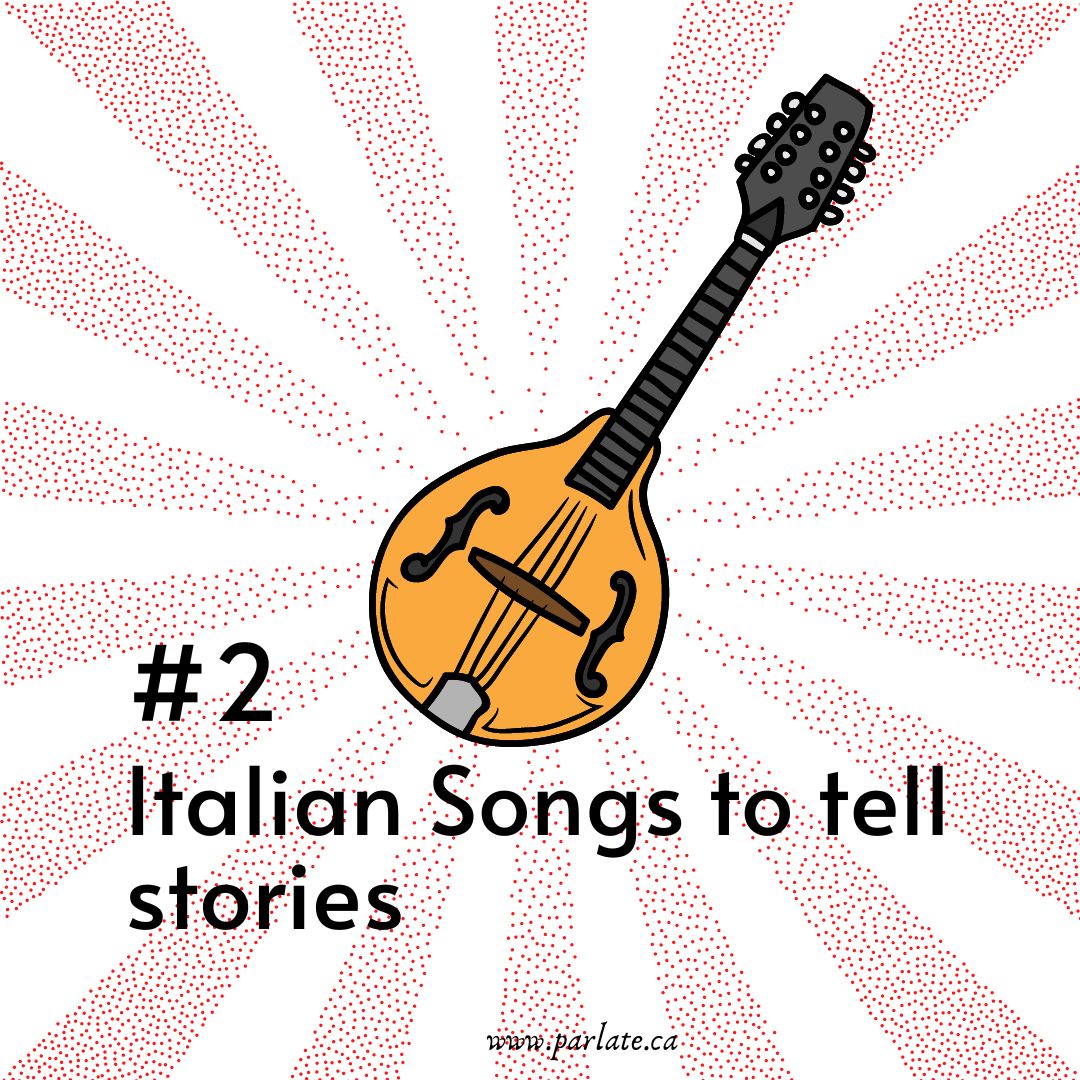
4 canzoni per raccontare facili storie in italiano, seconda parte
Hai cantato le canzoni della Prima Parte ? Erano corte e con semplici ripetizioni. La melodia e la ripetizione aiutano a migliorare la pronuncia.
In questa seconda parte ascoltiamo e cantiamo quattro canzoni che raccontano storie. Essere in grado di raccontare storie semplici è un bel traguardo che tutti vogliono raggiungere. La musica è il mezzo migliore per allenarsi.
Le quattro canzoni di popolari cantanti italiane fanno parte di un’epoca passata in cui la musica aveva una poesia diversa.
Did you sing the songs of the first part? They were short and with simple repetitions. Melody and repetition help improve pronunciation. In this second part we listen to and sing four songs that tell stories. Being able to tell simple stories is a great achievement that everyone wants to reach. Music is the best way to practice. The four songs by popular Italian singers are part of a bygone era where music had a different poetry.
vola colomba- Nilla pizzi (1952)
Brano originale del 1952 Brano cantato da Nilla Pizzi con l’orchestra di Ennio Morricone. La colomba era il messaggio che l’Italia uscita sconfitta e umiliata dalla guerra, inviava a Trieste, contesa fra i comunisti jugoslavi di Tito, gli inglesi e gli americani che la stavano occupando con le armi. La guerra a Trieste non finì infatti nel 1945 come nel resto del Paese, ma nel 1954 quando le truppe italiane ritornarono a liberarla.
Original piece from 1952 sung by Nilla Pizzi with the orchestra of Ennio Morricone. The dove “la colomba” was the message that Italy, defeated and humiliated by the war, sent to Trieste, disputed between Tito’s Yugoslav Communists, the British, and the Americans who were occupying it with arms. In fact, the war in Trieste did not end in 1945 as in the rest of the country, but in 1954 when the Italian troops returned to free it.
Pinguino Innamorato – Silvana Fioresi e Trio Lescano (1941)
Mentre la dittatura si avviava verso una terribile guerra e ancor più terribile guerra civile, il pubblico si deliziava con delle canzonette accattivanti per la melodia e lo swing. In contrasto le parole potrebbero essere definite come surreali, bizzarre, e grottesche.
As the dictatorship moved towards a terrible war and even more terrible civil war, the audience delighted with captivating songs for melody and swing. In contrast, the words could be defined as surreal, bizarre, and grotesque.
Canzone Da Due Soldi – Katyna Ranieri (1957)
Una canzone da due soldi, ci invita a vedere la vera felicità nel poco. Questi versi danno una voce “poetica” al dopoguerra, scuotono le masse ed entrano nelle case di un popolo assetato di normalità.
A simple song “una canzone da due soldi”, invites us to see true happiness in little. These verses give a “poetic” voice to the postwar period, it shakes the masses and enters the homes of a people thirsty for normality.
Casetta in Canadà – Carla Boni (1957)
Una canzone con un ritmo allegro ed accattivante con un testo – genere nonsense – di facile memorizzazione che si può ripetere all’infinito. Un grande successo fra gli Italiani emigrati in Canada.
A song with a cheerful and captivating rhythm with a text – nonsense genre – easy to memorize that can be repeated indefinitely. A great success among Italians who emigrated to Canada.
Mi raccomando canta ogni giorno, fa bene non solo allo studio dell’italiano ma anche alla salute!
I recommend singing every day, it’s good not only for your Italian, but also for your health!
A simple rule to use them correctly.
Una regola semplice per usarli correttamente.
English follows
Diciamocelo…i verbi italiani non sono proprio una passeggiata. Può infatti capitare di avere dei dubbi nel scegliere il tempo giusto al momento giusto. I due tempi verbali che capita a moltissimi di confondere sono l’imperfetto e il passato prossimo. Comunque ho un trucco facile facile per capire quando usare l’uno o l’altro. Sono sicura che applicarlo ti faciliterà la vita.
Ecco come funziona:
se parli di un’azione abituale nel passato, usi l’imperfetto. In inglese equivale a “used to”.
se parli di un’azione passata conclusa, avvenuta una o più volte, usi il passato prossimo.
Facciamo degli esempi:
imperfetto 1. L’anno scorso andavo in montagna. – Last year I used to go to the mountains.
passato prossimo 2. L’anno scorso sono andato in montagna. – Last year I went to the mountains.
ESERCIZIO – Scegli il tempo giusto:
Anni fa i maschi avevano/hanno avuto un unico problema esistenziale al mare: scegliere a quale categoria di uomo in costume da bagno appartenere. Slip o boxer? Il peso dell’apparenza estiva cadeva/è caduto sulle donne. L’uomo invece era/è stato funzionale alla vacanza: caricava/ha caricato l’auto di valigie, biciclette e gommoni, guidava/ha guidato fino a destinazione, montava/ha montato e smontava/ha smontato tavolini e ombrelloni, apriva/ha aperto e chiudeva/ha chiuso sdraio, gonfiava/ha gonfiato e sgonfiava/ha sgonfiato canotti. Provava/ha provato a cimentarsi in qualche attività sportiva che non praticava/ha praticato mai durante l’anno, combatteva/ha combattuto con il vento contrario alla direzione del suo riporto, fingeva/ha finto di approfondire le pagine di politica e sport. (adattato da Donna Moderna)
TRADUZIONE: Years ago, males used to have a single existential problem at the sea: choosing which category of man in a bathing suit to belong to. Slip or boxer? The weight of summer appearance used to fall on the women. The man, on the other hand, used to be functional to the holiday: he used to load the car with suitcases, bicycles and rafts, he sued to drive to their destination, he used to assemble and disassemble tables and umbrellas, he used to open and close deck chairs, he used to inflate and deflate dinghies. He used to try his hand at some sporting activity that he never used to practice during the year, he used to fight the wind against the direction of his come over, he used to pretend to deepen the pages of politics and sport. (adapted from Donna Moderna)
Soluzione in basso!
ENGLISH VERSION
Let’s face it … Italian verbs are not exactly a walk in the park. In fact, it may happen to have doubts in choosing the right tense at the right time. The two tenses that many people get confused are the imperfetto and the passato prossimo. However, I have a very easy trick for figuring out when to use one or the other. I’m sure applying it will make your life easier.
Here’s how it works:
if you talk about a habitual action in the past, you use the imperfetto. In English it is equivalent to “used to”.
if you are talking about a completed past action, that occurred once or more times, you use the passato prossimo.
Let’s make some examples:
imperfetto 1. L’anno scorso andavo in montagna. – Last year I used to go to the mountains.
passato prossimo 2. L’anno scorso sono andato in montagna. – Last year I went to the mountains.
EXERCISE – Choose the correct tense:
Anni fa i maschi avevano/hanno avuto un unico problema esistenziale al mare: scegliere a quale categoria di uomo in costume da bagno appartenere. Slip o boxer? Il peso dell’apparenza estiva cadeva/è caduto sulle donne. L’uomo invece era/è stato funzionale alla vacanza: caricava/ha caricato l’auto di valigie, biciclette e gommoni, guidava/ha guidato fino a destinazione, montava/ha montato e smontava/ha smontato tavolini e ombrelloni, apriva/ha aperto e chiudeva/ha chiuso sdraio, gonfiava/ha gonfiato e sgonfiava/ha sgonfiato canotti. Provava/ha provato a cimentarsi in qualche attività sportiva che non praticava/ha praticato mai durante l’anno, combatteva/ha combattuto con il vento contrario alla direzione del suo riporto, fingeva/ha finto di approfondire le pagine di politica e sport.(adattato da Donna Moderna)
TRANSLATION: Years ago, males used to have a single existential problem at the seaside: choosing which category of man in a bathing suit to belong to. Slip or boxer? The weight of summer appearance used to fall on the women. The man, on the other hand, used to be functional to the holiday: he used to load the car with suitcases, bicycles and rafts, he sued to drive to their destination, he used to assemble and disassemble tables and umbrellas, he used to open and close deck chairs, he used to inflate and deflate dinghies. He used to try his hand at some sporting activity that he never used to practice during the year, he used to fight the wind against the direction of his comb-over, he used to pretend to deepen the pages of politics and sport. (adapted from Donna Moderna)
SOLUZIONE: Anni fa i maschi avevano un unico problema esistenziale al mare: scegliere a quale categoria di uomo in costume da bagno appartenere. Slip o boxer? Il peso dell’apparenza estiva cadeva sulle donne. L’uomo invece era funzionale alla vacanza: caricava l’auto di valigie, biciclette e gommoni, guidava fino a destinazione, montava e smontava tavolini e ombrelloni, apriva e chiudeva sdraio, gonfiava e sgonfiava canotti. Provava a cimentarsi in qualche attività sportiva che non praticava mai durante l’anno, combatteva con il vento contrario alla direzione del suo riporto, fingeva di approfondire le pagine di politica e sport.(adattato da Donna Moderna)
4 Facili canzoni italiane per migliorare l’italiano
Quando la vita diventa caotica, c’è la musica a sostenermi. Canto sempre, soprattutto quando la vita diventa pesante. Sai che cantare in italiano è uno dei modi migliori per migliorare la lingua? La ripetizione di parole accompagnata da una melodia non solo migliora la pronuncia, ma migliora anche la fiducia nel parlare fluentemente. Ho scelto 4 semplici canzoni italiane per cominciare.
When life becomes chaotic there is music to support me. I always sing, especially when life gets heavy. Do you know that singing in Italian is one of the best ways to improve the language? Repetition of words accompanied by a melody not only improves pronunciation but also improves one’s confidence in speaking fluently. I’ve chosen 4 simple Italian songs to start with.
Ancora tu – Lucio Battisti
Canzone perfetta per fare domande e frasi negative.
Perfect songs for asking questions and making negative sentences.
Non credere – Mina
Una buona canzone per esercitarsi con l’imperativo.
A good song to practice the imperative.
Il mondo – Jimmy Fontana
Una canzone per praticare il presente con stile.
A song to practice the present with style.
Pensiero Stupendo – Patty Pravo
Una canzone stupenda e semplice con un tocco di condizionale.
A beautiful and simple song with a touch of conditional.
Mi raccomando canta ogni giorno, fa bene non solo allo studio dell’italiano ma anche alla salute!
I recommend singing every day, it’s good not only for your Italian, but also for your health