
google.com, pub-1205142185266664 , DIRECT, f08c47fec0942fa0

Sciare a Cortina d’Ampezzo e non solo


Cortina d’Ampezzo definita “La perla delle Dolomiti” è la stazione sciistica più famosa e prestigiosa d’Italia e vanta una storia millenaria. Occupa una posizione privilegiata nell’ampia e soleggiata Valle d’Ampezzo. Attorno ad essa le Dolomiti, Patrimonio dell’Umanità Unesco, deliziano turisti da tutto il mondo.

Situata nel Veneto, è celebre non solo per lo sci, ma anche per la cultura, la storia, la mondanità e l’incantevole architettura alpina. Circondata da vette spettacolari come il Monte Cristallo, la Tofana e il Faloria, Cortina possiede un ricco paesaggio composto di maestose pareti rocciose, i fitti boschi e i laghi alpini cristallini.

C’è molto da vedere e da fare a Cortina d’Ampezzo, e non solo in inverno. Le sue estati miti la rendono altrettanto allettante per escursioni e percorsi storici, la mountain bike e l’arrampicata, attirando gli amanti delle attività all’aperto tutto l’anno. Infatti anche i suoi campi da tennis e da golf sono molto panoramici.

Una passeggiata in corso Italia nel centro storico è d’obbligo. In un’atmosfera dinamica trovaeri alcuni degli hotel più celebri, caffè, vetrine di boutique di lusso o di prodotti tradizionali ampezzani. Cortina ospita anche eventi culturali, festival e mostre d’arte che riflettono la sua ricca storia e la sua vivace comunità.

Nel 1909 è arrivata fin qui la Grande Strada delle Dolomiti dal passo Falzarego e all’inizio del ’900 si sono svolte le prime gare di sci. Da allora Cortina è diventata la destinazione sportiva mondana e elitaria per eccellenza delle Dolomiti, grazie alle centinaia di chilometri di sentieri per escursioni e arrampicate e all’estensione delle piste da sci.

Cortina ha acquisito notorietà internazionale ospitando le Olimpiadi invernali del 1956, consolidando la sua reputazione di polo di eccellenza per gli sport invernali. È anche sede delle prossime Olimpiadi invernali del 2026 assieme a Milano.

Offre piste superbe in tre comprensori: Tofane, Faloria Cristallo e Lagazuoi 5 Torri. E’ un vasto comprensorio con circa 120 km di piste e 37 impianti di risalita, un vero paradiso per sciatori e snowboarder: uno snowpark con due diversi livelli di difficoltà, un parco divertimenti per bambini, 60 chilometri di piste per lo sci di fondo e per lo slittino.

Gli amanti dello sci di fondo troveranno pane per i loro denti nel Parco Naturale delle Dolomiti d’Ampezzo, con sette chilometri di piste e la possibilità di sciare in notturna su due di esse. La neve non manca mai sugli itinerari, sempre previsti su 70 chilometri di piste.

Tra sport e divertimento, da non perdere il bacino artificiale di Po’ Drusciè, il famoso lago a forma di cuore. È il più grande di Cortina, con 96.000 metri cubi d’acqua e una profondità di 10,5 metri, ideale per l’innevamento artificiale delle piste grazie alla sua notevole riserva.

La popolarità di Cortina è cresciuta soprattutto grazie alle gare di Coppa del Mondo che si svolgono annualmente sulla pista Olimpia delle Tofane. Ha anche attratto importanti registi, tanto da essere stata il set di alcune scene di James Bond, solo per citarne alcune.

Il misto di splendore naturale, attività all’aria aperta e ricchezza culturale rende Cortina d’Ampezzo un rifugio alpino unico. Un’esperienza indimenticabile che cattura l’essenza delle Alpi italiane e dell’ospitalità veneta.


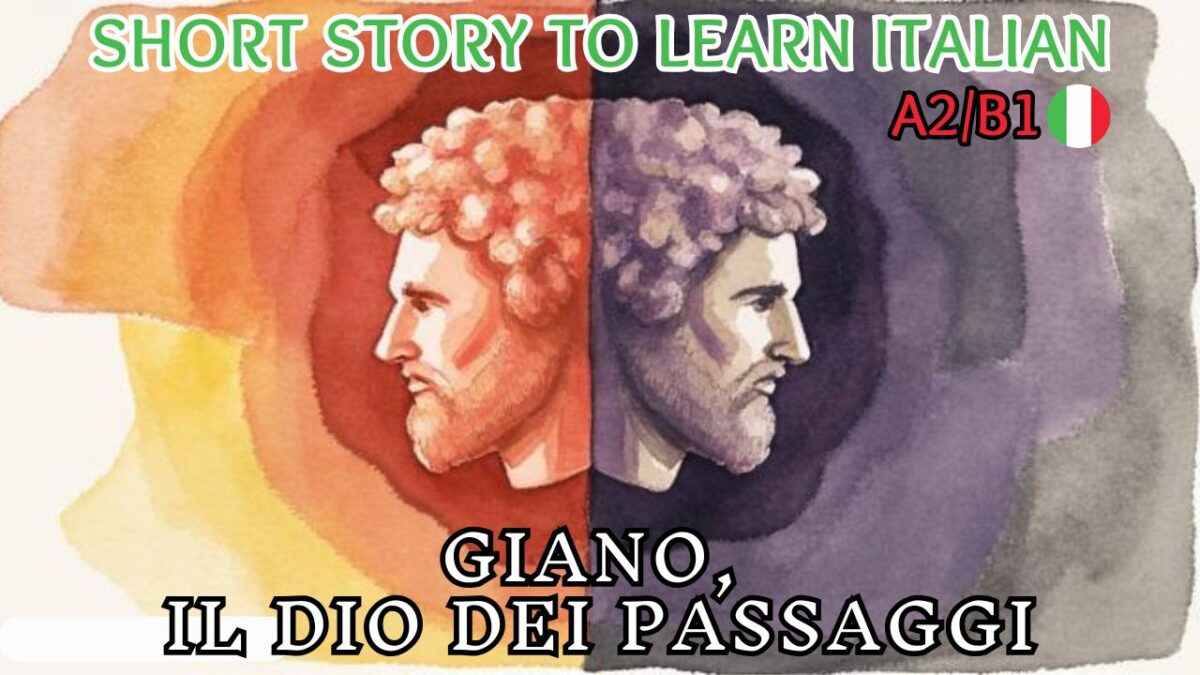
Racconto italiano: Giano, il dio dei passaggi A2/B1

Italian Short Story: Janus, the god of passages A2/B1


(English follows)

In questo mese di gennaio, il dio Giano è molto impegnato! Ma chi era Giano? Conosci l’origine del nome gennaio? Nel primo racconto di quest’anno scopriamo il significato antico del dio dei passaggi. Buona lettura e buon inizio del 2026!

Il racconto di questa lezione ha 5 parti:

  1. Ascolta la storia senza il testo in italiano.
  2. Ascolta una seconda volta con il testo e ripeti.
  3. Studia il vocabolario della storia.
  4. Rispondi alle domande di comprensione.
  5. Ascolta e ripeti la storia con più velocità.

    Ascoltare la storia senza il testo è importante per imparare i suoni e parlare automaticamente.

Metti un “mi piace” (un like) alla storia se vuoi altre storie come questa!

Ripeti questa lezione ogni giorno per una settimana.
La ripetizione è importante per parlare e pensare in italiano.


English version:

In this month of January, the god Janus is very busy! But who was Janus? Do you know the origin of the name January? In this year’s first story, we discover the ancient meaning of the god of passages. Happy reading and a happy start to 2026!

The short story in this lesson has 5 parts:

  1. Listen to the story without the text in Italian.
  2. Listen a second time with the text and repeat.
  3. Study the vocabulary in the story.
  4. Answer the comprehension questions.
  5. Listen and repeat the story at a faster pace.

Listening to the story without the text is important for learning sounds and speaking automatically.

Repeat this lesson every day for a week.
Repetition is important for speaking and thinking in Italian.

With constant repetition you don’t translate words and you don’t think about grammar.
If you repeat the same sentences out loud they become natural when you speak Italian.

Download the PDF of the story with the text and vocabulary

Like the story if you want more stories like this!

Download the PDF of the story with the text and vocabulary:

Racconto italiano: Il pupazzo di neve A1/A2

Italian Short Story: The Snowman A1/A2


(English follows)

La prima spolverata di neve portata dal freddo artico è arrivata sull’Italia e ha scatenato l’entusiasmo nelle località sciistiche in montagna. In alcune zone montane o di alta quota le nevicate sono spesso abbondanti. Infatti sono da record le bufere di neve a  Capracotta nel Molise, poco lontano dalla mia città. Sarà un inverno perfetto per sciare e fare pupazzi di neve!

Ho scritto questo simpatico racconto parlando proprio della neve. E’ adatto a tutti anche se scritto nel A1/A2. Buona lettura!

Il racconto di questa lezione ha 5 parti:

  1. Ascolta la storia senza il testo in italiano.
  2. Ascolta una seconda volta con il testo e ripeti.
  3. Studia il vocabolario della storia.
  4. Rispondi alle domande di comprensione.
  5. Ascolta e ripeti la storia con più velocità.

    Ascoltare la storia senza il testo è importante per imparare i suoni e parlare automaticamente.

Metti un “mi piace” (un like) alla storia se vuoi altre storie come questa!

Ripeti questa lezione ogni giorno per una settimana.
La ripetizione è importante per parlare e pensare in italiano.


English version:

The first dusting of snow brought by the Arctic cold has arrived in Italy and sparked excitement in mountain ski resorts. In some mountainous or high-altitude areas, snowfall is often heavy. In fact, record-breaking blizzards have hit Capracotta in Molise, not far from my hometown. It’s going to be a perfect winter for skiing and making snowmen!

I wrote this delightful story specifically about snow. It’s suitable for everyone, even though it’s written in A1/A2. Happy reading!
———————————————

The short story in this lesson has 5 parts:

  1. Listen to the story without the text in Italian.
  2. Listen a second time with the text and repeat.
  3. Study the vocabulary in the story.
  4. Answer the comprehension questions.
  5. Listen and repeat the story at a faster pace.

Listening to the story without the text is important for learning sounds and speaking automatically.

Repeat this lesson every day for a week.
Repetition is important for speaking and thinking in Italian.

With constant repetition you don’t translate words and you don’t think about grammar.
If you repeat the same sentences out loud they become natural when you speak Italian.

Download the PDF of the story with the text and vocabulary

Like the story if you want more stories like this!

Download the PDF of the story with the text and vocabulary:

Racconto italiano: Un paesino disabitato / A2-B1

Italian Short Story: An uninhabited village A2-B1


(English follows)

Il mese di novembre mi ispira a scrivere storie tenebrose, come questa che parla di un paesino italiano dove non abita anima viva. Ci andresti a fare un giro?

E’ anche il ventesimo racconto, un bel traguardo!

Questo racconto è adatto al livello A2/B1, ma anche ai livelli più alti.

Il PDF include il testo italiano e la traduzione in inglese, e inoltre le domande e le risposte di comprensione e il vocabolario. Buona lettura!
———————————————

Il racconto di questa lezione ha 5 parti:

  1. Ascolta la storia senza il testo in italiano.
  2. Ascolta una seconda volta con il testo e ripeti.
  3. Studia il vocabolario della storia.
  4. Rispondi alle domande di comprensione.
  5. Ascolta e ripeti la storia con più velocità.

    Ascoltare la storia senza il testo è importante per imparare i suoni e parlare automaticamente.

Metti un “mi piace” (un like) alla storia se vuoi altre storie come questa!

Ripeti questa lezione ogni giorno per una settimana.
La ripetizione è importante per parlare e pensare in italiano.


English version:

The month of November inspires me to write dark stories, like this one about a small Italian village where not a soul lives. Would you like to go for a tour?

It’s also my twentieth story, a great achievement!

This story is suitable for levels A2/B1, but also for higher levels.

The PDF includes the Italian text and the English translation, as well as comprehension questions and answers and vocabulary. Happy reading!
———————————————

The short story in this lesson has 5 parts:

  1. Listen to the story without the text in Italian.
  2. Listen a second time with the text and repeat.
  3. Study the vocabulary in the story.
  4. Answer the comprehension questions.
  5. Listen and repeat the story at a faster pace.

Listening to the story without the text is important for learning sounds and speaking automatically.

Repeat this lesson every day for a week.
Repetition is important for speaking and thinking in Italian.

With constant repetition you don’t translate words and you don’t think about grammar.
If you repeat the same sentences out loud they become natural when you speak Italian.

Download the PDF of the story with the text and vocabulary

Like the story if you want more stories like this!

Download the PDF of the story with the text and vocabulary:

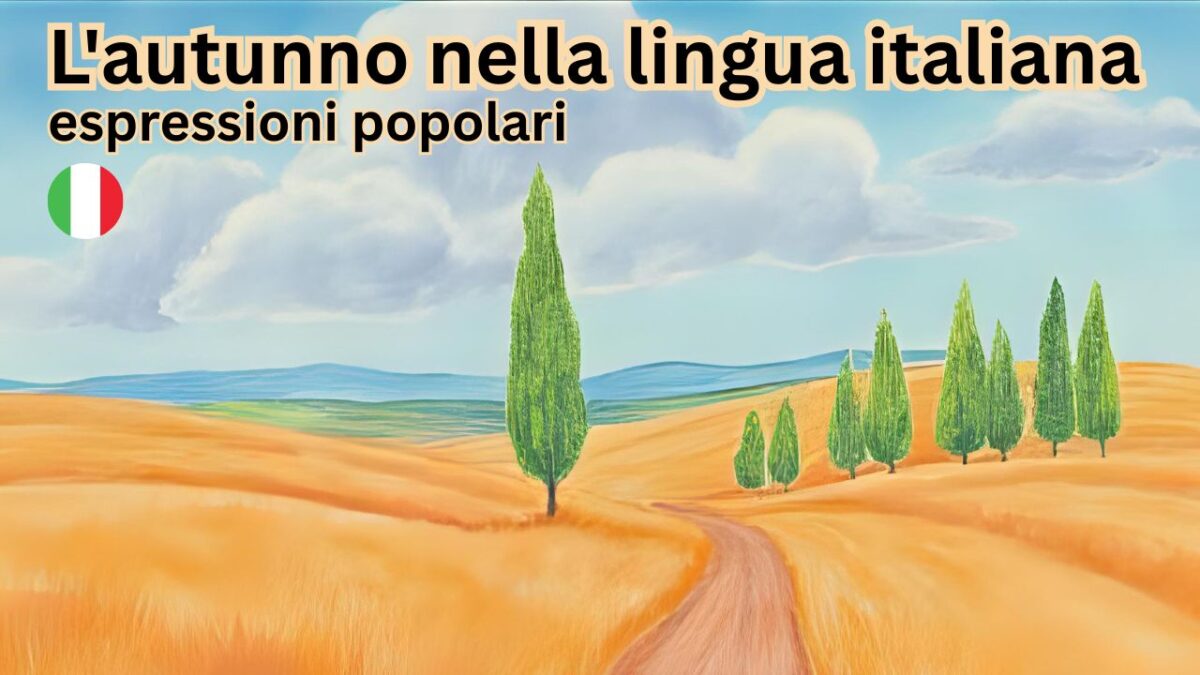
L’autunno nella lingua italiana: espressioni popolari

Autumn in the Italian Language: Popular Expressions


(English follows)

Questa settimana scopriami le origini e i significati di alcune espressioni popolari della lingua italiana. I protagonists sono due frutti autunnali. Indovina quali! Hai mai sentito usare questi  quatro modi di dire? Spero che nessuno ti abbia chiamato testa di zucca!

Buona lettura 🎃

Questa storia è adatta al livello B1 in su.

Il PDF include il testo italiano e la traduzione in inglese.

Buona lettura!
———————————————

https://youtu.be/2-DHpxTNyqY

Metti un “mi piace” (un like) alla storia se vuoi altre storie come questa!

Ripeti questa lezione ogni giorno per una settimana. La ripetizione è importante per parlare e pensare in italiano.


English version:

This week we’re discovering  the origins and meanings of some popular Italian expressions. The protagonists are two autumn fruits. Guess which ones! Have you ever heard these four expressions? I hope no one called you “testa di zucca”! 

Happy reading 🎃

This story is suitable for level B1 and above.

The PDF includes the Italian text and the English translation.
———————————————

Repeat this lesson every day for a week.
Repetition is important for speaking and thinking in Italian.

Like the story if you want more stories like this!

Download the PDF of the story with the text in Italian and English:

Racconto italiano: Un sabato indaffarato / A2

Italian Short Story: A busy Saturday / A2


(English follows)

L’inizio di una nuova stagione porta un nuovo racconto. Questa semplice storia è adatta al livello A2, ma anche ai livelli più alti. In Italia ci sono molte fiere autunnali  in questo periodo dove poter assaggiare tante specialità gastronomiche. La gente è molto indaffarata! Buona lettura.

Questa storia è adatta al livello A2.

Il PDF include il testo italiano e la traduzione in inglese, e inoltre le domande e le risposte di comprensione e il vocabolario. Buona lettura!
———————————————

Il racconto di questa lezione ha 5 parti:

  1. Ascolta la storia senza il testo in italiano.
  2. Ascolta una seconda volta con il testo e ripeti.
  3. Studia il vocabolario della storia.
  4. Rispondi alle domande di comprensione.
  5. Ascolta e ripeti la storia con più velocità.

    Ascoltare la storia senza il testo è importante per imparare i suoni e parlare automaticamente.
https://youtu.be/9wAG_nHYMAI

Metti un “mi piace” (un like) alla storia se vuoi altre storie come questa!

Ripeti questa lezione ogni giorno per una settimana.
La ripetizione è importante per parlare e pensare in italiano.


English version:

The start of a new season brings a new story. This simple story is suitable for A2 level students, but also for higher levels. In Italy, there are many autumn fairs during this time of year where you can sample many gastronomic specialties. People are very busy! Enjoy the story.

This story is suitable for level A2.

The PDF includes the Italian text and the English translation, as well as comprehension questions and answers and vocabulary. Enjoy!
———————————————

The short story in this lesson has 5 parts:

  1. Listen to the story without the text in Italian.
  2. Listen a second time with the text and repeat.
  3. Study the vocabulary in the story.
  4. Answer the comprehension questions.
  5. Listen and repeat the story at a faster pace.

Listening to the story without the text is important for learning sounds and speaking automatically.

Repeat this lesson every day for a week.
Repetition is important for speaking and thinking in Italian.

With constant repetition you don’t translate words and you don’t think about grammar.
If you repeat the same sentences out loud they become natural when you speak Italian.

Download the PDF of the story with the text and vocabulary

Like the story if you want more stories like this!

Download the PDF of the story with the text and vocabulary:

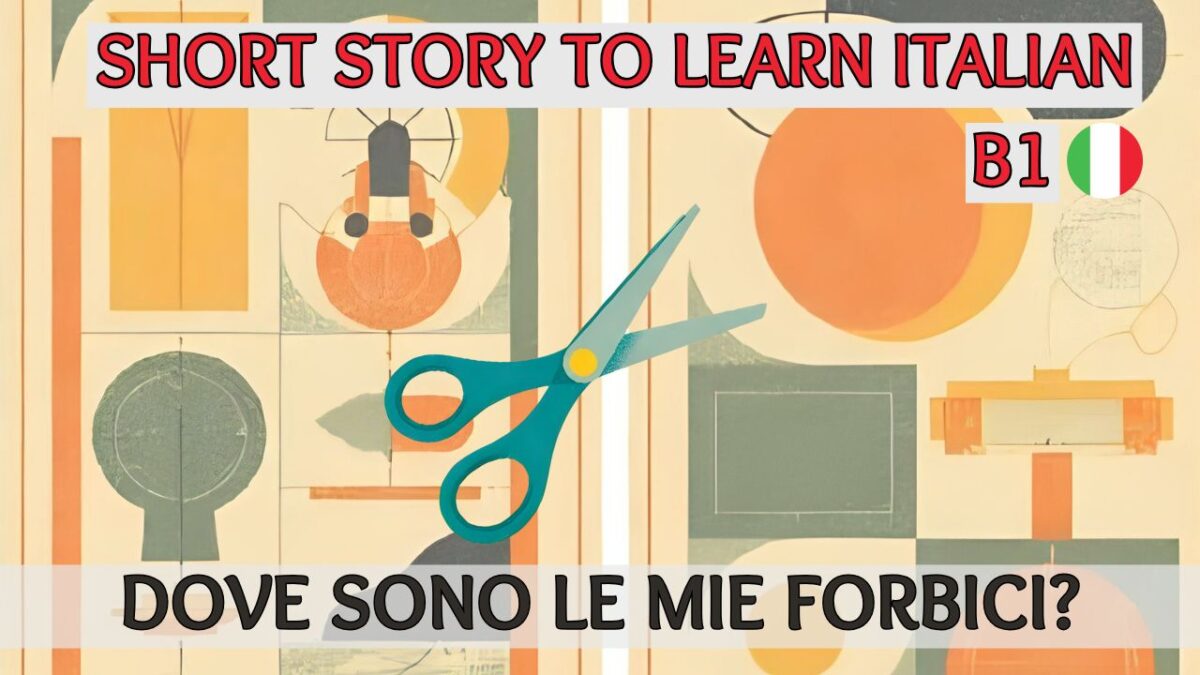
Racconto italiano: Dove sono le mie forbici? / B1

Italian Short Story: Where are my scissors? / B1


(English follows)

Ecco un nuovo racconto nel livello B1 per accogliere la stagione autunnale. Ti capita di smarrire degli oggetti? Eh, probabilmente ti sarà capitato almeno una volta! Non è divertente dover cercare nei posti piu sperduti soprattutto quando il tempo stringe. Credimi, ne so qualcosa! In fin dei conti non costa niente rimettere tutto al suo posto, per avere più ordine e meno caos, e senz’altro più pace e più tempo!

Questa storia è adatta al livello B1.

Il PDF include il testo italiano e la traduzione in inglese, e inoltre le domande e le risposte di comprensione e il vocabolario. Buona lettura!
———————————————

Il racconto di questa lezione ha 5 parti:

  1. Ascolta la storia senza il testo in italiano.
  2. Ascolta una seconda volta con il testo e ripeti.
  3. Studia il vocabolario della storia.
  4. Rispondi alle domande di comprensione.
  5. Ascolta e ripeti la storia con più velocità.

    Ascoltare la storia senza il testo è importante per imparare i suoni e parlare automaticamente.
https://youtu.be/twvk5ew3Bas

Metti un “mi piace” (un like) alla storia se vuoi altre storie come questa!

Ripeti questa lezione ogni giorno per una settimana.
La ripetizione è importante per parlare e pensare in italiano.


English version:

Here’s a new story in level B1 to welcome the fall season. Do you ever misplace things? Oh, it’s probably happened to you at least once! It’s no fun having to search in the most remote places, especially when time is short. Believe me, I know a thing or two about that! After all, it doesn’t cost anything to put everything back where it belongs, to have more order and less chaos, and certainly more peace and more time!

This story is suitable for level B1.

The PDF includes the Italian text and the English translation, as well as comprehension questions and answers and vocabulary. Enjoy!
———————————————

The short story in this lesson has 5 parts:

  1. Listen to the story without the text in Italian.
  2. Listen a second time with the text and repeat.
  3. Study the vocabulary in the story.
  4. Answer the comprehension questions.
  5. Listen and repeat the story at a faster pace.

Listening to the story without the text is important for learning sounds and speaking automatically.

Repeat this lesson every day for a week.
Repetition is important for speaking and thinking in Italian.

With constant repetition you don’t translate words and you don’t think about grammar.
If you repeat the same sentences out loud they become natural when you speak Italian.

Download the PDF of the story with the text and vocabulary

Like the story if you want more stories like this!

Download the PDF of the story with the text and vocabulary:

You cannot copy content of this page