google.com, pub-1205142185266664 , DIRECT, f08c47fec0942fa0

Racconto italiano: I due mondi – A2

Italian Short Story: The two worlds – A2


(English follows)

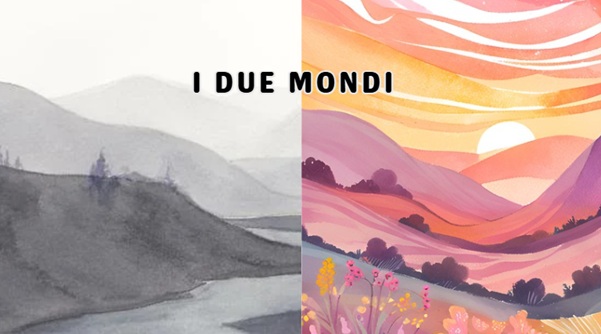
Una storia di due mondi diversi. Uno bianco e nero e uno colorato, dove la gente ha un diverso modo di vivere. Nel mondo bianco e nero le persone sono meno felici, ma il cambiamento è possibile? E, se sì, come?
Buona lettura!

Il racconto di questa lezione ha 5 parti:

  1. Ascolta la storia senza il testo in italiano.
  2. Ascolta una seconda volta con il testo e ripeti.
  3. Studia il vocabolario della storia.
  4. Rispondi alle domande di comprensione.
  5. Ascolta e ripeti la storia con più velocità.

    Ascoltare la storia senza il testo è importante per imparare i suoni e parlare automaticamente.

Metti un “mi piace” (un like) alla storia se vuoi altre storie come questa!

Ripeti questa lezione ogni giorno per una settimana.
La ripetizione è importante per parlare e pensare in italiano.

English version:

A story of two different worlds. One black and white and one colorful, where people have different ways of life. In the black and white world, people are less happy, but is change possible? And if so, will you come?
Buona lettura! (Happy reading!)

The short story in this lesson has 5 parts:

  1. Listen to the story without the text in Italian.
  2. Listen a second time with the text and repeat.
  3. Study the vocabulary in the story.
  4. Answer the comprehension questions.
  5. Listen and repeat the story at a faster pace.

Listening to the story without the text is important for learning sounds and speaking automatically.

Repeat this lesson every day for a week.
Repetition is important for speaking and thinking in Italian.

With constant repetition you don’t translate words and you don’t think about grammar.
If you repeat the same sentences out loud they become natural when you speak Italian.

Download the PDF of the story with the text and vocabulary

Like the story if you want more stories like this!

Download the PDF of the story with the text and vocabulary:

Racconto italiano: Chi dorme perde il treno – B1

Italian Short Story: Those who sleep lose the train – B1


(English follows)

Una storia moderna di un mondo in cui siamo sempre più connessi, ma allo stesso tempo disconnessi grazie alla tecnologia e in particolare ai nostri telefonini. Quante cose si perdono, persino il treno!
Fammi sapere nei commenti del video cosa ne pensi dei telefonini (chiamati anche cellulari).
Buona lettura!

Il racconto di questa lezione ha 5 parti:

  1. Ascolta la storia senza il testo in italiano.
  2. Ascolta una seconda volta con il testo e ripeti.
  3. Studia il vocabolario della storia.
  4. Rispondi alle domande di comprensione.
  5. Ascolta e ripeti la storia con più velocità.

    Ascoltare la storia senza il testo è importante per imparare i suoni e parlare automaticamente.

Metti un “mi piace” (un like) alla storia se vuoi altre storie come questa!

Ripeti questa lezione ogni giorno per una settimana.
La ripetizione è importante per parlare e pensare in italiano.


English version:

A modern story about a world in which we’re increasingly connected, yet simultaneously disconnected thanks to technology, especially our cell phones. How many things we lose, even the train!
Let me know in the comments of the video what you think about cell phones.
Buona lettura! (Happy reading!)

The short story in this lesson has 5 parts:

  1. Listen to the story without the text in Italian.
  2. Listen a second time with the text and repeat.
  3. Study the vocabulary in the story.
  4. Answer the comprehension questions.
  5. Listen and repeat the story at a faster pace.

Listening to the story without the text is important for learning sounds and speaking automatically.

Repeat this lesson every day for a week.
Repetition is important for speaking and thinking in Italian.

With constant repetition you don’t translate words and you don’t think about grammar.
If you repeat the same sentences out loud they become natural when you speak Italian.

Download the PDF of the story with the text and vocabulary

Like the story if you want more stories like this!

Download the PDF of the story with the text and vocabulary:

Racconto italiano: La favola dell’albero triste – B1

Italian Short Story: The tale of the sad tree – B1


(English follows)

La storia di un albero che non sa chi sia, che desidera un senso di appartenenza e vuole accontentare gli altri, come tanti di noi. Alla fine scopre il segreto per essere felice…
Buona lettura!

Il racconto di questa lezione ha 5 parti:

  1. Ascolta la storia senza il testo in italiano.
  2. Ascolta una seconda volta con il testo e ripeti.
  3. Studia il vocabolario della storia.
  4. Rispondi alle domande di comprensione.
  5. Ascolta e ripeti la storia con più velocità.

    Ascoltare la storia senza il testo è importante per imparare i suoni e parlare automaticamente.

https://youtu.be/H2h7useQZBA

Metti un “mi piace” (un like) alla storia se vuoi altre storie come questa!

Ripeti questa lezione ogni giorno per una settimana.
La ripetizione è importante per parlare e pensare in italiano.


English version:

The story of a tree who doesn’t know who he is, who longs for a sense of belonging and wants to please others, like so many of us. Eventually, he discovers the secret to happiness…
Buona lettura! (Happy reading!)

The short story in this lesson has 5 parts:

  1. Listen to the story without the text in Italian.
  2. Listen a second time with the text and repeat.
  3. Study the vocabulary in the story.
  4. Answer the comprehension questions.
  5. Listen and repeat the story at a faster pace.

Listening to the story without the text is important for learning sounds and speaking automatically.

Repeat this lesson every day for a week.
Repetition is important for speaking and thinking in Italian.

With constant repetition you don’t translate words and you don’t think about grammar.
If you repeat the same sentences out loud they become natural when you speak Italian.

Download the PDF of the story with the text and vocabulary

Like the story if you want more stories like this!

Download the PDF of the story with the text and vocabulary:

Racconto italiano: Una passeggiata in centro – A1/A2

Italian Short Story: A stroll in the centre – A1/A2


(English follows)

In questo questo breve racconto facciamo una bella passeggiata in una citta abbruzzese e ripassiamo anche gli avverbi di luogo. Buona lettura!

Il racconto di questa lezione ha 5 parti:

  1. Ascolta la storia senza il testo in italiano.
  2. Ascolta una seconda volta con il testo e ripeti.
  3. Studia il vocabolario della storia.
  4. Rispondi alle domande di comprensione.
  5. Ascolta e ripeti la storia con più velocità.

    Ascoltare la storia senza il testo è importante per imparare i suoni e parlare automaticamente.

Metti un “mi piace” (un like) alla storia se vuoi altre storie come questa!

Ripeti questa lezione ogni giorno per una settimana.
La ripetizione è importante per parlare e pensare in italiano.


English version:

In this short story, we take a pleasant stroll through a town in Abruzzo and also review adverbs of place. Buona lettura…Happy reading!

The short story in this lesson has 5 parts:

  1. Listen to the story without the text in Italian.
  2. Listen a second time with the text and repeat.
  3. Study the vocabulary in the story.
  4. Answer the comprehension questions.
  5. Listen and repeat the story at a faster pace.

Listening to the story without the text is important for learning sounds and speaking automatically.

Repeat this lesson every day for a week.
Repetition is important for speaking and thinking in Italian.

With constant repetition you don’t translate words and you don’t think about grammar.
If you repeat the same sentences out loud they become natural when you speak Italian.

Download the PDF of the story with the text and vocabulary

Like the story if you want more stories like this!

Download the PDF of the story with the text and vocabulary:

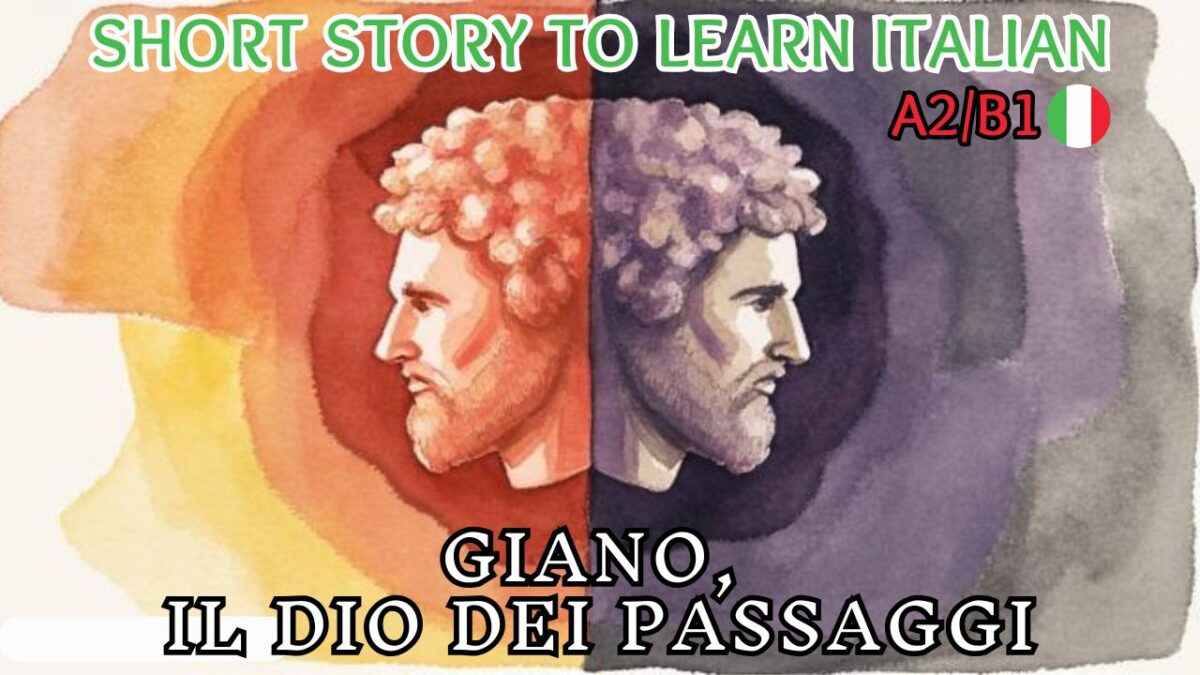
Racconto italiano: Giano, il dio dei passaggi A2/B1

Italian Short Story: Janus, the god of passages A2/B1


(English follows)

In questo mese di gennaio, il dio Giano è molto impegnato! Ma chi era Giano? Conosci l’origine del nome gennaio? Nel primo racconto di quest’anno scopriamo il significato antico del dio dei passaggi. Buona lettura e buon inizio del 2026!

Il racconto di questa lezione ha 5 parti:

  1. Ascolta la storia senza il testo in italiano.
  2. Ascolta una seconda volta con il testo e ripeti.
  3. Studia il vocabolario della storia.
  4. Rispondi alle domande di comprensione.
  5. Ascolta e ripeti la storia con più velocità.

    Ascoltare la storia senza il testo è importante per imparare i suoni e parlare automaticamente.

Metti un “mi piace” (un like) alla storia se vuoi altre storie come questa!

Ripeti questa lezione ogni giorno per una settimana.
La ripetizione è importante per parlare e pensare in italiano.


English version:

In this month of January, the god Janus is very busy! But who was Janus? Do you know the origin of the name January? In this year’s first story, we discover the ancient meaning of the god of passages. Happy reading and a happy start to 2026!

The short story in this lesson has 5 parts:

  1. Listen to the story without the text in Italian.
  2. Listen a second time with the text and repeat.
  3. Study the vocabulary in the story.
  4. Answer the comprehension questions.
  5. Listen and repeat the story at a faster pace.

Listening to the story without the text is important for learning sounds and speaking automatically.

Repeat this lesson every day for a week.
Repetition is important for speaking and thinking in Italian.

With constant repetition you don’t translate words and you don’t think about grammar.
If you repeat the same sentences out loud they become natural when you speak Italian.

Download the PDF of the story with the text and vocabulary

Like the story if you want more stories like this!

Download the PDF of the story with the text and vocabulary:

Racconto italiano: Il pupazzo di neve A1/A2

Italian Short Story: The Snowman A1/A2


(English follows)

La prima spolverata di neve portata dal freddo artico è arrivata sull’Italia e ha scatenato l’entusiasmo nelle località sciistiche in montagna. In alcune zone montane o di alta quota le nevicate sono spesso abbondanti. Infatti sono da record le bufere di neve a  Capracotta nel Molise, poco lontano dalla mia città. Sarà un inverno perfetto per sciare e fare pupazzi di neve!

Ho scritto questo simpatico racconto parlando proprio della neve. E’ adatto a tutti anche se scritto nel A1/A2. Buona lettura!

Il racconto di questa lezione ha 5 parti:

  1. Ascolta la storia senza il testo in italiano.
  2. Ascolta una seconda volta con il testo e ripeti.
  3. Studia il vocabolario della storia.
  4. Rispondi alle domande di comprensione.
  5. Ascolta e ripeti la storia con più velocità.

    Ascoltare la storia senza il testo è importante per imparare i suoni e parlare automaticamente.

Metti un “mi piace” (un like) alla storia se vuoi altre storie come questa!

Ripeti questa lezione ogni giorno per una settimana.
La ripetizione è importante per parlare e pensare in italiano.


English version:

The first dusting of snow brought by the Arctic cold has arrived in Italy and sparked excitement in mountain ski resorts. In some mountainous or high-altitude areas, snowfall is often heavy. In fact, record-breaking blizzards have hit Capracotta in Molise, not far from my hometown. It’s going to be a perfect winter for skiing and making snowmen!

I wrote this delightful story specifically about snow. It’s suitable for everyone, even though it’s written in A1/A2. Happy reading!
———————————————

The short story in this lesson has 5 parts:

  1. Listen to the story without the text in Italian.
  2. Listen a second time with the text and repeat.
  3. Study the vocabulary in the story.
  4. Answer the comprehension questions.
  5. Listen and repeat the story at a faster pace.

Listening to the story without the text is important for learning sounds and speaking automatically.

Repeat this lesson every day for a week.
Repetition is important for speaking and thinking in Italian.

With constant repetition you don’t translate words and you don’t think about grammar.
If you repeat the same sentences out loud they become natural when you speak Italian.

Download the PDF of the story with the text and vocabulary

Like the story if you want more stories like this!

Download the PDF of the story with the text and vocabulary:

Racconto italiano: Un paesino disabitato / A2-B1

Italian Short Story: An uninhabited village A2-B1


(English follows)

Il mese di novembre mi ispira a scrivere storie tenebrose, come questa che parla di un paesino italiano dove non abita anima viva. Ci andresti a fare un giro?

E’ anche il ventesimo racconto, un bel traguardo!

Questo racconto è adatto al livello A2/B1, ma anche ai livelli più alti.

Il PDF include il testo italiano e la traduzione in inglese, e inoltre le domande e le risposte di comprensione e il vocabolario. Buona lettura!
———————————————

Il racconto di questa lezione ha 5 parti:

  1. Ascolta la storia senza il testo in italiano.
  2. Ascolta una seconda volta con il testo e ripeti.
  3. Studia il vocabolario della storia.
  4. Rispondi alle domande di comprensione.
  5. Ascolta e ripeti la storia con più velocità.

    Ascoltare la storia senza il testo è importante per imparare i suoni e parlare automaticamente.

Metti un “mi piace” (un like) alla storia se vuoi altre storie come questa!

Ripeti questa lezione ogni giorno per una settimana.
La ripetizione è importante per parlare e pensare in italiano.


English version:

The month of November inspires me to write dark stories, like this one about a small Italian village where not a soul lives. Would you like to go for a tour?

It’s also my twentieth story, a great achievement!

This story is suitable for levels A2/B1, but also for higher levels.

The PDF includes the Italian text and the English translation, as well as comprehension questions and answers and vocabulary. Happy reading!
———————————————

The short story in this lesson has 5 parts:

  1. Listen to the story without the text in Italian.
  2. Listen a second time with the text and repeat.
  3. Study the vocabulary in the story.
  4. Answer the comprehension questions.
  5. Listen and repeat the story at a faster pace.

Listening to the story without the text is important for learning sounds and speaking automatically.

Repeat this lesson every day for a week.
Repetition is important for speaking and thinking in Italian.

With constant repetition you don’t translate words and you don’t think about grammar.
If you repeat the same sentences out loud they become natural when you speak Italian.

Download the PDF of the story with the text and vocabulary

Like the story if you want more stories like this!

Download the PDF of the story with the text and vocabulary:

You cannot copy content of this page