google.com, pub-1205142185266664 , DIRECT, f08c47fec0942fa0

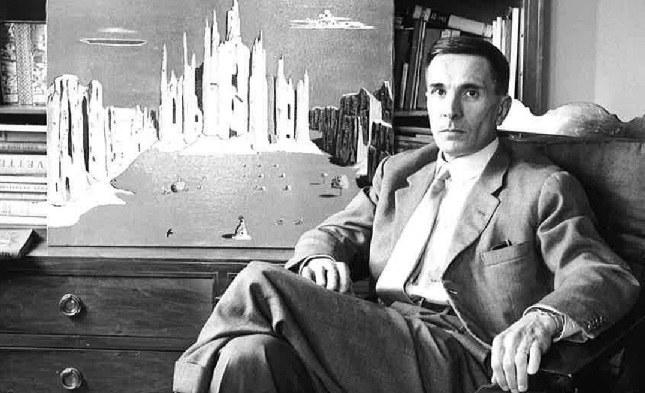
Dino Buzzati, il pittore scrittore italiano del XX secolo

Dino Buzzati, the Italian painter and writer of the 20th century

(English follows)

Gruppo di lettura:

Iscriviti qui

Ascolta l’articolo:

Il fatto è questo: io mi trovo vittima di un crudele equivoco. Sono un pittore il quale, per hobby, durante un periodo purtroppo alquanto prolungato, ha fatto anche lo scrittore e il giornalista. Ma dipingere e scrivere per me sono in fondo la stessa cosa. Che dipinga o che scriva, io perseguo il medesimo scopo, che è quello di raccontare delle storie. – Dino Buzzati

Dino Buzzati è una figura fondamentale per comprendere la letteratura italiana del Novecento, grazie alla sua capacità di raccontare l’inesorabile passaggio del tempo e le inquietudini dell’animo umano.

E’ stato uno degli scrittori e giornalisti italiani più importanti del XX secolo. Noto per la sua capacità di mescolare realtà e fantasia creando atmosfere surreali e inquietanti. Nato nel 1906 a Belluno e scomparso nel 1972, Buzzati si laureò in lettere e filosofia all’Università di Milano e, contemporaneamente, intraprese la carriera giornalistica come redattore del Corriere della Sera, ruolo che influenzò profondamente la sua scrittura, conferendogli uno sguardo attento e critico sulla realtà. 

Buzzati ha lasciato un segno profondo nella letteratura italiana grazie alle sue opere che spaziano dal romanzo al racconto breve, spesso attraversate da temi come l’assurdo e l’inquietudine esistenziale. La sua scrittura si distingue per uno stile elegante, capace di coinvolgere il lettore in storie che riflettono le paure e le speranze dell’uomo moderno. 

La sua opera più celebre è il romanzo “Il deserto dei Tartari” (1940), un racconto simbolico che esplora i temi dell’attesa, dell’angoscia esistenziale e del senso di vuoto attraverso la storia di un giovane ufficiale che trascorre anni in una fortezza sperando di affrontare un nemico invisibile. Questo libro rappresenta una riflessione sulla condizione umana e sul desiderio di dare un senso a un mondo spesso privo di logica. Altre opere fondamentali includono la raccolta di racconti “Le mille e una notte” (1956), che combina il fantastico con la vita quotidiana, e “La boutique del mistero” (1968), è una raccolta di trentuno racconti che evidenzia la sua propensione per il surrealismo e il mistero. Buzzati si distingue anche per il suo stile inconfondibile di atmosfere cupe e simbolismi che attraversano tutta la sua produzione. La sua scrittura è spesso intrisa di un senso di solitudine e di una visione pessimistica, ma al contempo profondamente umana.

“Il tempo correva, il suo battito silenzioso scandisce sempre più precipitoso la vita, non ci si può fermare neanche un attimo, neppure per un’occhiata indietro.” – Il deserto dei Tartari

Buzzati comunque si considerava soprattutto un pittore e ha sperimentato anche con la scrittura in formato romanzo grafico per esprimere le sue tematiche. L’opera sperimentale “Poema a fumetti” è un romanzo grafico edito nel 1969 e considerato uno dei primi graphic novel mai pubblicati. Le sue opere visive si caratterizzano per uno stile spesso minimalista, che si integra perfettamente con la sua scrittura, creando un ponte tra il mondo narrativo e quello visivo. Questo approccio permette al lettore di immergersi in ambientazioni oniriche e di cogliere sfumature emotive più profonde, rendendo il romanzo grafico di Buzzati un esempio unico di contaminazione tra due forme di espressione artistica.

Alberico Sala, critico letterario, nel Corriere d’Informazione del 26-27 novembre 1969: “Per la prima volta un grosso scrittore ha scelto per esprimersi il fumetto, riscattandone le qualità, forzandone le possibilità espressive, impegnando e compromettendo alcuni dei miti e dei temi più vivaci della vita moderna, quello della solitudine delle grandi città, dell’incombenza del mistero, dell’ossessione erotica, con gli strumenti inconfondibili e personalissimi del suo lavoro.”

La sua capacità di fondere il fantastico con la realtà quotidiana ha influenzato generazioni di scrittori italiani e internazionali, rendendolo una figura chiave nella letteratura moderna. Dino Buzzati rimane un autore di spessore, capace di esplorare le paure e le speranze dell’animo umano, lasciando un’eredità letteraria di grande valore.

Ogni vero dolore viene scritto su lastre di una sostanza misteriosa , al paragone della quale il granito è burro. E non basta un’eternità per cancellarlo. – La boutique del mistero

Romanzi

  • Bàrnabo delle montagne, Milano-Roma, Treves-Treccani-Tumminelli, 1933 (poi Milano, Garzanti, 1949; Milano, Mondadori, 1979).
  • Il segreto del Bosco Vecchio, Milano-Roma, Treves-Treccani-Tumminelli, 1935 (poi Milano, Garzanti, 1957; Milano, Mondadori, 1979).
  • Il deserto dei Tartari, Milano, Rizzoli, 1940 (poi Milano, Mondadori, 1945).
  • La famosa invasione degli orsi in Sicilia, Milano, Rizzoli, 1945 (poi Milano, Martello, 1958; Milano, Mondadori, 1977).
  • Il grande ritratto, Milano, Mondadori, 1960.
  • Un amore, Milano, Mondadori, 1963.

Racconti e novelle

  • I sette messaggeri, Milano, Mondadori, 1942.
  • Paura alla Scala, Milano, Mondadori, 1949.
  • In quel preciso momento, Vicenza, Neri Pozza, 1950; 2ª ed. accresciuta 1955; 3ª ed. Milano, Mondadori, 1963.
  • Il crollo della Baliverna, Milano, Mondadori, 1954. Premio Napoli.
  • Esperimento di magia. 18 racconti, Padova, Rebellato, 1958.
  • Sessanta racconti, Milano, Mondadori, 1958. premio Strega.
  • Egregio signore, Siamo spiacenti di…, con illustrazioni di Siné, Milano, Elmo, 1960; poi col titolo Siamo spiacenti di, Introduzione di Domenico Porzio, Milano, Mondadori, 1975.
  • Il colombre e altri cinquanta racconti, Milano, Mondadori, 1966.
  • La boutique del mistero, Milano, Mondadori, 1968.
  • Le notti difficili, Milano, Mondadori, 1971.
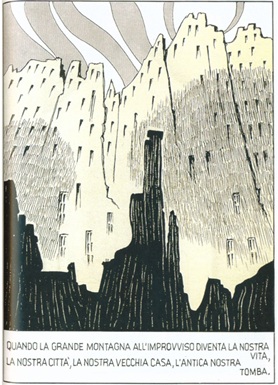
“Poema a fumetti” (1969)

Gruppo di lettura:

Iscriviti qui


English version:

The fact is this: I find myself the victim of a cruel misunderstanding. I am a painter who, as a hobby, for an unfortunately rather prolonged period, was also a writer and journalist. But for me, painting and writing are ultimately the same thing. Whether I paint or write, I pursue the same goal, which is to tell stories. – Dino Buzzati

Dino Buzzati is a key figure in understanding 20th-century Italian literature, thanks to his ability to narrate the inexorable passage of time and the anxieties of the human soul.
He was one of the most important Italian writers and journalists of the 20th century. Known for his ability to blend reality and fantasy, creating surreal and unsettling atmospheres. Born in 1906 in Belluno and died in 1972, Buzzati graduated in literature and philosophy from the University of Milan and, at the same time, embarked on a journalistic career as editor of the Corriere della Sera, a role that profoundly influenced his writing, giving him an observant and critical perspective on reality.

Buzzati left a profound mark on Italian literature with his works, ranging from novels to short stories, often permeated by themes such as the absurd and existential anxiety. His writing is distinguished by an elegant style, capable of engaging the reader in stories that reflect the fears and hopes of modern man.

His most famous work is the novel “Il deserto dei Tartari” (1940), a symbolic tale that explores themes of waiting, existential anguish, and a sense of emptiness through the story of a young officer who spends years in a fortress hoping to confront an invisible enemy. This book represents a reflection on the human condition and the desire to make sense of an often illogical world. Other seminal works incluse the short story collection “Le mille e una notte” (1956), which combines fantasy with everyday life, and “La boutique del mistero”(1968), is a collection of thirty-one stories that highlights his propensity for surrealism and mystery. Buzzati also stands out for his unmistakable style of dark atmospheres and symbolism that runs throughout his work. His writing is often imbued with a sense of solitude and a pessimistic vision, yet profoundly human.

Time was running, its silent beat marking life’s ever-increasing pace. One couldn’t stop for even a moment, not even for a glance back. – Il deserto dei Tartari

Buzzati, however, considered himself primarily a painter and also experimented with writing in the graphic novel format to express his themes. The experimental work “Poema a fumetti” is a graphic novel published in 1969 and considered one of the first graphic novels ever published. His visual works are characterized by an often minimalist style, which integrates perfectly with his writing, creating a bridge between the narrative and the visual world. This approach allows the reader to immerse themselves in dreamlike settings and grasp deeper emotional nuances, making Buzzati’s graphic novel a unique example of the fusion of two forms of artistic expression.

Alberico Sala, literary critic, in the Corriere d’Informazione of November 26-27, 1969: “For the first time, a great writer has chosen comics as his medium of expression, redeeming its qualities, pushing its expressive possibilities, engaging and compromising some of the most vibrant myths and themes of modern life—the solitude of big cities, the looming mystery, erotic obsession—with the unmistakable and highly personal tools of his work.”

His ability to blend the fantastic with everyday reality has influenced generations of Italian and international writers, making him a key figure in modern literature. Dino Buzzati remains a profound author, capable of exploring the fears and hopes of the human soul, leaving behind a literary legacy of inestimable value.

All true pain is written on slabs of a mysterious substance, compared to which granite is butter. And an eternity is not enough to erase it. – La boutique del mistero


Novels

  • Bàrnabo delle montagne, Milano-Roma, Treves-Treccani-Tumminelli, 1933 (poi Milano, Garzanti, 1949; Milano, Mondadori, 1979).
  • Il segreto del Bosco Vecchio, Milano-Roma, Treves-Treccani-Tumminelli, 1935 (poi Milano, Garzanti, 1957; Milano, Mondadori, 1979).
  • Il deserto dei Tartari, Milano, Rizzoli, 1940 (poi Milano, Mondadori, 1945).
  • La famosa invasione degli orsi in Sicilia, Milano, Rizzoli, 1945 (poi Milano, Martello, 1958; Milano, Mondadori, 1977).
  • Il grande ritratto, Milano, Mondadori, 1960.
  • Un amore, Milano, Mondadori, 1963.

Stories and novellas

  • I sette messaggeri, Milano, Mondadori, 1942.
  • Paura alla Scala, Milano, Mondadori, 1949.
  • In quel preciso momento, Vicenza, Neri Pozza, 1950; 2ª ed. accresciuta 1955; 3ª ed. Milano, Mondadori, 1963.
  • Il crollo della Baliverna, Milano, Mondadori, 1954. Premio Napoli.
  • Esperimento di magia. 18 racconti, Padova, Rebellato, 1958.
  • Sessanta racconti, Milano, Mondadori, 1958. premio Strega.
  • Egregio signore, Siamo spiacenti di…, con illustrazioni di Siné, Milano, Elmo, 1960; poi col titolo Siamo spiacenti di, Introduzione di Domenico Porzio, Milano, Mondadori, 1975.
  • Il colombre e altri cinquanta racconti, Milano, Mondadori, 1966.
  • La boutique del mistero, Milano, Mondadori, 1968.
  • Le notti difficili, Milano, Mondadori, 1971.

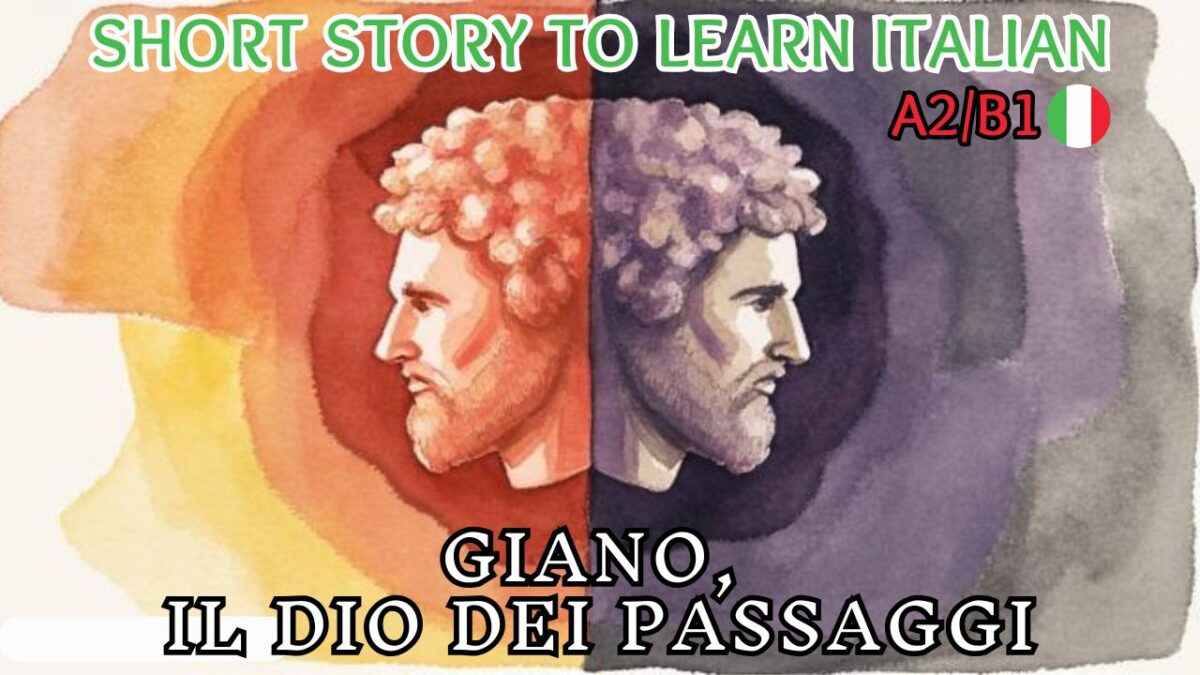
Racconto italiano: Giano, il dio dei passaggi A2/B1
Italian Short Story: Janus, the god of passages A2/B1


(English follows)

In questo mese di gennaio, il dio Giano è molto impegnato! Ma chi era Giano? Conosci l’origine del nome gennaio? Nel primo racconto di quest’anno scopriamo il significato antico del dio dei passaggi. Buona lettura e buon inizio del 2026!

Il racconto di questa lezione ha 5 parti:

  1. Ascolta la storia senza il testo in italiano.
  2. Ascolta una seconda volta con il testo e ripeti.
  3. Studia il vocabolario della storia.
  4. Rispondi alle domande di comprensione.
  5. Ascolta e ripeti la storia con più velocità.

    Ascoltare la storia senza il testo è importante per imparare i suoni e parlare automaticamente.

Metti un “mi piace” (un like) alla storia se vuoi altre storie come questa!

Ripeti questa lezione ogni giorno per una settimana.
La ripetizione è importante per parlare e pensare in italiano.


English version:

In this month of January, the god Janus is very busy! But who was Janus? Do you know the origin of the name January? In this year’s first story, we discover the ancient meaning of the god of passages. Happy reading and a happy start to 2026!

The short story in this lesson has 5 parts:

  1. Listen to the story without the text in Italian.
  2. Listen a second time with the text and repeat.
  3. Study the vocabulary in the story.
  4. Answer the comprehension questions.
  5. Listen and repeat the story at a faster pace.

Listening to the story without the text is important for learning sounds and speaking automatically.

Repeat this lesson every day for a week.
Repetition is important for speaking and thinking in Italian.

With constant repetition you don’t translate words and you don’t think about grammar.
If you repeat the same sentences out loud they become natural when you speak Italian.

Download the PDF of the story with the text and vocabulary

Like the story if you want more stories like this!

Download the PDF of the story with the text and vocabulary:

Racconto italiano: Il pupazzo di neve A1/A2

Italian Short Story: The Snowman A1/A2


(English follows)

La prima spolverata di neve portata dal freddo artico è arrivata sull’Italia e ha scatenato l’entusiasmo nelle località sciistiche in montagna. In alcune zone montane o di alta quota le nevicate sono spesso abbondanti. Infatti sono da record le bufere di neve a  Capracotta nel Molise, poco lontano dalla mia città. Sarà un inverno perfetto per sciare e fare pupazzi di neve!

Ho scritto questo simpatico racconto parlando proprio della neve. E’ adatto a tutti anche se scritto nel A1/A2. Buona lettura!

Il racconto di questa lezione ha 5 parti:

  1. Ascolta la storia senza il testo in italiano.
  2. Ascolta una seconda volta con il testo e ripeti.
  3. Studia il vocabolario della storia.
  4. Rispondi alle domande di comprensione.
  5. Ascolta e ripeti la storia con più velocità.

    Ascoltare la storia senza il testo è importante per imparare i suoni e parlare automaticamente.

Metti un “mi piace” (un like) alla storia se vuoi altre storie come questa!

Ripeti questa lezione ogni giorno per una settimana.
La ripetizione è importante per parlare e pensare in italiano.


English version:

The first dusting of snow brought by the Arctic cold has arrived in Italy and sparked excitement in mountain ski resorts. In some mountainous or high-altitude areas, snowfall is often heavy. In fact, record-breaking blizzards have hit Capracotta in Molise, not far from my hometown. It’s going to be a perfect winter for skiing and making snowmen!

I wrote this delightful story specifically about snow. It’s suitable for everyone, even though it’s written in A1/A2. Happy reading!
———————————————

The short story in this lesson has 5 parts:

  1. Listen to the story without the text in Italian.
  2. Listen a second time with the text and repeat.
  3. Study the vocabulary in the story.
  4. Answer the comprehension questions.
  5. Listen and repeat the story at a faster pace.

Listening to the story without the text is important for learning sounds and speaking automatically.

Repeat this lesson every day for a week.
Repetition is important for speaking and thinking in Italian.

With constant repetition you don’t translate words and you don’t think about grammar.
If you repeat the same sentences out loud they become natural when you speak Italian.

Download the PDF of the story with the text and vocabulary

Like the story if you want more stories like this!

Download the PDF of the story with the text and vocabulary:

Racconto italiano: Un paesino disabitato / A2-B1

Italian Short Story: An uninhabited village A2-B1


(English follows)

Il mese di novembre mi ispira a scrivere storie tenebrose, come questa che parla di un paesino italiano dove non abita anima viva. Ci andresti a fare un giro?

E’ anche il ventesimo racconto, un bel traguardo!

Questo racconto è adatto al livello A2/B1, ma anche ai livelli più alti.

Il PDF include il testo italiano e la traduzione in inglese, e inoltre le domande e le risposte di comprensione e il vocabolario. Buona lettura!
———————————————

Il racconto di questa lezione ha 5 parti:

  1. Ascolta la storia senza il testo in italiano.
  2. Ascolta una seconda volta con il testo e ripeti.
  3. Studia il vocabolario della storia.
  4. Rispondi alle domande di comprensione.
  5. Ascolta e ripeti la storia con più velocità.

    Ascoltare la storia senza il testo è importante per imparare i suoni e parlare automaticamente.

Metti un “mi piace” (un like) alla storia se vuoi altre storie come questa!

Ripeti questa lezione ogni giorno per una settimana.
La ripetizione è importante per parlare e pensare in italiano.


English version:

The month of November inspires me to write dark stories, like this one about a small Italian village where not a soul lives. Would you like to go for a tour?

It’s also my twentieth story, a great achievement!

This story is suitable for levels A2/B1, but also for higher levels.

The PDF includes the Italian text and the English translation, as well as comprehension questions and answers and vocabulary. Happy reading!
———————————————

The short story in this lesson has 5 parts:

  1. Listen to the story without the text in Italian.
  2. Listen a second time with the text and repeat.
  3. Study the vocabulary in the story.
  4. Answer the comprehension questions.
  5. Listen and repeat the story at a faster pace.

Listening to the story without the text is important for learning sounds and speaking automatically.

Repeat this lesson every day for a week.
Repetition is important for speaking and thinking in Italian.

With constant repetition you don’t translate words and you don’t think about grammar.
If you repeat the same sentences out loud they become natural when you speak Italian.

Download the PDF of the story with the text and vocabulary

Like the story if you want more stories like this!

Download the PDF of the story with the text and vocabulary:

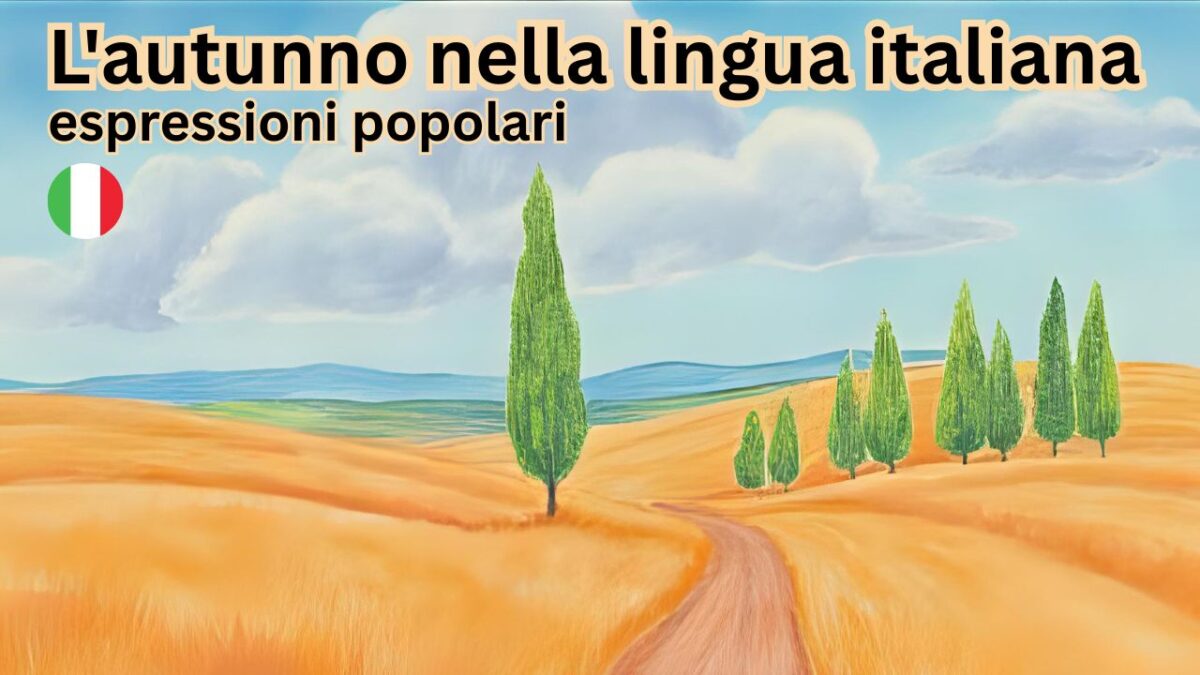
L’autunno nella lingua italiana: espressioni popolari
Autumn in the Italian Language: Popular Expressions


(English follows)

Questa settimana scopriami le origini e i significati di alcune espressioni popolari della lingua italiana. I protagonists sono due frutti autunnali. Indovina quali! Hai mai sentito usare questi  quatro modi di dire? Spero che nessuno ti abbia chiamato testa di zucca!

Buona lettura 🎃

Questa storia è adatta al livello B1 in su.

Il PDF include il testo italiano e la traduzione in inglese.

Buona lettura!
———————————————

https://youtu.be/2-DHpxTNyqY

Metti un “mi piace” (un like) alla storia se vuoi altre storie come questa!

Ripeti questa lezione ogni giorno per una settimana. La ripetizione è importante per parlare e pensare in italiano.


English version:

This week we’re discovering  the origins and meanings of some popular Italian expressions. The protagonists are two autumn fruits. Guess which ones! Have you ever heard these four expressions? I hope no one called you “testa di zucca”! 

Happy reading 🎃

This story is suitable for level B1 and above.

The PDF includes the Italian text and the English translation.
———————————————

Repeat this lesson every day for a week.
Repetition is important for speaking and thinking in Italian.

Like the story if you want more stories like this!

Download the PDF of the story with the text in Italian and English:

Racconto italiano: Un sabato indaffarato / A2

Italian Short Story: A busy Saturday / A2


(English follows)

L’inizio di una nuova stagione porta un nuovo racconto. Questa semplice storia è adatta al livello A2, ma anche ai livelli più alti. In Italia ci sono molte fiere autunnali  in questo periodo dove poter assaggiare tante specialità gastronomiche. La gente è molto indaffarata! Buona lettura.

Questa storia è adatta al livello A2.

Il PDF include il testo italiano e la traduzione in inglese, e inoltre le domande e le risposte di comprensione e il vocabolario. Buona lettura!
———————————————

Il racconto di questa lezione ha 5 parti:

  1. Ascolta la storia senza il testo in italiano.
  2. Ascolta una seconda volta con il testo e ripeti.
  3. Studia il vocabolario della storia.
  4. Rispondi alle domande di comprensione.
  5. Ascolta e ripeti la storia con più velocità.

    Ascoltare la storia senza il testo è importante per imparare i suoni e parlare automaticamente.
https://youtu.be/9wAG_nHYMAI

Metti un “mi piace” (un like) alla storia se vuoi altre storie come questa!

Ripeti questa lezione ogni giorno per una settimana.
La ripetizione è importante per parlare e pensare in italiano.


English version:

The start of a new season brings a new story. This simple story is suitable for A2 level students, but also for higher levels. In Italy, there are many autumn fairs during this time of year where you can sample many gastronomic specialties. People are very busy! Enjoy the story.

This story is suitable for level A2.

The PDF includes the Italian text and the English translation, as well as comprehension questions and answers and vocabulary. Enjoy!
———————————————

The short story in this lesson has 5 parts:

  1. Listen to the story without the text in Italian.
  2. Listen a second time with the text and repeat.
  3. Study the vocabulary in the story.
  4. Answer the comprehension questions.
  5. Listen and repeat the story at a faster pace.

Listening to the story without the text is important for learning sounds and speaking automatically.

Repeat this lesson every day for a week.
Repetition is important for speaking and thinking in Italian.

With constant repetition you don’t translate words and you don’t think about grammar.
If you repeat the same sentences out loud they become natural when you speak Italian.

Download the PDF of the story with the text and vocabulary

Like the story if you want more stories like this!

Download the PDF of the story with the text and vocabulary:

Racconto italiano: Dove sono le mie forbici? / B1
Italian Short Story: Where are my scissors? / B1


(English follows)

Ecco un nuovo racconto nel livello B1 per accogliere la stagione autunnale. Ti capita di smarrire degli oggetti? Eh, probabilmente ti sarà capitato almeno una volta! Non è divertente dover cercare nei posti piu sperduti soprattutto quando il tempo stringe. Credimi, ne so qualcosa! In fin dei conti non costa niente rimettere tutto al suo posto, per avere più ordine e meno caos, e senz’altro più pace e più tempo!

Questa storia è adatta al livello B1.

Il PDF include il testo italiano e la traduzione in inglese, e inoltre le domande e le risposte di comprensione e il vocabolario. Buona lettura!
———————————————

Il racconto di questa lezione ha 5 parti:

  1. Ascolta la storia senza il testo in italiano.
  2. Ascolta una seconda volta con il testo e ripeti.
  3. Studia il vocabolario della storia.
  4. Rispondi alle domande di comprensione.
  5. Ascolta e ripeti la storia con più velocità.

    Ascoltare la storia senza il testo è importante per imparare i suoni e parlare automaticamente.
https://youtu.be/twvk5ew3Bas

Metti un “mi piace” (un like) alla storia se vuoi altre storie come questa!

Ripeti questa lezione ogni giorno per una settimana.
La ripetizione è importante per parlare e pensare in italiano.


English version:

Here’s a new story in level B1 to welcome the fall season. Do you ever misplace things? Oh, it’s probably happened to you at least once! It’s no fun having to search in the most remote places, especially when time is short. Believe me, I know a thing or two about that! After all, it doesn’t cost anything to put everything back where it belongs, to have more order and less chaos, and certainly more peace and more time!

This story is suitable for level B1.

The PDF includes the Italian text and the English translation, as well as comprehension questions and answers and vocabulary. Enjoy!
———————————————

The short story in this lesson has 5 parts:

  1. Listen to the story without the text in Italian.
  2. Listen a second time with the text and repeat.
  3. Study the vocabulary in the story.
  4. Answer the comprehension questions.
  5. Listen and repeat the story at a faster pace.

Listening to the story without the text is important for learning sounds and speaking automatically.

Repeat this lesson every day for a week.
Repetition is important for speaking and thinking in Italian.

With constant repetition you don’t translate words and you don’t think about grammar.
If you repeat the same sentences out loud they become natural when you speak Italian.

Download the PDF of the story with the text and vocabulary

Like the story if you want more stories like this!

Download the PDF of the story with the text and vocabulary:

You cannot copy content of this page