google.com, pub-1205142185266664 , DIRECT, f08c47fec0942fa0

Racconto italiano: Gli spaghetti al pomodoro/A2

Italian Short Story: Gli spaghetti al pomodoro /A2


(English follows)

Ho dedicato il racconto di questa settimana agli spaghetti al pomodoro, uno dei miei piatti preferiti. Li mangerei ogni giorno, se potessi! Fino al novecento solo in Sicilia e Campania si mangiavano gli spaghetti, anche chiamati maccheroni. Si mangiavano in bianco fino al settecento prima dell’arrivo del pomodoro in Italia. Sai che ll fascismo favoriva il riso invece degli spaghetti? Sono felice di poter mangiare liberamente gli spaghetti conditi con un buon sugo al pomodoro  fatto con aglio, olio e basilico! Buona lettura! 

Questa storia è adatta al livello A2.

Il PDF include il testo italiano e la traduzione in inglese, e inoltre le domande e le risposte di comprensione e il vocabolario. Buona lettura!
———————————————

Il racconto di questa lezione ha 5 parti:

  1. Ascolta la storia senza il testo in italiano.
  2. Ascolta una seconda volta con il testo e ripeti.
  3. Studia il vocabolario della storia.
  4. Rispondi alle domande di comprensione.
  5. Ascolta e ripeti la storia con più velocità.

    Ascoltare la storia senza il testo è importante per imparare i suoni e parlare automaticamente.

Metti un “mi piace” (un like) alla storia se vuoi altre storie come questa!

Ripeti questa lezione ogni giorno per una settimana.
La ripetizione è importante per parlare e pensare in italiano.

English version:

This week’s story is about spaghetti with tomato sauce, one of my favorite dishes. I’d eat them every day if I could! Until the 20th century, spaghetti, also called maccheroni (macaroni), were eaten only in Sicily and Campania. They were eaten plain until the 18th century, before tomatoes arrived in Italy. Did you know that Fascism favored rice over spaghetti? I’m happy to be able to freely enjoy spaghetti with a delicious sauce made with garlic, oil, and basil!

This story is suitable for level A2.

The PDF includes the Italian text and the English translation, as well as comprehension questions and answers and vocabulary. Enjoy!
———————————————

The short story in this lesson has 5 parts:

  1. Listen to the story without the text in Italian.
  2. Listen a second time with the text and repeat.
  3. Study the vocabulary in the story.
  4. Answer the comprehension questions.
  5. Listen and repeat the story at a faster pace.

Listening to the story without the text is important for learning sounds and speaking automatically.

Repeat this lesson every day for a week.
Repetition is important for speaking and thinking in Italian.

With constant repetition you don’t translate words and you don’t think about grammar.
If you repeat the same sentences out loud they become natural when you speak Italian.

Download the PDF of the story with the text and vocabulary

Like the story if you want more stories like this!

Download the PDF of the story with the text and vocabulary:

Racconto italiano: Una vacanza al mare/B1

Italian Short Story: A seaside holiday /B1


(English follows)

È tempo di profumo di mare come canta Little Tony nella canzone omonina. Il mare mi ispira e mi rigenera. Spero di viverci vicino un giorno!
Peccato che tanti villeggiatori non lo rispettino e questo mi fa venire trisetezza e rabbia. Cerco sempre di divulgare l’amore e il rispetto per il nostro grande amico blu. Come avrai intuito, la storia di questo settimana è dedicata al mare.
Aiutami a divulgare il rispetto per il mare e l’amore per l’italiano. Condividila con famiglia, amici e conoscenti. Buona lettura! 

Questa storia è adatta al livello B1.

Il PDF include il testo italiano e la traduzione in inglese, e inoltre le domande e le risposte di comprensione e il vocabolario. Buona lettura!
———————————————

Il racconto di questa lezione ha 5 parti:

  1. Ascolta la storia senza il testo in italiano.
  2. Ascolta una seconda volta con il testo e ripeti.
  3. Studia il vocabolario della storia.
  4. Rispondi alle domande di comprensione.
  5. Ascolta e ripeti la storia con più velocità.

    Ascoltare la storia senza il testo è importante per imparare i suoni e parlare automaticamente.

Metti un “mi piace” (un like) alla storia se vuoi altre storie come questa!

Ripeti questa lezione ogni giorno per una settimana.
La ripetizione è importante per parlare e pensare in italiano.


English version:

It’s time for the scent of the sea, as Little Tony sings in the song of the same name. The sea inspires and regenerates me. I hope to live near it one day!
It’s a shame so many vacationers don’t respect it, and this makes me sad and angry. I always try to spread love and respect for our big blue friend.
As you may have guessed, this week’s story is dedicated to the sea.
Help me spread respect for the sea and love for the Italian language. Share this story with family, friends, and acquaintances. Happy reading!

This story is suitable for level B1.

The PDF includes the Italian text and the English translation, as well as comprehension questions and answers and vocabulary. Enjoy!
———————————————

The short story in this lesson has 5 parts:

  1. Listen to the story without the text in Italian.
  2. Listen a second time with the text and repeat.
  3. Study the vocabulary in the story.
  4. Answer the comprehension questions.
  5. Listen and repeat the story at a faster pace.

Listening to the story without the text is important for learning sounds and speaking automatically.

Repeat this lesson every day for a week.
Repetition is important for speaking and thinking in Italian.

With constant repetition you don’t translate words and you don’t think about grammar.
If you repeat the same sentences out loud they become natural when you speak Italian.

Download the PDF of the story with the text and vocabulary

Like the story if you want more stories like this!

Download the PDF of the story with the text and vocabulary:

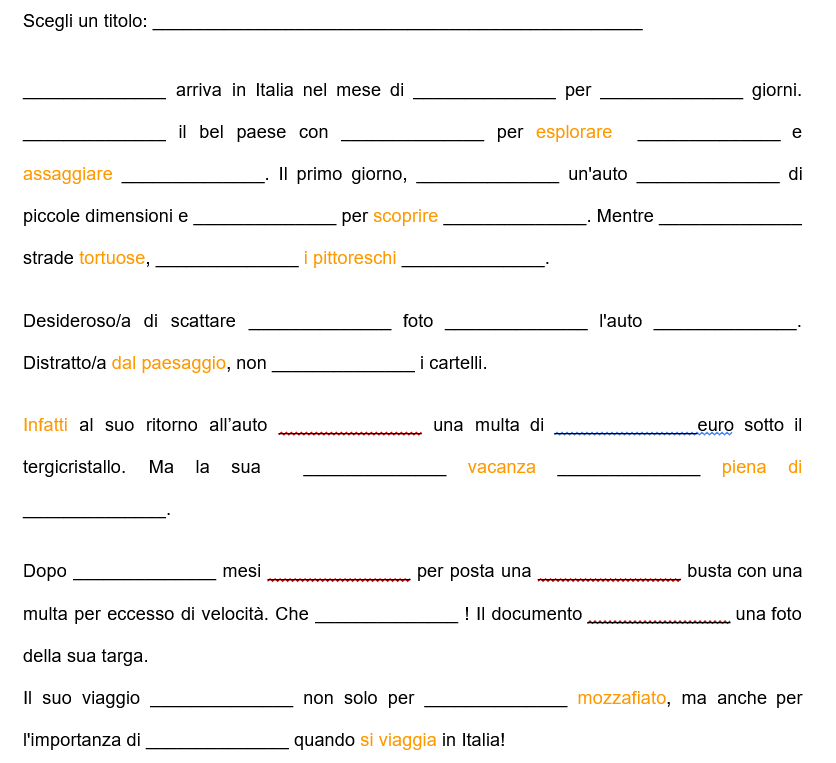
Crea la tua storia #1: esercizio di scrittura in italiano

Italian writing exercise: create your story #1


(English follows)

In questo esercizio di scrittura trovi un racconto incompleto. Scarica il PDF dove troverai l’esercizio e un esempio di racconto completo. Cerca di riempire gli spazi vuoti con parole o frasi di tua scelta. Usa i tempi verbali e il vocabolario che preferisci e soprattutto la tua creatività. Se ti senti audace, cambia anche le parole in arancione!

Condividi il tuo racconto nei commenti della pagina a questo link:
Mi farà piacere leggerlo e darti qualche consiglio!


———————————————


Racconto italiano: Alla fermata dell’autobus/A2

Italian Short Story: At the bus stop/A2


(English follows)

Forse saprai che quando aspetti l’autobus in Italia non sai mai cosa aspettarti: sarà in ritardo, salterà una corsa, si perderà per strada? Boh…la storia che ti racconto oggi mi è realmente capitata! Buona lettura!

Questa storia è adatta al livello A2.

Il PDF include il testo italiano e la traduzione in inglese, e inoltre le domande e le risposte di comprensione e il vocabolario. Buona lettura!
———————————————

Il racconto di questa lezione ha 5 fasi:

  1. Ascolta la storia senza il testo in italiano.
  2. Ascolta una seconda volta con il testo e ripeti.
  3. Studia il vocabolario della storia.
  4. Rispondi alle domande di comprensione.
  5. Ascolta e ripeti la storia con più velocità.

    Ascoltare la storia senza il testo è importante per imparare i suoni e parlare automaticamente.

Metti un “mi piace” (un like) alla storia se vuoi altre storie come questa!

Ripeti questa lezione ogni giorno per una settimana.
La ripetizione è importante per parlare e pensare in italiano.


English version:

Maybe you know that when you wait for the bus in Italy you never know what to expect: will it be late, will it miss a ride, will it get lost on the way? Well… the story I’m telling you today really happened to me! Enjoy reading it!

This story is suitable for level A2.

The PDF includes the Italian text and the English translation, as well as comprehension questions and answers and vocabulary. Enjoy!
———————————————

The short story in this lesson has 5 steps:

  1. Listen to the story without the text in Italian.
  2. Listen a second time with the text and repeat.
  3. Study the vocabulary in the story.
  4. Answer the comprehension questions.
  5. Listen and repeat the story at a faster pace.

Listening to the story without the text is important for learning sounds and speaking automatically.

Repeat this lesson every day for a week.
Repetition is important for speaking and thinking in Italian.

With constant repetition you don’t translate words and you don’t think about grammar.
If you repeat the same sentences out loud they become natural when you speak Italian.

Download the PDF of the story with the text and vocabulary

Like the story if you want more stories like this!

Download the PDF of the story with the text and vocabulary:

Racconto italiano: Gatti e cani comandano il mondo?/A2-B1

Italian Short Story: Cats and Dogs Rule the World /A2-B1

(English follows)

Secondo te, se a comandare il mondo non ci fossero gli umani, bensì i nostri amici pelosi, sarebbe un posto migliore? Io credo proprio di sì! Spero che ti diverterà leggere questo nuovo racconto, il mio preferito finora! Quali tra questi primi dodici video-racconti ti sono piaciuti?

Questa storia è adatta al livello A2/B1.

Il PDF include il testo italiano e la traduzione in inglese, e inoltre le domande e le risposte di comprensione e il vocabolario. Buona lettura!
———————————————

Il racconto di questa lezione ha 5 fasi:

  1. Ascolta la storia senza il testo in italiano.
  2. Ascolta una seconda volta con il testo e ripeti.
  3. Studia il vocabolario della storia.
  4. Rispondi alle domande di comprensione.
  5. Ascolta e ripeti la storia con più velocità.

    Ascoltare la storia senza il testo è importante per imparare i suoni e parlare automaticamente.
https://youtu.be/MOWGxYjPLp4

Metti un “mi piace” (un like) alla storia se vuoi altre storie come questa!

Ripeti questa lezione ogni giorno per una settimana.
La ripetizione è importante per parlare e pensare in italiano.


English version:

In your opinion, if humans were not in charge of the world, but our furry friends, would it be a better place? I really think so! I hope you enjoy reading this new story, my favorite so far! Which of these first twelve video stories did you like?

This story is suitable for level A2/B1.

The PDF includes the Italian text and the English translation, as well as comprehension questions and answers and vocabulary. Enjoy!
———————————————

The short story in this lesson has 5 steps:

  1. Listen to the story without the text in Italian.
  2. Listen a second time with the text and repeat.
  3. Study the vocabulary in the story.
  4. Answer the comprehension questions.
  5. Listen and repeat the story at a faster pace.

Listening to the story without the text is important for learning sounds and speaking automatically.

Repeat this lesson every day for a week.
Repetition is important for speaking and thinking in Italian.

With constant repetition you don’t translate words and you don’t think about grammar.
If you repeat the same sentences out loud they become natural when you speak Italian.

Download the PDF of the story with the text and vocabulary

Like the story if you want more stories like this!

Download the PDF of the story with the text and vocabulary:

Come studiare l’italiano in estate o in vacanza?

How to study Italian in the summer or on vacation?

Se stai per fare una vacanza estiva, ho una buona notizia, puoi continuare a praticare l’itaiano. Anzi, puoi portare l’italiano con te: a passeggio o in bici tra i sentieri ascoltando un podcast oppure seduti all’ombra di un albero o di un ombrellone leggendo un libro. Non hai che l’imbarazzo della scelta per rilassarti e immergerti nella bella lingua. Ecco alcuni suggerimenti!

If you are going on summer vacation, I have good news, you can continue practicing Italian. In fact, you can take Italian with you: walking or biking along the paths listening to a podcast or sitting in the shade of a tree or a beach umbrella reading a book. You are spoiled for choice to relax and immerse yourself in the beautiful language. Here are some suggestions.

1. Impara vocabolario nuovo

Imparare il vocabolario (verbi, sostantivi, aggettivi, congiunzioni, avverbi, ecc.) è essenziale per parlare una lingua ed è più importante che sapere la grammatica. Un buon vocabolario ci aiuta a comunicare quello che vogliamo usando le parole giuste.

Learning vocabulary (verbs, nouns, adjectives, conjunctions, adverbs, etc.) is essential to speaking a language and it is more important than knowing grammar. A good vocabulary helps us communicate what we want using the right words.

2. Ascolta un podcast italiano

Sono un’assidua ascoltatrice del Podcast “Denominazione di origine inventata” che parla dell’origine della cucina italiana. Ad ogni puntata scopro cose nuove!
L’esercizio di ascolto ci aiuta a migliorare la pronuncia e ad ampliare il vocabolario. Inoltre, asoltare dei podcast di cultura italiana ci rende più informati e colti. Ormai esistono centinaia di podcast su qualsiasi argomento, storia, arte, viaggio, cucina e cosi via.

I am a regular listener of the Podcast “Denominazione di origine inventata” which talks about the origin of Italian cuisine. I discover new things with each episode!
Listening exercises help us improve our pronunciation and expand our vocabulary. Furthermore, listening to podcasts about Italian culture makes us more informed and knowledgable. There are now hundreds of podcasts on any topic, history, art, travel, cuisine and so on.

3. Leggi racconti italiani

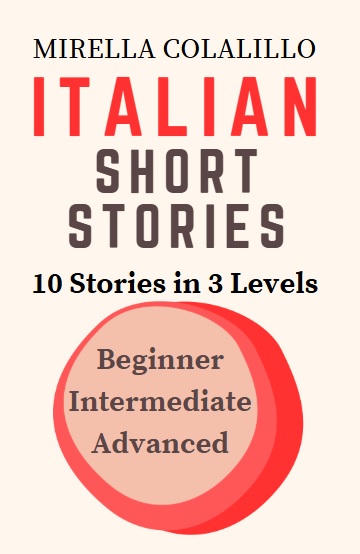
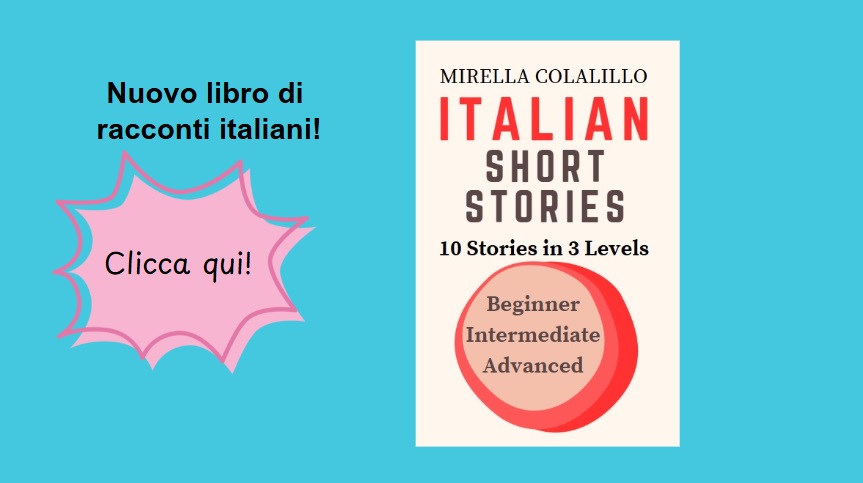
Se ti piace leggere racconti, questo libro fa per te. Ogni racconto è stato scritto in 3 livelli. Quindi se sei un principiante puoi leggere le storie nel livello A1 per principianti, ma avanzando con l’italiano potrai poi leggere il livello B1 e poi quello C1! Ogni racconto usa le stutture grammaticali e il vocabolario per quel livello. Se invece il tuo livello è C1, troverai interessante anche paragonare e analizzare la lingue nei tre livelli.

If you like reading short stories, this book is for you. Each story has been written in 3 levels. So if you are a beginner you can read the stories in the A1 level for beginners, but as you advance with your Italian you can then read the B1 level and then the C1 level! Each story uses the grammatical structures and vocabulary for that level. If your level is C1, you will also find it interesting to compare and analyze the languages ​​in the three levels.

4. Impara l’italiano con storie guidate

Questi video-racconti ti guidano nella lettura, pronuncia e comprensione. Ti incoraggiano a parlare attraverso la ripetizione a due diverse velocita. Le domande di comprensione ti aiutano a ricordare e riformulare il vocabolario e le frasi della storia. Ogni storia ha un PDF scaricabile gratis e ogni mese pubblico almeno due video, quindi resta all’ascolto per i prossimi!

These video stories guide you through reading, pronunciation, and comprehension. They encourage you to speak through repetition at two different speeds. Comprehension questions help you remember and reformulate the vocabulary and sentences in the story. Each story has a free downloadable PDF, and I publish at least two videos each month, so stay tuned for the next ones!

5. Studia la storia italiana

Uno dei miei articoli culturali preferiti sul mio blog che parla dell’evoluzione delle lettere dall’Antica Roma. Quando viaggiamo in Italia troviamo molte scritte romane, che a volte non capiamo. Mi aiuta aver studiato il latino a scuola. Sai che una tipologia di lettera in particolare è molto usata nel cinema.

One of my favorite cultural articles on my blog about the evolution of letters from Ancient Rome. When we travel in Italy we find a lot of Roman writing, which sometimes we don’t understand. It helps that I studied Latin in school. You know that one type of letter in particular is used a lot in cinema.

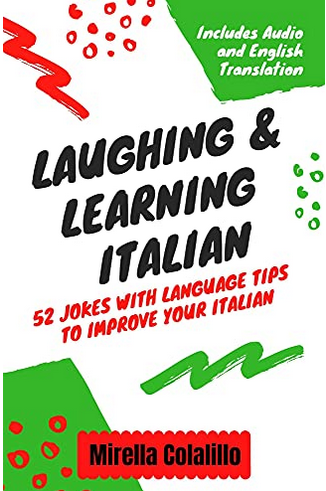
6. Impara barzellette italiane

E’ non solo un libro di barzellette, ma un libro di barzellette per parlare l’italiano. Il libro ha 52 barzellette da imparare, una per ogni settimana dell’anno, e ti incoraggia ad imparare a raccontare le barzellette in italiano. Per ogni barzelletta trovi anche uno spunto grammaticale. Parlare e ridere, cosa c’è di meglio!

It’s not just a joke book, but a joke book to speak Italian. The book has 52 jokes to learn, one for each week of the year, and encourages you to learn how to tell jokes in italian. For each joke you also find a grammatical tip. Talking and laughing, what’s better!

7. Ascolta e canta canzoni italiane

La lingua è musica! Ascoltare canzoni e, ancora meglio, cantarle è non solo divertente, ma è il miglior esercizio per migliorare la pronuncia poiché le parole diventano parte della melodia senza alcuno sforzo. Inoltre, la canzone è un esercizio di ripetizione e, come sappiamo, più ripetiamo, più ricordiamo e più impariamo!

Language is music! Listening to songs and, even better, singing them is not only fun, but it is the best exercise to improve pronunciation because the words become part of the melody without any effort. Furthermore, the song is an exercise in repetition and, as we know, the more we repeat, the more we remember and the more we learn!

8. Studia un argomento di grammatica

E perché no…imparare o perfezionare le nozioni di grammatica. In questo modo si fa una bella figura in viaggio per l’Italia!

And why not … learn or perfect your notions of grammar. This way you’ll make a great impression on your trip to Italy!


Racconto italiano: La magia dell’arte/A2-B1

Italian Short Story: The Magic of Art/A2-B1

(English follows)

La storia di questa settimana parla dell’arte. E’ sempre stata sin da bambina una delle mie più grandi fonti di gioia e di soddisfazione sperimentare con l’arte in tutte le sue forme, visuale, musicale, letteraria, danza….eccetera. Una magia in ogni senso e per tutti i sensi! In quale forma d’arte ti piace immergerti?

Questa storia è adatta al livello A2/B1.

Il PDF include il testo italiano e la traduzione in inglese, e inoltre le domande e le risposte di comprensione e il vocabolario. Buona lettura!
———————————————

Il racconto di questa lezione ha 5 fasi:

  1. Ascolta la storia senza il testo in italiano.
  2. Ascolta una seconda volta con il testo e ripeti.
  3. Studia il vocabolario della storia.
  4. Rispondi alle domande di comprensione.
  5. Ascolta e ripeti la storia con più velocità.

    Ascoltare la storia senza il testo è importante per imparare i suoni e parlare automaticamente.
https://youtu.be/OAk-uXGqeLs

Metti un “mi piace” (un like) alla storia se vuoi altre storie come questa!

Ripeti questa lezione ogni giorno per una settimana.
La ripetizione è importante per parlare e pensare in italiano.


English version:

Non so te, ma una delle mie materie meno preferite a scuola era la storia. Secondo me, sapere insegnare la storia è una grande responsabiltà e anche un’arte. I miei insegnanti di storia erano tutti noioisi! Adesso da adulta sono appassionata di storia e quindi dedico questo racconto all’amore per la storia. Il racconto parla di una torre vecchia ma speciale per il suo significato storico che lega le generazioni passate e future.

This story is suitable for level A2/B1.

The PDF includes the Italian text and the English translation, as well as comprehension questions and answers and vocabulary. Enjoy!
———————————————

The short story in this lesson has 5 steps:

  1. Listen to the story without the text in Italian.
  2. Listen a second time with the text and repeat.
  3. Study the vocabulary in the story.
  4. Answer the comprehension questions.
  5. Listen and repeat the story at a faster pace.

Listening to the story without the text is important for learning sounds and speaking automatically.

Repeat this lesson every day for a week.
Repetition is important for speaking and thinking in Italian.

With constant repetition you don’t translate words and you don’t think about grammar.
If you repeat the same sentences out loud they become natural when you speak Italian.

Download the PDF of the story with the text and vocabulary

Like the story if you want more stories like this!

Download the PDF of the story with the text and vocabulary:

You cannot copy content of this page