A whimsical letter-by-journey through the Italian ABCs with Dianne Hales
(Original English version follows)
In questo periodo strano in cui non è possibile viaggiare in Italia, Dianne Hales ha fatto quello che fanno gli scrittori: ha scritto un nuovo libro, un piccolo omaggio all’Italia e agli italiani. Ce ne parla oggi ospite del mio blog:
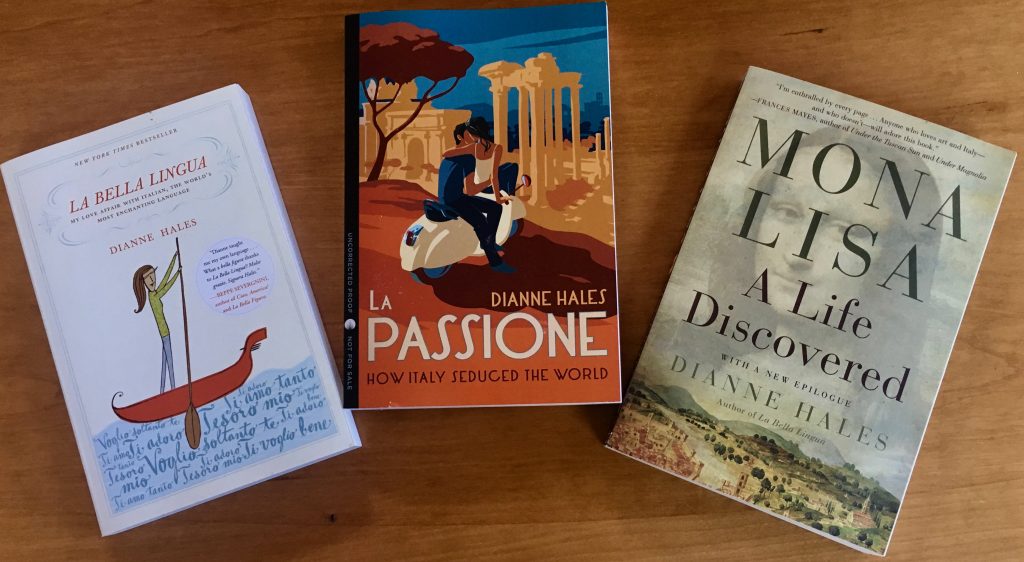
Decenni fa mi sono innamorata follemente, felicemente, vertiginosamente dell’italiano. Desiderosa di comunicare con i suoi interlocutori, ho deciso di imparare la loro lingua immergendomi nei suoi suoni.
Una delle mie prime lezioni formali si è concentrata sull’alfabeto italiano. Anche se le sue 21 lettere sembrano identiche alle loro controparti inglesi (escluse j, k, w, x e y), non suonano allo stesso modo.
Le differenze vanno oltre la pronuncia. A me ogni lettera fa venire in mente una parola che rappresenta un aspetto diverso della vita e della cultura italiana. Ho messo insieme le mie riflessioni alfabetiche in un libro digitale che puoi scaricare come PDF gratuito qui.
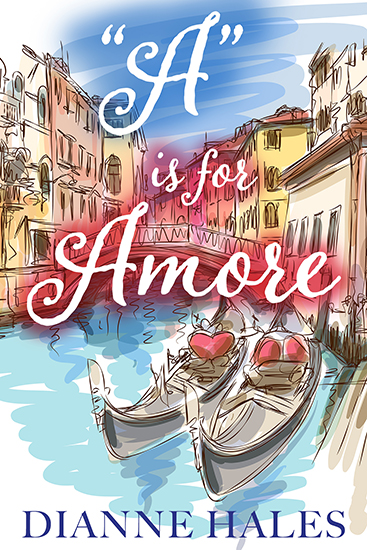
“A” Is for Amore accompagna i lettori in uno stravagante viaggio letterale attraverso l’ABC italiano. Viaggerai a Firenze e Roma; assaporirai i piatti preferiti dagli italiani; ti addentrerai nel mondo della moda e del vino; incontrerai Dante, Leonardo e l’irresistibile italiano; e acquisirai un nuovo apprezzamento delle lettere “H” (acca) e “Z” (zeta) in italiano.
Se ami l’Italia, imparerai di più sul paese e sulla sua gente. Se vieni da una famiglia italiana, scoprirai di più sulla tua eredità. Se sei uno studente o un insegnante d’italiano, troverai una prospettiva allegra che integra le lezioni di vocabolario e grammatica. Se sei un avventuriero in poltrona, non hai bisogno di conoscere nessun italiano per goderti il viaggio.
“A” Is for Amore è la mia lettera d’amore all’Italia, alla sua gente e a tutti i miei lettori, con grande apprezzamento per il loro sostegno. Spero che questo piccolo regalo ti diverta e ti sollevi.
In this strange period in which it is not possible to travel to Italy, Dianne Hales did what writers do: she wrote a new book, a small tribute to Italy and the Italians. She talks to us about today in this guest post:
Decades ago I fell madly, gladly, giddily in love with Italian. Yearning to communicate with its speakers, I set out to learn their language by immersing myself in its sounds.
One of my earliest formal lessons focused on the Italian alphabet. Although its 21 letters look identical to their English counterparts (minus j, k, w, x, and y), they don’t sound the same. The differences go beyond pronunciation. To me, each letter brings to mind a word that represents a different aspect of Italian life and culture. I’ve put together my alphabetical musings in a digital book you can download as a free PDF here.
“A” Is for Amore takes readers on a whimsical letter-by-journey through the Italian ABCs. You’ll travel to Florence and Rome; savor Italians’ favorite dishes; delve into the worlds of fashion and wine; meet Dante, Leonardo, and the irresistible Italian man; and gain a new appreciation of the Italian “H” (acca) and “Z” (zeta). If you love Italy, you’ll learn more about the country and its people. If you come from an Italian family, you’ll discover more about your heritage. If you’re an Italian student or teacher, you’ll find a light-hearted perspective that complements vocabulary and grammar lessons. If you are an armchair adventurer, you don’t need to know any Italian to enjoy the ride.
“A” Is for Amore is my love letter to Italy, its people, and all my readers, with great appreciation for your support. I hope this small gift will entertain and uplift you.
La scelta non manca per fortuna, anzi. Ci viene “quasi” voglia di restare a casa e ascoltare uno dei tanti podcast che popolano la rete. Ne ho scelti alcuni che spaziano dalla lingua alla letteratura, dalla storia al cinema.
The best Italian podcasts, about language and surrounding
La scelta non manca per fortuna, anzi. Ci viene “quasi” voglia di restare a casa e ascoltare uno dei tanti podcast che popolano la rete. Ne ho scelti alcuni che spaziano dalla lingua alla letteratura, dalla storia al cinema.
Il mio preferito è il primo in lista. Mi aiuta a mantenere l’equilibrio mentale in questo periodo destabilizzante. Buon ascolto.
Fortunately, the choice is not lacking, quite the contrary. We “almost” want to stay home and listen to one of the many podcasts that populate the net. I have chosen a few that range from language to literature, from history to cinema. My favorite is the first on the list. It helps me keep my mental balance in this unsettling time. Buon ascolto.
Mindfulness in Voce è il podcast dove puoi ascoltare una grande selezione degli articoli più interessanti di Medium.com sulla Mindfulness, in formato audio.
The podcast where you can listen to a great selection of Medium.com’s most interesting articles on Mindfulness, in audio format.
La Mindfulness contemporanea si porta appresso un imperativo morale a essere sempre buoni, calmi o felici, e questo spinge molti praticanti a recitare una parte. E' un equivoco che ha due effetti deleteri: da un lato repressione delle emozioni, dall'altro giudizio severo su sé stessi. Facciamo chiarezza. Lascia un commento nella nostra community! https://discord.gg/hDVGVd2
Articolo originale di Daniela Navaes su Medium.com
Radio Arlecchino: impara la grammatica italiana attraverso le storie di Arlecchino.
Learn Italian grammar through Harlequin’s stories.
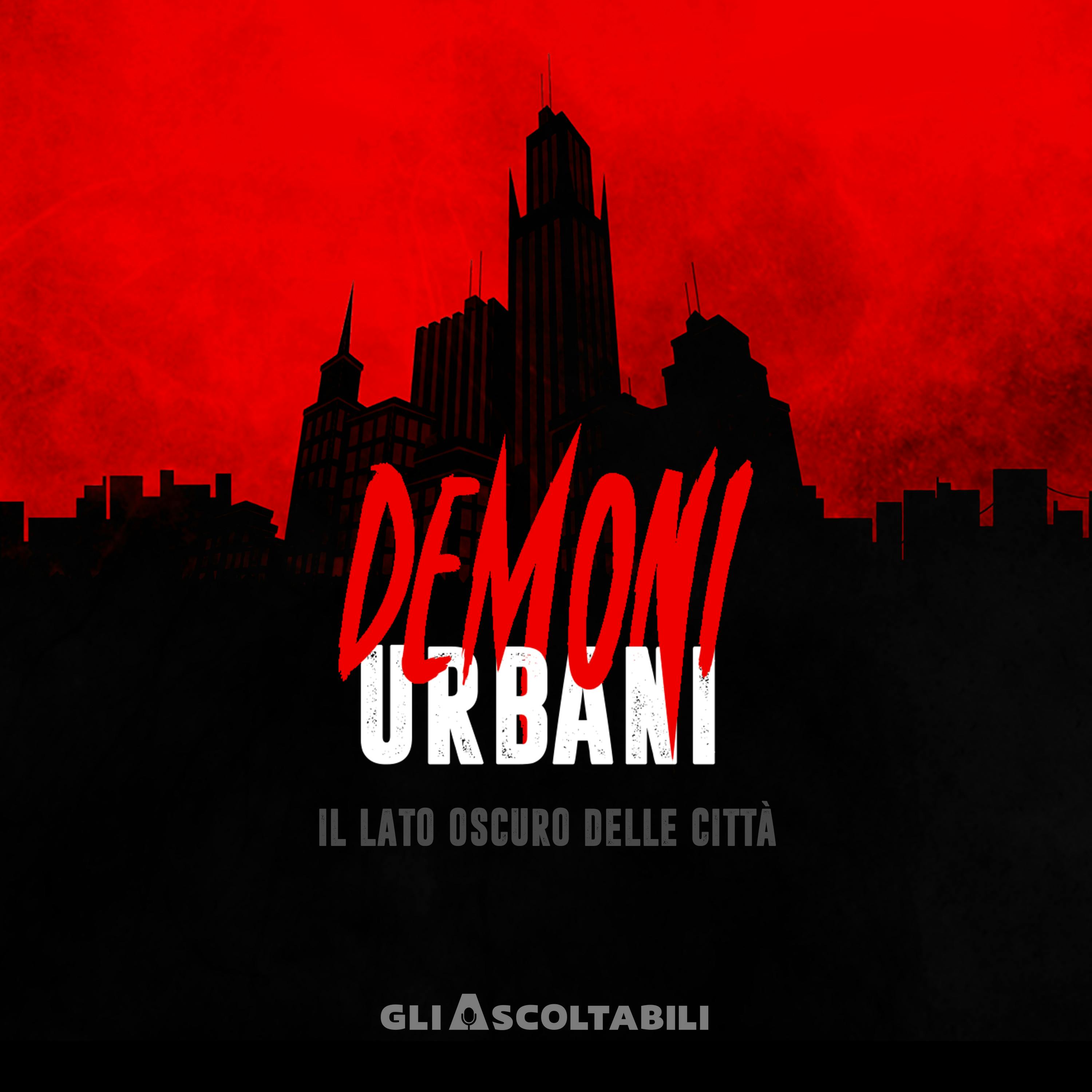
Demoni Urbani: anche le più belle città italiane hanno un cuore di tenebra. In ogni puntata di Demoni Urbani, condotta da Francesco Migliaccio, una storia criminale agghiacciante e sorprendente, tra le vie più suggestive che accompagnano la nostra quotidianità. Ripercorrerle non sarà più come prima…
Even the most beautiful Italian cities have a heart of darkness. In each episode of Urban Demons, conducted by Francesco Migliaccio, a chilling and surprising criminal story, among the most evocative streets that accompany our daily life. Retracing them will no longer be the same …
Nel 2014, tra le grandi strade di Goiânia, in Brasile, sfreccia una moto guidata da un giovane uomo, bello e atletico: Tiago Henrique Gomes da Rocha. Non ha una destinazione da raggiungere, vaga per la città accompagnato da una rabbia che gli infuoca lo stomaco, ira pura, immensa, inarrestabile. Cerca un modo per sfogarla e finalmente lo trova: deve uccidere. E ora che l’ha scoperto non può più farne a meno.
L'autrice di questo episodio è Francesca Notaro.
Learn more about your ad choices. Visit megaphone.fm/adchoices
Ad alta voce: ascolta la grande letteratura di scrittrici e scrittori italiani quali Ginzberg, Deledda, Collodi, Calvino, ecc.
Listen to the great literature of Italian writers such as Ginzberg, Deledda, Collodi, Calvino, etc.
Racconti: storie di autori classici e contemporanei. Per tutti, famiglie, ragazzi e bambini. Come un di più, per amore della leggerezza.
Short stories of classical and contemporary authors. For everyone, families, teens and children. As a plus, for the sake of lightness.
Antologia di Sherlock Holmes: una raccolta dei più famosi e amati racconti di Sherlock Holmes, nati dalla sapiente penna di Arthur Conan Doyle.
A collection of the most famous and beloved Sherlock Holmes stories, born from the wise pen of Arthur Conan Doyle.
Il Grande Nulla Agricolo: ogni episodio una nuova strana storia dalla profonda provincia romagnola: cani scomparsi, misteriose luci nel cielo, auto fantasma e molti altri eventi inspiegabili.
Each episode a new strange story from the deep Romagna province: missing dogs, mysterious lights in the sky, ghost cars and many other unexplained events.
Scientificastè stato il primo podcast indipendente a tema scientifico in Italia.Fondato nel 2007, Scientificast si propone di portare alle orecchie di un pubblico appassionato, informazioni, news e concetti di carattere scientifico con un taglio divulgativo, semplice ma rigoroso.
Is the first independent scientific-themed podcast in Italy. Founded in 2007, Scientificast aims to bring scientific information, news and concepts to the ears of a passionate public with a popular, simple but rigorous slant.
BISTORYè un racconto di vita e di morte: un bisturi che indaga il lato B della Storia, piena di grandi personaggi potenti e carismatici raggiunti dall’oblio o dalla leggenda dopo una fine incredibile. Idoli cruenti, amanti disperati, utopisti condannati, folli creatori di bellezza in un racconto pieno di verità e immaginazione, alla ricerca di quel foglio dimenticato, dove è la Storia a scrivere le storie.
It’s a tale of life and death: a scalpel that investigates the B side of history, full of great powerful and charismatic characters reached by oblivion or by legend after an incredible end. Bloody idols, desperate lovers, condemned utopians, crazy creators of beauty in a story full of truth and imagination, in search of that forgotten sheet, where history writes the stories.
Il cinema alla radio: ogni domenica l’ascolto o la rilettura di un classico del cinema o un’anteprima con tutte le anticipazioni.
Every Sunday listening to or rereading a classic film or a preview with all the previews.
Notizie del giorno con Start: il podcast del Sole 24 Ore che ogni mattina ti racconta tre notizie che possono esserti utili nella tua giornata.
The podcast of the Sole 24 Ore that every morning tells you three news that can be useful in your day.
Morgana: storie di donne che non hanno avuto bisogno di sposare un uomo con i soldi. Donne fuori dagli schemi, controcorrente, strane, pericolose, esagerate, stronze, a modo loro tutte diverse e difficili da collocare. Donne che con le proprie vite e il proprio lavoro hanno contribuito o contribuiscono a colmare il gender gap proprio partendo dalla possibilità e capacità di gestire in autonomia il proprio denaro.
Stories of women who didn’t need to marry a man with money. Women outside the box, against the tide, strange, dangerous, exaggerated, bitches, all different in their own way and difficult to place. Women who with their lives and work have contributed or contribute to bridging the gender gap starting from the possibility and ability to manage their money independently.
Quali sono i tuoi podcast preferiti? Mi raccomando fammi sapere nei commenti!
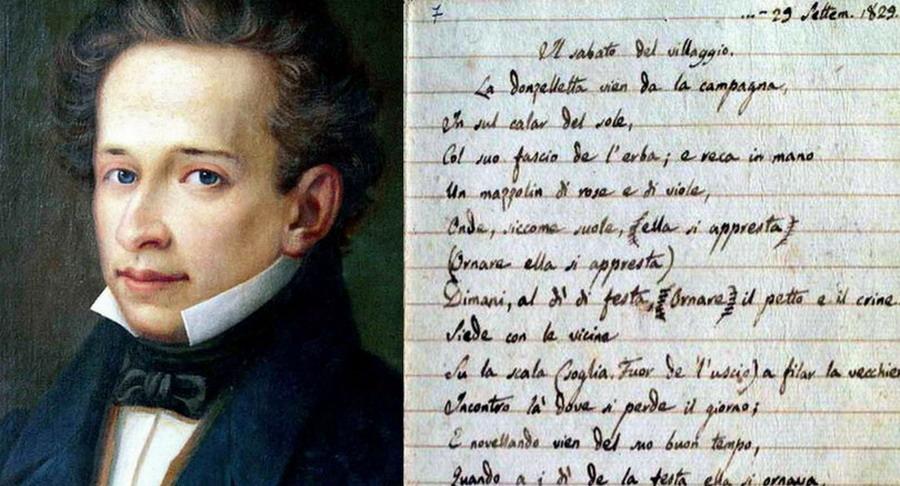
The explanation with English translation of “Il sabato del villaggio”, Saturday in the village, by Giacomo Leopardi.
Qual è il significato de Il sabato del villaggio? “Il sabato del villaggio” è una poesia scritta da Giacomo Leopardi nel 1829 a Recanati. Descrive in modo allegorico le attività dei paesani di Recanati durante un sabato, quando gli abitanti si preparano con ansia al giorno di festa della domenica. Il sabato rappresenta l’allegoria della giovinezza, dei sogni e delle speranze e la domenica, invece, simboleggia l’età adulta con la caduta delle illusioni. Secondo Leopardi la gioia umana si manifesta nell’attesa di un piacere irraggiungibile, ed è quindi fugace ed effimera.
What is the meaning of Saturday in the village? “Il sabato del villagio” is a poem written by Giacomo Leopardi in 1829 in Recanati. It allegorically describes the activities of the villagers of Recanati on a Saturday, when the inhabitants are anxiously preparing for the Sunday feast day. Saturday represents the allegory of youth, dreams and hopes and Sunday, on the other hand, symbolizes adulthood with the fall of illusions. According to Leopardi, human joy manifests itself in the expectation of unattainable pleasure, and is therefore fleeting and ephemeral.
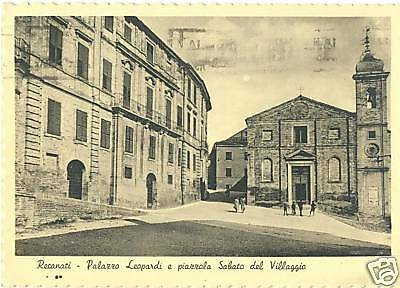
Il giovane Leopardi usava accostare il suo tavolino accanto a una finestra per ottimizzare lo sfruttamento della luce solare: tale finestra si affacciava su una piazza dove gli abitanti di Recanati si ritrovavano per organizzare le piccole feste domenicali. È proprio questa piazza ad ispirargli la stesura del “Sabato del villaggio“.
The young Leopardi used to place his table next to a window to optimize the use of sunlight: this window overlooked a square where the inhabitants of Recanati gathered to organize small Sunday parties. It is this square that inspired him to write “Il sabato del villaggio”.
Testo
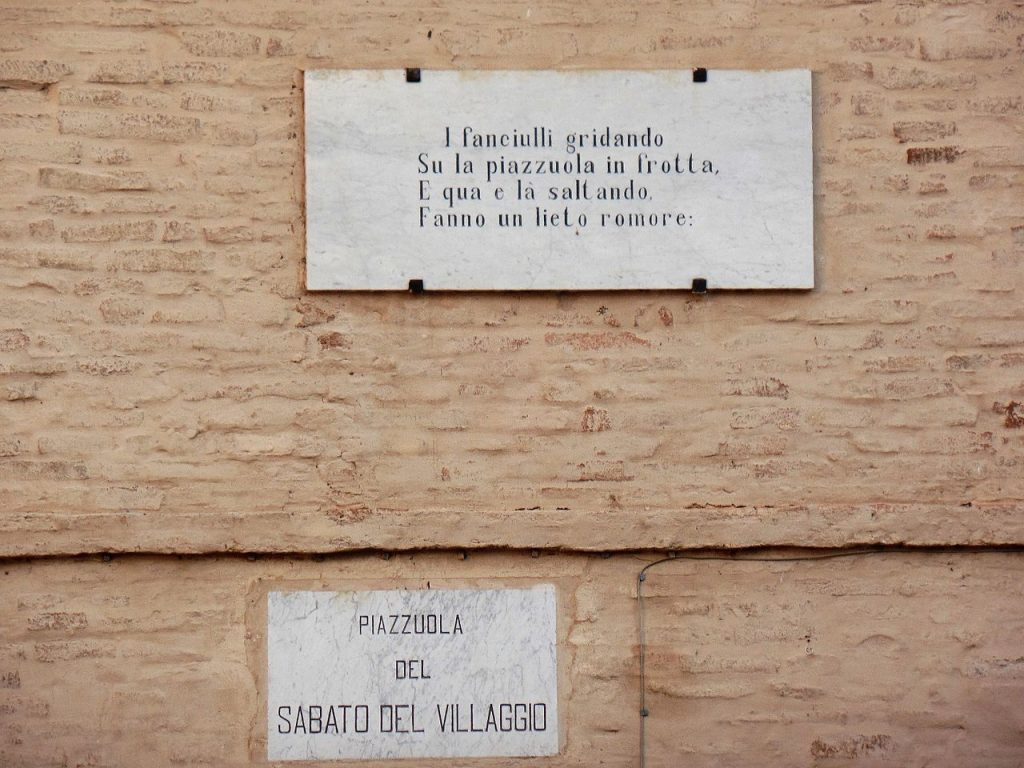
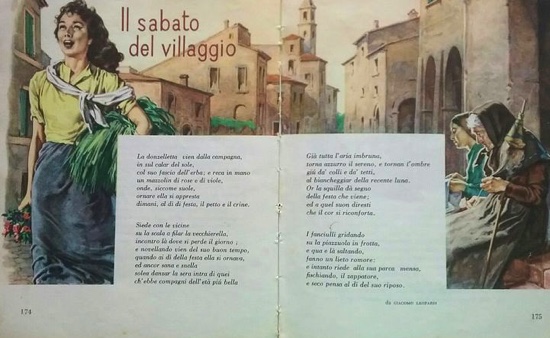
La donzelletta vien dalla campagna, In sul calar del sole, Col suo fascio dell’erba; e reca in mano Un mazzolin di rose e di viole, Onde, siccome suole, Ornare ella si appresta Dimani, al dì di festa, il petto e il crine. Siede con le vicine Su la scala a filar la vecchierella, Incontro là dove si perde il giorno; E novellando vien del suo buon tempo, Quando ai dì della festa ella si ornava, Ed ancor sana e snella Solea danzar la sera intra di quei Ch’ebbe compagni dell’età più bella. Già tutta l’aria imbruna, Torna azzurro il sereno, e tornan l’ombre Giù da’ colli e da’ tetti, Al biancheggiar della recente luna. Or la squilla dà segno Della festa che viene; Ed a quel suon diresti Che il cor si riconforta. I fanciulli gridando Su la piazzuola in frotta, E qua e là saltando, Fanno un lieto romore: E intanto riede alla sua parca mensa, Fischiando, il zappatore, E seco pensa al dì del suo riposo.
Poi quando intorno è spenta ogni altra face, E tutto l’altro tace, Odi il martel picchiare, odi la sega Del legnaiuol, che veglia Nella chiusa bottega alla lucerna, E s’affretta, e s’adopra Di fornir l’opra anzi il chiarir dell’alba.
Questo di sette è il più gradito giorno, Pien di speme e di gioia: Diman tristezza e noia Recheran l’ore, ed al travaglio usato Ciascuno in suo pensier farà ritorno.
Garzoncello scherzoso, Cotesta età fiorita È come un giorno d’allegrezza pieno, Giorno chiaro, sereno, Che precorre alla festa di tua vita. Godi, fanciullo mio; stato soave, Stagion lieta è cotesta. Altro dirti non vo’; ma la tua festa Ch’anco tardi a venir non ti sia grave.
Parafrasi
La ragazzetta torna dalla campagna, mentre il sole sta tramontando, con il suo fascio d’erba; e porta in mano anche un mazzolino di rose e di viole, con cui – come sua abitudine – si adornerà il petto e i capelli per l’indomani, giorno di festa. La vecchietta se ne sta seduta con le sue vicine sulla scala a filare, rivolta ai raggi del sole che tramonta, e ricorda e parla della sua giovinezza, quando era lei, ancora sana e slanciata, ad agghindarsi e a danzare la sera insieme a quelli che ebbe compagni della stagione più bella della vita. Già tutta l’aria imbrunisce, il cielo sereno si fa scuro e si disegnano le ombre delle colline e delle case al chiarore della luna appena sorta. Ora la campana ricorda a tutti la festa che sta arrivando, e potresti dire che il cuore si riconforta a quel suono. I bambini nella piazza si rincorrono gridando di entusiasmo, rompendo allegramente il silenzio: e intanto ritorna fischiettando alla sua cena il contadino che pensa al giorno di riposo.
Poi, quando tutte le luci sono spente, e tutto il paese è addormentato, si sente il picchiare del martello, e la sega del falegname ancora sveglio al chiarore della lucerna per ultimare in fretta il suo lavoro prima dell’alba.
Questo, di tutta la settimana, è il giorno più gradito, pieno di speranza e di gioia: domani le ore porteranno con sé tristezza e noia, e ciascuno ripenserà al consueto lavorio feriale.
Ragazzino che scherzi con leggerezza, questa età in fiore è un giorno di allegria, un giorno luminoso, sereno, che precede la festa della tua vita. Divertiti, mio caro ragazzo; è un momento incantato, questo, il periodo più felice. Non voglio svelarti altro; e se la tua festa tarda ad arrivare, non essere triste.
English translation of the Paraphrase:
The little girl returns from the countryside, while the sun is setting, with her bundle of grass; and she’s also carrying in her hand a bouquet of roses and violets, with which – as usual – she will adorn her bosom and hair for the next day, a holiday. The old lady is sitting with her neighbors spinning on the staircase, facing the rays of the setting sun, and remembering and talking about her youth, when she was still healthy and slender, and would also dress up and dance in the evening with her friends of the most beautiful season of life. Already all the air becoming dim, the clear sky is darkening and the shadows of the hills and houses are drawn in the light of the newly risen moon. Now the bell reminds everyone of the celebration that is coming, and you could say that the heart is comforted by that sound. The children in the square chase each other shouting with enthusiasm, happily breaking the silence: and in the meantime the peasant who is thinking of his day of rest returns whistling to his supper.
Then, when all the lights are out, and the whole town is asleep, one hears the pounding of the hammer, and the saw of the carpenter who still awake in the light of the lamp to quickly finish his work before dawn.
This, of the whole week, is the most pleasant day, full of hope and joy: tomorrow the hours will bring with them sadness and boredom, and everyone will start thining about the common workday.
Little boy you who are playing with levity lightly, this blossoming age is a day of joy, a bright, serene day that precedes the celebration of your life. Have fun, my dear boy; this is an enchanted moment the happiest time. I don’t want to reveal anything else; and if your celebration is late in coming, do not be sad.
E tu cosa ne pensi? Sei d’accordo con Giacomo Leopardi? //
What do you think? Do you agree with Giacomo Leopardi?
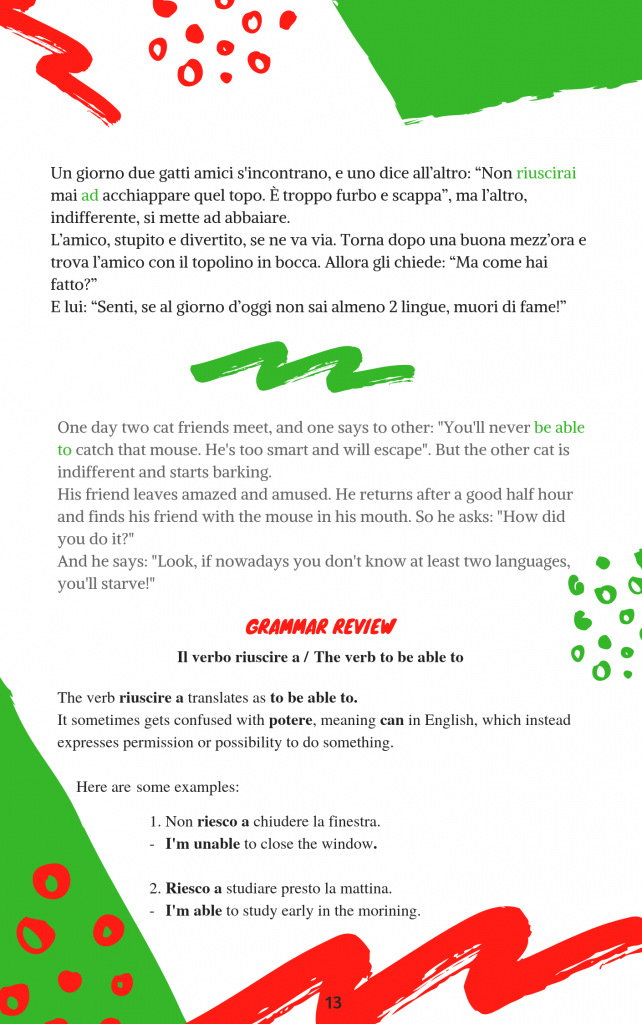
Let’s practice “riuscire a” with a joke and some exercises.
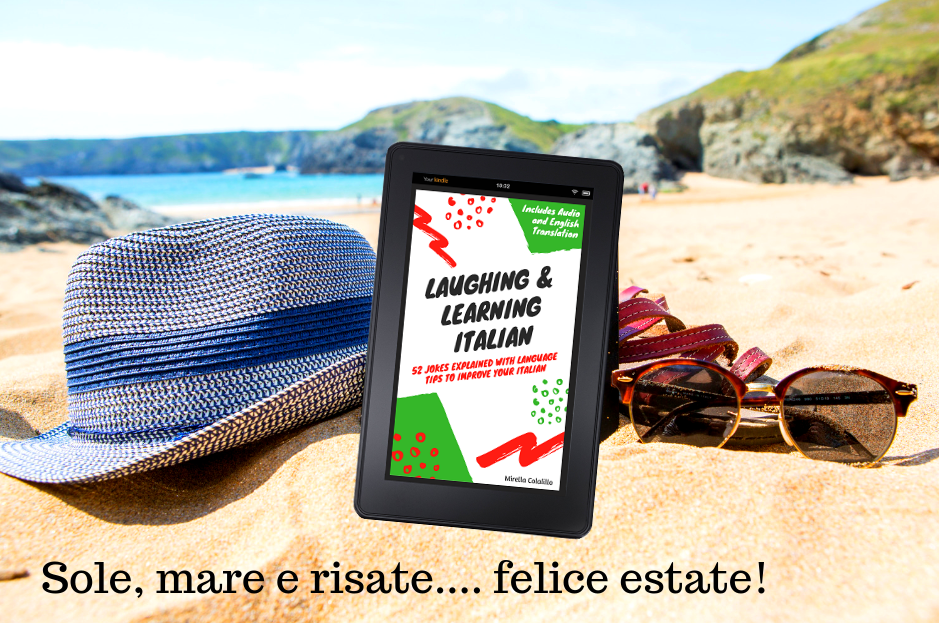
Questa è una pagina del mio libro “Laughing and Learning Italian”. Ci sono 52 barzellette per ogni settimana dell’anno più una traduzione in inglese. C’è anche un file audio in italiano di tutte le 52 barzellette per assicurare la corretta pronuncia e una giusta inflessione. Una delle mie studentesse, Linda, ha creato alcuni esercizi per aiutarla nella pratica. Mi suggerisce di creare un libro di esercizi per il libro. Cosa ne pensi? Ecco alcuni dei suoi esercizi. Di seguito troverai le soluzioni.
This is a page of my book “Laughing and Learning Italian”. There are 52 jokes for each week of the year plus an English translation. And there is also an audio file in Italian of all 52 jokes to make sure you pronounce the words properly and use a correct inflection. One of my students, Linda, created some exercises to help her practice. She suggests I create a workbook with exercises. What do you think? Here are some of her exercises. You’ll find the solutions below.
Esercizio 1: Riuscire a – to manage to do something, to succeed in doing something
Scrivi la forma corretta del verbo riuscire a (presente).
Non ___________(io) a farlo.
________________ (tu) a finire il tuo lavoro entro le sette?
Fernando _______________(lui) ad aiutarti.
__________________(loro) a parlare due lingue.
Non __________________ (noi) a capire quel concetto.
Esercizio 2: Riuscire a –
Rispondi alle domande usando la forma corretta del verbo riuscire a (presente)
Riesci a studiare con il rumore? Sì, ____________ a studiare.
Riuscite a trovare l’indirizzo? No, non _______________a trovarlo.
Signore, riesce a sollevare questa tavola pesante? Sì, ________________a sollevarla.
I romani usavano questa bevanda energizzante e disinfettante per dissetarsi.
(English follows)
“POSCA FORTEM….VINUM EBRIUM FACIT” -la POSCA fortifica mentre il vino inebria-
Sappiamo quanto sia importante bere tanta acqua per mantenersi idratati. Lo sapevano soprattutto i legionari romani che facevano massacranti marce di oltre 30 chilometri al giorno carichi di 20 chili e più di bagagli. Una cosa è certa, un esercito non può vincere se ha sete. La bevanda che li sosteneva era chiamata dal latino posca, affine a potare “bere”. Questa miscela di aceto e acqua – e probabilmente anche sale, erbe e altri ingredienti – occupa un posto speciale nella storia delle bevande grazie al suo ruolo essenziale nell’esercito romano.
Storia Già nella metà dell’era della Repubblica Romana (509-27 a.C.), i militari razionavano la posca alle truppe insieme a cereali e, molto occasionalmente, carne e formaggio. Questo sistema è continuato per secoli, fino all’Impero Romano. I soldati romani, ovviamente, bevevano acqua, ma documenti storici suggeriscono che non era la loro bevanda preferita. Infatti ecco cosa scrisse Plutarco di Catone il Vecchio, un ufficiale durante la Seconda Guerra Punica (218-202 a.C.), riguardo alla sua sete: “L’acqua era ciò che beveva nelle sue campagne, tranne per il fatto che di tanto in tanto, in una sete furiosa, voleva l’aceto, o quando la sua forza veniva meno, aggiungeva un po’ di vino.” Come Catone, i romani apprezzavano il vino per i suoi presunti benefici per la salute. Ciò rese la posca, che conteneva l’aceto fatto con il vino andato a male, di gran lunga preferibile alla semplice vecchia H20. Inoltre il vino all’epoca era abbondante. I ricchi romani ne producevano volumi titanici. Man mano che la portata dell’imperialismo romano si diffondeva in tutta Europa, è aumentata la viticoltura, che dava agli eserciti un accesso immediato ai depositi di vino quasi ovunque. Per i funzionari militari, il vino era una fonte economica di calorie da distribuire alla rinfusa. Diluendolo con acqua per fare la posca si raddoppiava il volume di razione liquida da dare ai soldati a un costo molto basso. Anche nella Bibbia c’è un passo in cui è protagonista proprio la posca: quando Gesù sulla croce, ormai vicino alla morte, lamenta di aver sete, un legionario infila in una canna una spugna pregna di aceto e gliela offre. Nella tradizione cristiana era stato visto nei secoli come un gesto di estremo sfregio nei riguardi del Cristo Redentore. In realtà si era trattato di un gesto misericordioso, infatti il legionario aveva impregnato la spugna proprio di posca, la bevanda che ogni legionario aveva con sé nella borraccia.
Benefici L’acido acetico presente nell’aceto eliminava gran parte dei microrganismi responsabili di disturbi gastrici, per cui il consumo della posca riduceva notevolmente la possibilità di ammalarsi di dissenteria. I romani, ovviamente, non sapevano a cosa fosse dovuta tale proprietà, ma notarono che si ammalavano meno e per questo il consumo della posca si diffuse quasi ovunque nell’Impero. L’acidità della bevanda e la leggera gradazione alcolica neutralizzano i batteri, rendendola più sicura del bere acqua pura. Questo era un grande vantaggio, dato che l’acqua contaminata è nota per aver devastato più eserciti delle battaglie stesse. Aveva anche proprietà dissetanti straordinarie al punto da ridurre di oltre un terzo il fabbisogno giornaliero rispetto all’acqua per ogni soldato, questa proprietà aveva positive ripercussioni anche nel trasporto e ingombro delle scorte, dovendo trasportare meno riserve d’acqua. La sua utilità non aveva soltanto una funzione dissetante, ma anche antisettica, sia per sanare ferite e abrasioni, sia per purificare l’acqua trovata durante il cammino. Inoltre si pensava che combattesse lo scorbuto. Persino all’esercito americano durante la Guerra Messicana nel 1800 veniva dato l’aceto di mele per le sue false virtù antiscorbutiche. Intendiamoci, i capi militari e altre élite in genere non si degnavano di bere la posca, che era più una bevanda della gente comune. Sia tra i soldati che tra la gente comune, la posca ha continuato a godere della sua fama anche nel Medioevo. Dunque, che sapore aveva la posca? È un po’ difficile dirlo, ma a causa della sua ubiquità nella letteratura romana possiamo tranquillamente concludere che consisteva di acqua e aceto di vino rosso. Dal momento che non esistono ricette di posca romane non sappiamo se fosse caratterizzata da altri gusti. Tuttavia, grazie agli scrittori medici bizantini non siamo completamente al buio. Ezio di Amida e Paolo di Egina, entrambi medici bizantini greci del sesto e settimo secolo, rispettivamente, scrivevano di ricette per una posca “appetibile e lassativa” che includeva cumino, semi di finocchio, semi di sedano, anice, timo e sale. È una bevanda che senz’altro aiuta a recuperare acqua e sali minerali persi durante l’esercizio fisico, o semplicemente sudando molto. Infatti andare in giro per l’Europa e l’Asia Minore mentre si è sellati con armature e sacchi pesanti faceva senza dubbio sudare.
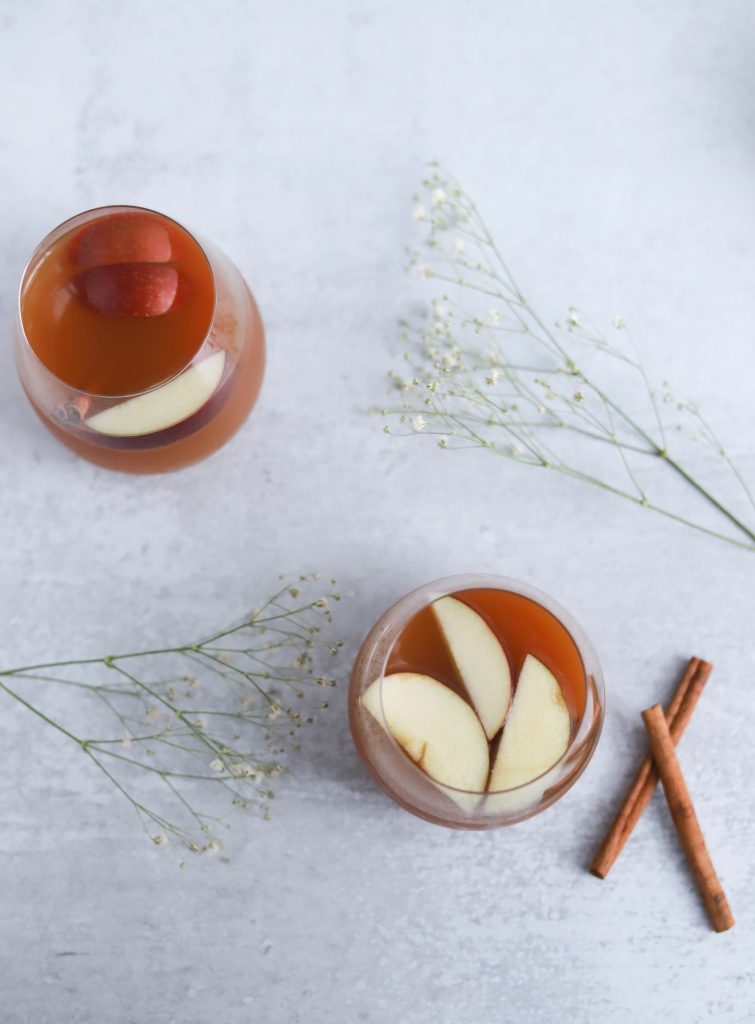
Posca al gusto mela e cannella — Posca apple and cinnamon flavor (photo Sarah Gualtieri/Unsplash)
La ricetta Per quanto riguarda i “moderni sudori”, perché comprare bevande sportive commerciali per placare la tua sete quando puoi farti la “Gatorade” degli antichi? Preparare la posca è semplicissimo e alla portata di tutti. Ecco una ricetta per aiutarti. Assicurati di usare solo aceto fermentato – vino rosso, nero, balsamico o sidro di mele, per esempio – e non distillato. È probabible che la posca fosse dolicificata a volte con del miele.
Ingredienti per una posca “forte”: 500 ml d’acqua, 2 cucchiai di aceto di mele, un pizzico di sale, erbe aromatiche a piacere (cumino, semi di finocchio, semi di sedano, anice, timo), dolcificare con miele o sciroppo d’acero.
Portare tutti gli ingredienti ad ebollizione, poi cuocere a fuoco lento per 30 minuti. Filtrare prima di bere. La bevanda può essere consumata anche fredda. Personalmente preferisco non cuocere gli ingredienti, ma consumarli a crudo. La mia versione è una posca leggera, siccome non sono una legionaria! Inoltre mi piace macerarci della frutta per aumentarne il valore vitaminico e renderla più gustosa.
I miei gusti preferiti: mela +cannella, ananas, agrumi, mirtillo, fragola, lampone, menta.
Si può lasciare la frutta per alcune ore prima di rimuoverla e poi filtrare la posca, la quale divido in tre “livelli di forza”:
posca leggera 1 cucchiaino di aceto di mele, 500 ml acqua
posca media 1 cucchiaio di aceto di mele, 500 ml acqua
posca forte 2 cucchiai di aceto di mele, 500 ml acqua
Ed ecco fatto, adesso puoi dissetarti e godere di ottima salute come un legionario. Bere la posca ormai fa parte del mio rituale quotidiano e in estate se fa tanto caldo aggiungo anche qualche cubetto di ghiaccio!
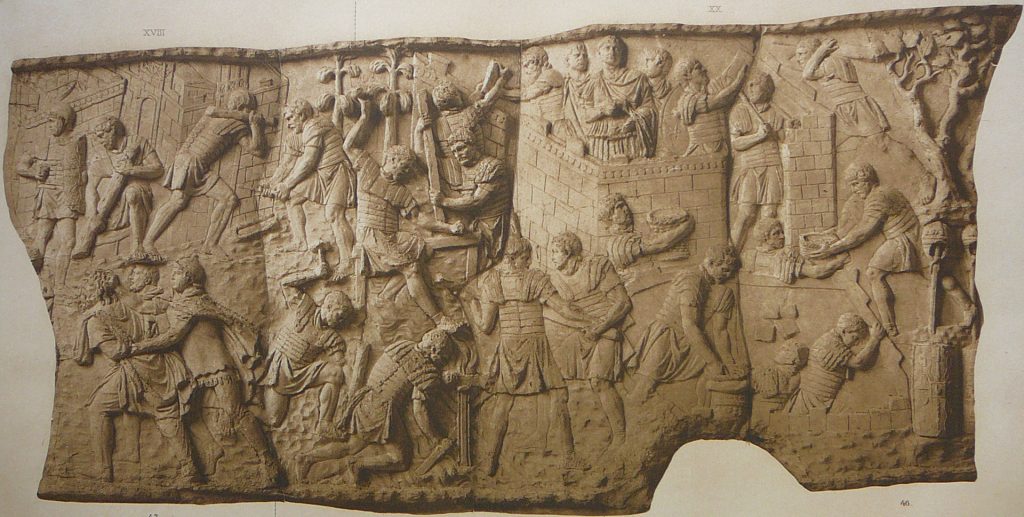
Colonna Traiana, rilievo XV. Alcuni exploratores conducono un prigioniero dace al cospetto dell’imperatore, per essere interrogato. Traiano, dall’alto di un accampamento fortificato, affiancato da due collaboratori, ispeziona lo status dei lavori sottostante, dove numerosi legionari stanno costruendo un nuovo ponte fisso su di un fiume, mentre altri legionari sono intenti a scavare un profondo fossato, utilizzando delle ceste per il trasporto del materiale. — Trajan’s Column, relief XV. Some exploratores lead a dace prisoner before the emperor to be interrogated. Trajan, from the top of a fortified camp, flanked by two collaborators, inspects the status of the works below, where numerous legionaries are building a new fixed bridge over a river, while other legionaries are intent on digging a deep moat, using baskets for the transport of the material. (via Wikipedia)
English version:
“POSCA FORTEM….VINUM EBRIUM FACIT” -POSCA fortifies while wine intoxicates- We know how important it is to drink lots of water to stay hydrated. The Roman legionaries who faced grueling marches of over 30 kilometers per day laden with 20 kilos and more of baggage knew it well. One thing is certain, an army cannot win if it’s thirsty. The drink that supported them was derived from the Latin word posca, akin to prune “drink”. This mixture of vinegar and water – and possibly salt, herbs and other ingredients – occupies a special place in the history of drinks thanks to its essential role in the Roman army.
History As early as the middle of the era of the Roman Republic (509-27 BC), the military rationed the troops with cereals and, very occasionally, meat and cheese. This system continued for centuries, until the Roman Empire. Roman soldiers obviously drank water, but historical records suggest that it was not their favorite beverage. In fact, here is what Plutarch wrote of Cato the Elder, an official during the Second Punic War (218-202 BC), about his thirst: “Water was what he drank in his campaigns, except for the fact that occasionally, in a raging thirst, he wanted vinegar, or when his strength waned, he added some wine.” Like Cato, the Romans appreciated wine for its alleged health benefits. This made posca, which contained vinegar made with wine gone bad, far preferable to good old H20. In addition, wine was abundant at the time. The rich Romans produced titanic volumes of it. As Roman imperialism spread across Europe, viticulture followed, giving armies immediate access to wine supplies almost everywhere. For military officials wine was an inexpensive source of calories to be distributed in bulk. Diluting it with water to make posca doubled the volume of liquid to be rationed to soldiers at a very low cost. Even in the Bible there is a passage in which posca is the protagonist: when Jesus on the cross is near death, he laments that he is thirsty, so a legionary places a sponge soaked with vinegar on a cane and offers it to him. In the Christian tradition it was seen over the centuries as a gesture of extreme scarring towards Christ the Redeemer. In reality it was a merciful gesture, in fact the legionary had soaked the sponge in posca, the drink that every legionary had inside his bottle.
Benefits The acetic acid present in the vinegar eliminated most of the microorganisms responsible for gastric disorders, so the consumption of posca significantly reduced the possibility of getting sick with dysentery. The Romans, of course, did not know what this property was due to, but they noticed that they became less sick and therefore the consumption of posca spread almost everywhere in the Empire. The acidity of the drink and the slight alcohol content neutralize the bacteria, making it safer than drinking pure water. This was a big plus, as contaminated water is known to have wreaked havoc on armies more than the battles themselves. It also had extraordinary thirst-quenching properties to the point of reducing by more than a third the daily requirement with respect to water for each soldier. This property had positive repercussions also in the transport and bulk of the stocks, having to carry fewer water reserves. Its usefulness had not only a thirst-quenching function, but also an antiseptic one, both to heal wounds and abrasions, and to purify the water found along the journey. It was also thought to fight scurvy. Even the American army during the Mexican War in 1800 was given apple cider vinegar for its false antiscorbutic virtues. Mind you, military leaders and other elites in general did not deign to drink posca, which was more a drink for ordinary people. However, both among soldiers and ordinary people, posca continued to enjoy its fame even in the Middle Ages. So what did posca taste like? It’s a little difficult to say, but because of its ubiquity in Roman literature we can safely conclude that it consisted of water and red wine vinegar. Since there are no Roman posca recipes we don’t know if it was characterized by other flavors. However, thanks to Byzantine medical writers we are not completely in the dark. Ezio di Amida and Paolo di Egina, both Greek Byzantine doctors of the sixth and seventh centuries, respectively, wrote of recipes for a “palatable and laxative” posca that included cumin, fennel seeds, celery seeds, anise, thyme, and salt. It’s a drink that certainly helps to recover water and minerals lost during exercise, or simply by sweating a lot. In fact, going around Europe and Asia Minor while saddled with armor and heavy bags certainly made one sweat.
Recipe As for the “modern sweats”, why buy commercial sports drinks to quench your thirst when you can make yourself the “Gatorade” of the ancients? Preparing posca is very simple and affordable for everyone. Here is a recipe to help you. Make sure to use only fermented vinegar, red, black wine, balsamic or apple cider vinegar, for example, and not distilled. It’s possible that posca was at times sweetened with honey.
Ingredients for a “strong” posca: 500 ml of water, 2 tablespoons of apple cider vinegar, a pinch of salt, aromatic herbs for taste (cumin, fennel seeds, celery seeds, anise, thyme), sweeten with honey or maple syrup.
Bring all the ingredients to a boil, then simmer for 30 minutes. Filter before drinking. The drink can also be consumed cold.
Personally I prefer not to cook the ingredients, but to consume them raw. My version is a light posca, since I’m not a legionary! In addition, I like to macerate fruit in it to increase its vitamin value and make it tastier.
My favorite flavors: apple + cinnamon, pineapple, citrus, blueberry, strawberry, raspberry, mint. You can leave the fruit for a few hours before removing it and filtering the posca, which I divide into three “strength levels”:
light posca 1 teaspoon of apple cider vinegar, 500 ml of water medium posca 1 tablespoon of apple cider vinegar, 500 ml of water strong posca 2 tablespoons of apple cider vinegar, 500 ml of water
And that’s it, now you can quench your thirst and enjoy excellent health like a legionary. Drinking posca is now part of my daily ritual and in the summer, if it’s very hot, I also add some ice cubes!
Una semplice strategia per imparare meglio, ed è utile anche per studiare le lingue.
(English folows)
È risaputo che avere il cervello riposato aiuta l’apprendimento, infatti diversi studi confermano che una piccola “pausa di riposo” dopo aver studiato permette di ricordare tutto con maggiore efficienza. Inoltre aiuta non solo gli studenti, ma anche persone affette dal morbo di Alzheimer.
Avevo già notato che studiare dei concetti prima di andare a letto avesse degli effetti positivi sull’apprendimento. Per questa ragione ho creato il corso digitale “Buonanotte Preposizioni”, in cui bisogna ascoltare, preferibilmente prima di coricarsi, dei brevi clip audio in cui vengono elencate delle frasi da ripetere con lo scopo di facilitare l’uso delle preposizioni.
Una intensa attività notturna potrebbe essere la ragione per cui spesso impariamo le cose meglio prima di andare a letto. Tuttavia, i ricercatori hanno scoperto che questa dinamica non è limitata solo al sonno e che simili attività neuronali si verificano anche durante i periodi di veglia.
L’esatto meccanismo è ancora sconosciuto, anche se alcuni indizi ci arrivano da una crescente comprensione della formazione della memoria. Oggigiorno è ben riconosciuto che una volta che i ricordi sono stati inizialmente codificati, passano attraverso un periodo di consolidamento che li fissa nell’archiviazione a lungo termine. Una volta si pensava che ciò accadesse principalmente durante il sonno, in cui avviene un’accresciuta comunicazione tra l’ippocampo – dove si formano i ricordi per la prima volta – e la corteccia. Un processo che potrebbe costruire e rafforzare le nuove connessioni neurali necessarie per un successivo richiamo.
Forse il cervello impiega qualsiasi “tempo morto” per rafforzare ciò che ha appreso di recente e quindi ridurre le stimolazioni durante questo tempo può facilitare il processo. Sembrerebbe anche che danni neurologici possano rendere il cervello particolarmente vulnerabile a tale interferenza dopo aver appreso un nuovo ricordo, motivo per cui il periodo di riposo si è rivelato particolarmente favorevole per i sopravvissuti ad un ictus e le persone affette dal morbo di Alzheimer.
Dunque non è necessario dormire, basta solo evitare distrazioni per 10-15 minuti dopo lo studio e lasciare riposare la mente in tutta tranquillità. L’ideale sarebbe una “interferenza minima” durante la pausa evitando deliberatamente qualsiasi attività che possa compromettere il delicato compito della memorizzazione. Quindi non controllare le mail o navigare sul web sul tuo smartphone. Bisogna dare al cervello la possibilità di una ricarica completa senza distrazioni.
In conclusione non è vero che più sforzo facciamo più impariamo. È utile invece programmare periodi di riposo regolari, senza distrazioni, per aiutarci a trattenere un po’ più saldamente il nuovo materiale. Nell’era del sovraccarico di informazioni, vale la pena ricordare che il nostro smartphone non è l’unica cosa che necessita di una ricarica regolare. Anche le nostre menti ne hanno chiaramente bisogno.
Prova a fare una “pausa di riposo” dopo aver studiato l’italiano e fammi sapere come va. Ricordi meglio i concetti studiati?
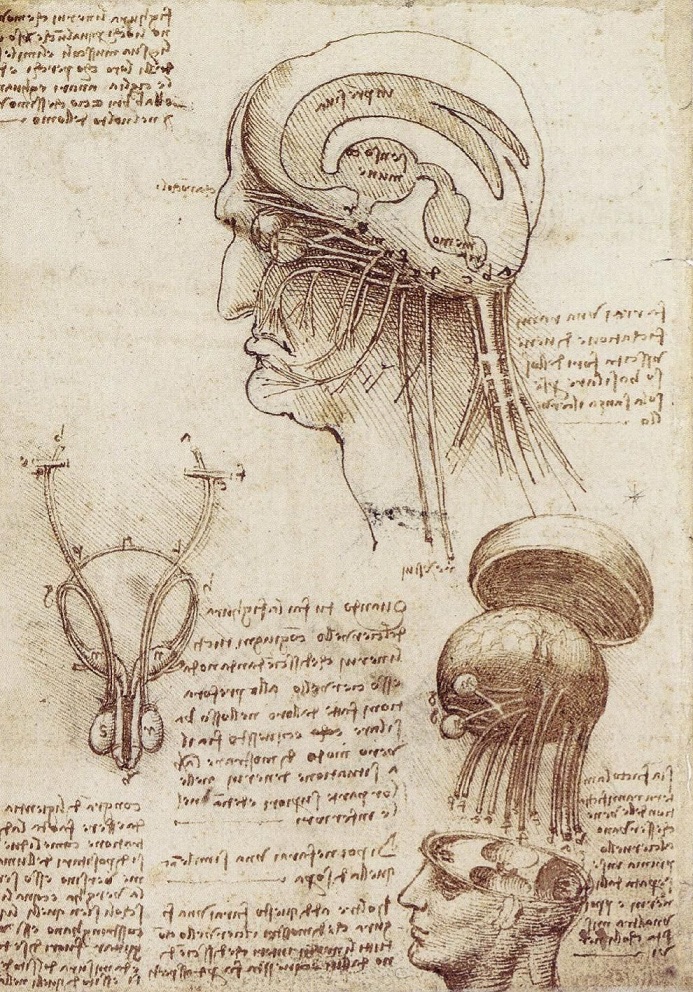
Il cervello – studi anatomici di Leonardo da Vinci
English version –
Improve memory effortlessly – A simple strategy to learn better, also useful to study languages. It is known that resting your brain helps learning, in fact several studies confirm that a small “restful break” after studying allows you to remember everything more efficiently. It helps not only students, but also people with Alzheimer’s disease.
I had already noticed that studying concepts before going to bed had positive effects on learning. For this reason I created the digital course “Buonanotte Preposizioni”, where you have to listen to, preferably before going to bed, short audio clips in which there are sentences to repeat with the aim of facilitating the use of prepositions. Intense nighttime activity could be the reason why we often learn things better before going to bed. However, researchers found that this dynamic is not limited only to sleep and that similar neuronal activities also occur during waking periods.
The exact mechanism is still unknown, although some clues were found in a growing understanding of memory formation. Nowadays it is well recognized that once memories have been initially encoded, they go through a period of consolidation that fixes them in long-term archiving. It was once thought that this mainly happened during sleep, in which increased communication takes place between the hippocampus – where memories are formed for the first time – and the cortex. A process that could build and strengthen the new neural connections necessary for subsequent recall.
Perhaps the brain takes “downtime” to strengthen what it has recently learned, so reducing stimulation during this period can facilitate the process. It would also appear that neurological damage may make the brain particularly vulnerable to such interference after acquiring a new memory, which is why the rest period has proved to be particularly beneficial for stroke survivors and people with Alzheimer’s disease.
Therefore there is no need to sleep, just avoid distractions for 10-15 minutes after studying and let your mind rest quietly. Ideally having “minimal interference” during the break, deliberately avoiding any activity that could compromise the delicate task of memorization. So don’t check your emails or surf the web on your smartphone. The brain must be given the possibility of a full recharge without distraction.
In conclusion it’s not true that the more effort we make the more we learn. Instead, it is helpful to schedule regular rest periods, without distraction, to help us hold the new material a little more firmly.
In the era of information overload, it is worth remembering that our smartphone is not the only thing that needs regular charging. Even our minds clearly need it.
Try to take a small “restful break” after studying Italian and let me know how it goes. Do you remember the concepts studied better?
L’usanza di consumare le verdure in pinzimonio è piuttosto antica, già diffusa nei banchetti rinascimentali.
The custom of consuming vegetables in pinzimonio is quite ancient, already widespread in Renaissance banquets.
A gennaio durante il corso di Italiano Ogni Giorno una delle parole era pinzimonio. Siccome ha fatto scaturire molto interesse, ho pensato di parlarne in un blog .
In January, during the course Italiano Ogni Giorno , one of the words was pinzimonio. As it sparked a lot of interest, I thought I’d talk about it in a blog.
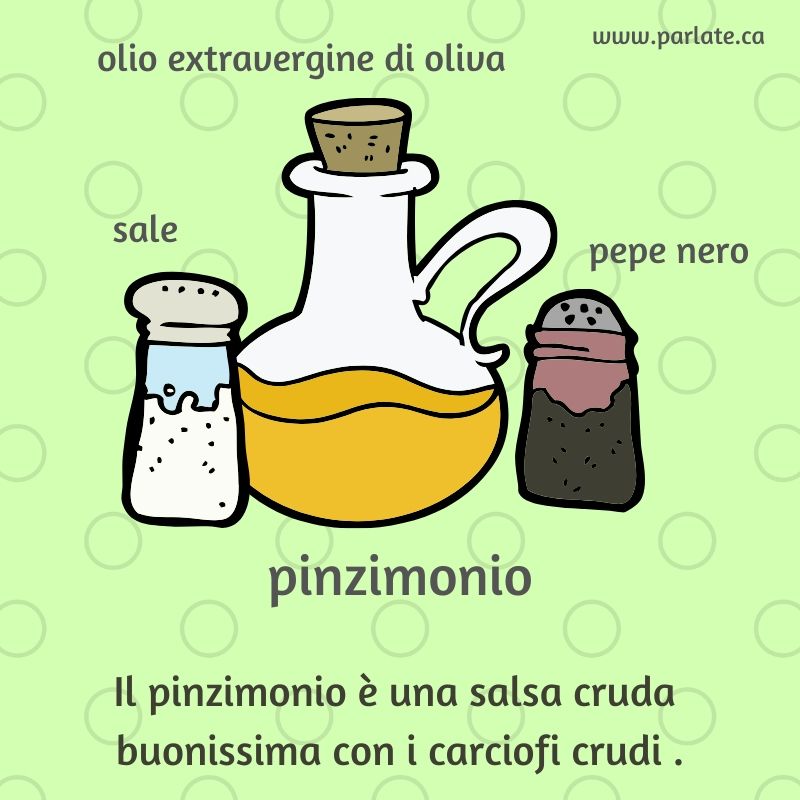
Il nome Pinzimonio è una combinazione di pinze e matrimonio e si riferisce all’usanza di pinzare le verdure tra le due dita e sposarle nella salsa di olio d’oliva con sale e pepe. Si mangia all’inizio o alla fine del pasto.
The name Pinzimonio is a combination of pincers and marriage and refers to the custom of pinzare pinching the vegetables between the two fingers and marrying them in the olive oil sauce with salt and pepper. It is eaten at the beginning or at the end of the meal.
Il pinzimonio è facile da preparare, anche perché non è prevista la cottura. Tuttavia, le verdure devono essere tagliate in pezzi più o meno della stessa forma e dimensione per dare loro l’aspetto armonioso che si associa a questo particolare piatto. Seguendo la stagionalità dei prodotti vegetali, puoi preparare un pinzimonio diverso per ogni mese dell’anno e aggiungere qualsiasi verdura che si presta ad essere consumatacruda.
The pinzimonio is easy to prepare, also because it does not require cooking. However, the vegetables need to be cut into pieces of roughly the same shape and size to give them the harmonious look that is associated with this particular dish. By following the seasonality of produce, you can prepare a different pinzimonio for each month of the year and add any vegetables that are suitable to be eaten raw.
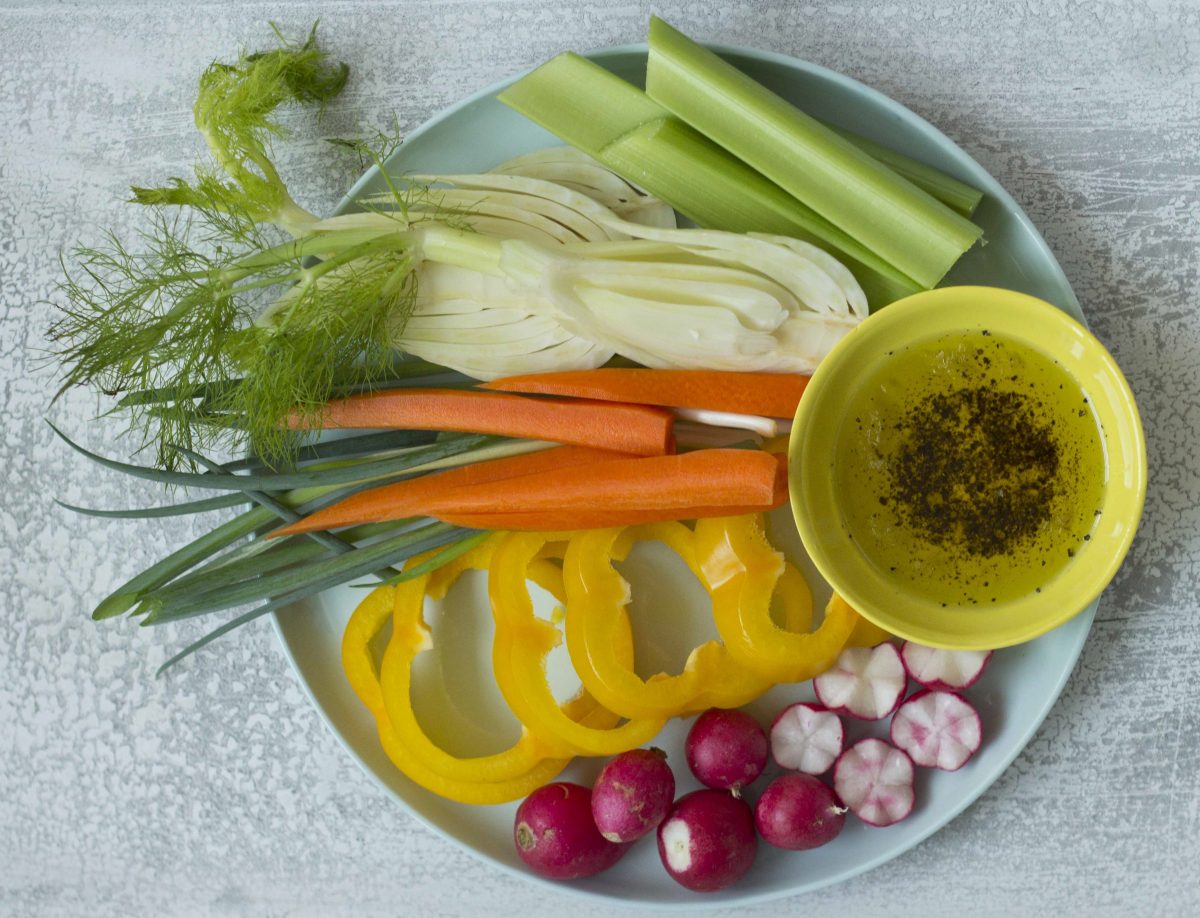
STORIA. Quello del pinzimonio è un uso molto antico, già diffuso nei banchetti rinascimentali. A quel tempo la frutta e la verdura arricchivano i vassoi di portata per scopi puramente decorativi. La verdura iniziava ad essere consumati intinta nei sughi delle carni che aveva decorato. Nel XIX sec. si consolida l’abitudine di sostituire i sughi con l’olio d’oliva, perché le verdure fresche diventano una vera pietanza, affidata nella composizione alla discrezione di chi allestiva il pranzo. In Toscana si mangiano in pinzimonio: carciofi, carote, finocchi, sedani, ravanelli, porri, cipolline ecc.
HISTORY. The pinzimonio is a very ancient custom, already widespread in Renaissance banquets. At that time fruit and vegetables enriched serving trays for purely decorative purposes. The vegetables began to be eaten dipped in the sauces of the meats that it decorated. In the nineteenth century the habit of replacing sauces with olive oil is consolidated, because fresh vegetables become a real dish, entrusted in the composition to the discretion of those who prepared the lunch. In Tuscany eaten in pinzimonio are: artichokes, carrots, fennel, celery, radishes, leeks, onions etc.
Era conosciuto a Roma e dintorni con il termine dialettale cazzimperio, che probabilmente proviene dall’italiano arcaicocazza, che significa mestolo, utensile tipico degli alchimisti. L’usanza di consumare le verdure in pinzimonio è oggi diffusa in tutta Italia.
It was known in and around Rome with the dialect term cazzimperio, which probably comes from the archaic Italian cazza, which means ladle, a typical tool of alchemists. The custom of consuming vegetables in pinzimonio is now widespread throughout Italy.
RICETTA. Contorno o antipasto che sia, questo piatto è perfetto per tutto l’anno, soprattutto in vista del caldo estivo, visto che consente di non accendere i fornelli. Come preparare un pinzimonio perfetto?
RECIPE. As a side dish or appetizer, this dish is perfect all year round, especially in view of the summer heat, as it allows you not to turn on the stove. How to prepare a perfect pinzimonio?
Le verdure devono essere molto fresche e croccanti, per cui è bene scegliere prodotti di stagione, più saporiti e profumati. Le verdure vanno pulite e tagliate a bastoncino, tutte più o meno della stessa forma e lunghezza, per creare un piatto molto ordinato. Classici del pinzimonio sono il sedano, le carote, i finocchi e i peperoni, ma ben vengano altri prodotti crudi, come i ravanelli, radicchio, indivia belga o cetrioli. L’importante è conservare le verdure in acqua fresca fino a poco prima di servirle: una volta tagliate, infatti, tendono ad annerirsi e a perdere consistenza.
The vegetables must be very fresh and crunchy, so it is good to choose seasonal products, more tasty and fragrant. The vegetables should be cleaned and cut into sticks, all more or less of the same shape and length, to create a very neat dish. Classics of pinzimonio are celery, carrots, fennel and peppers, but other raw produce are welcome, such as radishes, radicchio, Belgian endive or cucumbers. The important thing is to keep the vegetables in fresh water until just before serving them: once cut, in fact, they tend to blacken and lose consistency.
La salsa è classicamente composta da una emulsione di olio extravergine d’oliva, sale, pepe (nero o bianco), cui si aggiungono eventualmente aceto o limone. Si ottiene sbattendo gli ingredienti con una forchetta, fino a incorporarli l’uno con l’altro. Del pinzimonio esiste anche una variante siciliana, in cui sono aggiunti anche il pomodoro pelato, l’aglio, la menta e un po’ d’acqua.
The sauce is classically composed of an emulsion of extra virgin olive oil, salt, pepper (black or white), possibly adding vinegar or lemon. It is obtained by beating the ingredients with a fork, until they are incorporated into each other. There is also a Sicilian variant of the pinzimonio, in which peeled tomatoes, garlic, mint and a little water are also added.
Il Pinzimonio rappresenta la dieta mediterrana genuina per eccellenza, verdure crude e olio d’oliva. Un piatto perfetto per tutto l’anno.
Pinzimonio represents the genuine Mediterranean diet par excellence, raw vegetables and olive oil. A perfect dish for the whole year.