google.com, pub-1205142185266664 , DIRECT, f08c47fec0942fa0

How to use futuro anteriore | The future perfect – Italian verbs

(English follows)

Eccoci alle prese con uno dei verbi meno studiati dagli studenti di lingua italiana e meno usati nella lingua parlata: Il futuro anteriore (o futuro composto). Allora perche studiarlo mi chiederai? Tecnicamente il futuro anteriore è un tempo verbale che esprime fatti proiettati nel futuro ma avvenuti prima di altri. In poche parole illustra il rapporto temporale tra due eventi futuri. Non viene comunemente insegnato agli stranieri per la sua apparente complessità. Comunque esiste anche in inglese e concide con il future perfect.

Ma come vedremo negli esempi che seguono, il futuro anteriore ha un ruolo importante. Ha una funzione tanto importante da essere fondamentale nei testi giuridici.

Il futuro anteriore è molto simile nella sua costruzione al passato prossimo, con l’unica differenza che il verbo ausiliare (essere o avere) usa il futuro semplice.

Tabella del futuro anteriore di verbi regolari in:
-are, -ere, -ire

Parl-are Ricev-ere Part-ire
IoAvrò parl-atoAvrò ricev-uto Sarò part-ito/a
TuAvrai parl-atoAvrai ricev-uto Sarai part-ito/a
Lui/LeiAvrà parl-atoAvrà ricev-uto Sarà part-ito/a
NoiAvremo parl-atoAvremo ricev-uto Saremo part-iti/e
VoiAvrai parl-atoAvrete ricev-uto Sarete part-iti/e
LoroAvranno parl-atoAvranno ricev-uto Saranno part-iti/e

Quando si usa l’ausiliare “essere” ricordati di concordare il futuro anteriore con il soggetto:
Maschile singolare: Fra un mese, sarò partito per l’Italia.
Femminile singolare: Fra un mese, sarò partita per l’Italia.
Maschile plurale: Fra un mese, saremo partiti per l’Italia.
Femminile plurale: Fra un mese, saremo partite per l’Italia.
Misto maschile/femminile plurale: Fra un mese, saremo partiti per l’Italia.

Quando si usa il futuro anteriore?

Si usa per parlare di un’azione futura che si è gia conclusa prima di un’altra azione futura:
Domani a mezzogiorno saremo già arrivati al mare.
Tomorrow at noon we will already have arrived by the seaside.

Si usa nei casi in cui si esprime ipotesi o dubbio sul passato:
Non è venuta al lavoro ieri, sarà stata malata.
She didn’t come to work yesterday, she must have been sick.

Nella lingua parlata il futuro anteriore viene spesso sostituito con il futuro semplice e il passato prossimo:

(1) Quando arriveranno gli ospiti, inizieremo a pranzare.
Invece di:
Quando saranno arrivati gli ospiti, inizieremo a pranzare.
– When the guests will have arrived, we’ll start eating lunch.

(2) Quando avete finito di usare il passapomodoro, ce lo prestate?
Invece di:
Quando avrete finito di usare il passapomodoro, ce lo presterete?
– When you will have finished using the tomato press, will you lend it to us?

Due alternative al futuro anteriore usate nel linguaggio parlato:

1. dopo + participio passato

Dopo che avrò studiato guarderò un film. = Dopo aver studiato guarderò un film.
– After having studied, I’ll watch a film

2. forse + passato prossimo

Maria non mi ha chiamato, si sarà dimenticata. = Maria non mi ha chiamato, forse si è dimenticata.
Maria didn’t call me, maybe she forgot.


Tocca a te! Prova a scrivere delle frasi nei commenti usando il futuro anteriore!


English version:

Here we are tackling one of the verbs less studied by students of the Italian language and less used in the spoken language: Il futuro anteriore (o futuro composto). So why study it you might ask me? Technically, the il futuro anteriore is a verbal tense that expresses facts projected into the future but that occurred before others. In a nutshell, it illustrates the temporal relationship between two future events. It’s not commonly taught to foreigners due to its apparent complexity. However, it also exists in English and coincides with the future perfect.

But as we will see in the examples that follow, the futuro anteriore plays an important role. It has such an important function that it’s fundamental in legal texts.

The futuro anteriore is very similar in its construction to the passaro prossimo/present perfect, with the only difference that the auxiliary verb (essere/to be or avere/to have) uses the simple future.

Futuro anteriore, chart of regular verbs in:
-are, -ere, -ire

Parl-are Ricev-ere Part-ire
IoAvrò parl-atoAvrò ricev-uto Sarò part-ito/a
TuAvrai parl-atoAvrai ricev-uto Sarai part-ito/a
Lui/LeiAvrà parl-atoAvrà ricev-uto Sarà part-ito/a
NoiAvremo parl-atoAvremo ricev-uto Saremo part-iti/e
VoiAvrai parl-atoAvrete ricev-uto Sarete part-iti/e
LoroAvranno parl-atoAvranno ricev-uto Saranno part-iti/e

When using the auxiliary “essere/to be” remember that il futuro anteriore agrees with the subject:
Masculine singular: Fra un mese, sarò partito per l’Italia.
Feminine singular : Fra un mese, sarò partita per l’Italia.
Masculine plural: Fra un mese, saremo partiti per l’Italia.
Feminine plural: Fra un mese, saremo partite per l’Italia.
Mixed masculine/feminine plural: Fra un mese, saremo partiti per l’Italia.

When is il futuro anteriore used?

It is used to talk about a future action that has already ended before another future action:
Domani a mezzogiorno saremo già arrivati al mare.
– Tomorrow at noon we wil already have arrived by the seaside.

It is used in cases where hypotheses or doubts about the past are expressed:
Non è venuta al lavoro ieri, sarà stata malata.
– She didn’t come to work yesterday, she must have been sick.

In spoken language, il futuro anteriore is often replaced with the futuro semplice/simple future and the passato prossimo:

(1) Quando arriveranno gli ospiti, inizieremo a pranzare.
Instead of:
Quando saranno arrivati gli ospiti, inizieremo a pranzare.
– When the guests will have arrived, we’ll start eating lunch.

(2) Quando avete finito di usare il passapomodoro, ce lo prestate?
Invece di:
Quando avrete finito di usare il passapomodoro, ce lo presterete?
– When you will have finished using the tomato press, will you lend it to us?

Two alternatives to il futuro anteriore used in spoken language:

1. dopo + participio passato

Dopo che avrò studiato guarderò un film. = Dopo aver studiato guarderò un film.
– After having studied, I’ll watch a film

2. forse + passato prossimo

Maria non mi ha chiamato, si sarà dimenticata. = Maria non mi ha chiamato, forse si è dimenticata.
Maria didn’t call me, maybe she forgot.

It’s your turn! Try writing sentences in the comments using il futuro anteriore!

How to use Ce l’ho in Italian | learning Italian

(English follows)

A volte scegliere la forma corretta tra ce l’ho, ce lo e c’è lo è un dilemma sia per gli studenti stranieri sia per gli italiani stessi. Il modo migliore per imparare ad usare queste forme correttamente è di capire la loro funzione nella frase.

Prima di tutto rivediamo l’uso del pronome “ci”.

Le diverse funzioni di “ci”

Come pronome diretto corrispondente a noi e a noi:

  • Ci hanno regalato una caffettiera;
  • Dalla stazione ci hanno accompagnato a casa;

Come pronome riflessivo:

  • Ci siamo alzati tardi;

Con valore impersonale, frequente in Toscana, ma in rapida diffusione in tutto il territorio nazionale:

  • Ci si sente più tardi.

Può anche assumere il significato di qui, in questo luogo; , in quel luogo:

  • Mi piace il mare ecco perché ci vorrei vivere;

Esempi concreti di: ce l’ho, ce lo o c’è lo

1. Quando si scrive ce l’ho?

Quando l’espressione indica possesso e si riferisce a qualcosa già nominato in precedenza per evitare la ripetizione. La forma non contratta è “ce lo ho”. In questo caso “ce” è una trasformazione della particella “ci” per esigenze fonetiche di fronte a lo, la, li, le. Quindi “ce” può svolgere la funzione di avverbio di luogo, particella pronominale, complemento oppure far parte di espressioni peculiari del parlato.

  • ESEMPIO: Hai una penna? Sì, ce l’ho.
  • ESEMPIO: Ce l’ho fatta!

2. Quando si scrive ce lo? (pronome doppio “a noi lo”)

Anche qui, la particella “ce” deriva da “ci” e svolge la funzione di pronome personale per la prima persona plurale femminile e maschile. Viene seguita da un pronome per evitare la ripetizione.

  • ESEMPIO: Avete comprato il pane? No, ce lo siamo dimenticato.
  • ESEMPIO: È pronto il dolce? Sì, ce lo mangiamo dopo cena.

3. Quando si scrive c’è lo

I due elementi “c’è” e “lo” si scrivono così quando appartengono a due periodi diversi, spesso separati anche dalla punteggiatura. “C’è” è il risultato della contrazione della particella “ci” seguita dal verbo “essere”, mentre “lo” è un pronome diretto.

  • ESEMPIO: Se il pane non c’è lo comprerò domani.
  • ESEMPIO: A casa il pane non c’è, lo compro io quando torno.

Altri usi di ci:

L’uso del “ci” in eccesso

Nella lingua parlata si può usare “ci” anche “in eccesso” in frasi del tipo:

  • In questo ristorante ci si mangia bene

Ci e si in questo caso esprimono la stessa cosa, ma nel parlato la ridondanza è ammessa.

Gli esempi diventano un po’ più complessi quando “ci” assume valore dimostrativo:

  • a ciò: Non ci credo!
  • su ciò: Su di lui ci puoi contare.
  • in ciò: Non ci capisco nulla.

Oppure con il significato di con lui, con lei, con loro: “Con lui/lei/loro è tanto tempo che non ci parlo più”.

L’uso del ci attualizzante

Un uso sempre più diffuso nella lingua scritta e nel parlato è il cosiddetto ci attualizzante: “Non c’ho sonno”, “Non c’ho voglia”, “C’ho fame”. Abbondantemente usato nella lingua spontanea, ma che porta i puristi della lingua a interrogarsi sulla correttezza della grafia “c’ho”.

In alcune costruzioni, l’uso di “ci” è obbligatorio: “Ce l’hai la penna? Ce l’ho”. La variante: “Hai la penna?” è completamente accettata, ma di certo non potremmo dire “Sì, ho”.


ENGLISH VERSION:

Sometimes choosing the correct form between ce l’ho, ce lo and c’è lo is a dilemma both for foreign students and for Italians themselves.
The best way to learn how to use these forms correctly is to understand their function in the sentence.

First of all, let’s review the use of the pronoun “ci”.

The different functions of “ci”

As a direct pronoun corrisponding to noi and a noi:

  • Ci hanno regalato una caffettiera;
  • Dalla stazione ci hanno accompagnato a casa;

As a reflexive pronoun:

  • Ci siamo alzati tardi;

With an impersonal value, common in Tuscany, but rapidly spreading throughout the national territory:

  • Ci si sente più tardi.

It can also take on the meaning of here, in this place; there, in that place:

  • Mi piace il mare ecco perché ci vorrei vivere;

Concrete examples of the 3 forms:
ce l’ho, ce lo or c’è lo

1. When do you write ce l’ho?

When the expression indicates possession and refers to something previously mentioned to avoid repetition. The uncontracted form is “ce lo ho” . In this case “ce” is a transformation of the particle “ci” for phonetic needs before lo, la, li, le. Therefore “ce” can perform the function of adverb of place, pronominal particle, complement or be part of peculiar expressions of the spoken word.

  • EXAMPLE: Hai una penna? Sì, ce l’ho.
  • EXAMPLE: Ce l’ho fatta!

2. When do you write ce lo? (double pronoun “a noi lo”)

Here too, the particle “ce” derives from “ci” and acts as a direct pronoun for the first person plural feminine and masculine. It is followed by a pronoun to avoid repetition.

  • EXAMPLE: Avete comprato il pane? No, ce lo siamo dimenticato.
  • EXAMPLE: È pronto il dolce? Sì, ce lo mangiamo dopo cena.

3. When do you write c’è lo

The two elements “c’è” and “lo” are written this way when they belong to two different periods, often also separated by punctuation. “C’è” is the result of the contraction of the particle “ci” followed by the verb “to be”, while “lo” is a direct pronoun.

  • EXAMPLE: Se il pane non c’è lo comprerò domani.
  • EXAMPLE: A casa il pane non c’è, lo compro io quando torno.

Other uses of “ci”:

The use of “ci” in excess

In the spoken language you can use “ci” also “in excess” in sentences such as:

  • In questo ristorante ci si mangia bene

Ci and si in this case express the same thing, but in speech redundancy is allowed.

The examples become a little more complex when “ci” takes on a demonstrative value:

  • a ciò: Non ci credo!
  • su ciò: Su di lui ci puoi contare.
  • in ciò: Non ci capisco nulla.

Or with the meaning of con lui, con lei, con loro: “Con lui/lei/loro è tanto tempo che non ci parlo più”.

The use of actualizing “ci

An increasingly widespread use in written and spoken language is the so-called actualizing ci: “Non c’ho sonno”, “Non c’ho voglia”, “C’ho fame”. Used extensively in the spontaneous language, but which leads purists of the language to question the correctness of the spelling “c’ho”.

In some sentence structures, the use of “ci” is mandatory: “Ce l’hai la penna? Ce l’ho”. The variant: “Hai la penna?” is completely accepted, but we certainly couldn’t say “Sì, ho” .

Adesso prova a mettere in pratica facendo degli esercizi!
Now try practicing by doing some exercises!

How to use the past tense imperfetto prospettivo in Italian – Italian grammar

Come usare l’imperfetto prospettivo in italiano

Ti è mai capitato di voler esprimere un tempo futuro nel passato? Per esempio la frase, “Maria ha detto che faceva i cannelloni il giorno dopo”, indica un’azione futura nel passato di Maria.
Questo tipo di imperfetto in italiano (ce ne sono diversi!) si chiama imperfetto prospettivo e, come il condizionale passato, descrive un’azione futura in un contesto di eventi passati.

Have you ever wanted to express a future time in the past? For example, the phrase, “Maria ha detto che faceva i cannelloni il giorno dopo” (“Maria said she was making cannelloni the next day,”) indicates a future action in Maria’s past.
This type of imperfect in Italian (there are several!) is called imperfetto prospettivo (perspective imperfect) and, like the past conditional, describes a future action in a context of past events.

E’ molto comune anche per indicare un’intenzione futura che non avverrà, per esempio, “Dopodomani doveva uscire con gli amici, ma è malata.” L’equivalente in inglese è “supposed to” e in francese “J’étais supposé”. La grammatica italiana non annoia mai, vero?

It is also very common to indicate a future intention that will not happen, for example, “Dopodomani doveva uscire con gli amici, ma è malata.” (“The day after tomorrow she was supposed to go out with friends, but she is sick.”) The equivalent in English is “supposed to” and in French “J’étais supposé.” Italian grammar is never boring, right?


Per capire meglio vediamone altri esempi / To understand better, let’s see other examples:

  1. Sonia ci disse che partiva tra un mese.
    – Sonia told us we was leaving in a month.
  2. Ha scritto nel messaggio che veniva tra due giorni.
    – He wrote in the message that he was coming in two days.
  3. La prossima settimana riposavo se non dovevo lavorare.
    – Next week I was going on vacation, if I didn’t have to work.
  4. Mi dissero che andavano in campagna il prossimo fine settimana.
    – They told me they were going to the country-side next weekend

    Tutto chiaro?
    Adesso tocca a te, prova tu a fare delle frasi! / Now it’s your turn, try making some sentences!

How to use CI and NE with the verb PENSARE | Italian grammar

Come usare CI e NE con il verbo PENSARE – grammatica italiana


(English follows)

Imparare a usare i pronomi “ne” e “ci” è un grande risultato. Tuttavia, diventa ancora più interessante quando questi pronomi sono accompagnati da alcuni verbi, come il verbo pensare. Ad esempio pensarci e pensarne.

Potrebbero sembrare un po’ complicati, e lo sono, non lo nego! Quindi vediamo prima i significati e poi facciamo una semplice tabella per capirli meglio con alcuni esempi.

Pensarci

1. pensare, riflettere, meditare su qualcosa.
2. occuparsi di qualcosa.

Pensare, riflettere, meditare su qualcosa

  • Ci abbiamo pensato a lungo prima di traslocare in un nuovo paese.
    We have thought long about it before moving to another country.
  • I nostri amici ci pensano sempre.
    Our friends always think about us.

Occuparsi di qualcosa

  • Ci hanno pensato i vicini a tagliare l’erba.
    The neighbors took care of cutting the grass.
  • Vuole pensarci lui a preparare la cena.
    He wants to take care of making dinner.

Pensarne

1. trovare idee/soluzioni.
2. comprendere qualcuno o il significato di qualcosa in un modo particolare.
3. esprimere un’opinione.

Trovare idee/soluzioni

  • Ne abbiamo pensate tante prima di scegliere la soluzione adatta.
    We thought many up before choosing the right solution.
  • Non esiste una strategia unica. Bisogna pensarne diverse.
    There’s no one strategy. One must think up different ones.

Comprendere qualcuno o il significato di qualcosa in un modo particolare

  • Sembra strano e non so cosa pensarne.
    It seems strange and I don’t know what to make of it.
  • Era simpatico e non voglio pensarne male.
    He was nice and I don’t want to think badly of him.

Esprimere un’opinione

  • È la sua scelta qualunque cosa se ne pensi.
    It’s her/his choice whatever anyone thinks.
  • Che ne pensi del nuovo film di Sorrentino?
    What do you think about Sorrentino’s new film?

Ora prova a fare alcune frasi per esercitarti. Più applichi le regole, più velocemente impari!


English version:

Learning how to use the pronouns “ne” and “ci” is a great accomplishment.
However, it gets even more interesting when these pronouns are accompanied by some verbs, such as the verb pensare. For example pensarci and pensarne.

They might seem a bit tricky, and they are, I won’t deny it! So let’s let’s tackle the meanings first and then make a simple chart to understand them better with some examples.

Pensarci

1. to think, reflect, ponder about something.
2. to take care of something.

To think, reflect, ponder about something

  • Ci abbiamo pensato a lungo prima di traslocare in un nuovo paese.
    We have thought long about it before moving to another country.
  • I nostri amici ci pensano sempre.
    Our friends always think about us.

To take care of something

  • Ci hanno pensato i vicini a tagliare l’erba.
    The neighbors took care of cutting the grass.
  • Vuole pensarci lui a preparare la cena.
    He wants to take care of making dinner.

Pensarne

1. to think something up.
2. to understand someone or the meaning of something in a particular way.
3. to express an opinion.

To think something up

  • Ne abbiamo pensate tante prima di scegliere la soluzione adatta.
    We thought many up before choosing the right solution.
  • Non esiste una strategia unica. Bisogna pensarne diverse.
    There’s no one strategy.One must think up different ones.

To understand someone or the meaning of something in a particular way

  • Sembra strano e non so cosa pensarne.
    It seems strange and I don’t know what to make of it.
  • Era simpatico e non voglio pensarne male.
    He was nice and I don’t want to think badly of him.

To express an opinion

  • È la sua scelta qualunque cosa se ne pensi.
    It’s her/his choice whatever anyone thinks.
  • Che ne pensi del nuovo film di Sorrentino?
    What do you think about Sorrentino’s new film?

Now try making some sentences to practice. The more you apply the rules, the faster you learn!


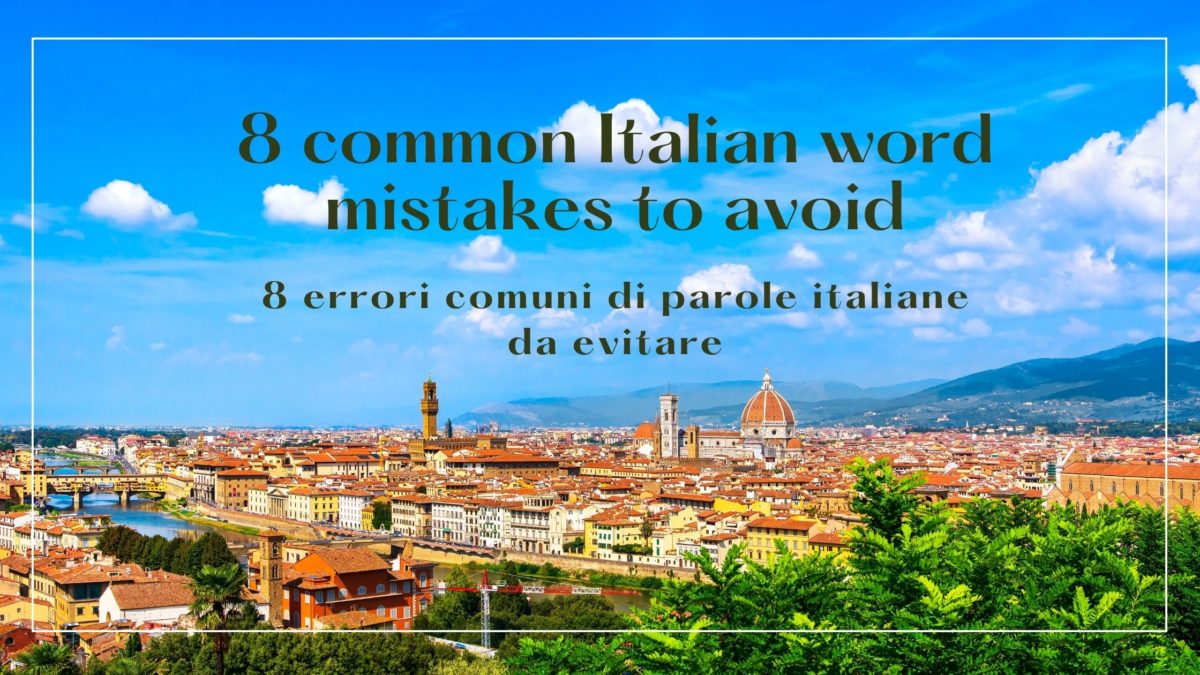
Don’t make these 8 Italian word mistakes

Non fare questi 8 errori di vocabolario italiano

Negli ultimi due decenni molte parole italiane sono state assorbite nelle abitudini di vita di tutto il mondo. Sebbene a volte il significato di queste parole, spesso relative al cibo, ad alcuni sia sconosciuto, sono tuttavia pronunciate con orgoglio. Vorrei che i laboriosi immigrati italiani della metà del XX secolo potessero vedere che l’italiano ora è di moda. Tuttavia, avrai sentito le discussioni che si stanno verificando in Italia negli ultimi anni sul fatto che la lingua italiana ha adottato molte parole straniere in particolare dall’inglese e dal francese. Al centro di queste discussioni c’è L’Accademia della Crusca, fondata nel 1583 a Firenze, i cui fondatori erano originariamente chiamati la brigata dei Crusconi e costituivano un circolo composto da poeti, letterati e giuristi. Questa società di studiosi di linguistica e filologia italiana è il più importante istituto di ricerca sulla lingua italiana, nonché la più antica accademia linguistica del mondo.

In the past couple of decades many Italian words have been absorbed in the lifestyle habits around the world. Although at times the meaning of these words, often pertaining to food, are unknown to some, they are yet uttered with pride. I wish the hard working Italian immigrants of the mid 20th century could see that Italian is now trendy. However, you may have heard the discussions taking place in Italy in recent years over the fact that the Italian language has been adopting many foreign words in particular from English and French. At the forefront of these discussions is L’Accademia della Crusca, founded in 1583 in Florence, whose founders were originally called la brigata dei Crusconi and constituted a circle composed of poets, men of letters, and lawyers. This society of scholars of Italian linguistics and philology is the most important research institution of the Italian language, as well as the oldest linguistic academy in the world.

Il suo obiettivo è di mantenere la purezza della lingua italiana. Infatti il nome Crusca è una metafora per il suo lavoro nel setacciare parole e strutture corrotte (come la crusca è separata dal grano). “Il più bel fior ne coglie”, un famoso verso del poeta italiano Francesco Petrarca è il motto dell’Accademia. Arrivati al 21° secolo c’è la preoccupazione che la lingua italiana svanisca o semplicemente diventi un minestrone. Quindi come ambasciatrice della lingua e della cultura italiana non uso mai parole straniere per sostituire una parola che già esiste in italiano. Quindi non mi sentirai mai dire “hai delle news” invece di “hai delle notizie oppure “nel weekend vado al mare” invece di “nel fine settimana vado al mare”.

Its goal is to maintain the purity of the Italian language. In fact Crusca, which means “bran” in Italian, is a metaphor for its work is to sift out corrupt words and structures (as bran is separated from wheat). “Il più bel fior ne coglie” (‘She gathers the fairest flower’), a famous line by the Italian poet Francesco Petrarca is the academy motto. Fast forward to the 21st century and there is concern that the Italian language will vanish or simply become un minestrone. So as an ambassador of the Italian language and culture I never use foreign words to replace a word that already exists in Italian. Therefore, you’ll never hear me say “hai delle news” instead of hai delle notizie oppure “nel weekend vado al mare” instead of “nel fine settimana vado al mare“.

Se hai viaggiato in Italia, avrai notato che gli italiani apprezzano quando gli stranieri si sforzano di parlare in italiano, e non gli dispiace affatto quando pronunci male una parola o fai fatica con alcune parole o frasi, in realtà gli italiani saranno più che felici di aiutarti a dirlo nel modo giusto. Tuttavia, potresti avere problemi a farti capire se usi o pronunci parole in modo errato. Facciamo un po’ di ordine partendo dalle seguenti otto parole che ho notato in Nord America hanno particolarmente bisogno di un po’ di amore!

If you have traveled to Italy, you may have noticed that Italians appreciate it when foreigners make an effort to speak Italian, and they don’t mind it at all when you mispronounce a word or struggle with some words or phrases, actually Italians will be more than happy to help you say it just right. However, you may have problems being understood if you’re using or pronouncing words incorrectly. Let’s make some order starting from following eight words which I noticed in North America are particularly in need of a bit of love!

1. Il biscotto / i biscotti

I biscotti riportano alla memoria i ricordi d’infanzia di quando mia mamma sfornava magicamente infiniti vassoi di biscotti in appena un paio d’ore. La casa si riempiva del dolce profumo di mandorle, vaniglia, cacao, scorza di limone. Mi sembrava di vivere ”in una casa di zucchero”. Preparava abbondanti quantità di biscotti e li conservava nel congelatore per gli ospiti fortunati. Il gigante congelatore era pieno di mostaccioli, amaretti, pesche e anche tante varietà di torte. Oggigiorno i biscotti hanno conquistato il mondo al plurale, giustamente. Ma se ne ordini solo 1, e non so come fai, è un sostantivo maschile singolare ”un biscotto”, mentre il plurale è “biscotti”. Mi sembra comunque tenero sentire qualcuno ordinare i “biscottis”.

Biscotti bring back childhood memories of when my mom would magically “sfornare” /bake endless trays of biscotti in just a couple of hours. The house would be filled with the sweet smell of almonds, vanilla, cacao, lemon zest. I felt like I was living “in una casa di zucchero”. She used to make copious amounts of biscotti and treasure them in the freezer for lucky guests. The giant freezer was packed with mostaccioli, amaretti, pesche, and a variety of cakes, too. Nowadays, biscotti, not biscottis, have taken over the world in their plural form, rightfully so. But if you order just 1, and I don’t know how you do it, it’s a singular masculine noun “un biscotto”, while the plural is “biscotti”. I still think it’s endearing when I hear someone order “a biscottis.”

2. Il gelato

Tutti amano il gelato e molti vogliono provarlo anche se non sanno cosa sia. Come la signora che ho visto una volta precipitarsi in un Caffè/bar a Little Italy in College Street a Toronto chiedendo al barista se poteva avere un “gelaro” apparendo perplessa non sapendo in cosa si stesse cacciando – sicuramente qualcosa di appetitoso secondo i racconti che l’avevano portata lì in primo luogo. Il barista sorrise indicando l’affare misterioso proprio di fronte a lei e disse “…è gelato!” Il gelato più amato al mondo. In italiano la “t” non si pronuncia come una “r”. Assicurati di pronunciare la “t” con la lingua premuta contro la parte posteriore dei denti anteriori in modo da poter essere serviti senza indugio questa prelibatezza italiana congelata!

Everybody loves gelato and many want to try it even if they don’t know what it is. Like the lady who once rushed into a Cafe’ in Little Italy on College Street in Toronto asking the barista if she could have a “gelaro” appearing puzzled and not knowing what she was getting herself into – surely something yummy according to the recounts that led her there in the first place. The barista grinned indicating right in front of her and said “..it’s ice-cream!” The most loved ice-cream in the world, il gelato. The t is not pronounced as an r in Italian. Be sure to voice the t with your tongue against the back of your front teeth so you can be served this frozen Italian delicacy without delay!

3. Il latte

Latte significa latte in italiano, quindi se ordini un “latte” in Italia, ti verrà servito un bicchiere di latte. Se chiedi un “grande” (stile Starbucks), riceverai un grande bicchiere di latte semplicemente! Ma se ci vuoi davvero del caffè dentro, dovrai chiedere un caffè latte, che significa caffè con latte. Inoltre, il mio consiglio, ogni volta che ordini qualsiasi tipo di cibo in Italia di cui non sei sicuro/a, scegli quello “piccolo” per evitare grandi sorprese!

Latte means milk, so if you order a “latte” in Italy, you’ll be served a glass of milk, un bicchiere di latte. If you ask for a “grande” (Starbucks style), you’ll get a big glass of plain milk! But if you actually want some coffee in it, you really want to ask for un caffè latte, which means milk coffee. My advice is that whenever you’re ordering any kind of food in Italy that you’re unsure of, just go for piccolo “small” to avoid big surprises!

4. Il peperone

Questo è stato in realtà l’ostacolo più grande per me all’estero perché non mangio carne. In italiano il peperone è l’ortaggio. Quindi in Italia se chiedi il peperone è esattamente quello che otterrai, sicuramente non le fette di salame. Mentre invece il pepperoni, con la doppia p, è una varietà americana di salame. In italiano si chiama semplicemente salame e basta chiedere quello.
Allora, pizza con salame o pizza con peperoni?

This was actually the biggest hurdle for me abroad as I don’t eat meat. In Italian il peperone is the vegetable, the bell pepper. So in Italy if you ask for peperone then that’s exactly what you’ll get, definitely not salami slices. While on the other hand pepperoni, with a double p, is an American variety of salami. In Italian it’s simply called salame and just ask for that.
So, pizza con salame or pizza con peperoni?

5. La bruschetta

Che buona la bruschetta! Il problema è che se la pronunci nello stile inglese “brushera” i camerieri italiani in Italia saranno nel pallone! Ovviamente le tre lettere sch sono spesso pronunciate male. Ma se le pronunci bene potrai ordinare la bruschetta anche in Italia. Tecnicamente pronuncia la -s (togli il suono “sh” inglese) e pronuncia “ch” che in italiano è come la “c” di cat o la “k” di kite, e otterrete “brusketta”. E infine la doppia “t”… rendila forte, con la lingua contro i denti anteriori, e dimostra con forza che ci tieni davvero!

Che buona la bruschetta! The problem is that if you pronounce it English style “brushera” Italian waiters in Italy will be clueless! Of course thethree letters sch are often mispronounced. But if you pronounce it right you’ll be able to order la bruschetta in Italy, too. Technically you pronounce the -s (remove the “sh” sound) and pronounce “ch” which in Italian is like the “c” in cat or the “k” in kite, and you’ll get “brusketta”. And finally the double “t”… make it strong, tongue against your front teeth, and show that you really mean it!

6. Pronto vs presto

La parola “pronto” ha un altro cugino italiano che molti ignorano, ed è presto. Oggigiorno ”pronto” è usato per significare essere preparato, disposto, mentre presto significa fra breve o rapidamente! “Sono pronto/a.” Anche quando rispondi al telefono “Pronto, chi parla?” Presto è un altro paio di maniche, per esempio “Arrivo presto.”
Quindi, Sei pronto/a per andare in Italia presto?

The word “pronto” has another Italian cousin that many ignore, and that’s presto. Nowadays ”pronto” is used to mean ready and presto means soon! “Sono pronto/a” – I’m ready! Also when you answer the phone “Pronto, chi parla?” Presto has another pair of sleeves, for example “Arrivo presto.” – I’ll be there soon!
So, Sei pronto/a per andare in Italia presto?

7. Il problema

Penso che le pubblicità americane abbiano propagato l’errore ”No problemo!”. Si dice “nessun problema”. Le regole grammaticali impongono che i nomi maschili debbano terminare in -o e i nomi femminili in -a. Tuttavia, sono sicura che ormai saprai che in italiano ci sono eccezioni alla maggior parte delle regole ed eccone una. Sebbene la maggior parte dei nomi che terminano in -a siano femminili, ci sono alcuni nomi di origine greca che terminano con il suffisso -ma, che sono ancora maschili nonostante l’ingannevole desinenza -a ed è richiesto l’articolo maschile “il”. Quindi se lo desideri dai pure la colpa di questa eccezione al greco!

I think American commercials have propagated the ”No problemo!” mistake. The proper translation of “nessun problema” is “il problema”. Grammar rules dictate that masculine nouns must end in -o and feminine nouns must end in -a. However, I’m sure you know by now that in Italian there are exceptions to most rules and this is one of them. Although most nouns ending in -a are feminine, there are some nouns of Greek origin ending with the suffixe -ma, which are still masculine despite the deceiving -a ending and the masculine article “il” is required. So go ahead and blame this one on the Greek if wish!

8. Il cannolo / i cannoli

Ahimè, il cannolo proprio come il biscotto rientra nella categoria degli errori col doppio plurale. Il plurale in italiano differisce dalle altre lingue, in quanto non usa la -s, e invece si modifica la vocale che termina la parola: la -o maschile diventa -i e la -a femminile diventa -e. È comprensibile questo errore dato che i cannoli sono così buoni che vorresti moltiplicarli all’infinito chiamandoli cannolis al plurale, ma la grammatica ha i suoi limiti, per fortuna!

Alas, cannolo just like biscotto falls into the double plural mistake category. Pluralizing in italian differs from other languages, as it doesn’t use an -s, instead you modify the vowel at the end: masculine -o becomes -i and femminine -a becomes -e. This mistake is understandable since cannoli are so good you’d like to multiply them infinitely calling them cannolis in the plural form, but grammar has it’s limits, luckily!

Potrebbero esserci altre parole da aggiungere a questa lista, fammi sapere nei commenti se ne hai sentite altre che vengono spesso sbagliate!

There may be more words to add to this list, let me know in the comments if you’ve heard of any other words that are often mistaken!

A presto!

Mirella


How to use interjections in italian | Italian language

Le interiezioni in italiano

(English follows)

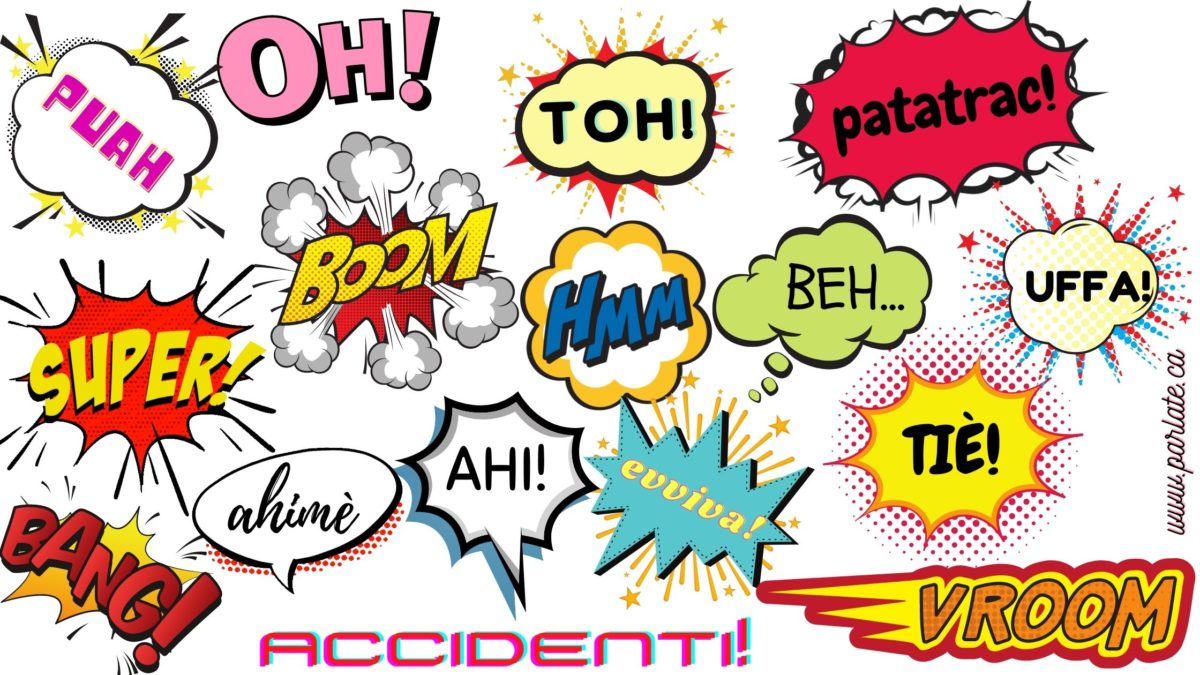
Oggi parliamo di interiezioni, di cui l’italiano è ricco. Credo che potrebbero bastare per fare discorsi interi… eh, ahimè, be’ , povero me…mah!

L’interiezione si usa per esprimere emozioni, stati d’animo e reazioni istintive condensate in una sola espressione, senza legami sintattici con il resto della frase.

Molte interiezioni hanno origine vernacolare e vengono utilizzate con frequenza maggiore o minore a seconda della provenienza geografica dell’interlocutore, ma ormai quasi tutte sono entrate a diritto nell’uso della lingua italiana.

Comunque per essere compresa bisogna conoscerne il contesto. Per questo motivo l’interiezione si può definire deittica, cioè legata a un qui e ora ben determinato.

In base all’intonazione, l’interiezione è in grado di assumere il significato di un’intera frase.

Come le espressioni del viso le interiezioni esprimono un messaggio chiaro all’interlocutore senza il bisogno di aggiungere altro.

Invece quando ci troviamo di fronte a un testo scritto è necessario integrare l’interiezione con qualche parola che ne specifichi il senso, siccome non possiamo basarci sul tono con cui viene pronunciata.

Le interiezioni sono divise in due differenti gruppi:

  1. Interiezioni che generalmente contengono la lettera h, sono brevi e assumono unicamente valore interiettivo come oh, ahimè, ahi
  2. Interiezioni che prendono a prestito parti del discorso anche molto diverse tra loro (avverbi, aggettivi, sostantivi, intere proposizioni…) e le utilizzano con valore esclamativo o interrogativo (bene!, evviva!, attenzione!).

Poi all’interno del secondo gruppo si trovano interiezioni improprie e locuzioni interiettive formate da proposizioni e modi di dire (povero me!, santa pazienza!).

All’interno della prima categoria: è facile individuare interiezioni semplici, composte e onomatopeiche:

Semplici – si compongono di uno o due suoni vocalici e possono esprimere dolore (ahi!, ohi!), esitazione o impaccio (ehm, uhm), repulsione (ih!), dubbio (mah, boh), sorpresa (uh!) e molti altri sentimenti e impulsi.

Composte – sono formate generalmente da un’interiezione semplice in combinazione con un pronome personale oppure da due parole (ahimè, orsù, suvvia). Anche queste voci possiedono diverse sfumature di significato in base al contesto.

Onomatopeiche – come dice il nome stesso, derivano da suoni riconoscibili e provengono per la maggior parte dal mondo del fumetto (puah, splash, clap, toc, wow).

Sicuramente tutte le interiezioni hanno un valore onomatopeico perché si basano sull’intonazione e il suono, e quindi più che prestare attenzione alle denominazioni dovremmo avere ben chiare le distinzioni e la provenienza etimologica di queste piccole istintive parti del discorso.

È importante poi la giusta grafia delle interiezioni! Spesso troviamo errori molto gravi come ho! al posto di oh!. L’h va messa sempre alla fine (eh, beh, mah, toh) tranne nel caso in cui ci siano due vocali come per esempio in ehi!, ahi! e i loro composti come ahinoi! e nel caso di ehm e uhm, dove si posiziona in mezzo.

Infine è possibile trovare O senza h quando si tratta di un vocativo (O cari fratelli!, O amica mia!). L’imperativo alla seconda persona singolare troncata di alcuni verbi funge talvolta da interiezione come nel caso di te’ per “tieni”, va’ per “guarda (ant. varda)”. Oppure ancora dall’apocope di alcune parole come be’ per “bene”.

Lista:

ahimè, oh,

povero me!, santa pazienza!

esprimere dolore ahi!, ohi!,

esitazione o impaccio ehm, uhm

repulsione (ih!), dubbio (mah, boh), sorpresa (uh!)

ahimè, orsù, suvvia

puah, splash, clap, toc, wow

eh, beh, mah, toh…)

ehi!, ahi! ahinoi!

O cari fratelli!, O amica mia!

te’ per “tieni”, va’ per “guarda (ant. Varda)

be’ per “bene”.


English version

Today we’re talking about interjections, of which Italian is rich. I think they might be enough to make whole speeches … eh, ahimè, be’ , povero me…mah!

The interjection is used to express emotions, moods and instinctive reactions condensed into a single expression, without syntactic links with the rest of the sentence.

Many interjections have a vernacular origin and are used with greater or lesser frequency depending on the geographical origin of the interlocutor, but now almost all of them have rightfully entered the use of the Italian language.

However, in order to be understood, it is necessary to know the context. For this reason, the interjection can be defined as deictic, that is, linked to a well-determined here and now.

Based on the intonation, the interjection is able to take on the meaning of an entire sentence. Like facial expressions, the interjections express a clear message to the interlocutor without the need to add anything else.

Instead, when we are faced with a written text it is necessary to integrate the interjection with some words that specify its meaning, since we cannot rely on the tone in which it is pronounced.

The interjections are divided into two different groups:

  1. Interjections that generally contain the letter h, are short and assume only interjective value such as oh, ahimè, ahi
  2. Interjections that borrow parts of speech that are also very different from each other (adverbs, adjectives, nouns, whole sentences…) and use them with exclamation or interrogative value (bene!, evviva!, attenzione!).
    Then within the second group there are improper interjections and interjective phrases formed by propositions and idioms (povero me!, santa pazienza!).

Within the first category: it is easy to identify simple, compound and onomatopoeic interjections:

Simple – consist of one or two vowel sounds and can express pain (ahi!, ohi!) , hesitation or embarrassment (ehm, uhm) , repulsion (ih!), doubt (mah, boh), surprise (uh!) and many other feelings and impulses.

Compounds – are generally formed by a simple interjection in combination with a personal pronoun or by two words (ahimè, orsù, suvvia) . These interjections also have different shades of meaning depending on the context.

Onomatopoeic – as the name implies, they derive from recognizable sounds and come for the most part from the world of comics (puah, splash, clap, toc, wow).

Surely all the interjections have an onomatopoeic value because they are based on intonation and sound, and therefore, rather than paying attention to the denominations, we should be very clear about the distinctions and the etymological origin of these small instinctive parts of the speech.

The correct spelling of the interjections is also important! We often find very serious mistakes like ho! instead of oh!. . The h must always be placed at the end (eh, beh, mah, toh) except in the case in which there are two vowels such as in ehi!, ahi! and their compounds like ahinoi and in the case of ehm and uhm, where it sits in the middle.

Finally, it is possible to find O without h when it’s a vocative (O cari fratelli!, O amica mia!) . The imperative in the truncated second person singular of some verbs sometimes acts as an interjection as in the case of te’ for “here/take” , va’ for “guarda (ant. varda)” . Or again from the apocope of some words such as be’ for “bene” .

5 Italian listening activities | 5 attività per l’ascolto e la pronuncia

5 activities for listening and pronunciation in Italian

Tra le cose più complesse nell’apprendimento delle lingue è la comprensione della lingua parlata. Ma quando migliora facilita anche un perfezionamento della pronuncia.
Di seguito trovi una carrellata di 5 attività per migliorare le capacità di ascolto e la pronuncia: podcast, scioglilingua e anche politici italiani che fanno gaffe! Consiglio sempre di impegnarsi in attività di ascolto e pronuncia ogni giorno. Anche soltanto 15 minuti producono risultati “udibili”!

Among the most complex things in language learning is understanding the spoken language. But when it improves it also facilitates a refinement of your pronunciation.
Below you will find a roundup of 5 activities to improve listening skills and pronunciation: podcasts, tongue twisters and even Italian politicians and their Italian blunders!
I always recommend engaging in listening and pronunciation activities every day. Even just 15 minutes will produce “audible” results!

1. Ognuno di questi dodici podcast ha una funzione diversa. Dai racconti alla storia, dalla lingua italiana alla scienza, ce n’è per ogni gusto!

Each of these twelve podcasts has a different function. From stories to history, from Italian to science, there is something for every taste!

2. In quest’articolo parlo di 5 opere di arte italiana legate al vino.

In this article I talk about 5 works of Italian art related to wine.

3. Questi 9 scioglilingua basati sui numeri ti divertiranno e ti sfideranno di sicuro! Quanto velocemente puoi ripeterli senza commettere errori?

These 9 tongue twisters based on numbers will entertain you and challenge you for sure! How fast can your repeat them without making any mistakes?

4. Scusi, Onorevole….potrebbe ripetere, per favore? I politici italiani deturpano la lingua italiana di continuo e non so se ridere o piangere! Quindi se ti senti scoraggiato/a quando fai errori d’italiano, impara l’arte di fregartene dagli esperti.

Excuse me, Honourable …. could you repeat, please? Italian politicians disfigure the Italian language all the time and I don’t know whether to laugh or cry! So if you feel discouraged when you make Italian mistakes, learn the art of not caring about it from the experts.

6. Questi 7 divertenti scioglilingua basati sulla simmetria della frase presentano una sfida ancora più intensa! Ce la puoi fare!

These 7 fun tongue twisters based on sentence symmetry present an even more intense challenge! You can do it!

Fammi sapere quale attività trovi più utile o più divertente.

Let me know which activity you find most useful or most enjoyable.

Altri articoli da leggere / more articles to read:


You cannot copy content of this page