google.com, pub-1205142185266664 , DIRECT, f08c47fec0942fa0

Racconto italiano: Il treno dei sogni /B1-B2

Italian Short Story: The train of dreams B1-B2

(English follows)

Un nuovo racconto ma questa volta per il livello B1/B2. “Il treno dei sogni” parla di superare le paure per intraprendere il viaggio verso i nostri sogni.

Il PDF include il testo italiano e la traduzione in inglese, e inoltre le domande e le risposte di comprensione e il vocabolario. Buona lettura!
———————————————

Il racconto di questa lezione ha 5 fasi:

  1. Ascolta la storia senza il testo in italiano.
  2. Ascolta una seconda volta con il testo.
  3. Studia il vocabolario della storia.
  4. Rispondi alle domande di comprensione.
  5. Ascolta e ripeti la storia con più velocità.

    Ascoltare la storia senza il testo è importante per imparare i suoni e parlare automaticamente.

Metti un “mi piace” (un like) alla storia se vuoi altre storie come questa!

Ripeti questa lezione ogni giorno per una settimana.
La ripetizione è importante per parlare e pensare in italiano.


English version:

A new story but this time for the B1/B2 level. “Il treno dei sogni/ The train of dreams” is about overcoming fears to embark on the journey towards our dreams.

The PDF includes the Italian text and the English translation, as well as comprehension questions and answers and vocabulary. Enjoy!
———————————————

The short story in this lesson has 5 steps:

  1. Listen to the story without the text in Italian.
  2. Listen a second time with the text.
  3. Study the vocabulary in the story.
  4. Answer the comprehension questions.
  5. Listen and repeat the story at a faster pace.

Listening to the story without the text is important for learning sounds and speaking automatically.

Repeat this lesson every day for a week.
Repetition is important for speaking and thinking in Italian.

With constant repetition you don’t translate words and you don’t think about grammar.
If you repeat the same sentences out loud they become natural when you speak Italian.

Download the PDF of the story with the text and vocabulary

Like the story if you want more stories like this!

Download the PDF of the story with the text and vocabulary:

60 verbi italiani per viaggiare  #2

60 Italian verbs for travel #2

Questi 60 verbi sono fondamentali per viaggiare. Sono strumenti utili per comunicare bene.

Ecco in questo video i primi 3o verbi della lista dei 60 verbi italiani per viaggiare in Italia. Ascolta e ripeti i verbi e le frasi molte volte ad alta voce.

Scarica il PDF per avere la lista sempre con te mentre studi e viaggi.

Puoi guadare la PRIMA PARTE qui
(you can watch the first part here)


RIPETI DI NUOVO LA PRIMA PARTE: / repeat the first part again:

Racconto breve italiano: Il ladro di cioccolata

Italian Short Story: The Chocolate Thief

(English follows)

Il racconto breve di questa lezione ha 5 fasi:

  1. Ascolta la storia senza il testo in italiano.
  2. Ascolta una seconda volta con il testo.
  3. Studia il vocabolario della storia.
  4. Rispondi alle domande di comprensione.
  5. Ascolta e ripeti la storia con più velocità.

    Ascoltare la storia senza il testo è importante per imparare i suoni e parlare automaticamente.

Metti un “mi piace” (un like) alla storia se vuoi altre storie come questa!

Ripeti questa lezione ogni giorno per una settimana.
La ripetizione è importante per parlare e pensare in italiano.

Con la ripetizione costante non traduci le parole e non pensi alla grammatica.
Se ripeti le stesse frasi a voce alta diventano naturali quando parli italiano.

Scarica il PDF della storia con il testo e il vocabolario:


English version:

The short story in this lesson has 5 steps:

  1. Listen to the story without the text in Italian.
  2. Listen a second time with the text.
  3. Study the vocabulary in the story.
  4. Answer the comprehension questions.
  5. Listen and repeat the story at a faster pace.

Listening to the story without the text is important for learning sounds and speaking automatically.

Repeat this lesson every day for a week.
Repetition is important for speaking and thinking in Italian.

With constant repetition you don’t translate words and you don’t think about grammar.
If you repeat the same sentences out loud they become natural when you speak Italian.

Download the PDF of the story with the text and vocabulary

Like the story if you want more stories like this!

Download the PDF of the story with the text and vocabulary:

60 verbi italiani per viaggiare  #1

60 Italian verbs for travel #1

Questi 60 verbi sono fondamentali per viaggiare. Sono strumenti utili per comunicare bene.

Ecco in questo video i primi 3o verbi della lista dei 60 verbi italiani per viaggiare in Italia. Ascolta e ripeti i verbi e le frasi molte volte ad alta voce.

Scarica il PDF per avere la lista sempre con te mentre studi e viaggi.


Dieci verbi per l’estate

Ten verbs for the Summer

(Italian / English PDF below)

Ascolta le parole e le frasi nel video:

#1 Dissetarsi

  • Bevo una buona limonata per dissetarmi.
  • Ci siamo dissetati con l’acqua della fontanella.

#2 Nuotare

  • Ogni mattina nuoto tra le onde del mare.
  • Abbiamo nuotato nel lago per rinfrescarci.

#3 Andare in ferie/ in vacanza

  • Dove andrete in ferie quest’anno?
  • In agosto vado in vacanza in montagna.

#4 Tuffarsi

  • Mi sono tuffata in acqua dalla scogliera.
  • Dai, tuffatevi anche voi!

#5 Rinfrescarsi

  • Mi rinfrescherò con una doccia fredda.
  • Si è rinfrescata mangiando un gelato.

#6 Abbronzarsi/ Prendere il sole

  • Se prendi il sole sarai meno bianca.
  • Ti sei abbronzata tantissimo sulla spiaggia.

#7 Andare in barca

  • Se il mare sarà calmo, andremo in barca.
  • Mi piace andare in barca per rilassarmi.

#8 Fare il bagno

  • Che caldo, facciamo il bagno!
  • Prima di cena faranno il bagno.

#9 Fare una gita

  • Nel fine settimana faremo una gita.
  • Hanno fatto una gita lungo la costa.

#10 Viaggiare

  • A volte viaggio in luoghi remoti.
  • Anni fa viaggiavamo spesso in Europa.

6 significati del verbo trovare

6 meanings of the verb trovare – to find

Nel video spiego 6 significati del verbo trovare/
In the video I explain 6 meanings of the verb to find

1) Trovare qualcosa o qualcuno che cerchi;
– to find something or someone you are looking for;

Esempi:
1. Per fortuna hai trovato le mie chiavi!
Luckily you found my keys!

2. Sono certa che troveremo il gatto sotto al divano.
I’m sure we’ll find the cat under the sofa.

3. Ecco, ti ho trovato finalmente!
Well, I’ve finally found you!

2) Trovare qualcosa o qualcuno per caso;
– to find/come across someone or something by chance;

Esempi:
1. Trovava sempre dei quadrifogli ovunque.
She always used to find four-leaf clovers everywhere.

2. Abbiamo trovato dei pomodori a buon prezzo.
We found some tomatoes at a good price.

3. Ho trovato una vecchia foto nel quaderno.
I found an old photo in the notebook.

3) Trovarsi con qualcuno;
– to meet up with someone;

Esempi:

1. Ci troveremo davanti al cinema alle 20.
We will meet in front of the cinema at 8pm.

2. Si sono trovati al bar per prendere un caffè.
They met at the bar to have a coffee.

3. Troviamoci dopo per chiacchierare!
Let’s meet up later to chat!

4) Trovare qualcuno/qualcosa bello, interessente, antipatico, ecc.
– to find someone/something beautiful, interesting, unpleasant, etc.

Esempi:
1. Trovi utile questo libro di grammatica?
Do you find this grammar book useful?

2. Ho trovato gli spaghetti troppo piccanti.
I found the spaghetti too spicy.

3. Troviamo la tua idea geniale!
We find your idea brilliant!

5) Andare/venire a trovare qualcuno;
– to visit with someone;

Esempi:
1. Ti verremo a trovare tra qualche giorno.
We will visit you in a few days.

2. Ieri sono andata a trovare una vecchia amica.
Yesterday I went to visit an old friend.

3. Venivano sempre a trovare i nonni il sabato.
They always came to visit their grandparents on Saturdays.

6) trovarsi, essere situato;
– to be located, situated;

Esempi:
1. La nostra casa si trova davanti alla piazza.
Our house is located in front of the square.

2. Dove si trovano i parcheggi per le bici?
Where are the bike parks located?

3. Il nuovo teatro si troverà vicino al centro.
The new theater will be located near the center.

Per ricordare meglio questi 6 significati esercitati a scrivere delle frasi e condividile nei commenti di questo blog cosi te le valuto!

Inoltre, iscrivendoti all’Accademia dei Verbi avrai l’opportunita’ di perfezionarti ancora di più.

To better remember these 6 meanings, practice writing sentences and share them in the comments of this blog so I can evaluate them for you!

Furthermore, by enrolling in the Accademia dei Verbi you will have the opportunity to improve yourself even further.


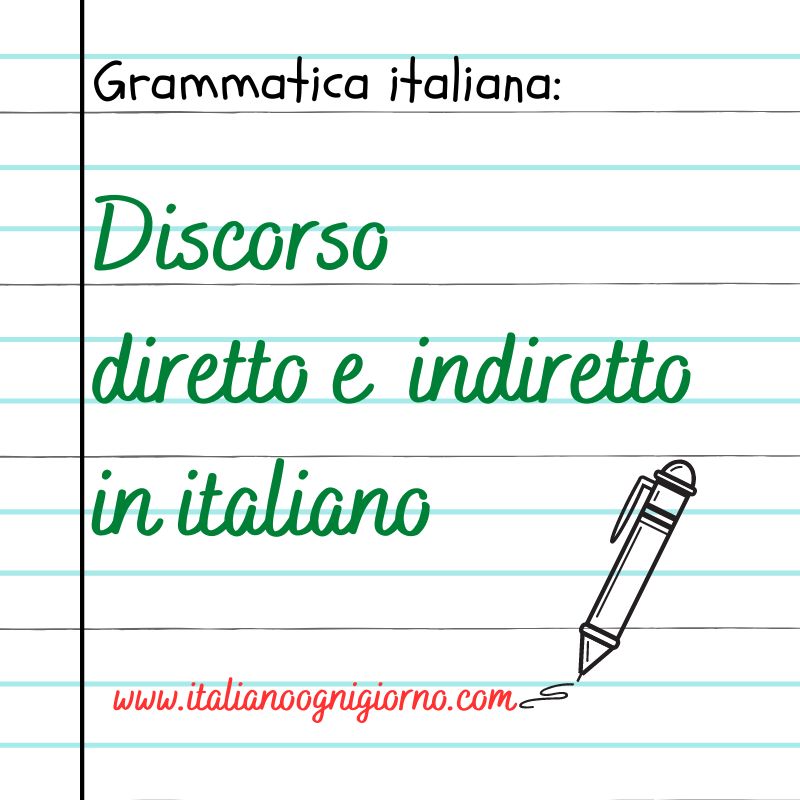
Il Discorso diretto e discorso indiretto in italiano

Direct speech and indirect speech in Italian

(English follows)

Come funzionano il discorso diretto e il discorso indiretto?

Per esprimere quello che viene detto da qualcuno si usano due modi differenti: il discorso diretto (frasi dette) e il discorso indiretto (frasi riportate)

1) Maria: “Vai a casa!”discorso diretto
2) Maria ha detto di andare a casa.discorso indiretto

Nell’esempio qui sopra abbiamo due frasi diverse:

Nella prima frase vengono scritte esattamente le parole pronunciate da Maria; Maria dice a qualcuno di andare a casa.

Mentre nel secondo caso un narratore riporta la frase di Maria.

DISCORSO DIRETTO

Nel discorso diretto si trascrivono le stesse parole pronunciate dai soggetti all’interno di segni grafici distintivi (< > ” “ ).
Il discorso diretto può essere introdotto dai due punti (  :  ).

IL DISCORSO INDIRETTO

Nel discorso indiretto si racconta ciò che è stato detto, introdotto di norma con “che“, “a“, “di“, “se“.

DA DIRETTO A INDIRETTO

Un discorso diretto può trasformarsi in un discorso indiretto (e viceversa), ma per avere una frase comprensibile e grammaticalmente corretta si devono cambiare i segni di punteggiatura, i pronomi, i tempi e i modi verbali e gli eventuali aggettivi.

RegolaDiscorso direttoDiscorso indiretto
presente -> imperfettoLucia ha detto: “vado a Milano”.Lucia ha detto che andava a Milano.
passato prossimo -> trapassato prossimoLucia ha detto: “sono andata a Milano”.Lucia ha detto che era andata a Milano.
futuro -> condizionale passatoLucia ha detto: “andrò a Milano”.Lucia ha detto che sarebbe andata a Milano.
condizionale presente -> condizionale passatoLucia ha detto: “andrei a Milano”.Lucia ha detto che sarebbe andata a Milano.
imperfetto -> imperfettoLucia ha detto: “andavo a Milano”.Lucia ha detto che andava a Milano.
imperativo -> infinitoLucia ha detto: “andiamo Milano”.Lucia ha detto di andare a Milano.

Prova ad esercitarti: scrivi nei commenti sotto una frase in discorso diretto e trasformala in discorso indiretto.


Scarica qui il programma dei primi 4 moduli dell’Accademia dei Verbi.

Fai alcune lezioni gratuite.


English version

How do direct speech and indirect speech work?

Two different ways are used to express what someone says: direct speech (spoken sentences) and indirect speech (reported sentences).

1) Maria: “Vai a casa!”direct speech
– Maria: ” Go home!”
2) Maria ha detto di andare a casa.indirect speech
– Maria said to go home.

In the example above we have two different sentences:

In the first sentence the exact words spoken by Mary are written; Maria tells someone to go home.

While in the second case a narrator reports Maria’s sentence.

DIRECT SPEECH

In direct speech, the same words pronounced by the characters are transcribed within distinctive graphic signs (< > ,  ” ” ,  – ).
Direct speech can be introduced by colons (  :  )

INDIRECT SPEECH

In indirect speech we tell what has been said, usually introduced with “che“, “a“, “di“, “se“. (“that”, “to”, “of”, “if”)

FROM DIRECT TO INDIRECT

Direct speech can transform into indirect speech (and vice versa), but for the sentence to be understandable and grammatically correct, the punctuation marks, pronouns, tenses and verbal forms and any adjectives must be changed.

RegolaDiscorso direttoDiscorso indiretto
presente -> imperfettoLucia ha detto: “vado a Milano”.Lucia ha detto che andava a Milano.
passato prossimo -> trapassato prossimoLucia ha detto: “sono andata a Milano”.Lucia ha detto che era andata a Milano.
futuro -> condizionale passatoLucia ha detto: “andrò a Milano”.Lucia ha detto che sarebbe andata a Milano.
condizionale presente -> condizionale passatoLucia ha detto: “andrei a Milano”.Lucia ha detto che sarebbe andata a Milano.
imperfetto -> imperfettoLucia ha detto: “andavo a Milano”.Lucia ha detto che andava a Milano.
imperativo -> infinitoLucia ha detto: “andiamoa Milano”.Lucia ha detto di andare a Milano.

Try to practice: write a sentence in direct speech in the comments below and transform it into indirect speech.


You cannot copy content of this page