google.com, pub-1205142185266664 , DIRECT, f08c47fec0942fa0

Racconto italiano: Il labirinto di Lucca/B1

Italian Short Story: The Labyrinth of Lucca – level B1

(English follows)

Sai che in italiano la parola “storia” significa sia una storia di finzione sia la storia passata vissuta? Questa settimana non ho un racconto di finzione bensì una storia reale, la storia del labirinto di Lucca. Conosci questa storia legata alla via Francigena?

Questa storia è adatta al livello B1.

Il PDF include il testo italiano e la traduzione in inglese, e inoltre le domande e le risposte di comprensione e il vocabolario. Buona lettura!
———————————————

Il racconto di questa lezione ha 5 fasi:

  1. Ascolta la storia senza il testo in italiano.
  2. Ascolta una seconda volta con il testo e ripeti.
  3. Studia il vocabolario della storia.
  4. Rispondi alle domande di comprensione.
  5. Ascolta e ripeti la storia con più velocità.

    Ascoltare la storia senza il testo è importante per imparare i suoni e parlare automaticamente.

Metti un “mi piace” (un like) alla storia se vuoi altre storie come questa!

Ripeti questa lezione ogni giorno per una settimana.
La ripetizione è importante per parlare e pensare in italiano.

English version:

Did you know that in Italian the word “storia” means both a fictional story and a lived past story? This week I don’t have a fictional story but a real “storia”, the history of the labyrinth of Lucca. Do you know this story related to the Via Francigena?

This story is suitable for level B1.

The PDF includes the Italian text and the English translation, as well as comprehension questions and answers and vocabulary. Enjoy!
———————————————

The short story in this lesson has 5 steps:

  1. Listen to the story without the text in Italian.
  2. Listen a second time with the text and repeat.
  3. Study the vocabulary in the story.
  4. Answer the comprehension questions.
  5. Listen and repeat the story at a faster pace.

Listening to the story without the text is important for learning sounds and speaking automatically.

Repeat this lesson every day for a week.
Repetition is important for speaking and thinking in Italian.

With constant repetition you don’t translate words and you don’t think about grammar.
If you repeat the same sentences out loud they become natural when you speak Italian.

Download the PDF of the story with the text and vocabulary

Like the story if you want more stories like this!

Download the PDF of the story with the text and vocabulary:

Racconto italiano: Il segreto per imparare l’italiano/B1

Italian Short Story: The Secret to Learning Italian

(English follows)

Questo racconto per il livello B1, chiamato “Il segreto per imparare l’italiano”, è una storia che riflette l’esperienza di molti studenti d’italiano e delle lingue in generale. Svela un “segreto”, o meglio una strategia per imparare l’italiano.

Il PDF include il testo italiano e la traduzione in inglese, e inoltre le domande e le risposte di comprensione e il vocabolario. Buona lettura!
———————————————

Il racconto di questa lezione ha 5 fasi:

  1. Ascolta la storia senza il testo in italiano.
  2. Ascolta una seconda volta con il testo e ripeti.
  3. Studia il vocabolario della storia.
  4. Rispondi alle domande di comprensione.
  5. Ascolta e ripeti la storia con più velocità.

    Ascoltare la storia senza il testo è importante per imparare i suoni e parlare automaticamente.

Metti un “mi piace” (un like) alla storia se vuoi altre storie come questa!

Ripeti questa lezione ogni giorno per una settimana.
La ripetizione è importante per parlare e pensare in italiano.


English version:

This story for the B1 level, called “Il segreto per imparare l’italiano/The Secret to Learning Italian”, is a story that reflects the experience of many students of Italian and of languages ​​in general. It reveals a “secret”, or rather a strategy for learning Italian.

The PDF includes the Italian text and the English translation, as well as comprehension questions and answers and vocabulary. Enjoy!
———————————————

The short story in this lesson has 5 steps:

  1. Listen to the story without the text in Italian.
  2. Listen a second time with the text and repeat.
  3. Study the vocabulary in the story.
  4. Answer the comprehension questions.
  5. Listen and repeat the story at a faster pace.

Listening to the story without the text is important for learning sounds and speaking automatically.

Repeat this lesson every day for a week.
Repetition is important for speaking and thinking in Italian.

With constant repetition you don’t translate words and you don’t think about grammar.
If you repeat the same sentences out loud they become natural when you speak Italian.

Download the PDF of the story with the text and vocabulary

Like the story if you want more stories like this!

Download the PDF of the story with the text and vocabulary:

Racconto italiano: La disdetta del frullato al cacao A2/B1

Italian Short Story: The misfortune of the cocoa smoothie, level A2/B1

(English follows)

Questo racconto per il livello A2/B1, chiamato “La disdetta del frullato al cacao”, è una storia realmente accaduta tra me e il frullato al cacao!

Il PDF include il testo italiano e la traduzione in inglese, e inoltre le domande e le risposte di comprensione e il vocabolario. Buona lettura!
———————————————

Il racconto di questa lezione ha 5 fasi:

  1. Ascolta la storia senza il testo in italiano.
  2. Ascolta una seconda volta con il testo.
  3. Studia il vocabolario della storia.
  4. Rispondi alle domande di comprensione.
  5. Ascolta e ripeti la storia con più velocità.

    Ascoltare la storia senza il testo è importante per imparare i suoni e parlare automaticamente.

Metti un “mi piace” (un like) alla storia se vuoi altre storie come questa!

Ripeti questa lezione ogni giorno per una settimana.
La ripetizione è importante per parlare e pensare in italiano.


English version:

This new story for level A2/B1, called “La disdetta del frullato al cacao”/ “The misfortune of the cocoa smoothie”. It’s a true story between me and the cocoa smoothie.

The PDF includes the Italian text and the English translation, as well as comprehension questions and answers and vocabulary. Enjoy!
———————————————

The short story in this lesson has 5 steps:

  1. Listen to the story without the text in Italian.
  2. Listen a second time with the text.
  3. Study the vocabulary in the story.
  4. Answer the comprehension questions.
  5. Listen and repeat the story at a faster pace.

Listening to the story without the text is important for learning sounds and speaking automatically.

Repeat this lesson every day for a week.
Repetition is important for speaking and thinking in Italian.

With constant repetition you don’t translate words and you don’t think about grammar.
If you repeat the same sentences out loud they become natural when you speak Italian.

Download the PDF of the story with the text and vocabulary

Like the story if you want more stories like this!

Download the PDF of the story with the text and vocabulary:

Come si usa il gerundio

How to use the gerund in italian


(English follows)

Introduzione

Amando le lingue, e studiando la grammatica, trovo affascinante tutte le differenze e le similitudini. Cosa sto dicendo? Ah, solo che il gerundio ha delle regole in italiano che non ha in inglese per esempio! Stavo parlando di questo ad un’amico l’altro giorno e allora ne ho scritto una spiegazione semplice. Eccola e buono studio!

Il gerundio è un modo del verbo che a volte viene tradotto in italiano da un’altra lingua in modo errato. Spiego qui in modo chiaro e semplice come si usa in italiano.

Il gerundio esprime un’azione della frase dipendente in relazione al verbo della frase indipendente /principale. Il soggetto delle due frasi è uguale.

Esempio:
Leggendo (frase dipendente), ho imparato nuove parole. (frase indipendente)

Il gerundio ha 3 tipi di relazioni:

• causa
Cucinando a casa, mangio salutare.
(Dato che cucino a casa, mangio salutare)

• tempo
Andando al negozio, ho incontrato Sara.
(Mentre andavo al negozio, ho incontrato Sara)

• modo
Disegno usando le matite colorate.
(Disegno (in che modo?) con le matite colorate)

Forma

Per le 3 coniugazione si forma nel seguente modo:
-are -> -ando (parlando, lavorando,..)
-ere -> -endo
(scrivendo, mettendo,..)
-ire -> -endo
(partendo, dormendo,..)

Il gerundio ha 2 tempi:
tempo semplice (formato da una sola parola), che indica un’azione contemporanea a quella della frase principale.
presente: Maria, camminando con il cane, ha trovato un portafoglio.

tempo composto (formato da due parole), che indica un’azione anteriore (avvenuta prima) a quella della frase principale
passato: Maria, avendo camminando con il cane, ha fatto molta strada.

L’uso

Oltre a quelli visti finora, il gerundio si usa molto spesso preceduto dal verbo stare (all’indicativo presente o imperfetto) per indicare un’azione che è in svolgimento in questo momento. Questa forma è detta perifrastica:

sto mangiando, stiamo studiando, stavano salendo,…

Esercizio

Trasforma al gerundio presente le espressioni in neretto delle seguenti frasi.

1. Dato che vengo a piedi, mi mette le scarpe comode.
. . . . . . . . . . . . . . . . . . . . . . . . . . . . . . . . . . . . . . . . . . . . . . . . . .
2. Mentre trasportava la scatola, l’ha fatta cadere .
. . . . . . . . . . . . . . . . . . . . . . . . . . . . . . . . . . . . . . . . . . . . . . . . . .
3. Mi diverto tanto, quando ballo.
. . . . . . . . . . . . . . . . . . . . . . . . . . . . . . . . . . . . . . . . . . . . . . . . . .
4. Mentre pensavamo alle vacanze, eravamo felici.
. . . . . . . . . . . . . . . . . . . . . . . . . . . . . . . . . . . . . . . . . . . . . . . . . .

Troverai questa lezione nel formato PDF da scaricare insieme ad altri esercizi e le soluzioni.


(English)

Introduction

Loving languages, and studying grammar, I find all the differences and similarities fascinating. What am I saying? Oh, just that the gerund has rules in Italian that it doesn’t have in English for example! I was talking about this to a friend the other day and so I wrote a simple explanation. Here it is, and happy studying!

The gerund is a verb form that is sometimes translated incorrectly into Italian from another language. I’ll explain here clearly and simply how it is used in Italian.

The gerund expresses an action of the dependent clause in relation to the verb of the independent/main clause. The subject of the two sentences is the same.

Example:
Leggendo (dependent clause), ho imparato nuove parole. (independent clause)

The gerund has 3 types of relations:

• cause
Cucinando a casa, mangio salutare.
(Because I cook at home, I eat healthy)

• time
Andando al negozio, ho incontrato Sara.
(As I was going to the store, I met Sara)

• mode
Disegno usando le matite colorate.
(I draw (how?) with colored pencils)

Form

For the 3 conjugations it’s formed in the following way:
-are -> -ando (parlando, lavorando,..)
-ere -> -endo (scrivendo, mettendo,..)
-ire -> -endo (partendo, dormendo,..)

The gerund has 2 tenses:
simple tense (consisting of a single word), which indicates an action that is contemporary with that of the main sentence.
present: Maria, camminando con il cane, ha trovato un portafoglio.

composed tense (formed by two words), which indicates an action prior to (happened before) that of the main sentence
past: Maria, avendo camminando con il cane, ha fatto molta strada.

Use

In addition to those seen so far, the gerund is very often used preceded by the verb stare (in the present or imperfect indicative) to indicate an action that is in progress at this moment. This form is called perifrastica:

sto mangiando, stiamo studiando, stavano salendo,…

Esercise

Change the expressions in bold in the following sentences into the present gerund.

1. Dato che vengo a piedi, mi mette le scarpe comode.
. . . . . . . . . . . . . . . . . . . . . . . . . . . . . . . . . . . . . . . . . . . . . . . . . .
2. Mentre trasportava la scatola, l’ha fatta cadere .
. . . . . . . . . . . . . . . . . . . . . . . . . . . . . . . . . . . . . . . . . . . . . . . . . .
3. Mi diverto tanto, quando ballo.
. . . . . . . . . . . . . . . . . . . . . . . . . . . . . . . . . . . . . . . . . . . . . . . . . .
4. Mentre pensavamo alle vacanze, eravamo felici.
. . . . . . . . . . . . . . . . . . . . . . . . . . . . . . . . . . . . . . . . . . . . . . . . . .

You will find this lesson in PDF format to download along with other exercises and solutions.

Racconto italiano: La gatta sull’albero /A2

Italian Short Story: The cat on the tree, level A2

(English follows)

Questo racconto per il livello A2, chiamato “La gatta sull’albero”, è una storia di una gatta molto amata nella sua città per un motivo particolare.

Il PDF include il testo italiano e la traduzione in inglese, e inoltre le domande e le risposte di comprensione e il vocabolario. Buona lettura!
———————————————

Il racconto di questa lezione ha 5 fasi:

  1. Ascolta la storia senza il testo in italiano.
  2. Ascolta una seconda volta con il testo.
  3. Studia il vocabolario della storia.
  4. Rispondi alle domande di comprensione.
  5. Ascolta e ripeti la storia con più velocità.

    Ascoltare la storia senza il testo è importante per imparare i suoni e parlare automaticamente.

Metti un “mi piace” (un like) alla storia se vuoi altre storie come questa!

Ripeti questa lezione ogni giorno per una settimana.
La ripetizione è importante per parlare e pensare in italiano.


English version:

This new story for level A2, called “La gatta sull’albero”/ The cat on the tree”, It’s a story about a cat who is much loved in her city for a particular reason.

The PDF includes the Italian text and the English translation, as well as comprehension questions and answers and vocabulary. Enjoy!
———————————————

The short story in this lesson has 5 steps:

  1. Listen to the story without the text in Italian.
  2. Listen a second time with the text.
  3. Study the vocabulary in the story.
  4. Answer the comprehension questions.
  5. Listen and repeat the story at a faster pace.

Listening to the story without the text is important for learning sounds and speaking automatically.

Repeat this lesson every day for a week.
Repetition is important for speaking and thinking in Italian.

With constant repetition you don’t translate words and you don’t think about grammar.
If you repeat the same sentences out loud they become natural when you speak Italian.

Download the PDF of the story with the text and vocabulary

Like the story if you want more stories like this!

Download the PDF of the story with the text and vocabulary:

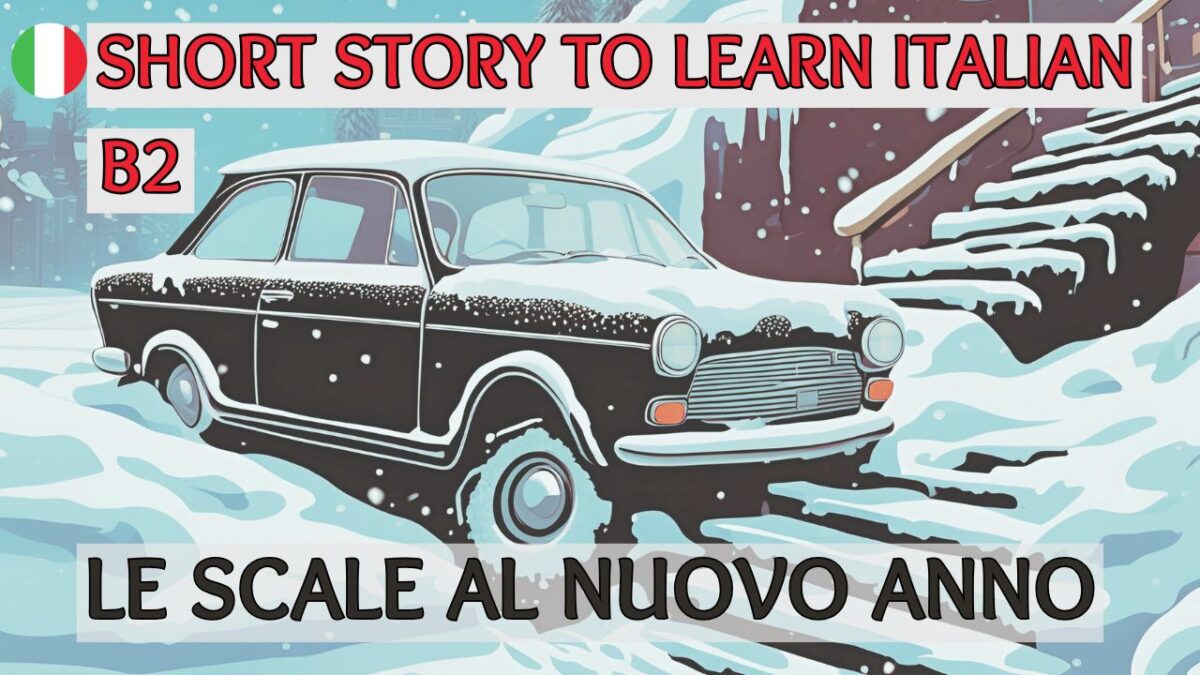
Racconto italiano: Le scale al nuovo anno /B2

Italian Short Story: The stairs to the new year, level B2

(English follows)

Questo racconto per il livello B2, chiamato “Le scale al nuovo anno”, è una storia sulla fine del’anno e le aspettative per il nuovo anno.

Il PDF include il testo italiano e la traduzione in inglese, e inoltre le domande e le risposte di comprensione e il vocabolario. Buona lettura!
———————————————

Il racconto di questa lezione ha 5 fasi:

  1. Ascolta la storia senza il testo in italiano.
  2. Ascolta una seconda volta con il testo.
  3. Studia il vocabolario della storia.
  4. Rispondi alle domande di comprensione.
  5. Ascolta e ripeti la storia con più velocità.

    Ascoltare la storia senza il testo è importante per imparare i suoni e parlare automaticamente.

Metti un “mi piace” (un like) alla storia se vuoi altre storie come questa!

Ripeti questa lezione ogni giorno per una settimana.
La ripetizione è importante per parlare e pensare in italiano.


English version:

This new story for level A2, called “”Le scale al nuovo anno/ The stairs to the new year”, is a story about the end of the year and expectations for the new year.

The PDF includes the Italian text and the English translation, as well as comprehension questions and answers and vocabulary. Enjoy!
———————————————

The short story in this lesson has 5 steps:

  1. Listen to the story without the text in Italian.
  2. Listen a second time with the text.
  3. Study the vocabulary in the story.
  4. Answer the comprehension questions.
  5. Listen and repeat the story at a faster pace.

Listening to the story without the text is important for learning sounds and speaking automatically.

Repeat this lesson every day for a week.
Repetition is important for speaking and thinking in Italian.

With constant repetition you don’t translate words and you don’t think about grammar.
If you repeat the same sentences out loud they become natural when you speak Italian.

Download the PDF of the story with the text and vocabulary

Like the story if you want more stories like this!

Download the PDF of the story with the text and vocabulary:

32 frasi ipotetiche del primo tipo in italiano

32 first-type hypothetical sentences in Italian


(English follows)

Quante volte durante la giornata iniziamo una frase con la parolina “se” per esprimere una ipotesi, una possibiltà, una realtà, una impossibiltà? Tante!

Per esempio:

“Se mangi troppi dolci, ti viene il mal di stomaco.”

Questa è una frase ipotetica del primo tipo della realtà che si costruisce con il presente indicativo + il presente indicativo ed esprime una ipotesi presentata come un fatto reale o plausibile.

In tutto ci sono 5 modi per formare una frase ipotetica del primo tipo della realtà.

Qualche esempio:

1. se + indicativo presente + indicativo presentese non mangi, hai fame;

2. se + indicativo presente + indicativo futuro se partiamo tardi, perderemo il treno;

3. se + indicativo futuro + indicativo futuro se verrai, ceneremo insieme.

4. se + indicativo passato + indicativo futurose hai portato il libro, lo leggerò.

5. se + indicativo presente + imperativo se avete sete, bevete!

Ci sono tre tipi di frasi ipotetiche oltre a quelle miste, ma ricordare quali verbi usare in ciascun caso rischia di diventare un gioco mnemonico poco pratico. La strategia migliore è di ricordare il suono attraverso la ripetizione orale.

Nel video potrai ascotare e ripetere 32 frasi ipotetiche del primo tipo.
Più le ripeti, più diventerà naturale formularle senza pensarci, in quanto svilupperai una memoria orale. Ti consiglio di ripeterle spesso e di esercitarti a scriverne altre nei commenti.


Scarica il PDF della lezione / Download the PDF of the lesson:

English version

How many times during the day do we start a sentence with the little word “if” to express a hypothesis, a possibility, a reality, an impossibility? Many!

For example:

“Se mangi troppi dolci, ti viene il mal di stomaco.”
(“If you eat to many sweets, you’ll get a stomach ache)

This is a hypothetical sentence of the first type of reality constructed with the present indicative + the present indicative and expresses a hypothesis presented as a real or plausible fact.

In total there are 5 ways to form a hypothetical sentence of the first type of reality.

Some examples:

1. se + indicativo presente + indicativo presentese non mangi, hai fame;

2. se + indicativo presente + indicativo futuro se partiamo tardi, perderemo il treno;

3. se + indicativo futuro + indicativo futuro se verrai, ceneremo insieme.

4. se + indicativo passato + indicativo futurose hai portato il libro, lo leggerò.

5. se + indicativo presente + imperativo se avete sete, bevete!

There are three types of hypothetical sentences in addition to mixed ones. Since remembering which verbs to use in each case risks becoming an impractical mnemonic game, the best strategy is to remember the sound with oral repetition.
In the video you will be able to listen to and repeat 32 first-type hypothetical sentences.
The more you repeat them, the more natural it will become to formulate them without thinking, as you will develop an oral memory. I recommend that you repeat them often and practice writing some in the comments.


You cannot copy content of this page