google.com, pub-1205142185266664 , DIRECT, f08c47fec0942fa0

25 verbi riflessivi con l’imperfetto

25 reflexive Italian verbs with the imperfect

(English follows)

In questa lezione ci eserciteremo con 25 verbi riflessivi comuni all’imperfetto, un tempo semplice che quindi non utilizza un ausliare.

A differenza del passato prossimo, un tempo composto (clicca qui per ri-esercitarti!) che si coniuga sempre con l’ausiliare usare ESSERE.

Latini dicevano che, “repetita iuvant”, ripetere le cose giova. Infatti a scuola i professori ce lo ripetevano spesso. Per studiare bene e imparare bene bisogna sempre ripetere e non avere fretta di avanzare al prossimo argomento. Nel caso dello studio delle lingue, ripetere a voce alta ti aiuta a parlare bene.


In this lesson, we’ll practice 25 common reflexive verbs in the imperfect, a simple tense that doesn’t use an auxiliary verb.

Unlike the passato prossimo, a compound tense (click here to practice again!), it’s always conjugated with the auxiliary verb ESSERE.

The Latins used to say that “repetita iuvant”—repeating things is beneficial. In fact, teachers often told us this in school. To study and learn well, you need to constantly repeat and not rush to move on to the next topic. When studying languages, repeating things out loud helps you speak well.


Scarica il PDF della lezione / Download the PDF of the lesson:

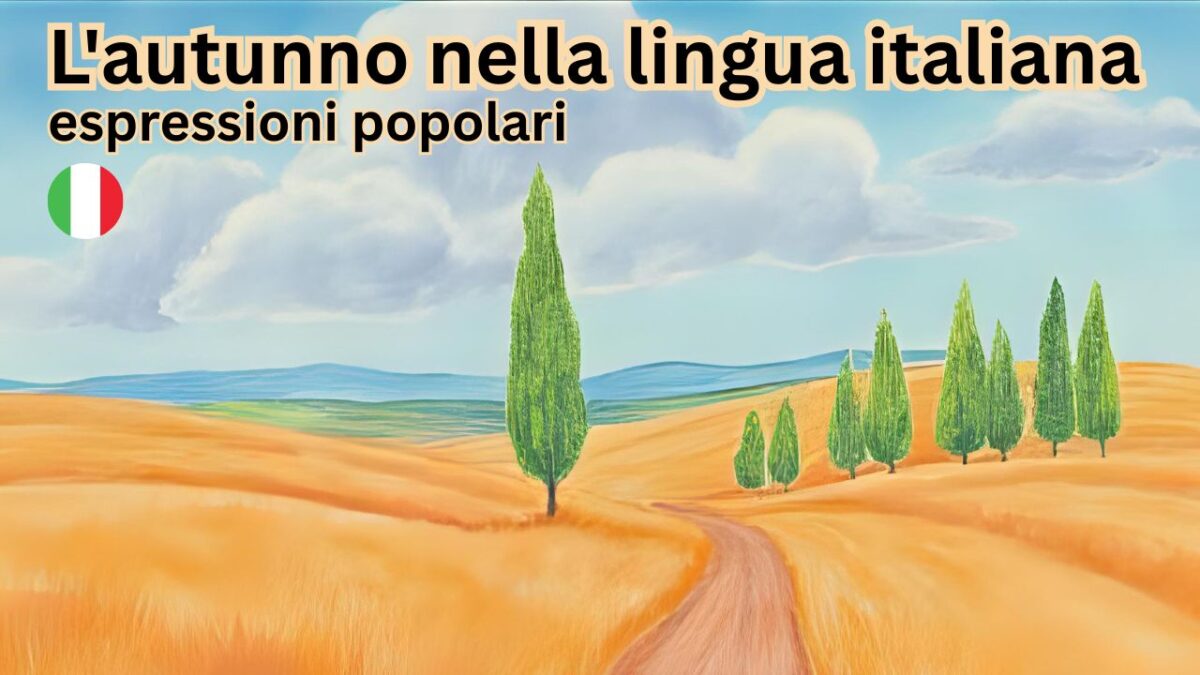
L’autunno nella lingua italiana: espressioni popolari

Autumn in the Italian Language: Popular Expressions


(English follows)

Questa settimana scopriami le origini e i significati di alcune espressioni popolari della lingua italiana. I protagonists sono due frutti autunnali. Indovina quali! Hai mai sentito usare questi  quatro modi di dire? Spero che nessuno ti abbia chiamato testa di zucca!

Buona lettura 🎃

Questa storia è adatta al livello B1 in su.

Il PDF include il testo italiano e la traduzione in inglese.

Buona lettura!
———————————————

https://youtu.be/2-DHpxTNyqY

Metti un “mi piace” (un like) alla storia se vuoi altre storie come questa!

Ripeti questa lezione ogni giorno per una settimana. La ripetizione è importante per parlare e pensare in italiano.


English version:

This week we’re discovering  the origins and meanings of some popular Italian expressions. The protagonists are two autumn fruits. Guess which ones! Have you ever heard these four expressions? I hope no one called you “testa di zucca”! 

Happy reading 🎃

This story is suitable for level B1 and above.

The PDF includes the Italian text and the English translation.
———————————————

Repeat this lesson every day for a week.
Repetition is important for speaking and thinking in Italian.

Like the story if you want more stories like this!

Download the PDF of the story with the text in Italian and English:

Racconto italiano: Un sabato indaffarato / A2

Italian Short Story: A busy Saturday / A2


(English follows)

L’inizio di una nuova stagione porta un nuovo racconto. Questa semplice storia è adatta al livello A2, ma anche ai livelli più alti. In Italia ci sono molte fiere autunnali  in questo periodo dove poter assaggiare tante specialità gastronomiche. La gente è molto indaffarata! Buona lettura.

Questa storia è adatta al livello A2.

Il PDF include il testo italiano e la traduzione in inglese, e inoltre le domande e le risposte di comprensione e il vocabolario. Buona lettura!
———————————————

Il racconto di questa lezione ha 5 parti:

  1. Ascolta la storia senza il testo in italiano.
  2. Ascolta una seconda volta con il testo e ripeti.
  3. Studia il vocabolario della storia.
  4. Rispondi alle domande di comprensione.
  5. Ascolta e ripeti la storia con più velocità.

    Ascoltare la storia senza il testo è importante per imparare i suoni e parlare automaticamente.
https://youtu.be/9wAG_nHYMAI

Metti un “mi piace” (un like) alla storia se vuoi altre storie come questa!

Ripeti questa lezione ogni giorno per una settimana.
La ripetizione è importante per parlare e pensare in italiano.

English version:

The start of a new season brings a new story. This simple story is suitable for A2 level students, but also for higher levels. In Italy, there are many autumn fairs during this time of year where you can sample many gastronomic specialties. People are very busy! Enjoy the story.

This story is suitable for level A2.

The PDF includes the Italian text and the English translation, as well as comprehension questions and answers and vocabulary. Enjoy!
———————————————

The short story in this lesson has 5 parts:

  1. Listen to the story without the text in Italian.
  2. Listen a second time with the text and repeat.
  3. Study the vocabulary in the story.
  4. Answer the comprehension questions.
  5. Listen and repeat the story at a faster pace.

Listening to the story without the text is important for learning sounds and speaking automatically.

Repeat this lesson every day for a week.
Repetition is important for speaking and thinking in Italian.

With constant repetition you don’t translate words and you don’t think about grammar.
If you repeat the same sentences out loud they become natural when you speak Italian.

Download the PDF of the story with the text and vocabulary

Like the story if you want more stories like this!

Download the PDF of the story with the text and vocabulary:

Racconto italiano: Dove sono le mie forbici? / B1

Italian Short Story: Where are my scissors? / B1


(English follows)

Ecco un nuovo racconto nel livello B1 per accogliere la stagione autunnale. Ti capita di smarrire degli oggetti? Eh, probabilmente ti sarà capitato almeno una volta! Non è divertente dover cercare nei posti piu sperduti soprattutto quando il tempo stringe. Credimi, ne so qualcosa! In fin dei conti non costa niente rimettere tutto al suo posto, per avere più ordine e meno caos, e senz’altro più pace e più tempo!

Questa storia è adatta al livello B1.

Il PDF include il testo italiano e la traduzione in inglese, e inoltre le domande e le risposte di comprensione e il vocabolario. Buona lettura!
———————————————

Il racconto di questa lezione ha 5 parti:

  1. Ascolta la storia senza il testo in italiano.
  2. Ascolta una seconda volta con il testo e ripeti.
  3. Studia il vocabolario della storia.
  4. Rispondi alle domande di comprensione.
  5. Ascolta e ripeti la storia con più velocità.

    Ascoltare la storia senza il testo è importante per imparare i suoni e parlare automaticamente.
https://youtu.be/twvk5ew3Bas

Metti un “mi piace” (un like) alla storia se vuoi altre storie come questa!

Ripeti questa lezione ogni giorno per una settimana.
La ripetizione è importante per parlare e pensare in italiano.


English version:

Here’s a new story in level B1 to welcome the fall season. Do you ever misplace things? Oh, it’s probably happened to you at least once! It’s no fun having to search in the most remote places, especially when time is short. Believe me, I know a thing or two about that! After all, it doesn’t cost anything to put everything back where it belongs, to have more order and less chaos, and certainly more peace and more time!

This story is suitable for level B1.

The PDF includes the Italian text and the English translation, as well as comprehension questions and answers and vocabulary. Enjoy!
———————————————

The short story in this lesson has 5 parts:

  1. Listen to the story without the text in Italian.
  2. Listen a second time with the text and repeat.
  3. Study the vocabulary in the story.
  4. Answer the comprehension questions.
  5. Listen and repeat the story at a faster pace.

Listening to the story without the text is important for learning sounds and speaking automatically.

Repeat this lesson every day for a week.
Repetition is important for speaking and thinking in Italian.

With constant repetition you don’t translate words and you don’t think about grammar.
If you repeat the same sentences out loud they become natural when you speak Italian.

Download the PDF of the story with the text and vocabulary

Like the story if you want more stories like this!

Download the PDF of the story with the text and vocabulary:

28 frasi con piacere, servire, mancare + imperfetto

28 sentences with piacere, servire, mancare + imperfetto

(English follows)

Questo video serve a molti studenti d’italiano che studiano i verbi e in particolare i verbi piacere, servire e mancare che sono accompagnati dai pronomi indiretti.
Se vi mancavano degli esercizi su questi verbi allora penso che questo vi piacerà! Fatemi sapere se ne volete altri.

Ricordiamo che l’imperfetto si usa per ->
– esprimere azioni abituali o ripetute nel passato,
– descrivere persone, luoghi o situazioni nel passato,
– indicare azioni continuate o in svolgimento nel passato, spesso come sfondo a un’azione puntuale espressa da un altro tempo verbale.

Come si forma l’imperfetto ->
si prende il tema del presente del verbo e si aggiunge una vocale tematica (-a-, -e-, -i-) e le desinenze tipiche:
-vo, -vi, -va, -vamo, -vate, -vano

Ad esempio:

“guardare” (1ª coniugazione) = “io guardavo”;  

“mettere” (2ª coniugazione) =  “io mettevo”; 

“sentire” (3ª coniugazione) =  “io sentivo”

Ricordiamo che con i verbi piacere, servire, mancare->si usano i pronomi indiretti:
a me/mi, a te/ti, a lei/le, a lui/gli, a noi/ci, a voi/vi, a loro/gli


Scarica il PDF della lezione / Download the PDF of the lesson:


This video is needed by many Italian students studying verbs, particularly the verbs piacere, servizio, and mancare, which are accompanied by indirect pronouns.
If you were missing exercises on these verbs, then I think you’ll like this one!
Let me know if you’d like more.

Let’s remember that l’imperfetto is used for ->
– expressing habitual or repeated actions in the past,
– describing people, places, or situations in the past,
– indicating continuos or ongoing actions in the past, often as a backdrop to a specific action expressed by another verb tense.

How to form l’imperfetto ->
the present stem of the verb is taken and a thematic vowel is added
(-a-, -e-, -i-) and the typical endings:
-vo, -vi, -va, -vamo, -vate, -vano

For example:

“guardare” (1ª coniugazione) = “io guardavo”;  

“mettere” (2ª coniugazione) =  “io mettevo”; 

“sentire” (3ª coniugazione) =  “io sentivo”

Let’s remember that with the verbs piacere, servire, mancare-> you use indirect pronouns:
a me/mi, a te/ti, a lei/le, a lui/gli, a noi/ci, a voi/vi, a loro/gli


Vocabolario, arte e ricette del vino

Wine Vocabulary, Art, and Recipes


Racconto italiano: L’indimenticabile viaggio in Italia/A2

Italian Short Story: The Unforgettable Trip to Italy / A2


(English follows)

Questa storia parla della bellezza di viaggiare in Italia, ma anche delle disavventure se guidi una macchina. Ho sentito che molti turisti hanno questa esperienza di cui parlo nel racconto. Fammi sapere nei commenti se è successo anche a te…buona lettura!

Questa storia è adatta al livello A2.

Il PDF include il testo italiano e la traduzione in inglese, e inoltre le domande e le risposte di comprensione e il vocabolario. Buona lettura!
———————————————

Il racconto di questa lezione ha 5 parti:

  1. Ascolta la storia senza il testo in italiano.
  2. Ascolta una seconda volta con il testo e ripeti.
  3. Studia il vocabolario della storia.
  4. Rispondi alle domande di comprensione.
  5. Ascolta e ripeti la storia con più velocità.

    Ascoltare la storia senza il testo è importante per imparare i suoni e parlare automaticamente.

Metti un “mi piace” (un like) alla storia se vuoi altre storie come questa!

Ripeti questa lezione ogni giorno per una settimana.
La ripetizione è importante per parlare e pensare in italiano.


English version:

This story is about the beauty of traveling in Italy, but also about the misadventures of driving. I’ve heard many tourists have this experience, which I describe in the story. Let me know in the comments if it’s happened to you too…enjoy!

This story is suitable for level A2.

The PDF includes the Italian text and the English translation, as well as comprehension questions and answers and vocabulary. Enjoy!
———————————————

The short story in this lesson has 5 parts:

  1. Listen to the story without the text in Italian.
  2. Listen a second time with the text and repeat.
  3. Study the vocabulary in the story.
  4. Answer the comprehension questions.
  5. Listen and repeat the story at a faster pace.

Listening to the story without the text is important for learning sounds and speaking automatically.

Repeat this lesson every day for a week.
Repetition is important for speaking and thinking in Italian.

With constant repetition you don’t translate words and you don’t think about grammar.
If you repeat the same sentences out loud they become natural when you speak Italian.

Download the PDF of the story with the text and vocabulary

Like the story if you want more stories like this!

Download the PDF of the story with the text and vocabulary:

You cannot copy content of this page