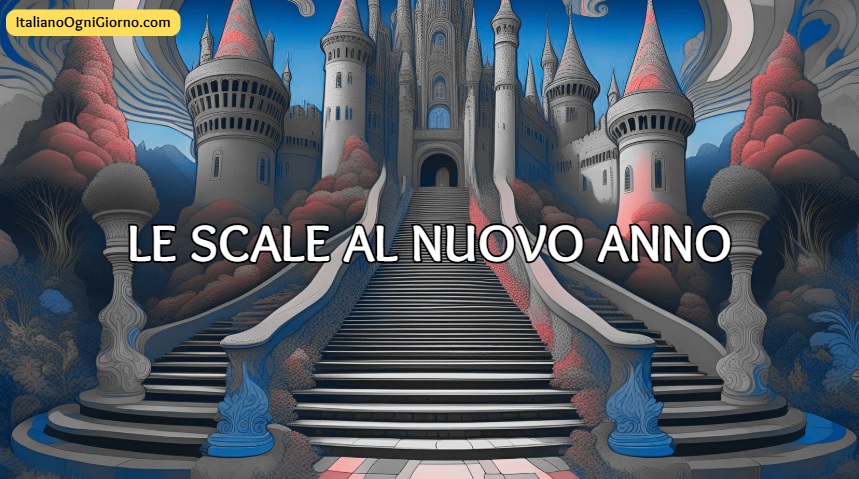
Italian Short Story: The stairs to the new year, level A1
(English follows)
Questo nuovo racconto per il livello A1, chiamato “Le scale al nuovo anno”, è una storia sulla fine del’anno e le aspettative per il nuovo anno.
Il PDF include il testo italiano e la traduzione in inglese, e inoltre le domande e le risposte di comprensione e il vocabolario. Buona lettura! ———————————————
Il racconto di questa lezione ha 5 fasi:
Ascolta la storia senza il testo in italiano.
Ascolta una seconda volta con il testo.
Studia il vocabolario della storia.
Rispondi alle domande di comprensione.
Ascolta e ripeti la storia con più velocità.
Ascoltare la storia senza il testo è importante per imparare i suoni e parlare automaticamente.
Metti un “mi piace” (un like) alla storia se vuoi altre storie come questa!
Ripeti questa lezione ogni giorno per una settimana. La ripetizione è importante per parlare e pensare in italiano.
English version:
This new story for level A2, called “”Le scale al nuovo anno/ The stairs to the new year”, is a story about the end of the year and expectations for the new year.
The PDF includes the Italian text and the English translation, as well as comprehension questions and answers and vocabulary. Enjoy! ———————————————
The short story in this lesson has 5 steps:
Listen to the story without the text in Italian.
Listen a second time with the text.
Study the vocabulary in the story.
Answer the comprehension questions.
Listen and repeat the story at a faster pace.
Listening to the story without the text is important for learning sounds and speaking automatically.
Repeat this lesson every day for a week. Repetition is important for speaking and thinking in Italian.
With constant repetition you don’t translate words and you don’t think about grammar. If you repeat the same sentences out loud they become natural when you speak Italian.
Download the PDF of the story with the text and vocabulary
Like the story if you want more stories like this!
Download the PDF of the story with the text and vocabulary:
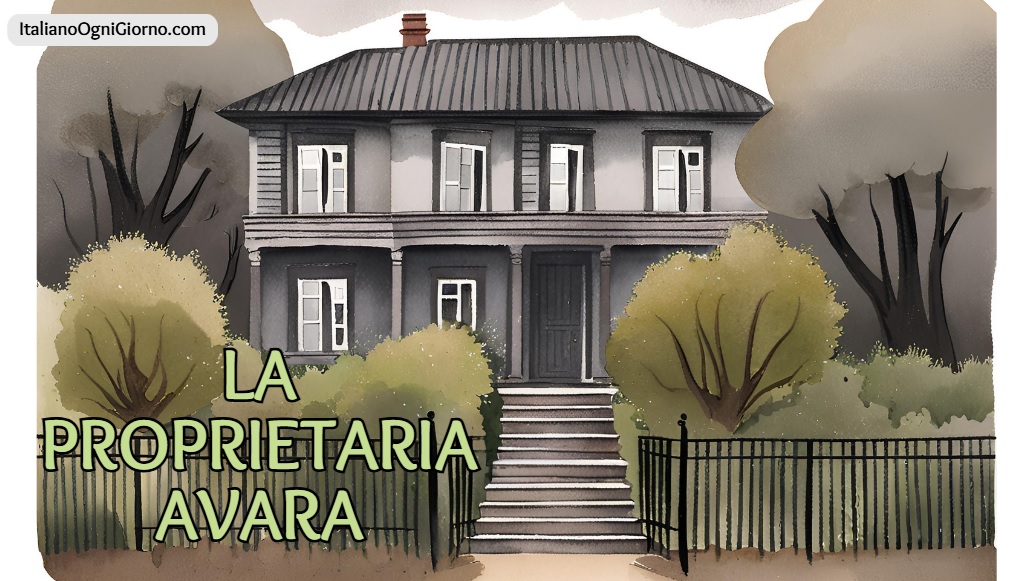
Italian Short Story: The greedy landlord, level A2
(English follows)
Questo nuovo racconto per il livello A2, chiamato “La proprietaria avara”, è una storia sulle conseguenze dell’avarizia e dell’egoismo.
Il PDF include il testo italiano e la traduzione in inglese, e inoltre le domande e le risposte di comprensione e il vocabolario. Buona lettura! ———————————————
Il racconto di questa lezione ha 5 fasi:
Ascolta la storia senza il testo in italiano.
Ascolta una seconda volta con il testo.
Studia il vocabolario della storia.
Rispondi alle domande di comprensione.
Ascolta e ripeti la storia con più velocità.
Ascoltare la storia senza il testo è importante per imparare i suoni e parlare automaticamente.
Metti un “mi piace” (un like) alla storia se vuoi altre storie come questa!
Ripeti questa lezione ogni giorno per una settimana. La ripetizione è importante per parlare e pensare in italiano.
English version:
This new story for level A2, called “”La proprietaria avara/ The greedy landlord”, is a story about the consequences of greed and selfishness.
The PDF includes the Italian text and the English translation, as well as comprehension questions and answers and vocabulary. Enjoy! ———————————————
The short story in this lesson has 5 steps:
Listen to the story without the text in Italian.
Listen a second time with the text.
Study the vocabulary in the story.
Answer the comprehension questions.
Listen and repeat the story at a faster pace.
Listening to the story without the text is important for learning sounds and speaking automatically.
Repeat this lesson every day for a week. Repetition is important for speaking and thinking in Italian.
With constant repetition you don’t translate words and you don’t think about grammar. If you repeat the same sentences out loud they become natural when you speak Italian.
Download the PDF of the story with the text and vocabulary
Like the story if you want more stories like this!
Download the PDF of the story with the text and vocabulary:
Un nuovo racconto ma questa volta per il livello B1/B2. “Il treno dei sogni” parla di superare le paure per intraprendere il viaggio verso i nostri sogni.
Il PDF include il testo italiano e la traduzione in inglese, e inoltre le domande e le risposte di comprensione e il vocabolario. Buona lettura! ———————————————
Il racconto di questa lezione ha 5 fasi:
Ascolta la storia senza il testo in italiano.
Ascolta una seconda volta con il testo.
Studia il vocabolario della storia.
Rispondi alle domande di comprensione.
Ascolta e ripeti la storia con più velocità.
Ascoltare la storia senza il testo è importante per imparare i suoni e parlare automaticamente.
Metti un “mi piace” (un like) alla storia se vuoi altre storie come questa!
Ripeti questa lezione ogni giorno per una settimana. La ripetizione è importante per parlare e pensare in italiano.
English version:
A new story but this time for the B1/B2 level. “Il treno dei sogni/ The train of dreams” is about overcoming fears to embark on the journey towards our dreams.
The PDF includes the Italian text and the English translation, as well as comprehension questions and answers and vocabulary. Enjoy! ———————————————
The short story in this lesson has 5 steps:
Listen to the story without the text in Italian.
Listen a second time with the text.
Study the vocabulary in the story.
Answer the comprehension questions.
Listen and repeat the story at a faster pace.
Listening to the story without the text is important for learning sounds and speaking automatically.
Repeat this lesson every day for a week. Repetition is important for speaking and thinking in Italian.
With constant repetition you don’t translate words and you don’t think about grammar. If you repeat the same sentences out loud they become natural when you speak Italian.
Download the PDF of the story with the text and vocabulary
Like the story if you want more stories like this!
Download the PDF of the story with the text and vocabulary:
Ascoltare la storia senza il testo è importante per imparare i suoni e parlare automaticamente.
Metti un “mi piace” (un like) alla storia se vuoi altre storie come questa!
Ripeti questa lezione ogni giorno per una settimana. La ripetizione è importante per parlare e pensare in italiano.
Con la ripetizione costante non traduci le parole e non pensi alla grammatica. Se ripeti le stesse frasi a voce alta diventano naturali quando parli italiano.
Scarica il PDF della storia con il testo e il vocabolario:
English version:
The short story in this lesson has 5 steps:
Listen to the story without the text in Italian.
Listen a second time with the text.
Study the vocabulary in the story.
Answer the comprehension questions.
Listen and repeat the story at a faster pace.
Listening to the story without the text is important for learning sounds and speaking automatically.
Repeat this lesson every day for a week. Repetition is important for speaking and thinking in Italian.
With constant repetition you don’t translate words and you don’t think about grammar. If you repeat the same sentences out loud they become natural when you speak Italian.
Download the PDF of the story with the text and vocabulary
Like the story if you want more stories like this!
Download the PDF of the story with the text and vocabulary:
Michela Murgia: tenacious Italian writer and activist
(English follows)
Il mondo della cultura è in lutto. Alcuni giorni fa è venuta a mancare Michela Murgia, una scrittrice e attivista italiana nota per i suoi lavori su temi sociali, culturali e politici. È stata coinvolta in varie cause politiche e sociali in Italia contro la discriminazione delle donne, dei precari, della diversità, dei più deboli. Ha scritto molto su questioni relative al femminismo, all’immigrazione e ai diritti umani, tra gli altri. È considerata una delle voci più importanti della letteratura italiana contemporanea e ha vinto numerosi premi per i suoi contributi nel campo.
Nata il 3 ottobre 1972 a Cabras, un piccolo paese della Sardegna, ha pubblicato numerosi libri, saggi e articoli, sia in Italia che all’estero. Una delle sue opere più famose è il romanzo “Accabadora”, pubblicato nel 2009 e vincitore di premi letterari. Il libro racconta la storia di una donna di nome Bonaria Urrai, conosciuta nel suo paese come “Accabadora”, una figura tradizionale della società sarda che assisteva le persone nei loro momenti morenti.
Murgia era anche grande amica e sostenitrice di Roberto Saviano, scrittore e attivista anitmafia, autore di “Gomorra”, che di recente è costretto a difendersi nel processo per diffamazione contro la prima ministra Giorgia Meloni e altri politici di destra.
Sia Murgia che Saviano e altri intellettuali italiani si sono assunti il duro compito di criticare e prendere posizioni difficili contro “il potere”. Insieme hanno affrontato con determinazione e coraggio le infamie dei giornali e dei più forti senza mai tirarsi indietro. Murgia è stata tenace anche nei confronti della malattia scegliendo il sorriso alla disperazione continuando a far sentire la sua voce su questioni politiche e sociali fino all’ultimo.
Anche i suoi funerali, come dice Saviano, sono stati “Un atto politico: non nascondere niente e far stare insieme tutti coloro che hanno creduto nel suo ideale politico.”
La lotta di Michela Murgia continua attraverso i suoi libri e attraverso tutte le persone che ha ispirato con le sue parole e i suoi gesti. Lotteremo sempre e comunque per la libertà di espressione. Ciao, Michela.
Le frasi tratte dai libri di Michela Murgia
Da queste frasi è facile comprendere il pensiero di Michela Murgia.
Il mondo deve sapere
L’obiettivo raggiunto di oggi è la base di partenza per quello di domani.
Perché alla fine ha ragione Stephen King, l’orrore è nel quotidiano, non è nel mostro che viene dallo spazio, è nella tazzina di caffè che non hai bevuto perché ha squillato il telefono.
Fai in modo che il tuo sogno incontri le opportunità. Ma ricorda che l’opportunità lasciata passare non è mai persa… verrà trovata da qualcun altro.
Accabadora
Nell’ora della debolezza alcuni preferiscono diventare credenti piuttosto che forti.
Come gli occhi della civetta, ci sono pensieri che non sopportano la luce piena. Non possono nascere che di notte, dove la loro funzione è la stessa della luna, necessaria a smuovere maree di senso in qualche invisibile altrove dell’anima.
Gli appezzamenti piccoli e irregolari raccontavano di famiglie con troppi figli e nessuna intesa, frantumate in una miriade di confini fatti a muretto a secco, in basalto nero, ciascuno con il suo astio a tenerlo su.
Ave Mary
Invece di accrescere l’autorevolezza, l’età avanzata colloca infatti le donne in una posizione di ulteriore fragilità, perché all’abbassamento del parametro estetico si accompagna anche lo svilimento pubblico della capacità intellettuale, qualora fosse stata prima riconosciuta.
A lungo mi sono chiesta come fosse possibile che persone intelligenti, il più delle volte colte, spesso autonome economicamente, accettassero di essere oggetto di violenza all’interno della propria relazione. Adesso so che contano l’educazione femminile, frutto di secoli di addestramento alla subordinazione, e anche la parallela formazione maschile, imbevuta di proiezioni dominanti e possessive.
Finché la volontà dell’uomo continuerà a essere l’unica fonte di diritto, la volontà delle donne sarà costretta a porsi come elemento di conflitto.
L’incontro
Come si è nati è una di quelle cose che bisogna farsi spiegare piú volte, e dev’essere per questo che dopo, per tutta la loro vita, molti adulti cercano di liberarsi dalle parentele casuali affermandone altre decise da sé con puri atti di volontà. Testimoni di matrimonio vengono assunti come fratelli.
Cosí li senti davvero certi adulti nei bar, uomini fatti e disfatti mille volte dalla vita, vantarsi an- cora tra di loro dei legami nella strada dell’infanzia – abbiamo fatto il gioco insieme – come di un parto condiviso.
Benedetto sempre sia il rispetto per la carne della nostra carne, ma la strada e l’averci giocato insieme offre ai bambini una più alta dimensione di parentela, che nemmeno da adulti sarà mai dimenticata.
Chirú
Non capiva perché le persone passassero tutta la vita a cercare di essere piú speciali degli altri: se solo avessero immaginato cosa significava essere diversi in un posto in cui essere diversi voleva dire essere soli, ciascuno si sarebbe accontentato di sé stesso.
Nessuno può sapere quanto rumore fa una certezza che si rompe.
Bisogna essere molto attenti per riconoscere nei gesti altrui il suono sordo della ceramica scheggiata. Io non lo ero.
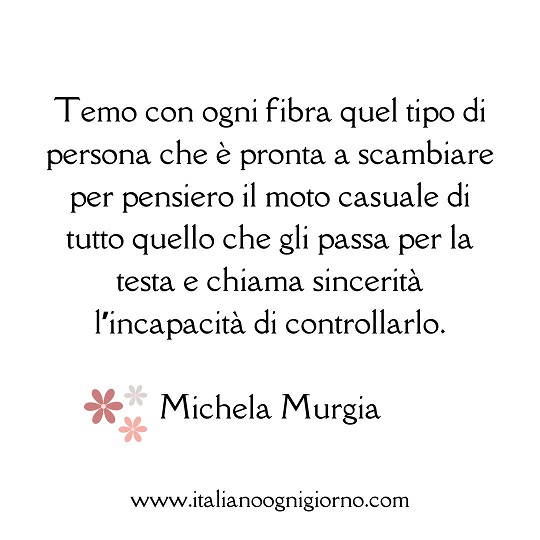
Temo con ogni fibra quel tipo di persona che è pronta a scambiare per pensiero il moto casuale di tutto quello che gli passa per la testa e chiama sincerità l’incapacità di controllarlo.
Futuro interiore
Chi non ha risposte si salverà forse con una domanda, se saprà sceglierla bene.
Non ci sono colpe del passato né pesi nel presente che possano esimerci dal prenderci la responsabilità di sognare il futuro.
Chi nasce nella bellezza crescerà convinto di meritarsi un mondo bello e sarà difficile persuaderlo ad accontentarsi di qualcosa di meno.
Istruzioni per diventare fascisti
Il rischio è dire: se tutto è fascismo, niente lo è. Non è così. Non tutto è fascismo, ma il fascismo ha la fantastica capacità, se non vigiliamo costantemente, di contaminare tutto.
Una democrazia giovane, specialmente se nata da una guerra o da una rivoluzione civile, sarà molto reattiva al fascismo, ma una democrazia – poniamo caso – con addosso una settantina d’anni avrà perso gran parte della memoria iniziale di sé e avrà seppellito i testimoni oculari che con i loro racconti reggevano la sua retorica.
Se il gioco è carnefici contro vittime, è un gioco perso: nessuno vuole passare per lo stronzo che chiude la porta di casa mentre fuori si muore di fame. Se invece tutti sono vittime allora le fragilità ci mettono sullo stesso piano e nessuno ha obblighi verso gli altri.
Il problema è stabilire chi non è in parte coinvolto nella legittimazione del fascismo come metodo, cioè quanto fascismo c’è in quelli che si credono antifascisti.
Noi siamo tempesta
Se la vita ti porta via qualcosa e ti rende fragile, non è la forza dell’altro che ti serve, ma sapere che la tua debolezza è accolta e capita, che nessuno la teme o la sfugge.
Impara più cose che puoi: solo gli insetti si specializzano. Sei un insetto tu?
E se a cambiare fossero le storie che ci insegnano da bambini? Se anziché farli addormentare sognandosi soli contro il mondo e l’uno contro l’altro dessimo loro avventure dove diventare potenti insieme?
Gli uomini spesso scambiano l’ambizione con la speranza. L’ambizione è il desiderio che le cose che fai si realizzino così come le vuoi; la speranza è la certezza che fare quelle cose abbia un senso comunque, indipendentemente da come finiranno, perché ci sono cose che vanno fatte solo perché è giusto e necessario.
Stai zitta
La donna socialmente gradita è una donna silenziosa, che diletta con qualunque arte, tranne quella oratoria.
In ogni ambito ci sono uomini mediocri e uomini eccellenti; solo che quando un uomo sbaglia è colpa sua, mentre quando sbaglia una donna, sono tutte le donne a essere incluse nel suo fallimento.
Il problema non è quanta pelle si veda del corpo di una donna, ma quanto lo sguardo maschile sia formato culturalmente a sessualizzare ogni centimetro che ne scorge. Se hai la testa a forma di fucile, tutto quello che vedi ti sembra un bersaglio, ed evidentemente la testa a forma di fucile, in questo Paese, ce l’avevano e continua ad avercela ancora in parecchi.
L’idea che l’esperienza del materno debba rendere piú umane le donne eccellenti ha come contraltare il fatto che le donne che scelgono di non essere madri sono invece raccontate o sottintese come creature disumane, mancanti della parte piú realizzata della loro essenza.
Le donne italiane, che sono tra le europee quelle che subiscono il maggior dislivello nella distribuzione del carico di lavoro familiare nella coppia, se vivono anche la dimensione della carriera svolgono di fatto due lavori, uno dei quali non retribuito, con il relativo carico mentale. In questa carambola di energie disperse si inserisce la terrificante leggenda del cervello femminile multitasking, che aggiunge ulteriori pretese di performatività.
Tre ciotole
Una sera ti metti a tavola e la vita che conoscevi è finita.
Agli uomini di quanto sei brava a cavartela non importa niente, ti preferiscono quando hai bisogno di loro.”
English version
The world of culture is in mourning. A few days ago, Michela Murgia, an Italian writer and activist known for her work on social, cultural and political issues, passed away. She has been involved in various political and social causes in Italy against the discrimination of women, precarious workers, diversity, the most vulnerable. She has written extensively on issues related to feminism, immigration and human rights, among others. She is considered one of the most important voices in contemporary Italian literature and has won numerous awards for her contributions in the field.
She was born on October 3, 1972 in Cabras, a small town in Sardinia, she has published numerous books, essays and articles, both in Italy and abroad. One of her most famous works is the novel “Accabadora”, published in 2009 and winner of literary awards. The book tells the story of a woman named Bonaria Urrai, known in her country as “Accabadora”, a traditional figure of Sardinian society who assisted people in their dying moments.
Murgia was also a great friend and supporter of Roberto Saviano, writer and anti-mafia activist, author of “Gomorrah”, who has recently been forced to defend himself in the libel trial against Prime Minister Giorgia Meloni and other right-wing politicians.
Both Murgia and Saviano and other Italian intellectuals took on the hard task of criticizing and taking difficult positions against “power”. Together they faced the infamy of the newspapers and the powerful with determination and courage without ever backing down. Murgia was also tenacious towards her disease, choosing a smile over desperation, continuing to make her voice heard on political and social issues right up to the end.
Even her funeral, as Saviano says, was “A political act: not hiding anything and bringing together all those who believed in her political ideal.” Michela Murgia’s struggle continues through her books and through all the people she has inspired with her words and gestures. We will always fight for freedom of expression. Ciao, Michela.
Phrases taken from Michela Murgia’s books From these sentences it is easy to understand the thought of Michela Murgia.
Il mondo deve sapere /The world must know – Today’s goal achieved is the starting point for tomorrow’s.
– Because in the end Stephen King is right, horror is in everyday life, it’s not in the monster that comes from space, it’s in the cup of coffee you didn’t drink because the phone rang.
– Make your dream meet opportunity. But remember that opportunity let pass is never lost… it will be found by someone else.
Accabadora -In the hour of weakness some prefer to become believers rather than strong.
-Like the owl’s eyes, there are thoughts that can’t stand full light. They can only be born at night, where their function is the same as the moon, necessary to move tides of meaning in some invisible elsewhere of the soul.
-The small and irregular plots told of families with too many children and no understanding, shattered into a myriad of borders made of dry stone walls, in black basalt, each with its own hatred to keep it up.
Ave Mary /Hail Mary -Instead of increasing authority, advanced age places women in a position of further fragility, because the lowering of the aesthetic parameter is also accompanied by the public debasement of intellectual capacity, if it had been recognized first.
-I have long wondered how it was possible for intelligent people, most often cultured, often economically autonomous, to accept being subjected to violence within their own relationship. Now I know that female education counts, the result of centuries of training in subordination, and also the parallel male education, imbued with dominant and possessive projections.
-As long as the will of man continues to be the only source of law, the will of women will be forced to act as an element of conflict.
L’incontro / The encounter -How one was born is one of those things that needs to be explained over and over again, and it must be for this reason that later, throughout their lives, many adults try to free themselves from casual kinships by affirming other ones decided by themselves with pure acts of will. Wedding witnesses are hired as brothers.
-So you really hear certain adults in bars, men made and unmade a thousand times by life, still boasting among themselves of the ties in the street of childhood – we played the game together – like a shared birth.
-Always blessed is respect for the flesh of our flesh, but the road and having played with it offers children a higher dimension of kinship, which not even as adults will ever be forgotten.
Chirú He didn’t understand why people spent their whole lives trying to be more special than others: if only they had imagined what it meant to be different in a place where being different meant being alone, everyone would have been satisfied with themselves.
No one can know how much noise a broken certainty makes.
You have to be very careful to recognize the muffled sound of chipped ceramic in the gestures of others. I was not.
I fear with every fiber the kind of person who is quick to mistake the random motion of everything that goes through his head for thought and calls the inability to control it sincerity.
Futuro Interiore -Whoever has no answers will perhaps save himself with a question, if he knows how to choose it well.
-There are no past faults or present burdens that can exempt us from taking responsibility for dreaming of the future.
-Those born into beauty will grow up convinced that they deserve a beautiful world and it will be difficult to persuade them to settle for anything less.
Istruzioni per diventare fascisti / Instructions for becoming a fascist -The risk is to say: if everything is fascism, nothing is. It is not so. Not everything is fascism, but fascism has the fantastic ability, if we are not constantly vigilant, to contaminate everything.
-A young democracy, especially if born from a war or a civil revolution, will be very reactive to fascism, but a democracy – let’s say – about seventy years old will have lost much of its initial memory and will have buried the witnesses eyewitnesses who supported his rhetoric with their stories.
-If the game is perpetrators against victims, it’s a lost game: no one wants to go through the asshole who closes the door of the house while people die of hunger outside. If, on the other hand, everyone is a victim, then fragility puts us on the same level and no one has obligations towards others.
-The problem is to establish who is not partially involved in the legitimization of fascism as a method, that is, how much fascism there is in those who believe themselves to be anti-fascists.
Noi siamo tempesta / We are storm -If life takes something away from you and makes you fragile, it’s not the strength of the other you need, but knowing that your weakness is accepted and understood, that no one fears or escapes it.
-Learn as many things as you can: only insects specialize. Are you an insect?
-What if the stories they teach us as children change? What if instead of making them fall asleep dreaming alone against the world and against each other, we gave them adventures where they could become powerful together?
-Men often mistake ambition for hope. Ambition is the desire that the things you do turn out the way you want them; hope is the certainty that doing those things makes sense anyway, regardless of how they end up, because there are things that need to be done just because it’s right and necessary.
Stai Zitta / Shut up -The socially acceptable woman is a silent woman who delights in any art except oratory.
-In every field there are mediocre men and excellent men; it’s just that when a man fails it’s his fault, and when a woman fails, all women are included in his failure.
-The problem is not how much skin can be seen of a woman’s body, but how much the male gaze is culturally trained to sexualize every inch it sees of it. If you have a gun-shaped head, everything you see looks like a target, and evidently a gun-shaped head, in this country, had it and still does in many.
-The idea that the maternal experience should make excellent women more humane counterbalances the fact that women who choose not to be mothers are instead told or implied as inhuman creatures, lacking the most realized part of their essence.
-Italian women, who are among the Europeans who suffer the greatest difference in the distribution of the family workload in the couple, if they also live the dimension of the career they actually carry out two jobs, one of which is unpaid, with the related mental load. The terrifying legend of the multitasking female brain fits into this jumble of dispersed energies, adding further claims to performativity.
Tre Ciotole / Three bowls -One evening you sit at the table and the life you knew is over.
-Men don’t care how good you are at coping, they prefer you when you need them.”
Abbiamo bisogno di una legge per proteggere l’Italiano?
(English version below)
Non vogliamo fare la guerra all’inglese, ma vogliamo rammentare ai parlanti italiani che in molti casi esistono parole italiane utilizzabili, comode e trasparenti. Vogliamo provare a proporle a tutti come possibile alternativa, per promuovere la grande ricchezza lessicale ed espressiva della nostra lingua.
Claudio Marazzini (Presidente dell’Accademia della Crusca)
La domanda che ci poniamo in tanti dopo la proposta di legge sulla lingua italiana del Governo Meloni è questa: Dobbiamo proteggere la lingua italiana dai forestierismi, le parole straniere, e in particolare dall’inglese?
La legge vieterebbe l’uso di termini inglesi in certi ambiti, come la Pubblica Amministrazione, la comunicazione pubblica, nei contratti di lavoro o per specificare i ruoli in azienda e prevederebbe multe da 5000 a 100.000.
E’ un’illusione pensare di poter fare leggi contro l’invasione delle parole? Oppure come suggeriscono gli esperti linguisti, “l’unico vero intervento efficace per la salute della lingua italiana è garantire che tutti abbiano la migliore istruzione possibile e che l’ insegnamento dell’italiano faccia acquisire una migliore consapevolezza linguistica – per tutti e quindi anche per i futuri legislatori, politici e comunicatori pubblici.”
Il desiderio di emulare gli anglofoni ha origini lontane. La parola anglicismo veniva infatti già utilizzata nel 18esimo secolo. Era un periodo in cui l’Europa guardava con ammirazione alle conquiste coloniali, politiche e tecnologiche dell’Inghilterra, il che ha dato il via all’adozione di parole d’origine inglese, gli anglicismi per l’appunto, un’onda che ha seguito un’altra, quella dei francesisimi.
Dei nostri giorni la globalizzazione assieme alla diffusione di termini inglesi nella tecnologia digitale ha reso l’afflusso di anglismi patologico.
Difatti nel 2015 l’Accademia della Crusca, uno dei principali punti di riferimento in Italia e nel mondo per le ricerche sulla lingua italiana, aveva lanciato una petizione per incoraggiare l’uso di parole italiane invece di quelle inglesi.
Gli anglicismi hanno sostituito se non addirittura cancellato quelle italiane.
Guardando il notiziario sentiamo “hub” energetico, quando invece la parola “centro” o “fulcro” sarebbe meglio capita dalla maggioranza degli italiani. Oppure le famose “expenditures” del governo…forse per evitare la parola più limpida:“spese”?
Per non parlare di molte leggi italiane con nomenclature inglesi, tipo: “Il Jobs Act”, “Il Green Pass”,….ecc.
Nelle strade sentiamo parlare di “news”, invece che di “notizie”, di “weekend” invece che di “fine settimana”. Per quanto mi riguarda, quando parlo l’inglese, parlo l’inglese; quando parlo l’italiano, parlo l’italiano e lo stesso vale per il francese e altre lingue che mi diletto ad imparare.
Allora, riinnamoriamoci dell’italiano ascoltando Alessandro Baricco che legge e spiega”La cognizione del dolore” di Carlo Emilio Gadda (noto come il Joyce italiano)
– attivare i sottotitoli per una migliore comprensione –
Lo scrittore Alessandro Baricco inizia dicendo che i grandi scrittori riescono a nominare la vita, le cose. E’ una cosa preziosa perché si danno i nomi alle cose per difendersi da esse.
“I grandi scrittori sono straordinari perché sanno nominare le zone più semplici e complicate della nostra esperienza. Non raccontano solo storie, nominano la vita…
Gadda lavorava con la nostra lingua e siamo gli unici al mondo che possiamo veramente capire e goderci fino in fondo cosa lui ha fatto. Tutte le traduzioni perdono per strada molto di quello che lui era riuscito a combinare. Sapeva nominare le cose più strane con una esattezza e bellezza quasi irripetibili.
Leggiamo due capoversi di circa dieci righe dell’ultima pagina del libro “La cognizione del dolore”, un libro che non ha mai finito (lui non amava molto finire le cose).
Una vecchia signora che è stata aggredita di notte e sta per morire, ma non si sa se morirà. Hanno passato la notte a cercare di curarla e adesso lei è stesa nel suo letto in una stanza in un’agonia silenziosa nell’ultimo brandello di notte prima dell’alba.”
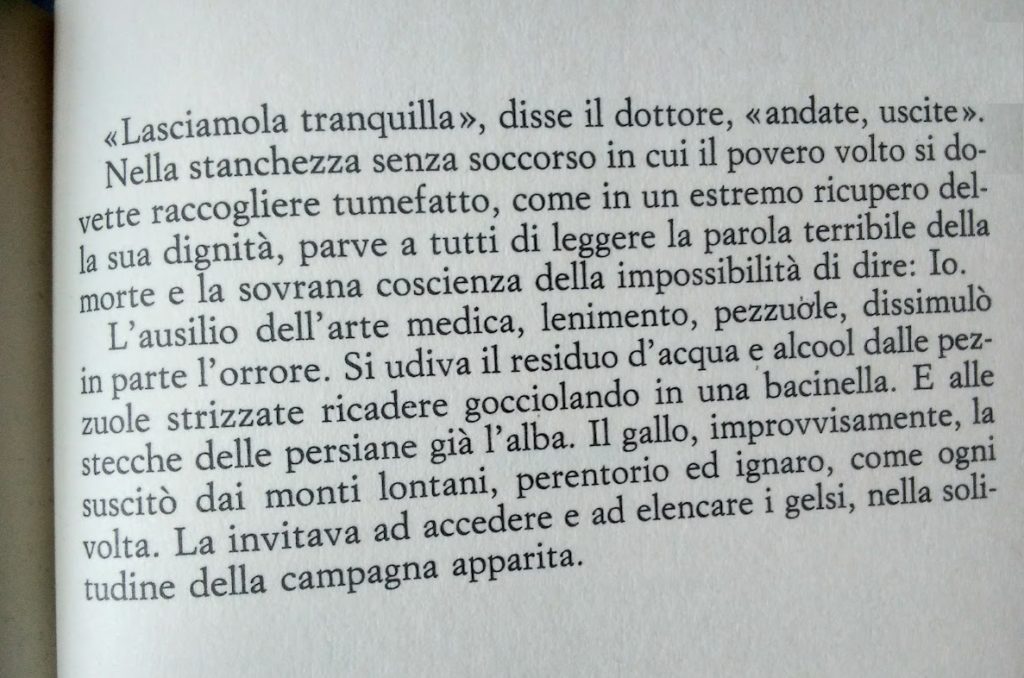
“Lasciamola tranquilla”, disse il dottoe. Andate, uscite. Nella stanchezza senza soccorso in cui il povero volto si dovette raccogliere tumefatto, come in un estremo recupero della sua dignità, parve a tutti di leggere la parola terribile della morte e la sovrana coscienza dell’impossibiltà di dire: Io.”
“Si fa fatica a tenere insieme questo corpo che sta per morire. E pensiamo se tutto finisce così allora cosa si salva di tutto quello che ho fatto. Perché facciamo tutto questo? Tutto questo lo sappiamo, ma a saperla a dire in una riga con esattezza…..”
“L’ausilio dell’arte medica, lenimento, pezzuole, dissimulòin parte l’orrore. Si udiva il residuo d’acqua e alcool delle pezzuole strizzate ricadere gocciolando in una bacinella.”
“Una inquadratura cinematografica molto stretta. Lui te la vende come un suono ‘si udiva‘, ma in realtà te la sta facendo vedere.”
“E alle stecche delle persane, già l’alba.”
“C’era da dire che stava per cominciare il giorno. Gadda era preciso. Non dice persiane, ma alle stecche e non c’è verbo. L’alba infatti si vede nelle stecche delle persiane. Più sei esatto e non vago, più quel nome resisterà.”
“Il gallo, improvvisamente, la suscitòdai monti lontani, perentorio e ignaro, come ogni volta. La invitava ad accedere e ad elencare i gelsi, nella solitudine della campagna apparita.”
“Elencare i gelsi….arriva la luce, il primo gelso, il secondo….E’ quello che fa la luce: elenca. In tre parole c’è un movimento e un senso della bellezza… La danza dell’alba che nessuna traduzione nel mondo potrebbe salvare. Noi possiamo sentire la danza dell’alba. Gadda aveva il senso della bellezza.
Quest’ultima frase molto italiana, è melodia, è un canto, oltre ad essere precisa, esatta, è musica.
Chiunque di noi sente che quella è la musica giusta, ritmo e melodia.
L’ultima frase del tema “nome” tac…..per sempre….
Noi abbiamo una bellissima lingua, l’italiano, che lui usava da Dio.”
“We don’t want to wage war on English, but we want to remind Italian speakers that in many cases there are usable, comfortable and transparent Italian words. We want to try to offer them to everyone as a possible alternative, to promote the great lexical and expressive richness of our language.” Claudio Marazzini (President of the Accademia della Crusca)
The question that many of us are asking after the Meloni government’s bill on Italian language is this: Should we protect the Italian language from foreign words, and in particular from English?
The law would prohibit the use of English terms in certain areas, such as the Public Administration, public communication, in employment contracts or to specify roles in a company and would provide for fines from 5,000 to 100,000.
Is it an illusion to think you can make laws against the invasion of words? Or as linguist experts suggest, “the only truly effective intervention for the health of the Italian language is to ensure that everyone has the best possible education and that teaching Italian leads to better linguistic awareness – for everyone and therefore also for future lawmakers, politicians and public communicators.”
The desire to emulate English speakers has distant origins. The word Anglicism was in fact already used in the 18th century. It was a time when Europe looked up to England’s colonial, political and technological achievements, which gave rise to the adoption of words of English origin, anglicisms to be precise, a wave that followed another one, that of the frenchisms.
Today’s globalization coupled with the spread of English terms into digital technology has made the influx of Anglicisms pathological.
In fact, in 2015 the Accademia della Crusca, one of the main points of reference in Italy and in the world for research on the Italian language, had launched a petition to encourage the use of Italian words instead of English ones.
Anglicisms have replaced or even canceled Italian words.
Watching the news we hear about “hub” energetico, when instead the words “centro” or “fulcro” energetico would be better understood by the majority of Italians. Or the famous government “expenditures”… perhaps to avoid the clearer word: “spese” in Italian?
Not to mention many Italian laws with English nomenclature, such as: “The Jobs Act”, “The Green Pass”,….etc.
In the streets we hear “news” instead of “notizia”, “weekend” instead of “fine settimana”. For me, when I speak English, I speak English; when I speak Italian, I speak Italian, and the same goes for French and other languages that I enjoy learning.
So, let’s fall in love with Italian again by listening to Alessandro Baricco read and explain “La cognizione del dolore” / “The Cognition of Pain” by Carlo Emilio Gadda (known as the Italian Joyce)
– activate the subtitles of the video above for a better understanding –
The writer Alessandro Baricco begins by saying that great writers manage to name life, things. It is a precious thing because things are given names to defend ourselves against them.
“Great writers are extraordinary because they know how to name the simplest and most complicated areas of our experience. They don’t just tell stories, they name life…
Gadda worked with our language and we are the only ones in the world who can truly understand and fully enjoy what he did. All translations lose much of what he had managed to accomplish by the wayside. He knew how to name the strangest things with almost unrepeatable accuracy and beauty.
We’ll read two paragraphs about ten lines long from the last page of the book “The Cognition of Pain”, a book he never finished (he didn’t really like finishing things).
An old lady who was attacked at night and is about to die, but it is not known whether she will die. They spent the night trying to treat her and now she lies in her bed in a room in silent agony in the last shred of night before dawn.”
“Let’s leave her alone,” said the doctor. Go, exit. In the unaided tiredness in which the poor face had to compose itself swollen, as in an extreme recovery of its dignity, everyone seemed to read the terrible word of death and the sovereign awareness of the impossibility of saying: I. “
“It’s hard to keep this body together that is about to die. And if we think that everything ends like this then what is saved from everything I’ve done. Why do we do all this? We know all this, but knowing how to say it in one line with accuracy…..”
“The aid of medical art, soothing, cloths, partly concealed the horror. You could hear the residue of water and alcohol from the squeezed cloths dripping into a basin.”
“A very tight cinematic shot. He’s selling it to you as a sound, but he’s actually showing it to you.”
“And at the slats, it’s already dawn.”
“It had to be said that the day was about to begin. Gadda was precise. He doesn’t say shutters, but on the slats and there is no verb. In fact, dawn can be seen in the slats of the shutters. The more exact you are and not vague, the more that name will last.”
“The rooster suddenly aroused her from the distant mountains, peremptory and unaware, as every time. He invited her to enter and list the mulberry trees, in the solitude of the countryside that appeared.”
“List the mulberries….the light comes, the first mulberry, the second….It’s what the light does: it lists. In three words there is a movement and a sense of beauty… The dance of the dawn that no translation in the world could save. We can feel the dance of the dawn. Gadda had a sense of beauty.
This last phrase is very Italian, it is melody, it is a song, as well as being precise, exact, it is music.
All of us feel that this is the right music, rhythm and melody.
The last sentence of the theme “name” tac….. forever….
We have a beautiful language, Italian, which he used like God.”
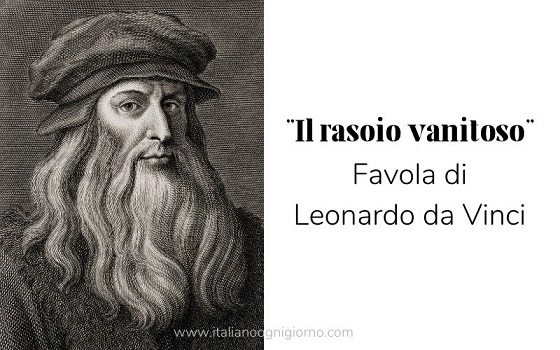
Il Rasoio Vanitoso, una favola di Leonardo da Vinci
Sai, che Leonardo da Vinci tra un’invenzione e l’altra scriveva anche favole? Non c’è da stupirsi ovviamente! Anche perché la favola ha un’ origine popolare antichissima e ha preceduto qualsiasi forma letteraria. La parola “favola”, viene dal latino “fabula”, e significa parlare. Infatti, le favole avevano il ruolo di trasmettere in forma orale, la tradizione, i principi e i valori della società. Pertanto, non era destinata all’educazione dei bambini, ma a dare un significato e fornire riposte agli episodi della vita quotidiana.
Leonardo trasmette con questa favola l’importanza di allenare sempre la propria mente come faceva lui!
IL RASOIO VANITOSO Un giorno il rasoio uscì dal suo manico e si mise a prendere il Sole. Vedendo il Sole che si specchiava sul metallo lucido, il rasoio si riempì d’orgoglio e disse: “Come sono bello: perfino il Sole si specchia su di me. Eppure devo faticare ogni giorno; sono proprio stufo di tagliare barbe. Anzi, sapete cosa faccio? Me ne vado. E non tornerò più alla bottega del barbiere. Mi nasconderò e mi godrò in pace la mia bella vita”. Il rasoio fuggì lontano dalla bottega e si nascose in una grotta, per non essere trovato dal barbiere. Rimase lì per qualche mese, poi uscì dalla grotta e si mise al Sole ma questo non si specchiava più sulla sua lama: il rasoio aveva perso la sua lama ed era coperto di ruggine da cima a fondo. Disperato, si lamentò: “Ah, se solo fossi rimasto alla bottega del barbiere. Avrei dovuto continuare a tagliar barbe, così sarei rimasto ben affilato e lucente; adesso sono solo un ferro vecchio da buttare”. Questo è quel che accade a chi smette di studiare e di esercitarsi e si dà al divertimento: la sua mente, come il ferro, perde filo e lucentezza e si copre della ruggine dell’ignoranza.
(English translation)
Did you know that Leonardo da Vinci also wrote fables between one invention and another? Nothing to be surprised about of course! Also because the fable has a very ancient popular origin and preceded any literary form. The word “favola” (fable) comes from the Latin word “fabula”, and means to speak. In fact, fable had the role of transmitting the tradition, principles and values of society in oral form. Therefore, it was not intended for the education of children, but to give meaning and providing answers to events of everyday life.
Leonardo transmits with this fable the importance of always training one’s mind as he did!
THE VAIN RAZOR One day the razor came out of its handle and began to bask in the sun. Seeing the sun reflected in the shiny metal, the razor was filled with pride and said: “How beautiful I am: even the sun is reflected on me. Yet I have to toil every day; I’m just sick of trimming beards. Actually, you know what I’m going to do? I’m leaving. And I’ll never go back to the barbershop. I’ll hide away and enjoy my beautiful life in peace.” The razor fled away from the shop and hid in a cave, not to be found by the barber. He stayed there for a few months, then he came out of the cave and put himself in the sun, but it no longer reflected on his blade: the razor had lost its blade and was covered in rust from top to bottom. Desperate, he moaned, “Ah, if only I’d stayed at the barbershop. I should have kept trimming beards, so I would have remained sharp and shiny; now I’m just an old piece of iron to throw away”. This is what happens to those who stop studying and practicing and just want to have fun: their mind, like iron, loses its edge and shine, and is covered with the rust of ignorance.