google.com, pub-1205142185266664 , DIRECT, f08c47fec0942fa0

Introduction to the Samnites | I Sanniti – introduzione

Primo di una serie di articoli dedicati alla storia dei Sanniti. – First of a series of articles dedicated to the history of the Samnites.

(English follows)

I Sanniti: Introduzione

La storia dei Sanniti continua ad affascinare dopo più di duemila anni. I Sanniti erano un popolo italico e acerrimi nemici di Roma. Di questo popolo fiero e indomito restano scarne testimonianze e poche vestigia, nonostante per decenni avessero lasciato un’impronta della propria civiltà sulle terre che si estendono dal Gran Sasso fino ad arrivare alle aree della Magna Grecia. Questo territorio è nei giorni nostri denominato “il Sannio”. Sappiamo che i Sanniti hanno influenzato la crescita di gran parte delle popolazioni italiche. 

Gli storici non sono sicuri delle origini dei Sanniti, ma pare che fossero cugini dei Romani. Infatti si ritiene che diramassero dai Sabini, uno dei primi ceppi etnici che si sono poi fusi con il ceppo che sarebbe diventato noto come il popolo romano. I Sanniti non hanno mai creato un’unica comunità politica come avevamo fatto i Romani, ma piuttosto delle tribù. Le principali erano i Carricini, i Caudini, i Frentani, gli Irpini e i Pentri che si sono uniti per fini bellici in una confederazione. “Samnium” e “Samnites” erano parole latine, e i Sanniti si riferivano a proprio paese come “Safinim” e a se stessi come “Safineis”. 

I romani, nella loro spinta verso l’espansione regionale, non hanno avuto un compito facile conquistare la penisola italiana e l’isola di Sicilia. In effetti più di una volta nella loro storia antica, se le cose fossero andate in modo leggermente diverso, i romani si sarebbero trovati vinti invece che conquistatori. 

Altri popoli hanno dato filo da torcere ai romani nella loro marcia verso la costruzione dell’impero tra cui gli Etruschi, i Greci e i Celti, ma i Sanniti erano i più caparbi e risoluti e consideravano sacra la libertà per cui hanno combattuto strenuamente.

Agli inizi del IV secolo a.C i Romani e i Sanniti si sono alleati e combattuti per avere l’egemonia sull’espansione naturale verso le fertili terre a sud del fiume Liri dal Volturno al Sarno. Il fattore che ha permesso all’uno di sovrastare all’altro non è facile da sapere. La storia che ci è stata tramandata si basa sul lavoro di storici asserviti al potere di Roma, tra cui Tito Livio. Si sa invece poco dei popoli soggiogati, delle loro vicende, idee politiche e religiose. Gli antichi testi parlano in modo superficiale, confuso e spesso non veritiero dei Sanniti. Infatti persino ricostruire l’assetto geografico del Sannio non è un compito semplice.

In seguito a nuovi scavi archeologici negli ultimi anni, il ritrovamento di reperti ha permesso di mettere un po’ di ordine nella storia e di dare una nuova interpretazione dell’antica società sannitica.

I Sanniti hanno vissuto in almeno quattro regioni: Abruzzo, Molise, Lazio e Campania. Ciascuna di queste regioni ha un museo dedicato ai Sanniti tra cui bisogna peregrinare non potendo per contrasti politici e geografici creare un unico museo dove conservare i reperti archeologici. 

Per indicare quei territori che erano uniti per combattere l’egemonia di Roma, i Sanniti furono i primi ad utilizzare il nome “Italia”.
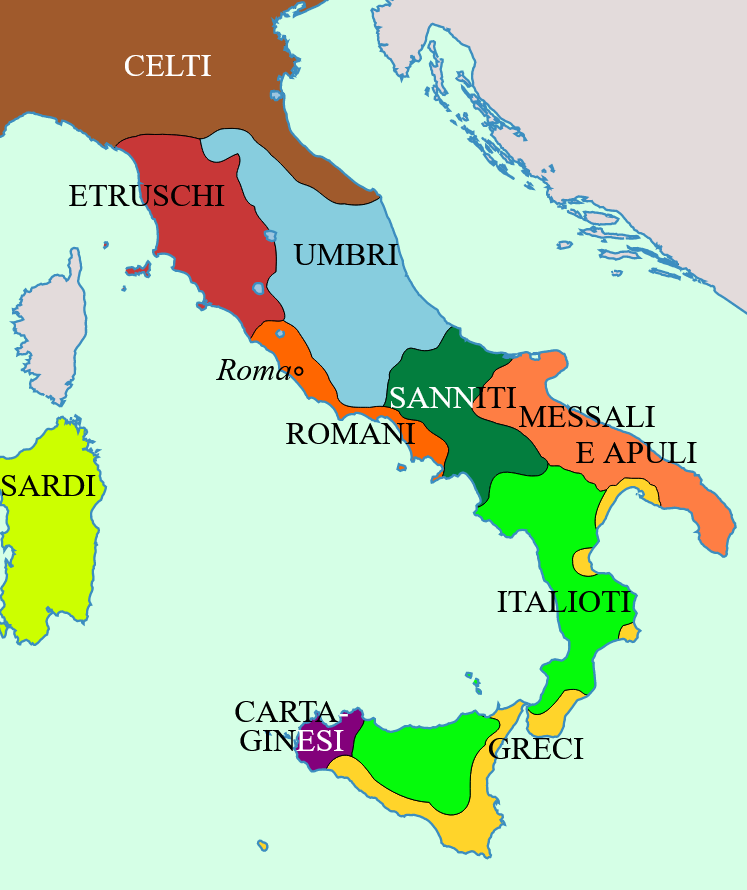
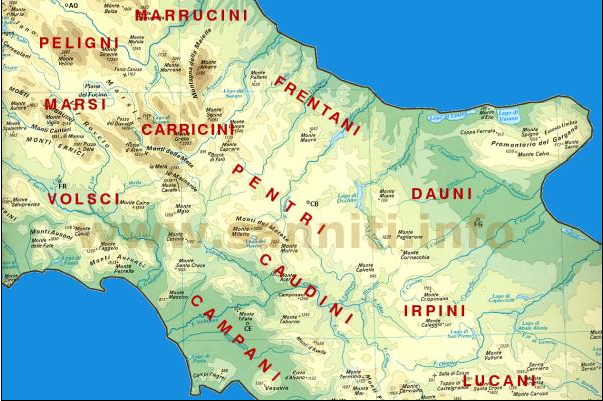
Antiche popolazioni dell’Italia centro-meridionale / fonte:sanniti.info

English version

The Samnites: Introduction

The history of the Samnites continues to fascinate after more than two thousand years. The Samnites were an Italian people and bitter enemies of Rome. Scarce evidence and few vestiges remain of this proud and indomitable people, despite the fact that for decades they had left the mark of their civilization on the lands that extend from the Gran Sasso up to the areas of Magna Graecia. This territory is nowadays called the Sannio. We know that the Samnites influenced the growth of most of the Italian populations.

Historians aren’t sure of the origins of the Samnites, but it appears that they were cousins of the Romans. Indeed it is believed that they branched off from the Sabines, an early ethnic lineage who later merged with the lineage that would come to be known as the Roman people. The Samnites never created a single polity as the Romans did, but rather tribes. The main ones were the Carricini, Caudini, Frentani, Irpini and Pentri who united for war purposes in a confederation. “Samnium” and “Samnites” were Latin words, and the Samnites referred to their country as “Safinim” and to themselves as “Safineis”. 

The Romans, in their drive for regional expansion, had no easy task conquering the Italian peninsula and the island of Sicily. Indeed more than once in their early history, if things had gone slightly differently, the Romans would have found themselves vanquished rather than conquerors. Other peoples gave the Romans a hard time in their march towards empire building including the Etruscans, Greeks and Celts, but the Samnites were the most stubborn and resolute and held sacred the freedom they fought so hard for. 

At the beginning of the 4th century BC the Romans and the Samnites allied and fought to have hegemony over the natural expansion towards the fertile lands south of the Liri river from the Volturno to the Sarno. The factor that allowed one to dominate the other is not easy to know. The story that has been handed down to us is based on the work of historians enslaved to the power of Rome, including Tito Livio. On the other hand, little is known about the subjugated peoples, their vicissitudes, political and religious ideas. The ancient texts speak in a superficial, confused and often untruthful way about the Samnites. In fact, even reconstructing the geographical structure of Sannio is not a simple task. 

Following new archaeological excavations in recent years, the discovery of artifacts has allowed us to put some order in history and to give a new interpretation of the ancient Samnite society. 

The Samnites lived in at least four regions: Abruzzo, Molise, Lazio and Campania. Each of these regions has a museum dedicated to the Samnites among which it is necessary to wander as it is not possible due to political and geographical contrasts to create a single museum in which to preserve the archaeological finds. 

To indicate those territories that were united to fight the hegemony of Rome, the Samnites were the first to use the name “Italy”.


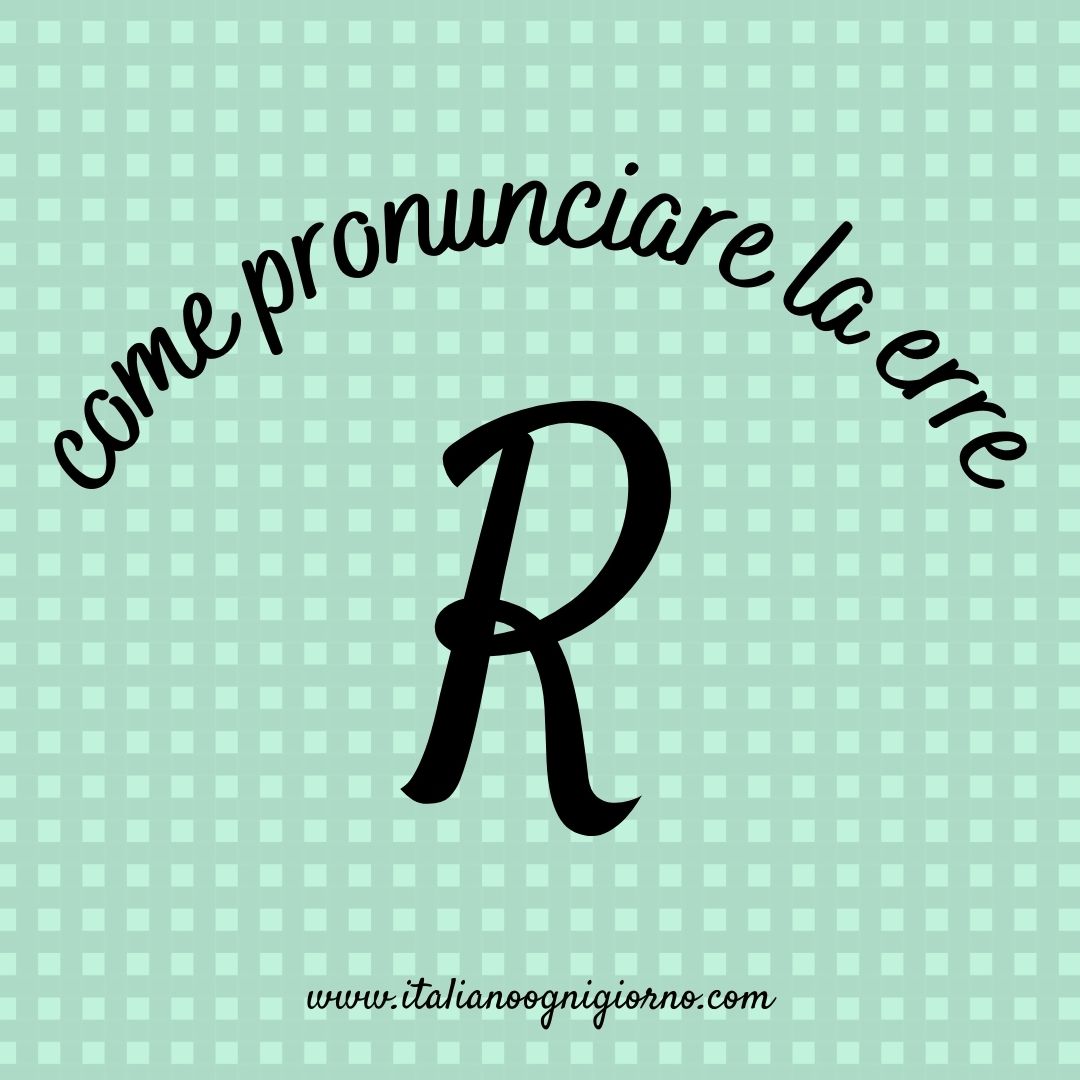
How to roll the r in Italian | pronunciation practice

Come pronunciare la r in italiano – esercizi di pronuncia

Parliamo della famosa erre (R). È una delle lettere più difficili da pronunciare non solo per studenti stranieri, ma anche per i madrelingua. Infatti non tutti vibrano la “R” allo stesso modo. 

I diversi modi di pronunciare la “R” dipendono da fattori interni, la “r moscia”, o anche esterni, per esempio i dialetti regionali e il sistema fonetico di altre lingue che richiedono l’uso di un’altra parte della bocca o della lingua. In inglese britannico per esempio è un suono approssimativo, mentre in italiano è un trillo come anche in americano. Infatti nelle parole butter, better (la R e’ un trillo).

La R moscia, nota anche come “erre francese”, è un modo di articolare la “R”, che invece di essere vibrata nella parte anteriore della bocca si fa vibrare nella parte posteriore.

Proviamo per esempio a dire “Rosa” prima vibrando la parte posteriore, R moscia, e poi la parte anteriore, trillo.

In italiano la lettera “R” è definita una vibrante alveolare, il che significa che per produrre il suono corretto la punta della lingua deve vibrare. La lingua si muove con la erre trillata e non è nella gola come la “R” francese. 

Inoltre, in base alla posizione della “R” nella parola otteniamo suoni diversi:

  • la “erre leggera” – come nella parola “TRE” dove il suono non è forte perché si trova tra una vocale e una consonante; oppure quando si trova tra due vocali per esempio nella parola “AMORE”.
  • il “trillo lungo” – come nella parola “CARRO” poiché abbiamo una doppia erre; oppure all’inizio della parola come in “riso”. In questi due casi si tende a enfatizzare la “R”, producendo così un suono vibrante.

Comunque alcune persone pronunciano la “R” trillata in entrambi i casi e quindi “tre” e “riso” sono pronunciati con la “R” trillata.

ESERCIZI

Se si vuole cambiare la pronuncia della “R” basta fare degli esercizi regolarmente. Vediamone alcuni.

  1. Un primo esercizio utilizza la lettera “L” un suono lungo con la lingua dietro i denti. Ripetiamo velocemente “TLA” mettendo la lingua tra i denti anteriori:

TLA TLA  TLA  TLA  TLA  TLA  TLA TLA 

Più velocemente si ripete più si sente una “R” vibrante.

Facciamo lo stesso con tutte le vocali.

TLE TLE TLE TLE TLE TLE TLE TLE

TLI TLI TLI TLI TLI TLI TLI TLI 

TLO TLO TLO TLO TLO TLO TLO TLO

TLU TLU TLU TLU TLU TLU TLU TLU

2. Facciamo un altro esercizio con la lettera “D”. La punta della lingua è dietro ai denti e bisogna molto velocemente ripetere la D insieme alle vocali.…

DaDaDaDaDaDaDaDaDaDaDaDa

Viene molto bene con la “e”

DeDeDeDeDeDeDeDeDeDeDeDe

DiDiDiDiDiDiDiDiDiDiDiDiDiDiDiDi

DoDoDoDoDoDoDoDoDoDoDoDo

DuDuDuDuDuDuDuDuDuDuDuDu

Adesso ripetiamo “DRE” molto velocemente…..e magicamente diventa “TRE” con un bel trillo della “R”.

DRE DRE DRE DRE DRE DRE DRE

3. E poi ci sono gli scioglilingua, un altro ottimo esercizio per migliorare il suono della “R”

Ripetiamo i seguenti 3 scioglilingua molto conosciuti per pronunciare la R.

  1. “Trentatré trentini entrarono a Trento tutti e trentatré trotterellando.”.
  2. “Tre tigri contro tre tigri”.
  3. “Un ramarro sul muro marrone”.

Prova a ripetere ciascuno molte volte aumentando la velocità, ma mantenendo una buona forma di pronuncia.  

Quando si pronunciano con regolarità gli scioglilingua e gli altri esercizi la coordinazione della lingua diventa un gesto naturale.

—————————————————-

(English version)

Let’s talk about the famous  Italian R sound. It is one of the most difficult letters to pronounce not only for foreign students, but also for native speakers. In fact, not everyone vibrates the “R” in the same way.

The different ways of pronouncing the “R” depend on internal factors, the “r moscia” (dull R) or even external, regional dialects, but also the phonetic system of other languages ​​that requires the use of another part of the mouth or tongue. In British English, for example, it is an approximate sound, while in Italian it is a trill as well as in American. In fact, in the words butter, better (the R is a trill)

The R moscia, also known as “French R”, is a way of articulating the “R”, which instead of being vibrated in the front part of the mouth is vibrated in the back.

For example, let’s try to say “Rosa” by vibrating the back first, R moscia, and then the front part, trill.

In Italian the letter “R” is defined as a vibrating alveolar, which means that to produce the correct sound the tip of the tongue must vibrate. The tongue moves with the trilled r, it is not in the throat like the French “R”.

Also based on the position of the “R” in the word you get different sounds:

Light R – as in the word “TRE” where the sound is not strong because the “R” is located between a vowel and a consonant; or when it is found between two vowels, for example in the word “AMORE”.

Long trill – as in the word “CARRO” because there’s a double “R”; or at the beginning of the word as in “RISO”. In these two cases we tend to emphasize the “R”, thus producing a vibrant sound.

However, some people pronounce the trilled “R” in both cases and therefore “TRE” and “RISO” are pronounced with the trilled “R”.

If you want to change the pronunciation of the “R” just do some exercises regularly. Let’s see some of them.

A first exercise uses the letter “L” a long sound with the tongue behind the teeth. We’ll quickly repeat “TLA” putting the tongue between the front teeth:

TLA TLA TLA TLA TLA TLA TLA TLA

The faster you repeat the more a vibrant “R” is.

We do the same with all vowels.

TLE TLE TLE TLE TLE TLE TLE TLE

TLI TLI TLI TLI TLI TLI TLI

TLO TLO TLO TLO TLO TLO TLO TLO

TLU TLU TLU TLU TLU TLU TLU TLU

Let’s do another exercise with the letter “D”. The tip of the tongue is behind the teeth and you have to repeat it very quickly together with the vowels. …

DaDaDaDaDaDaDaDaDaDa

It works very well with the “e”

DeDeDeDeDeDeDeDeDeDeDeDe

DoDoDoDoDoDoDoDoDoDoDoDoDo

DuDuDuDuDuDuDuDuDuDuDuDu

Now let’s repeat “DRE” very quickly… ..and magically it becomes “TRE” with a nice roll of the “R”.

And also the tongue twisters are another great exercise to improve the sound of the “R”

Let’s repeat the following 3 well-known tongue twisters for pronouncing the “R”.

  1. “Trentatré trentini entrarono a Trento tutti e trentatré trotterellando.”.
  2. “Tre tigri contro tre tigri”.
  3. “Un ramarro sul muro marrone”.

Try repeating each several times while increasing the speed, but maintaining a good form of pronunciation.

When tongue twisters and the other exercises are pronounced regularly, tongue coordination becomes a natural gesture.

Italian songs to tell easy stories | part 2

4 canzoni per raccontare facili storie in italiano, seconda parte

Hai cantato le canzoni della Prima Parte ? Erano corte e con semplici ripetizioni. La melodia e la ripetizione aiutano a migliorare la pronuncia.

In questa seconda parte ascoltiamo e cantiamo quattro canzoni che raccontano storie. Essere in grado di raccontare storie semplici è un bel traguardo che tutti vogliono raggiungere. La musica è il mezzo migliore per allenarsi.

Le quattro canzoni di popolari cantanti italiane fanno parte di un’epoca passata in cui la musica aveva una poesia diversa.

Did you sing the songs of the first part? They were short and with simple repetitions. Melody and repetition help improve pronunciation.
In this second part we listen to and sing four songs that tell stories. Being able to tell simple stories is a great achievement that everyone wants to reach. Music is the best way to practice.
The four songs by popular Italian singers are part of a bygone era where music had a different poetry.

vola colomba- Nilla pizzi (1952)

Brano originale del 1952 Brano cantato da Nilla Pizzi con l’orchestra di Ennio Morricone.
La colomba era il messaggio che l’Italia uscita sconfitta e umiliata dalla guerra, inviava a Trieste, contesa fra i comunisti jugoslavi di Tito, gli inglesi e gli americani che la stavano occupando con le armi. La guerra a Trieste non finì infatti nel 1945 come nel resto del Paese, ma nel 1954 quando le truppe italiane ritornarono a liberarla.

Original piece from 1952 sung by Nilla Pizzi with the orchestra of Ennio Morricone.
The dove “la colomba” was the message that Italy, defeated and humiliated by the war, sent to Trieste, disputed between Tito’s Yugoslav Communists, the British, and the Americans who were occupying it with arms. In fact, the war in Trieste did not end in 1945 as in the rest of the country, but in 1954 when the Italian troops returned to free it.

Pinguino Innamorato – Silvana Fioresi e Trio Lescano (1941)

Mentre la dittatura si avviava verso una terribile guerra e ancor più terribile guerra civile, il pubblico si deliziava con delle canzonette accattivanti per la melodia e lo swing. In contrasto le parole potrebbero essere definite come surreali, bizzarre, e grottesche.

As the dictatorship moved towards a terrible war and even more terrible civil war, the audience delighted with captivating songs for melody and swing. In contrast, the words could be defined as surreal, bizarre, and grotesque.


Canzone Da Due Soldi – Katyna Ranieri (1957)

Una canzone da due soldi, ci invita a vedere la vera felicità nel poco. Questi versi danno una voce “poetica” al dopoguerra, scuotono le masse ed entrano nelle case di un popolo assetato di normalità.

A simple song “una canzone da due soldi”, invites us to see true happiness in little. These verses give a “poetic” voice to the postwar period, it shakes the masses and enters the homes of a people thirsty for normality.

Casetta in Canadà – Carla Boni (1957)

Una canzone con un ritmo allegro ed accattivante con un testo – genere nonsense – di facile memorizzazione che si può ripetere all’infinito. Un grande successo fra gli Italiani emigrati in Canada.

A song with a cheerful and captivating rhythm with a text – nonsense genre – easy to memorize that can be repeated indefinitely. A great success among Italians who emigrated to Canada.

Mi raccomando canta ogni giorno, fa bene non solo allo studio dell’italiano ma anche alla salute!

I recommend singing every day, it’s good not only for your Italian, but also for your health!

Ascolta le canzoni della prima parte……

Listen to the songs of the first part

Italian words to keep a conversation going

Parole italiane per mantenere viva una conversazione

Abbiamo precedentemente visto come in italiano le ‘parole riempitive’ o ‘intercalari’ siano usate in abbondanza. Infatti la lista era interminabile!
Ma esiste anche un’altra categoria di parole ed espressioni che vengono usate per mantenere viva una conversazione. Queste parole ed espressioni aiutano anche a comunicare il nostro accordo, disaccordo e incertezza senza interrompere l’interlocutore.

Ecco una lista di alcune delle più comuni.

We have already seen how in Italian the “filler words”, ‘parole riempitive’ o ‘intercalari’ are used in abundance. In fact, the list was endless! But there is also another category of words and expressions that are used to keep a conversation going. These words and expressions also help communicate our agreement, disagreement, and uncertainty without interrupting the other party.

Here is a list of some of the more common ones.

Esprimere accordo – expressing agreement

La più popolare in assoluto per esprimere accordo è “infatti”. Si puo’ alternare con le altre espressioni, o ripetere molte volte sopratutto se l’interlocutore non dà segno di voler smettere di parlare!

The most popular by far is “infatti”. You can alternate it with the other expressions, or repeat it many times especially if the speaker shows no sign of wanting to stop talking!

Infatti (indeed)
Direi (I’d say so)
Sono d’accordo (I agree)
Certo (of course)
Senz’altro (certainly)
Come no… (of course)
Vero (True)
Verissimo (very True)
Bene (Good)

Esprimere disaccordo – expressing disagreement

Quando vuoi restare cortesemente in disaccordo con poche parole e senza interrompere chi parla:

When you want to politely disagree with a few words and without interrupting the speaker:

Non direi (I wouldn’t say so)
Ma no (Can’t be)
Al contrario (on the contrary)
Ma dai… (Come on)
Non credo (I don’t think so)

Esprimere incertezza – Expressing uncertainty

Queste parole possono incoraggiare l’interlocutore a fornire ulteriori informazioni:

These words can encourage the speaker to provide more information:

Dici? (Do you think so?)
Non so (I don’t know)
Mah… (Perhaps…)
Davvero? (Really?)
Credi davvero? (Do you really think so?)
Potrebbe essere (Could be)


Esempio misto:

– Domani ci sarà lo sciopero dei trasporti….
Davvero?
-…e io devo prendere il treno, è pazzesco! Il sistema dei trasporti è un disastro…
…infatti…
– Vedrai che lo sciopero durerà tutta la settimana!
Ma no…
– Non ci credi? Scommettiamo che ho ragione!

Mixed example:

– Tomorrow there will be a transport strike ….
Really?
– … and I have to take the train, it’s crazy! The transport system is a mess …
…indeed…
– You’ll see the strike will last all week!
Come on…
– You don’t believe it? We can bet I’m right!


Easy Italian songs to be more fluent

4 Facili canzoni italiane per migliorare l’italiano 

Quando la vita diventa caotica, c’è la musica a sostenermi. Canto sempre, soprattutto quando la vita diventa pesante. Sai che cantare in italiano è uno dei modi migliori per migliorare la lingua? La ripetizione di parole accompagnata da una melodia non solo migliora la pronuncia, ma migliora anche la fiducia nel parlare fluentemente. Ho scelto 4 semplici canzoni italiane per cominciare. 

Scarica qui il testo delle canzoni

(download here the lyrics of the songs)

When life becomes chaotic there is music to support me. I always sing, especially when life gets heavy. Do you know that singing in Italian is one of the best ways to improve the language? Repetition of words accompanied by a melody not only improves pronunciation but also improves one’s confidence in speaking fluently. I’ve chosen 4 simple Italian songs to start with.

Ancora tu – Lucio Battisti

Canzone perfetta per fare domande e frasi negative.

Perfect songs for asking questions and making negative sentences.

Non credere – Mina

Una buona canzone per esercitarsi con l’imperativo.

A good song to practice the imperative.


Il mondo – Jimmy Fontana

Una canzone per praticare il presente con stile.

A song to practice the present with style.

Pensiero Stupendo – Patty Pravo

Una canzone stupenda e semplice con un tocco di condizionale.

A beautiful and simple song with a touch of conditional.

Mi raccomando canta ogni giorno, fa bene non solo allo studio dell’italiano ma anche alla salute!

I recommend singing every day, it’s good not only for your Italian, but also for your health

How to say delicious in Italian – 16 words and phrases

16 parole e frasi per dire buonissimo in italiano

Sai, che il proverbio “De gustibus non disputandum est” – Sui gusti non si discute, è uno dei più utilizzati dagli italiani? E comunque non viene utilizzato solo riguardo al cibo, bensi anche per ogni altro tipo di gusto: musica, moda, genere letterario ecc.
Nell’articolo di questa settimana però restiamo nel campo del cibo e vediamo tutti i modi per dire “buonissimo” in italiano.

Le parole e le espressioni non mancano, come puoi immaginare! Parlare di buon cibo a livello gustativo e olfattivo fa parte dell’italianità!

RICORDA: gli aggettivi si concordano con il genere e numero del sostantivo. Per esempio:
Buono – maschile singolare
Buona – femminile singolare
Buoni – maschile plurale
Buone – femminile plurale

Do you know that the proverb “De gustibus non disputandum est”/ Sui gusti non si discute (there’s no accounting for taste) is one of the most used by Italians? And in any case it is not only used for food, but also for any other type of taste: music, fashion, literary genre, etc.
In this week’s article, however, we remain in the field of food and look intl all the ways to say “very good” in Italian.
There is no shortage of words and expressions, as you can imagine! Speaking of good food on a gustatory and olfactory level is part of being Italian!

REMEMBER: adjectives agree with the gender and number of the noun. For instance:
Buono – masculine singular
Buona – feminine singular
Buoni – masculine plural
Buone – feminine plural

Buonissimo / very good

Buono diventa un superlativo assoluto “buonissimo” quando dire buono proprio non basta!

Good becomes an absolute superlative “Buonissimo”/ “very good” when saying “buono” is just not enough!

  • E’ buonissima questa pasta al pesto!This pasta al pesto is very good!

Delizioso / delicious

Ecco una espressione che ha non solo il significato di “buonissimo”, ma pochi stranieri sanno che si può usare in altri contesti con il significato di carino, simpatico. Riferendosi per esempio a “una persona deliziosa” o a “un regalo delizioso”.

Here is an expression that not only has the meaning of “very good”, but few foreigners know that it can be used in other contexts with the meaning of delightful, charming. Referring for example to “a charming person” or “a delightful gift”.

  • Tutte le pizze del ristorante erano deliziose.All the pizzas at the restaurant were delicious!
  • Abbiamo conosciuto una deliziosa famiglia siciliana.We met a charming Sicilian family.

Che delizia / what a delight

In questo caso però la parola “delizia”, il sostantivo de cui deriva l’aggettivo delizioso, si riferisce solo al cibo.

In this case, however, the word “delizia”, the noun from which the adjective “delizioso” derives from, refers only to food.

  • Che delizia questo rustico agli spinaci!What a delight this spinach savory cake is!

Che buono / so good

Questa è sicuramente l’esclamazione più popolare: “Che buono” o semplicemente, “buono! A volte si tende ad allungare il suono della “o” alla fine in conseguenza al gusto della pietanza particolarmente apprezzata!

This is surely the most popular exclamation: “Che buono”/”So good” or simply, “Buono”/ “good! Sometimes there is a tendency to lengthen the sound of the “o” at the end as a result of the taste of the dish which is particularly appreciated!

  • Che buoni questi biscotti appena sfornati! These freshly baked cookies are so good!

Squisito / Exquisite

Come alternativa a “buonissimo” puoi anche dire “Squisito”.

As an alternative to “buonissimo” you can also say “Squisito” / Exquisite”.

  • La cena che hai preparato era squisita. – The dinner you cooked was exquisite.

Che bontà / So good

Se non vuoi ripeterti tropp dicendo “che buono” , prova invece a dire “Che bontà”/so good.

If you don’t want to repeat yourself too many times saying “che buono”, try saying instead “Che bontà” / “so good”.

  • Ma che bontà queste albicocche del tuo giardino. / These apricots from your garden are so good.

Che prelibatezza / What a delicacy

Dalla parola prelibato, nasce l’espressione “Che prelibatezza” / “What a delicacy”.

From the word “prelibato”/”delicious”, comes the expression”Che prelibatezza” / “What a delicacy”.

  • Che prelibatezza questa zuppa di legumi! / What a delicacy this legume soup!

Ottimo / Really good

Tra “buono” e “squisito” troviamo “Ottimo” / “Really good”

Between “buono” and “squisito” we find “Ottimo” / “Really good”.

  • Ottima la conserva di pomodoro di quest’anno! – This year’s tomato preserve is really good!

Eccellente / Excellent

Forse meno usata rispetto alle altre parole, ma “Eccellente” / “Excellent” ha il di sicuro il suo posto a tavola!

Perhaps less used than the other words, but “Eccellente” / “Excellent” certainly has its place at the table!

  • Abbiamo gustato un eccellente vino d’annata. / We tasted an excellent vintage wine.

Spettacolare / Spectacular

Se vuoi fare un complimento esagerato…

If you want to give an exaggerated compliment …

  • Questo risotto è più che buono. È spettacolare! – This pizza is more than good. It’s spectacular!

Gustoso – Saporito / Full of flavor-Tasty

Per dire che una cosa è ricca di sapore, si usano gli aggettivi “gustoso”/”saporito”, “tasty.

To say that something is rich in flavor, the adjectives “gustoso”/”saporito”, “tasty” are used.

  • I crostini dell’antipasto erano gustosi. / The crostini on the appetizer were tasty.

Invitante – allettante / tempting – inviting

Queste due parole si possono applicare al cibo, ma anche ad altre cose che ci tentano.

These two words can be applied to food, but also to other things that tempt us.

  • Il profumo del forno è molto invitante. / The smell of the bakery is very inviting.

Uno tira l’altro / moreish

A chi non capita di non riuscire a smettere di mangiare una cosa troppo buona!

Who doesn’t find themselves be unable to stop eating something that is too good!

  • Questi cioccolatini sono talmente buoni che uno tira l’altro! / These chocolates are so good that they are moreish!

Fa venire l’acquolina in bocca / It is mouth-watering

Un odore invitante o la vista di una cosa buonissima da mangiare “Fa venire l’acquolina in bocca” / “Is mouth-watering”.

  • Il profumo delle lasagne fa venire l’acquolina in bocca. / The smell of the lasagna is mouth-watering.

  • Non formali / non-formal:

Da leccarsi i baffi / It is mouth-watering

  • Gli spaghetti alle melanzane sono da leccarsi i baffi! / The spaghetti with eggplant are mouth-watering!

È buono: da morire – da urlo – impazzire /
It’s to die for – It’s crazy good

  • Ti assicuro che gli arancini sono da urlo! / I assure you that the arancini are to die for!

È da sbavo / It’s To drool for

Un’espressione non proprio adatta ad eventi formali ed eleganti! È sicuramente molto più usato tra i più giovani.

An expression not really suitable for formal and elegant events! It is certainly much more commonly used among the younger ones.

  • Ho mangiato un pasticcino alla crema da sbavo! I ate a cream pastry to drool for!

Fammi sapere nei commenti quale parole o espressione usi o userai!

Let me know in the comments which words or expressions you use or will use!

Allora, Cioè, Insomma: Italian filler words | parole riempitive – intercalari

In italiano le ‘parole riempitive’ o ‘intercalari’ si usano in abbondanza, come potrai notare dalla lunga lista che ho compilato. Si possono dividere in 3 catogorie: iniziatori, mediani e finalizzatori. Anche se, diciamo che, alcune di queste parole o espressioni si prestano bene in diverse situazioni. Sono particolarmente importanti per dare fluidità ad una conversazione. Comunque se non sei un madrelingua “allora diciamo che magari ti danno tutto sommato” più tempo per formulare i tuoi pensieri in italiano. Ecco alcune delle più comuni ‘parole riempitive’ o ‘intercalari’ della lingua italiana.

In Italian the ‘filler words’, “parole riempitive” o”intercalari” are used in abundance, as you can see from the long list I have compiled. They can be divided into 3 categories: starter words, middle words and ending words. Although, “diciamo”, let’s say that, some of these words or expressions lend themselves well in different situations. They are particularly important for giving fluidity to a conversation. However, if you are not a native speaker “then let’s say that maybe they give you all in all” (“allora diciamo che magari ti danno tutto sommato”) more time to formulate your thoughts in Italian. Here are some of the most common ‘filler words’ of the Italian language.

Iniziatori – Starter words

Sono molto utili per iniziare una frase o per darti tempo per organizzare i pensieri. Si può iniziare con anche più di uno….”mah, senti, allora….dunque.”

They are very useful for starting a sentence or giving you time to organize your thoughts. You can start with more than one …. ”mah, senti, allora….dunque.”

Allora (so)
Senti (hear me out)
Sai (you know)
Mah (indicates doubt, disappointment)
Guarda (look)
Dunque (so)
Onestamente (honestly)
Praticamente (practically)
Sostanzialmente (essentially)
Bene (great/well)
Vabbe (whatever)
Beh (well)
Fammi pensare (let me think)
Ehm (um)
Mica (perhaps)
Niente (anyway)

Esempio/ Example:

-Allora, che ne dici di andare al cinema stasera?
– Mah, onestamente, preferirei una pizza.
– Sai, possiamo mangiare la pizza prima e poi guardare il film.
– Ehm, fammi pensare…d’accordo. Ci sto!

-So, what about going to the cinema tonight?
– … honestly, I’d prefer a pizza.
– You know, we could eat the pizza first and then watch the film.
– Um, let me think … okay. I’m in!

Mediani – Middle Words

A volte mentre parli la parola giusta non ti viene immediatamente, allora per sbloccarti puoi usare queste parole riempitive :

Sometimes while you are speaking, the right word does not immediately come to mind, so to get unstuck you can use these filler words:

Che dire (what can I say)
Cioè (in other words)
Niente (anyway)
Capito (got it?)
Sai (you know)
Mah (indicates doubt, disappointment)
Onestamente (honestly)
Praticamente (practically)
Sostanzialmente (essentially)
Comunque (however)
Diciamo (let’s say)
Boh (I don’t know)
Ehm (um)
Insomma (in short)
Nel senso (I mean)
Per intenderci (to understand eachother)
Non so (I don’t know)
Tutto sommato (after all)
Che so io (what do I know)
Magari (perhaps)
Mica (perhaps
Tipo (like)

Esempio/ Example:

Sono andata alle poste ed era praticamente pieno di gente, insomma zeppo…tipo non ci si riusciva a muovere, boh, che dire, me ne sono tornata a casa.

I went to the post office and it was practically full of people, in short, packed … like we could’t move, I don’t know, what can I say, I went home.

Finalizzatori – Ending words

Per indicare che abbiamo finito di parlare usiamo i finalizzatori:

To indicate that we have finished speaking we use finalizers:

E quant’altro (and so on)
E niente (anyway)
Capito (got it?)
Mah (indicates doubt, disappointment)
Bene (great)
Vabbe/beh
Che dire (what can I say)
Diciamo (let’s say)
Boh (I don’t know)
Insomma (in short)
In conclusione (in conclusion)
Per intenderci (to understand eachother)
Purtroppo (unfortuntaley)

Esempio/ Example:

…E niente, la fila per il ristorante era lunga e ci hanno detto di pazientare ancora per 30 minuti, capito…

… Anyway, the line-up for the restaurant was long and we were told to wait another 30 minutes, got it…?


Insomma, che dire, in italiano, practicamente la varietà di espressioni non manca! (In short, what can I say, practically there’s no shortage of filler words!)

Scrivi una frase nei commenti con i tuoi intercalari preferiti. / Write a sentence in the comments with your favorite filler words.


You cannot copy content of this page