google.com, pub-1205142185266664 , DIRECT, f08c47fec0942fa0

Estate di San Martino- leggenda e tradizioni

Summer of San Martino (Indian Summer) – legend and traditions

(English follows)

Capita quasi ogni anno, prima che faccia capolino l’inverno, che si verifichi un’intervallo di bel tempo, con giornate luminose e tiepide nel pieno della stagione autunnale, nel periodo di fine ottobre-inizio novembre.

Un rialzo delle temperature mette in pausa pioggia, nebbia e freddo. Questo fenomeno avvolto da tradizioni e leggende di origine cristiana è conosciuto come l’Estate di San Martino.

La leggenda

“L’Estate di San Martino dura tre giorni e un pochino” è un popolare detto che accompagna la leggenda dell’Estate di San Martino, una tradizione popolare italiana che celebra la fine dell’estate e l’inizio dell’autunno.

Si narra che un freddo giorno d’autunno, molto probabilmente proprio l’11 novembre, Martino uscendo a cavallo da una delle porte della città di Amiens, in Francia, si è imbattuto in un uomo molto povero, nudo e infreddolito. San Martino ha avuto pietà dell’uomo e ha deciso di aiutarlo. Così ha tagliato il suo mantello di lana donandogli la metà.

Pare che dopo pochi istanti abbia smesso di piovere, sia spuntato il sole e la temperatura sia diventata più mite. Quella notte Martino ha sognato Gesù rivelando di essere lui il mendicante. Quindi per commemorare quell’11 novembre San Martino mantiene la sua promessa (quasi) ogni anno, regalando un’interruzione dalla morsa del freddo e un periodo piacevole e mite.

La tradizione

L’Estate di San Martino nei Paesi anglosassoni viene chiamata “Indian Summer” (letteralmente Estate Indiana) ed è nota anche nelle culture francofone e iberofone.

Questa festività in alcune parti d’Italia è associata alla vendemmia e alla raccolta delle olive. In effetti questa piccola pausa di piacevole clima è vista come un momento di transizione e cambiamento verso l’inverno che sta per arrivare.

Una spiegazione scientifica

L’Estate di San Martino ha anche una spiegazione scientifica. Secondo molti esperti l’alta pressione, le alte temperature e il bel tempo sono dovuti all’espansione dell’anticiclone dalla Spagna verso tutto il Mediterraneo.

San Martino, da militare a santo

Martino da Tours è nato intorno al 317 da una nobile famiglia. Si è convertito al cristianesimo dopo l’episodio del mantello ed è stato battezzato. Dopo vent’anni di carriera militare è diventato Vescovo di Tours nel 371. Ha fondato il monastero di Ligugé, il più antico d’Europa.

san martino nella letteratura

L’estate di San Martino è celebrata in diverse poesie e presta il nome anche al titolo di un romanzo. Ricordiamo:

  • una famosa poesia di Giosuè Carducci, intitolata appunto San Martino.
  • una poesia di Giovanni Pascoli Novembre è dedicata all’Estate di San Martino
  • anche Cesare Pavese ha dedicato una poesia al periodo intitolata Estate di San Martino.
  • L’Estate di San Martino (Nachsommer, 1857) è uno dei romanzi più celebri di Stifter.

English version

It happens almost every year, before winter sets in, that there is an interval of good weather, with bright and warm days at the height of the autumn season, in the period from the end of October to the beginning of November.

A rise in temperatures puts a pause on rain, fog and cold. This phenomenon surrounded by traditions and legends of Christian origin is known as “L’Estate di San Martino”, Saint Martin’s Summer.

The legend

“Saint Martin’s Summer lasts three days and a little” (“L’Estate di San Martino dura tre giorni e un pochin) is a popular saying that accompanies the legend of Saint Martin’s Summer, an Italian popular tradition that celebrates the end of summer and the beginning of autumn.

It is said that one cold autumn day, most likely on November 11th, Martino, horse riding out of one of the gates of the city of Amiens, in France, came across a very poor, naked and cold man. Saint Martin took pity on the man and decided to help him. So he cut his woolen cloak and gave him half of it.

It seems that after a few moments it stopped raining, the sun came out and the temperature became milder. That night Martin dreamed of Jesus revealing that he was the beggar. So to commemorate that day of November 11th, Saint Martin keeps his promise (almost) every year, granting an interruption from the grip of the cold and a pleasant and mild period.

The Tradition

Saint Martin’s Summer in Anglo-Saxon countries is called “Indian Summer” and is also known in Francophone and Iberophone cultures.

This holiday in some parts of Italy is associated with the grape harvest and olive harvest. In fact, this small break of pleasant climate is seen as a moment of transition and change towards the winter that is about to arrive.

A scientific explanation

St. Martin’s Summer also has a scientific explanation. According to many experts, the high pressure, high temperatures and good weather are due to the expansion of the anticyclone from Spain towards the entire Mediterranean.

Saint Martin, from soldier to saint

Martin of Tours was born around 317 to a noble family. He converted to Christianity after the cloak episode and was baptized. After twenty years of military career he became Bishop of Tours in 371. He founded the monastery of Ligugé, the oldest in Europe.

Saint Martin in literature

The Estate di San Martino is celebrated in several poems and also lends its name to the title of a novel. We remember:

  • a famous poem by Giosuè Carducci, entitled San Martino.
  • a poem by Giovanni Pascoli Novembre is dedicated to the Summer of San Martino
  • Cesare Pavese also dedicated a poem to the period entitled Summer of San Martino. (Estate di San Martino)
  • St. Martin’s Summer (Nachsommer, 1857) is one of Stifter’s most famous novels.

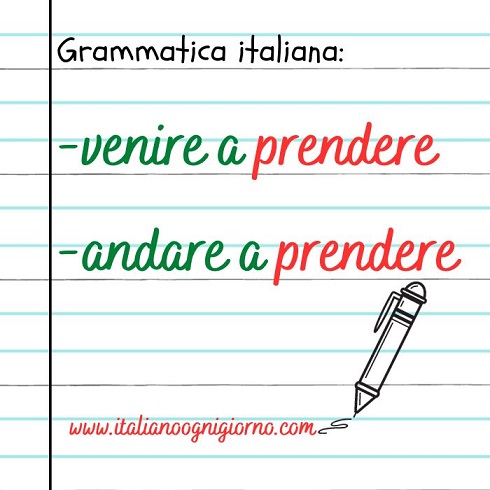
I verbi fraseologici: venire/andare a prendere

The phrasal verbs: venire/andare a prendere

(English follows)

Ascolta la lezione (listen to the lesson):

Studiando l’italiano hai mai incontrato dei verbi seguiti da una preposizione e poi da un altro verbo all’inifinito o al gerundio? Sono dei verbi fraseologici e a volte ti fanno grattare il capo se non sai come usarli! Vediamo in particolare come si usano i verbi fraseologici venire a prendere e  andare a prendere.

I verbi venire a prendere e andare a prendere sono chiamati verbi fraseologici. Sono usati davanti a un altro verbo all’infinito o al gerundio e sono spesso accompagnati da una preposizione.

I verbi fraseologici esprimono una particolare azione, per esempio:
cominciare a +infinito – (inizio dell’azione)
finire di + infinito – (fine dell’azione)
continuare a +infinito – (proseguimento dell’azione)
stare per + gerundio – (progressività dell’azione)

I verbi venire a + prendere e andare a + prendere indicano il movimento di un’azione.

Vediamo alcune frasi:

Venire a prendere – to come get, pick up

1. Vengo a prendere la mia bici domani quando sarà pronta.

2. Stasera i miei amici vengono a prendere dell’uva del mio orto.

3. Sono venuti a prenderci alla fermata dell’autobus.

4. Ti veniamo a prendere all’aeroporto.

Andare a prendere – to go get, pick up

1. Siete andati a prendere un caffè al bar?

2. Ogni giorno va a prendere la figlia all’uscita dalla scuola.

3. Sono andati a prendere le chiavi dell’appartamento.

4. Domani andremo a prendere del vino in cantina.

Consiglio

Quando hai dei dubbi, per non sbagliare, consulta sempre il dizionario!

Continua a esercitarti nell’Accademia dei Verbi.
Troverai tanti esercizi efficaci che ti aiuteranno a coniugare tutti i tempi verbali e a pronunciarli bene:


English version

While studying Italian, have you ever encountered verbs followed by a preposition and then by another verb in the infinitive or gerund? They are phrasal verbs and sometimes they make you scratch your head if you don’t know how to use them! Let’s see in particular how to use the phrasal verbs venire a prendere and andare a prendere.

The verbs venire a prendere and andare a prendere are called phrasal verbs. They are used before another verb in the infinitive or gerund and are often accompanied by a preposition.

Phrasal verbs express a particular action, for example:
cominciare a +infinito – (start of an action)
finire di + infinito – (end of an action)
continuare a +infinito – (continuation of an action)
stare per + gerundio – (progression an action)

The verbs venire a + prendere e andare a + prendere indicate the movement of an action.

Let’s have a look at some sentences:

Venire a prendere – to come get, pick up

1. Vengo a prendere la mia bici domani quando sarà pronta.
I’ll come get my bike tomorrow when it’s ready.

2. Stasera i miei amici vengono a prendere dell’uva del mio orto.
Tonight my friends are coming to get some grapes from my garden.

3. Sono venuti a prenderci alla fermata dell’autobus.
They came to pick us up at the bus stop.

4. Ti veniamo a prendere all’aeroporto.
We will pick you up at the airport.

Andare a prendere – to go get, pick up

1. Siete andati a prendere un caffe al bar?
Have you gone to and get a coffee at the bar?

2. Ogni giorno va a prendere la figlia all’uscita dalla scuola .
Every day he goes to pick up his daughter from school.

3. Sono andati a prendere le chiavi dell’appartamento.
They went to get the keys to the apartment.

4. Domani andremo a prendere del vino in cantina.
Tomorrow we will go to the cellar to get some wine.

Suggestion:

When in doubt, to avoid making mistakes, always consult the dictionary!

Continua a esercitarti (continue to practice) in the Accademia dei Verbi.
You will find many effective exercises that will help you conjugate all the verb tenses and pronounce them well:

I Vini italiani |Storia e Cultura

Italian wines | History and culture

(English follows)

Articolo scritto in italiano da Gregory Graybill, studioso del vino e dell’italiano. Redatto in italiano e tradotto in inglese da Mirella Colalillo.


Il vino ha avuto un ruolo importante nella cucina italiana e nello sviluppo culinario, infatti la storia della coltivazione e la produzione del vino è cominciata prima dei tempi romani. La formazione della civiltà si è sempre basata sull’agricultura. Il vino soprattutto, era forse l’elemento più utile della trinità dell’agricultura, grano, ulivi e vino, almeno nel mondo antico
del sud europa.
Salmo 104:15: il vino che allieta il cuore dell’uomo, l’olio che fa risplendere il suo volto e il pane che sostiene il suo cuore.

Il vino ha permesso alla gente antica di immagazzinare calorie per l’inverno. Ma anche dobbiamo ammettere che il vino offriva effetti collaterali deliziosi e divertenti durante le lunghe notti.

È particolarmente interessante che in Italia ci siano più o meno 3,000 varietà di vitigni quando invece consideriamo che ci sono circa 6,000 in tutto il mondo. Perché è importante questo fatto? Secondo me, rappresenta l’importanza per tutto il tempo dello sviluppo dei vigneti selezionati per essere più adatti a condizioni climatiche e territoriali specifiche, parte arte e parte scienza, per produrre un prodotto meraviglioso. Il processo è perso nella storia, ma oggi
il risultato finale rimane come antiche rovine romane non costruite di pietra.

Una persona impazzirebbe cercando di conoscere tutti i vini d’Italia. Ma ho cercato di scoprire il più possibile durante le mie vacanze in Italia. Parlerò solo delle regioni vinicole che ho visitato. Tutti conoscono il Chianti e gli altri famosi vini come il Brunello, il Nebiolo, il Barolo. In contrasto voglio parlare di quelli sconosciuti.

Comincio con Lacrima Christi del Vesuvio. Che cos’è un nome? Questi vitigni crescono in terreno vulcanico ed ostile, quasi solo ghiaia, sotto lo sguardo del Vesuvio. Il godimento del vino è ancora maggiore a causa della difficoltà di coltivazione. È un posto antico. Altresì in Campania c’è Aglianico di Irpina sulle montagne. L’uva Aglianico produce un vino ricco in quasi
tutto il sud. Lo adoro molto.

Adesso parliamo della Puglia. Il mondo dei vini in Pugila è diverso e speciale, come la storia degli ulivi secolari. Il Primitivo di Manduria è incredibile però non è famoso. Se fosse possibile bere un solo vino, questa sarebbe la mia scelta. Non vale la pena includere il paese di Manduria
durante un grande tour d’Italia per la maggioranza, ma ha un valore storico come parte della Magna Grecia. Il terreno è pianeggiante, ma le belle spiagge vicine si ricordano i Caraibi. Le uve maturano al sole brillante e raffreddate dal mare e producendo un vino ad alto contenuto alcolico e molto fruttato. Più a sud in Puglia, in Salento, a Guagnano si incontra il Negroamaro.
Il vino è scuro, audace, e anche forse sottovalutato. Gli amanti del vino dovrebbero visitare la Puglia.

San Gimignano attrae un sacco di turisti, come in tutta la Toscana dove i vini rossi sono più famosi e comuni. Comunque La Vernaccia di San Gimignano, un vino bianco, ha origini di più o meno 800 anni fa. La Vernaccia viene menzionata da Dante nel “Purgatorio”. Nell’anno 1960, è stato il primo vino ad ottenere il DOC e poi il DOCG. Le colline offrono un meraviglioso viaggio
nel paese dove non ci sono troppo turisti. La Vernaccia è un vino refrescante, un po’ acido ed amaro. Ma ci sono ancora altri posti non menzionati qui.

Tutte le tradizioni enogastronomiche d’Italia nascono da una base di ingredienti artigianali: formaggi, salame, olio, vino, ecc. Raccontano tutti una storia di un tempo e di un luogo.
Contengono tanto patrimonio quanto il Colosseo o il Vaticano. Dunque, quando si va in Italia consiglio una visita delle cantine, dei frantoi o dei caseifici. Ho trovato che la maggior parte delle persone in paese è felice di vedere i turisti, forse perché non ce ne sono molti. È possibile soggiornare in una Masseria o Azienda in una zona vinicola per avere un senso del posto. Dopo, si torna a casa, quando degustate un vino magari sarete trasportati con il suo sapore e odore. In questo modo, il vino può essere un ricordo del tuo viaggio, e dei bei momenti. Con un calice di vino sarai più felice.

Gregory Graybill
L’autore è nato in California, cresciuto durante il periodo in cui la California stava diventando una famosa regione vinicola. All’università ha studiato biochimica e biologia moleculare maturando un interesse per la produzione di vino. Nel tempo libero ha viaggiato nelle aree vinicole della California, e poi in altri Stati. Ha conseguito i certificati in viticoltura ed enologia. Ha iniziato a viaggiare in Europa nelle regioni vinicole in Spagna, Francia, Germania, Grecia e Italia, dove è andato quattro volte. L’amore per i vini italiani è diventato un motivo importante per andarci, per vedere, annusare e toccare la terra, e per incontrare le persone che sono i custodi delle viti e del vino diventando cosi un conoscitore dei vini d’Italia.
Canale YouTube:https://www.youtube.com/@gregthewinetraveler3946


(English version)

Article written in Italian by Gregory Graybill, wine and Italian scholar Edited in Italian and translated into English by Mirella Colalillo.

Wine has played an important role in Italian cuisine and culinary development, in fact the history of cultivation and production of wine began before Roman times. The formation of civilization has always been based on agriculture. Above all, wine was perhaps the most useful element of the trinity of agriculture: wheat, olive trees and wine, at least in the ancient world of southern Europe.
Psalm 104:15: Wine that gladdens a man’s heart, oil that makes his face shine, and bread that sustains his heart.

Wine allowed ancient people to store calories for the winter. But also we must admit that wine offered delicious and enjoyable side effects during the long nights.

It is particularly interesting that there are more or less 3,000 varieties of grape varieties in Italy when we consider that there are about 6,000 worldwide. Why is this fact important? In my opinion, it represents the importance all along of the development of vineyards selected to be best suited to specific climatic and territorial conditions, part art and part science, to produce a wonderful product. The process is lost in history, but today the end result remains as ancient Roman ruins not built of stone.

A person would go crazy trying to know all the wines of Italy. But I tried to discover as much as I could during my vacation in Italy. I will only talk about the wine regions I visited. Everyone knows Chianti and the other famous wines such as Brunello, Nebiolo, and Barolo. In contrast I want to talk about the unknown ones.

I’ll start with Lacrima Christi del Vesuvio. What is this, a name? These vines grow in volcanic and hostile soil, almost only gravel, under the gaze of Vesuvius. The enjoyment of the wine is even greater because of the difficulty of cultivation. It is an ancient place. Also in Campania there is Aglianico di Irpina in the mountains. The Aglianico grape produces a rich wine in almost
the whole south. I love it very much.

Now let’s talk about Puglia. The world of wines in Pugila is different and special, like the history of centuries-old olive trees. Primitivo di Manduria is incredible, however it is not famous. If it were possible to drink only one wine, this would be my choice. It is not worth including the town of Manduria
during a grand tour of Italy for the majority, but it has historical value as part of Magna Graecia. The terrain is flat, but the beautiful beaches nearby are reminiscent of the Caribbean. The grapes ripen in brilliant sunshine and cooled by the sea, producing a high-alcohol, very fruity wine. Further south in Puglia, in Salento, Negroamaro is found in Guagnano. The wine is dark, bold, and even perhaps underrated. Wine lovers should visit Puglia.

San Gimignano attracts a lot of tourists, as in all of Tuscany where red wines are more famous and common. However Vernaccia di San Gimignano, a white wine, dates back to more or less 800 years ago. Vernaccia is mentioned by Dante in “Purgatorio.” In the year 1960, it was the first wine to obtain DOC and then DOCG status. The hills offer a wonderful journey in the country where there are not too many tourists. Vernaccia is a refreshing wine, a little sour and bitter. But there are still other places not mentioned here.

All of Italy’s food and wine traditions stem from a base of artisanal ingredients: cheese, salami, oil, wine, etc. They all tell a story of a time and place.
They contain as much heritage as the Colosseum or the Vatican. So, when you go to Italy I recommend a visit to wineries, oil mills or dairies. I have found that most people in the village are happy to see tourists, perhaps because there are not many of them. You can stay in a Masseria or Azienda in a wine area to get a sense of place. Later, when you go back home, you’ll taste a wine and maybe you will be transported with its taste and smell. In this way, the wine can be a reminder of your journey, and of the good times. With a glass of wine you will be happier.

Gregory Graybill
The author was born in California, and grew up during the time when California was becoming a famous wine region. In college he studied biochemistry and molecular biology while developing an interest in wine production. In his spare time he traveled to the Californian wine areas, and then to other States. He earned certificates in viticulture and enology. He began traveling in Europe to wine regions in Spain, France, Germany, Greece and Italy, where he went four times. His love for Italian wines became an important reason to go there, to see, smell and touch the land, and to meet the people who are the keepers of the vines and wine, thus becoming a connoisseur of the wines of Italy.
YouTube Channel: https://www.youtube.com/@gregthewinetraveler3946

3 ways to pronounce the s in Italian

3 modi di pronunciare la s in italiano

A volte basta una sola lettera pronunciata in modo errato per cambiare il significato di una parola. Prendiamo come esempio le due parole “rosa” e “rossa”. Con la prima indichiamo il fiore e, trovandosi tra due vocali, la “s” ha un suono sibilante come una “z” dolce. Mentre la seconda è un aggettivo di colore in cui la doppia “s” ha un suono forte. Quindi quando sentiamo “rosa rossa” notiamo la differenza nel suono della “s” il che ci permette di capire che parliamo di un fiore di colore rosso.

La lettera “s” ha 3 suoni particolari:

  • la doppia “ss
  • la “s” che sembra “z”
  • la “s” normale (parole che iniziano con la “s” o la “s” è accanto ad una consonante

Ecco una lista di parole per esercitari.

Sometimes all it takes is one mispronounced letter to change the meaning of a word. Let’s take as an example, the two words “rosa” and “rossa”. With the first we indicate the flower and, being between two vowels, the “s” has a sibilant sound like a soft “z”. While the second is an adjective of color and the double “s” has a strong sound. So when we hear “rosa rossa” we notice the difference in the sound of the “s” which allows us to understand that we are talking about a red flower.

The letter “s” has 3 particular sounds:

  • la doppia “ss“/ the double “ss”
  • la “s” che sembra “z” / the “s” that sounds like “z”
  • la “s” normale (parole che iniziano con la “s” o la “s” è accanto ad una consonante / words starting with “s” or “s” is next to a consonant

Here’s a list of words to practice:

Parole con la doppia “ss

Words with double “ss

Ascolta e ripeti:

spesso, rilassarsi, assaporare, assoluta, eccesso,  assaggiare, passata, grosso, assurdità, stessi, smesso, interesse, assieme, bussare, impressione, rossissimi, benissimo, sussisstere,  successo, necessario, fissata

Parole con la “s” che sembra “z” (la “s” è tra due vocali)

Words with an “s” that sounds like “z”

Ascolta e ripeti:

paradiso, cose, religioso, sorriso, rosa, così, episodio, accesa, causato, famoso, muso, preso, bisogno, quasi, paese, desiderare, scusa, sposata, faticoso, presuntuoso, prezioso, vaso, qualcosa, mesi, sorpresa

Parole che iniziano con la “s” o la “s” è accanto ad una consonante

Words that start with an “s” or the “s” is next to a consonant

Ascolta e ripeti:

spaghetti, posta, sole, losco, senza, soluzione,  rospo, sogno, simile, svegliarsi, composto, Spagna, stella, arso, spiaggia, sedia, soggiorno, sereno, storia, crosta

Adesso prova a ripetere / Now try to repeat:

Assaggio una deliziosa crostata di mele saporita!

Esercitati regolarmente con queste liste per pronunciare perfettamente il suono della “s”.

Practice these lists regularly to pronounce the sound of the “s” perfectly.


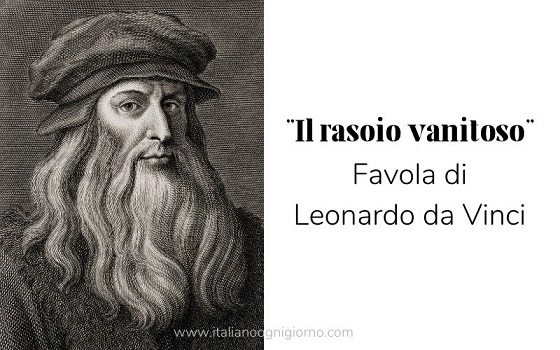
The Vain Razor, a fable by Leonardo da Vinci

Il Rasoio Vanitoso, una favola di Leonardo da Vinci

Sai, che Leonardo da Vinci tra un’invenzione e l’altra scriveva anche favole? Non c’è da stupirsi ovviamente! Anche perché la favola ha un’ origine popolare antichissima e ha preceduto qualsiasi forma letteraria. La parola “favola”, viene dal latino “fabula”, e significa parlare. Infatti, le favole avevano il ruolo di trasmettere in forma orale, la tradizione, i principi e i valori della società. Pertanto, non era destinata all’educazione dei bambini, ma a dare un significato e fornire riposte agli episodi della vita quotidiana.

Leonardo trasmette con questa favola l’importanza di allenare sempre la propria mente come faceva lui!

IL RASOIO VANITOSO
Un giorno il rasoio uscì dal suo manico e si mise a prendere il Sole. Vedendo il Sole che si specchiava sul metallo lucido, il rasoio si riempì d’orgoglio e disse: “Come sono bello: perfino il Sole si specchia su di me. Eppure devo faticare ogni giorno; sono proprio stufo di tagliare barbe. Anzi, sapete cosa faccio? Me ne vado. E non tornerò più alla bottega del barbiere. Mi nasconderò e mi godrò in pace la mia bella vita”.
Il rasoio fuggì lontano dalla bottega e si nascose in una grotta, per non essere trovato dal barbiere. Rimase lì per qualche mese, poi uscì dalla grotta e si mise al Sole ma questo non si specchiava più sulla sua lama: il rasoio aveva perso la sua lama ed era coperto di ruggine da cima a fondo.
Disperato, si lamentò: “Ah, se solo fossi rimasto alla bottega del barbiere. Avrei dovuto continuare a tagliar barbe, così sarei rimasto ben affilato e lucente; adesso sono solo un ferro vecchio da buttare”.
Questo è quel che accade a chi smette di studiare e di esercitarsi e si dà al divertimento: la sua mente, come il ferro, perde filo e lucentezza e si copre della ruggine dell’ignoranza.


(English translation)

Did you know that Leonardo da Vinci also wrote fables between one invention and another? Nothing to be surprised about of course! Also because the fable has a very ancient popular origin and preceded any literary form. The word “favola” (fable) comes from the Latin word “fabula”, and means to speak. In fact, fable had the role of transmitting the tradition, principles and values of society in oral form. Therefore, it was not intended for the education of children, but to give meaning and providing answers to events of everyday life.

Leonardo transmits with this fable the importance of always training one’s mind as he did!

THE VAIN RAZOR
One day the razor came out of its handle and began to bask in the sun. Seeing the sun reflected in the shiny metal, the razor was filled with pride and said: “How beautiful I am: even the sun is reflected on me. Yet I have to toil every day; I’m just sick of trimming beards. Actually, you know what I’m going to do? I’m leaving. And I’ll never go back to the barbershop. I’ll hide away and enjoy my beautiful life in peace.”
The razor fled away from the shop and hid in a cave, not to be found by the barber. He stayed there for a few months, then he came out of the cave and put himself in the sun, but it no longer reflected on his blade: the razor had lost its blade and was covered in rust from top to bottom.
Desperate, he moaned, “Ah, if only I’d stayed at the barbershop. I should have kept trimming beards, so I would have remained sharp and shiny; now I’m just an old piece of iron to throw away”.
This is what happens to those who stop studying and practicing and just want to have fun: their mind, like iron, loses its edge and shine, and is covered with the rust of ignorance.

Racconto di Natale -I regali nello sgabuzzino| Italian pronunciation

(English text follows)

Ascolta qui / listen here:

Il postino suonò due volte. Mancavano cinque giorni a Natale. Aveva fra le braccia un grosso pacco avvolto in carta preziosamente disegnata e legato con nastri dorati.
«Avanti», disse una voce dall’interno.
Il postino entrò. Era una casa malandata: si trovò in una stanza piena d’ombre e di polvere. Seduto in una poltrona c’era un vecchio.
«Guardi che stupendo paccone di Natale!» disse allegramente il postino.
«Grazie. Lo metta pure per terra», disse il vecchio con la voce più triste che mai.
Il postino rimase imbambolato con il grosso pacco in mano. Intuiva benissimo che il pacco era pieno di cose buone e quel vecchio non aveva certo l’aria di spassarsela bene. Allora, perché era così triste?
«Ma, signore, non dovrebbe fare un po’ di festa a questo magnifico regalo?».
«Non posso… Non posso proprio», disse il vecchio con le lacrime agli occhi. E raccontò al postino la storia della figlia che si era sposata nella città vicina ed era diventata ricca. Tutti gli anni gli mandava un pacco, per Natale, con un bigliettino: «Da tua figlia Luisa e marito». Mai un augurio personale, una visita, un invito: «Vieni a passare il Natale con noi».
«Venga a vedere», aggiunse il vecchio e si alzò stancamente.
Il postino lo seguì fino ad uno sgabuzzino. Il vecchio aprì la porta.
«Ma…» fece il postino.
Lo sgabuzzino traboccava di regali natalizi. Erano tutti quelli dei Natali precedenti. Intatti, con la loro preziosa carta e i nastri luccicanti.
«Ma non li ha neanche aperti!» esclamò il postino allibito.
«No», disse mestamente il vecchio. «Non c’è amore dentro».

– autore: anomino


(English version)

The postman rang twice. It was five days until Christmas. In his arms he had a large parcel wrapped in preciously designed paper and tied with golden ribbons.
“Come in,” said a voice from within.
The postman entered. It was a shabby house: he found himself in a room full of shadows and dust. Sitting in an armchair was an old man.
“Look at that gorgeous Christmas bag!” the postman said cheerfully.
“Thank you. Put it on the floor,” said the old man in a sadder voice than ever.
The postman was stunned with the big package in his hand. He understood very well that the package was full of good things and that old man certainly didn’t look like he was having a good time. So why was he so sad?
‘But, sir, shouldn’t you make a little celebration of this magnificent present?’
“I can’t… I just can’t,” said the old man with tears in his eyes. And he told the postman the story of her daughter who had married in the next town and had become rich. Every year she sent him a package for Christmas with a note: “From your daughter Luisa and husband.” Never a personal greeting, a visit, an invitation: «Come and spend Christmas with us».
“Come and see,” the old man added, and got up wearily.
The postman followed him to a closet. The old man opened the door.
“But…” said the postman.
The closet was overflowing with Christmas presents. They were all the ones from previous Christmases. Intact, with their precious paper and shiny ribbons.
“But he didn’t even open them!” exclaimed the shocked postman.
“No,” said the old man ruefully. “There is no love inside.”

– author: anonymous

12 Italian phrases to live better | Italian pronunciation

12 frasi per vivere meglio

Ascolta qui / listen here:

Ho l’abitudine di fare liste di frasi e aforismi che mi aiutano a trovare ispirazione e motivazione. In questo podcast ti leggo alcune frasi che mi sostengono durante le dure prove della vita. L’imperatore romano e filosofo stoico Marco Aurelio diceva che bisogna abituarsi a sentirsi a disagio. Se non siamo allenati alla durezza della vita, allora non saremo pronti ad affrontarla quando si presenterà. A chi dice che non devo complicarmi la vita, dico che mi alleno. Essere riuscita a risolvere le questioni che si sono presentate mi ha dato molte soddisfazioni. Scegliere il modo più semplice e conveniente non fa per me. Considero la vita una scuola fondamentalmente e mi dà pace sapere che ho tutto ciò che serve moralmente per affrontare qualsiasi cosa.

Queste sono alcune delle frasi. Non le seguo sempre diligentemente, anzi spesso con grande difficoltà! Ma la migliore delle tecniche per avere successo è la ripetizione, vero?

  1. È il nostro atteggiamento all’inizio di un compito che più di ogni altra cosa influenzerà il suo esito positivo.
  2. Pensa, agisci, parla, cammina e comportati in tutti i tuoi affari come farebbe la persona che desideri diventare.
  3. Siamo interdipendenti; è impossibile avere successo senza gli altri. Ed è il nostro atteggiamento verso gli altri che determinerà il loro atteggiamento verso di noi.
  4. È il nostro atteggiamento verso la vita che determinerà l’atteggiamento della vita verso di noi.
  5. Abbi compassione ed empatia per il più piccolo degli animali. E’ una delle virtù più nobili che si possa avere.
  6. La tua mente può contenere solo un pensiero alla volta. E poiché non c’è niente da guadagnare essendo negativi, sii positivo.
  7. Il desiderio più profondo degli esseri umani è di essere necessari, di sentirsi importanti, di essere apprezzati. Offrilo agli altri e te lo restituiranno.
  8. Cerca il meglio nelle nuove idee. Come qualcuno ha detto,”non ho mai incontrato una persona da cui non potessi imparare qualcosa”.
  9. Non perdere tempo prezioso a parlare di problemi personali; probabilmente non ti aiuterà e non può aiutare gli altri.
  10. Abbandonati nel silenzio per poter ascoltare e imparare.
  11. Irradia l’atteggiamento di benessere, di fiducia, di una persona che sa dove sta andando. Questo ispirerà coloro che ti circondano e scoprirai che le cose belle cominceranno a succederti.
  12. Tratta tutti quelli con cui entri in contatto come la persona più importante sulla terra.

Hai delle frasi che t’ispirano a dare il tuo meglio quotidianamenete oppure nei momenti difficili? Condividile nei commenti!


(English version)

I have a habit of making lists of phrases and aphorisms that help me find inspiration and motivation. In this podcast I’ll read some sentences that support me during the hard trials of life. The Roman emperor and Stoic philosopher Marcus Aurelius said that one must get used to feeling uncomfortable. If we aren’t trained in the harshness of life, then we won’t be ready to deal with it when it comes. To those who say I don’t have to complicate my life, I say that I’m training. Being able to resolve the issues that have arise has given me a lot of satisfaction. Choosing the easiest and most convenient way is not for me. I consider life basically a school and it gives me peace to know that I have what it takes morally to face anything.

These are some of the phrases. I don’t always follow them diligently, indeed often with great difficulty! But the best way to be successful is repetition, right?

1. It is our attitude at the beginning of a task that more than anything else will influence its successful outcome.

2. Think, act, talk, walk and behave in all your affairs as the person you wish to become.

3. We are interdependent; it is impossible to be successful without others. And it is our attitude towards others that will determine their attitude towards us.

4. It is our attitude towards life that will determine the attitude of life towards us.

5. Have compassion and empathy for the smallest of animals. It is one of the noblest virtues that one can have.

6. Your mind can only hold one thought at a time. And since there is nothing to be gained by being negative, be positive.

7. The deepest desire of human beings is to be needed, to feel important, to be appreciated. Offer it to others and they will return it to you.

8. Look for the best in new ideas. As someone said, “I’ve never met a person I couldn’t learn something from”.

9. Don’t waste precious time talking about personal problems; it probably won’t help you and can’t help others.

10. Abandon yourself in silence so that you can listen and learn.

11. Radiate the attitude of well-being, of trust, of a person who knows where they are going. This will inspire those around you and you will find that good things will begin to happen to you.

10. Treat everyone you come in contact with as the most important person on earth.

Do you have phrases that inspire you to give your best every day or in difficult moments? Share them in the comments!

You cannot copy content of this page