Allora, dopo 6 mesi di peregrinazioni e di sfuggire i freddi mesi invernali, sono appena tornata a quella che era la mia vita “normale”. Solo che ora l’irregolarità è diventata la mia nuova casa.
Gestire e risolvere l’imprevedibile, creare nuovi spazi, e adeguarsi ad una quotidianità non regolare è diventata una pazza abitudine sana. Credo di poter dire di essermi abituata a gestire uno stile di vita irregolare.
Alla fine eventualmente s’impara a familiarizzare con essa, proprio come quando hai a che fare con i plurali irregolari dei sostantivi italiani! Non devi fare altro che trovare uno spunto, riconoscere uno schema, ed il gioco è fatto.
La maggior parte dei sostantivi irregolari italiani hanno una derivazione dal latino o da antiche parole italiane. Come la vita stessa, le parole sono tutte da scoprire.
Felice scoperta!
Mirella
So after 6 months of wandering and escaping the cold winter months, I’ve just returned to what used to be my “regular” life. Only now irregularity has become my new home.
Managing and solving the unpredictable, creating new spaces, and adjusting to a daily non-routine has become a crazy healthy habit. I guess I can say that I’ve become accustomed to dealing with an irregular lifestyle.You eventually learn to familiarize with it, just like when you’re dealing with the irregular plurals of Italian nouns! All you have to do is hint, then sense the patterns, and “il gioco è fatto”, it’s all done.
Do you know what the origins of the words Papa and Papà are? Today we’re going to find out as we celebrate Father’s Day which is observed on San Giuseppe (St. Joseph), on March 19. This year I am especially happy to celebrate it here in Italy with my father.
The words Papa and papà look the same, but Papa means Pope and papà means dad.
If we take a closer look we’ll see that the Papa lives in Rome, while my papà lives among his grapevines in Molise.
However, the word Papa takes us back to the Latin word Papa, which in turn comes from the Greek word Papas meaning father, padre in Italian, or papà, used in a more familiar and endearing way.
When there’s an accent mark on the vowel “a”, it is stressed like in the word papà, also in:
città attività libertà volontà bontà felicità
And this brings us to the conclusion that every papà is a Papa… 😉
Qual è secondo te la parola più famosa della lingua italiana? L’abbiamo sentita cantata tante volte da Dean Martin in “That’s Amore“. Gli italiani la stra-usano ad ogni occasione: “queste scarpe sono un amore”, “quel ragazzo/a è un amore”, “questa canzone è un amore”,… e così via.
Un’inguaribile romantica come me la usa non solo per chiamare tutti i gatti del quartiere, ma anche i suoi amici. Non credo che sia necessario un limite all’uso, anzi, più esprimiamo sentimenti di amore, più stiamo meglio tutti.
L’amore si accompagna sempre ad altre parole e gesti che ne danno il vero significato. In questo video ho compilato una lista di quelle che considero le più importanti.
gioia – joy
fiducia – trust
rispetto – respect
onestà – honesty
stima – praise
sostegno – support
pazienza – patience
creatività – creativity
Questo video è un amore… Una e-card da condividere con tutte le persone che ami.
Per concludere in dolcezza, Febbraio è un mese romantico e anche ricco di peccaminosi dolci di Carnevale. Non ho resistito e ho creato questa golosità. Sapete come si chiama?
Con tanto amore,
Mirella
Whatdo you think isthe mostfamousword of the Italian language? We’ve heard it sung so many timesby DeanMartinin“That’s Amore“. Italiansover use it at every opportunity: “queste scarpe sono un amore”, “quel ragazzo/a è un amore”, “questa canzone è un amore” (“these shoes are a love“, “the boy/girlis a love“, “this song is a love,”) …andso on.
A hopeless romanticlike myselfuses itnotonly to callall the cats in the neigborhood, but alsoher friends. I don’t thinkit’s necessary tolimitit’s use, on the contrary, the morewe expressfeelings of love, the more we areallbetter.
Loveis always accompanied byother wordsandgesturesthatgiveit its true meaning. Inthis video,I’vecompiled a list ofwhat I considerto be the most important ones.
gioia – joy
fiducia – trust
rispetto – respect
onestà – honesty
stima – praise
sostegno – support
pazienza – patience
creatività – creativity
This video is a love… questo video è un amore. An e-card to share with all the people you love.
To endon a sweet note, February is a month full of sinful Carnival sweets. I could not resist and I created this delicacy. Do you know what it’s called?
With lots of love,
Mirella
Join the ITALIANO ALLA MANO club for weekly study plans, learning materials and tips:
Il fine settimana è qui, ma i miei piani di andare a trascorrere alcuni giorni lungo il mare a Santa Marinella, sono stati rimandati, ahimè, poiché l’Italia èinvasa da un tempo bruttissimo, freddo, nevoso, piovoso…, per fortuna gli aggettivi sono sempre utili per sfogarsi.
Una buona alternativa finché si calmerà è di stare caldi e asciutti vicino al camino a leggere, disegnare o fare quiz. Il Quizino di oggi di grammatica italiana è proprio a tema, gli aggettivi. Guarda il video e vedi se riesci a trovare quanti aggettivi ci sono nella frase. Fammi sapere nei commenti!
Magari mentre cerchi gli aggettivi puoi goderti della Nutella! Se hai perso il giorno Internazionale della Nutella ieri, non ci sono problemi, con la mia ricetta la Nutella si può mangiare tutti i giorni! Segui questo link per scaricare la ricetta e stamparla.
Ti auguro un caldo e dolce fine settimana,
Mirella
The weekend is here, but my plans to go spend a few days along the seaside in Santa Marinella, have been postponed, alas, since Italy is invaded by bad, cold, snowy, rainy weather… luckily adjectives are always useful when you need to vent.
A good alternative until it calms down is to keep dry and warm by the fireplace reading, drawing or doing quizzes. Today’s Italian grammar Quizino is the subject of the day, adjectives. Watch the video and see if you can find out how many adjectives are in the sentence. Let me know in the comments!
Perhaps as you search for adjectives you can enjoy some Nutella! If you lost International Nutella Day yesterday, no problems, with my Nutella recipe you can eat it every day! Follow this link to download and print the recipe.
Ho buone notizie! Come ti avevo accennato poco tempo fa, mi diverte molto creare animazioni e ho quindi deciso di unire l’utile al dilettevole.
Allora ecco “Il Quizino” (la “z” ha un suono forte), una serie di animazioni di grammatica italiana che sicuramente non ti faranno sbadigliare mentre impari la lingua, ma al contrario, ti divertirai anche studiando cose complicate.
In questo primo video metterai alla prova le tue conoscenze verbali e precisamente il participio passato di tre verbi irregolari.
Dopo il quiz fai pratica creando delle frasi e non dimenticarti di condividerle nei commenti!
La prossima settimana arriverà il secondo video!
Buona visione e felice studio!
Mirella
I have good news! As Imentionedrecently,I really enjoycreatinganimations, soIdecided to combinebusiness with pleasure.
Here’s “Il Quizino”(the “z” hasastrong sound), a series ofanimated quizzesofItalian grammarthatdefinitelywill not make youyawnwhile you learnthe language, buton the contrary, you’ll have funalso studyingcomplicated things.
Inthis first video you will testyour verb skills andpreciselythe past participleof threeirregular verbs.
After the quiz practice making sentences and don’t forget to share them in the comments.
Il tempo vola! Sono tornata in Italia all’inizio di ottobre e il Bel Paese mi ha regalato il clima invernale più mite che avrei mai potuto sognare. In puro stile italiano ho mangiato, appena raccolti dall’orto di mio padre, tanta frutta e verdura, ho fatto viaggi a Roma, Torino e in magici paesini sconosciuti. Ho anche contemplato le nuvole durante i temporali e dopo il funerale del mio caro zio, un promemoria per apprezzare ogni momento, e amare sempre al massimo.
In tempi come questi la mia creatività raggiunge il picco, quindi sono molto felice di presentarti il mio canale YouTube dove creerò animazioni in 2D e 3D, una delle mie passioni, in combinazione con la lingua italiana. Spero che ti piaceranno!
Il mio primo video è un semplice Augurio Natalizio per ringraziarti del tuo appoggio e per augurarti tutta la felicità che meriti. Credo che a qualsiasi età e ovunque ci troviamo nella vita, i sogni possono diventare realtà!
Con Affetto,
Mirella
Il tempo vola! Time flies…I’ve been back in Italy since the beginning of October and il Bel Paese has gifted me with the mildest winter weather I could dream of. In pure Italian style I’ve been eating, fresh from my Dad’s vegetable garden, orto, lots of vegetables and fruits, enjoyed trips to Roma, Torino and to magical unknown towns. I have also been contemplating the clouds during rain storms, and after the funeral of my dear uncle, a reminder to appreciate every moment, and to always love to the fullest.
In times like these my creativity peaks so I’m very happy to present to you my YouTube channel, where I’ll be creating animations in 2D and 3D, one of my passions, in combination with teaching Italian. I hope you enjoy them!
My first video is a simple Holiday Greeting to thank you for your support and to wish you all the happiness you deserve. I believe that at any age and anywhere you are in life, dreams can come true!
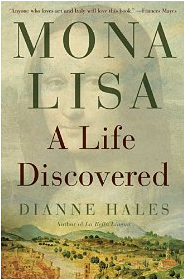
In this guest post Dianne Hales, author of “La Bella Lingua”, tells us how her new book about La Bella Mona Lisa came to life. At the end of the post you can challenge your knowledge of Mona Lisa with a little quiz that Dianne and I have created for you.
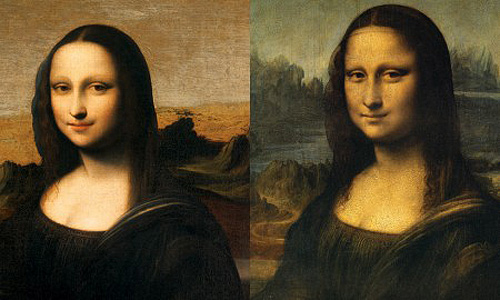
“Earlier Version” and the Louvre Mona Lisa – courtesy of the Mona Lisa Foundation
Her name seduced me. The first time that I heard “Mona (Madame) Lisa Gherardini del Giocondo”— many years after I first beheld Leonardo’s portrait in the Louvre — I repeated the syllables out loud to listen to their Italian sounds. Immediately I felt a surge of curiosity about the woman everyone recognizes but hardly anyone knows.
After falling—happily, gladly, giddily—in love with Italian many years ago, I became just as enamored with the life and times of a true Fiorentina, a daughter of the Renaissance, a merchant’s wife, a loving mother, an artist’s muse and, in her husband’s words, “a noble spirit.” Somehow it seemed only natural to go from a passion for la bella lingua to a quest for una bella donna.
On the trail of Lisa’s story, I followed facts wherever I could find them. I sought the help of authoritative experts in an array of fields, from art to history to sociology to women’s studies. I delved into archives and read through a veritable library of scholarly articles and texts. And I relied on a reporter’s most timeless and trustworthy tool: shoe leather. In the course of extended visits over several years, I walked the streets and neighborhoods of Mona Lisa’s Florence, explored its museums and monuments and came to know—and love—its skies and seasons.
Mona Lisa, I discovered, was a quintessential woman of her times, caught in a whirl of political upheavals, family dramas, and public scandals. Descended from ancient nobles, she was born and baptized in Florence in 1479. Wed to a truculent businessman twice her age, she gave birth to six children and died at age sixty-three in 1542.
Mona Lisa’s life spanned the most tumultuous chapters in the history of Florence, decades of war, rebellion, invasion, siege — and of the greatest artistic outpouring the world has ever seen. Her story creates an extraordinary tapestry of daily life in a vibrant city bursting into fullest bloom.
Five centuries after Mona Lisa Gherardini’s death, the world remains eager to learn more about her. Amazon.com chose my book, Mona Lisa: A Life Discovered, published by Simon & Schuster, as one of the “best books of the month” for history and for biography and memoirs. BBC read episodes on the radio for its “Book of the Week” program. CNN and USA Today selected it as one of their “hottest reads” of the summer. Reviewers have praised it as “entertaining,” “enthralling,” “vivid and accessible” and “lyrical.” BRIDES magazine included it on its list of “10 most-read books for your honeymoon.” “Anyone who loves Italy and art—and who doesn’t?—will adore this book,” predicts Frances Mayes, author of Under the Tuscan Sun.
I hope that all of you who love Italian will enjoy this new journey of discovery!
Dianne Hales
Dianne Hales is a prize-winning, widely published journalist and the author of MONA LISA: A Life Discovered. In recognition of her previous book, La Bella Lingua: My Love Affair with Italian, the World’s Most Enchanting Language, as “an invaluable tool for promoting the Italian language,” the President of Italy conferred on Dianne the highest honor its government can bestow on a foreigner, the title of Cavaliere dell’ Ordine della Stella della Solidarietà Italiana (Knight of the Order of the Star of Italian Solidarity.) You can follow her prize-winning blog on Italy’s language and culture at www.becomingitalianwordbyword.typepad.com and new blog on discovering Mona Lisa at www.monalisabook.com
QUIZ:
10 Facts You May Not Have Known about Mona Lisa
Time limit: 0
Quiz-summary
0 of 10 questions completed
Questions:
1
2
3
4
5
6
7
8
9
10
Information
Pronti? Via!
You have already completed the quiz before. Hence you can not start it again.
Quiz is loading...
You must sign in or sign up to start the quiz.
You have to finish following quiz, to start this quiz:
Results
0 of 10 questions answered correctly
Your time:
Time has elapsed
You have reached 0 of 0 points, (0)
Average score
Your score
Categories
Not categorized0%
Congratulazioni!
La misteriosa Mona Lisa is less mysterious now!
If you liked the quiz, share it with your friends.
“Mona”—spelled “monna” in modern Italian—means “Madame,” a respectful title for married ladies.
Incorrect
“Mona”—spelled “monna” in modern Italian—means “Madame,” a respectful title for married ladies.
Question 2 of 10
2. Question
1 points
Where was the Mona Lisa first hung?
Correct
The Mona Lisa was first hung in a French king’s bathing salon. King Francis I, Leonardo’s last patron, bought the portrait for the equivalent of $10 million and hung it in the royal bathing suite at the Palace of Fontainbleau, where the high humidity damaged and dulled its colors.
Incorrect
The Mona Lisa was first hung in a French king’s bathing salon. King Francis I, Leonardo’s last patron, bought the portrait for the equivalent of $10 million and hung it in the royal bathing suite at the Palace of Fontainbleau, where the high humidity damaged and dulled its colors.
Question 3 of 10
3. Question
1 points
How old was Mona Lisa when she was wed?
Correct
Mona Lisa was a teenage bride who was wed at age 15 in an arranged marriage to Francesco del Giocondo, a prosperous merchant almost twice her age.
Incorrect
Mona Lisa was a teenage bride who was wed at age 15 in an arranged marriage to Francesco del Giocondo, a prosperous merchant almost twice her age.
Question 4 of 10
4. Question
1 points
What was Mona Lisa’s last name?
Correct
Her last name was Lisa Gherardini. She was a real women who descended from a proud, ancient clan who once were rich and powerful Tuscan knights and barons.
Incorrect
Her last name was Lisa Gherardini. She was a real women who descended from a proud, ancient clan who once were rich and powerful Tuscan knights and barons.
Question 5 of 10
5. Question
1 points
Leonardo
Correct
Art historians believe that he kept refining and embellishing the painting long after he began the work in 1503. Leonardo kept Lisa’s portrait with him until his death in 1519.
Incorrect
Art historians believe that he kept refining and embellishing the painting long after he began the work in 1503. Leonardo kept Lisa’s portrait with him until his death in 1519.
Question 6 of 10
6. Question
1 points
What does “Gioconda” mean?
Correct
Gioconda” means the happy one—a nickname given to the great grandfather of Lisa’s husband, a barrelmaker so merry that all his descendants inherited his nickname. Italians call the Mona Lisa “La Gioconda” as a play on her husband ‘s name and the descriptive for a smiling or jovial woman.
Incorrect
Gioconda” means the happy one—a nickname given to the great grandfather of Lisa’s husband, a barrelmaker so merry that all his descendants inherited his nickname. Italians call the Mona Lisa “La Gioconda” as a play on her husband ‘s name and the descriptive for a smiling or jovial woman.
Question 7 of 10
7. Question
1 points
How many daughters did Mona Lisa have?
Correct
She had three daughters—one died at age two and two entered nunneries.
Mona Lisa gave birth to six children—three boys and three girls—and acquired a stepson from her husband’s first marriage.
Incorrect
She had three daughters—one died at age two and two entered nunneries.
Mona Lisa gave birth to six children—three boys and three girls—and acquired a stepson from her husband’s first marriage.
Question 8 of 10
8. Question
1 points
Which art historian wrote a biography of Leonardo and his Mona Lisa?
Correct
Giorgio Vasari’s account of the Mona Lisa comes from his biography of Leonardo published in 1550, 31 years after the artist’s death, and which has long been the best known source of information on the provenance of the work and identity of Leonardo.
Incorrect
Giorgio Vasari’s account of the Mona Lisa comes from his biography of Leonardo published in 1550, 31 years after the artist’s death, and which has long been the best known source of information on the provenance of the work and identity of Leonardo.
Question 9 of 10
9. Question
1 points
Who commissioned the painting of The Mona Lisa?
Correct
Leonardo undertook to paint, for Francesco del Giocondo, the portrait of Mona Lisa, his wife.
Incorrect
Leonardo undertook to paint, for Francesco del Giocondo, the portrait of Mona Lisa, his wife.
Question 10 of 10
10. Question
1 points
Who inherited The Mona Lisa when Leonardo died?
Correct
On his death the painting was inherited, among other works, by his pupil and assistant, Salaì.
Incorrect
On his death the painting was inherited, among other works, by his pupil and assistant, Salaì.
Join the ITALIANO ALLA MANO club for weekly study plans, learning materials and tips: