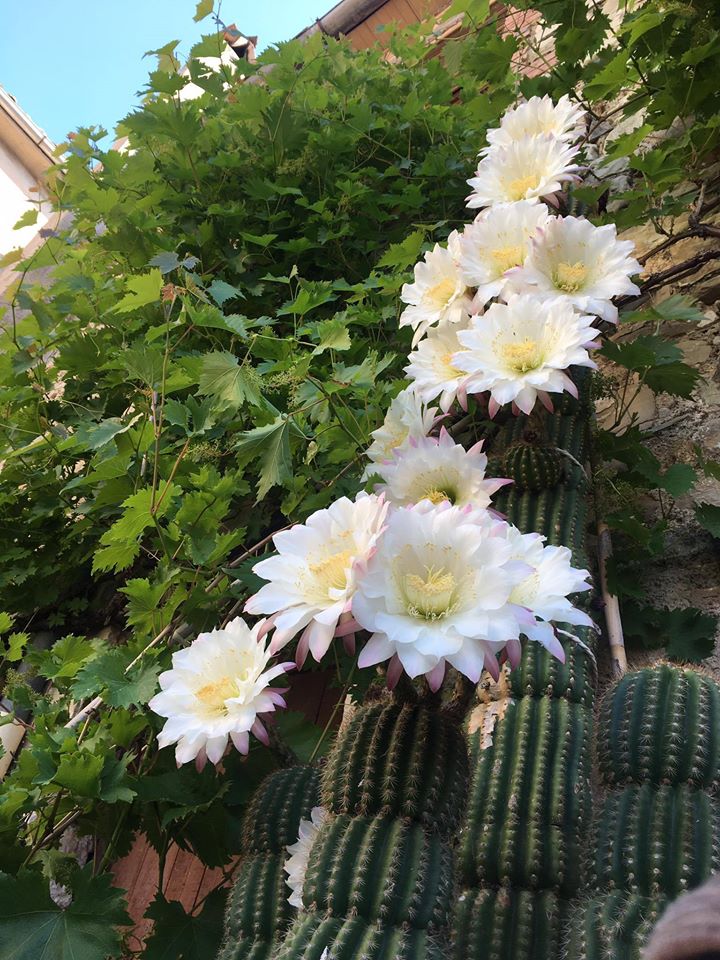
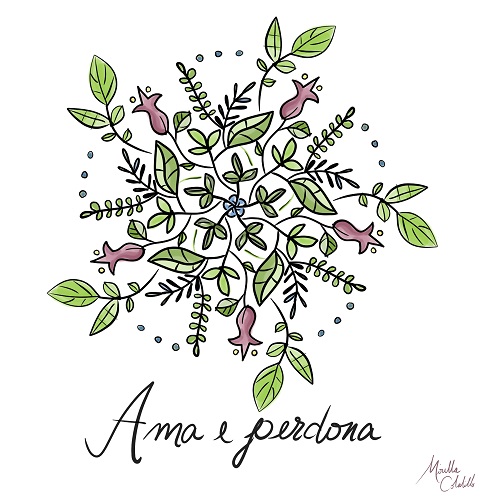
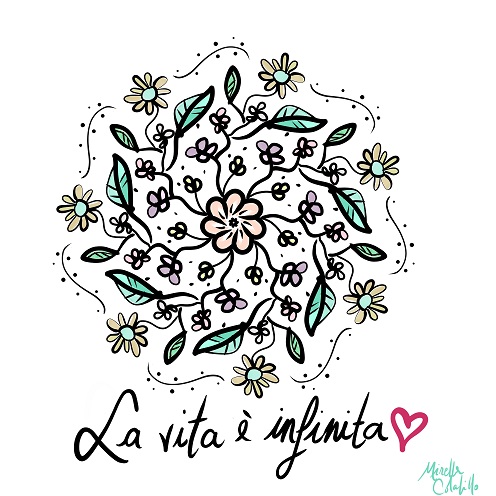
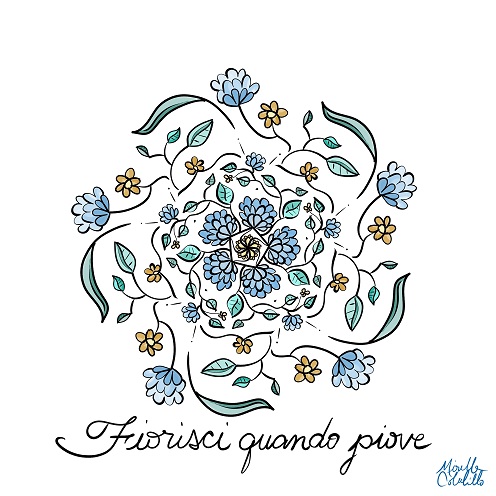
Un progetto dedicato alla memoria di mio padre e ai suoi bellissimi giardinetti. A project dedicated to the memory of my father and to his beautiful gardens
Il cactus fiorito di mio padre / My father’s cactus in bloom. – foto: Leo Colalillo
English follows –
In queste ultime settimane ho trovato molto conforto nel disegnare visto che la lucidità per esprimermi in parole mi mancava.
Per alcuni dei miei disegni mi sono ispirata ai giardinetti di mio padre che quest’anno, la prima estate senza di lui, sono fioriti da soli in tutto il loro splendore. Ho disegnato dei mandala fioriti.
Pare che l’Italia si stia rialzando e tra un mese finalmente sarò lì. Spero che potrò dire che dopo quest’apocalisse le cose cambieranno finalmente per il meglio nel bel paese. Chi vivrà vedrà.
Nel frattempo continuerò a disegnare mandala e a trovare ispirazione nei fiori.
In the last few weeks I have found a lot of comfort in drawing since I was missing the clarity to express myself in words. For some of my drawings I was inspired by my father’s gardens ”giardinetti” which this year, the first summer without him, have bloomed alone in all their splendor. I designed flowery mandalas. It seems that Italy is getting back up and in a month I will finally be there.
I hope I can say that after this apocalypse things will finally change for the better in the beautiful country ”bel paese”. Time will tell.
In the meantime, I will continue to draw mandalas and to find inspiration in flowers.
Con affetto, Mirella
Altri articoli da leggere / More articles to read:
In quest’articolo mio fratello ci parla della sua passione per il ciclismo e della scoperta dei magici luoghi italiani del ciclismo. Il titolo “Pedalando i luoghi del ciclismo” non è di facile traduzione in inglese. Mentre sarebbe facile in francese “En pédalant les lieux du cyclisme”. Azzardiamo con “Mountains, cycling, and fresh air in Italy?” 😃
In this article my brother talks about his passion for biking and the discovery of the magical Italian places of cycling. The title “Pedalando i luoghi del ciclismo” is not easy to translate into English. While it would be easy in French “En pédaler les lieux du cyclisme”. Shall we dare with “Mountains, cycling, and fresh air in Italy?” 😃
Quest’anno l’estate proprio non vuole arrivare e forse neanche la primavera, dicono che sia stato il maggio più freddo dal 1957, nello stesso periodo in cui si è svolto uno degli eventi ciclistici più importanti del mondo, il Giro d’Italia.
This year summer just doesn’t want to come and perhaps not even spring, they say it was the coldest May since 1957, and during that same period, one of the most important cycling events in the world took place, il Giro d’Italia.
Come è noto, il Giro d’Italia attraversa i posti più belli d’Italia soprattutto montani, e quest’anno la tappa che prevedeva il passo Gavia non si è svolta. Parliamo di una salita di circa 26km che da Bormio (1.220m s.l.m.) sale fino a 2.621 s.l.m ed è tuttora coperta di neve.
As many know, il Giro d’Italia crosses the most beautiful places in Italy, especially those in the mountains, and this year the stage that included il passo Gavia did not take place. We’re talking about a slope of about 26km which from Bormio (1.220m above sea level) rises up to 2.621m and is still covered with snow.
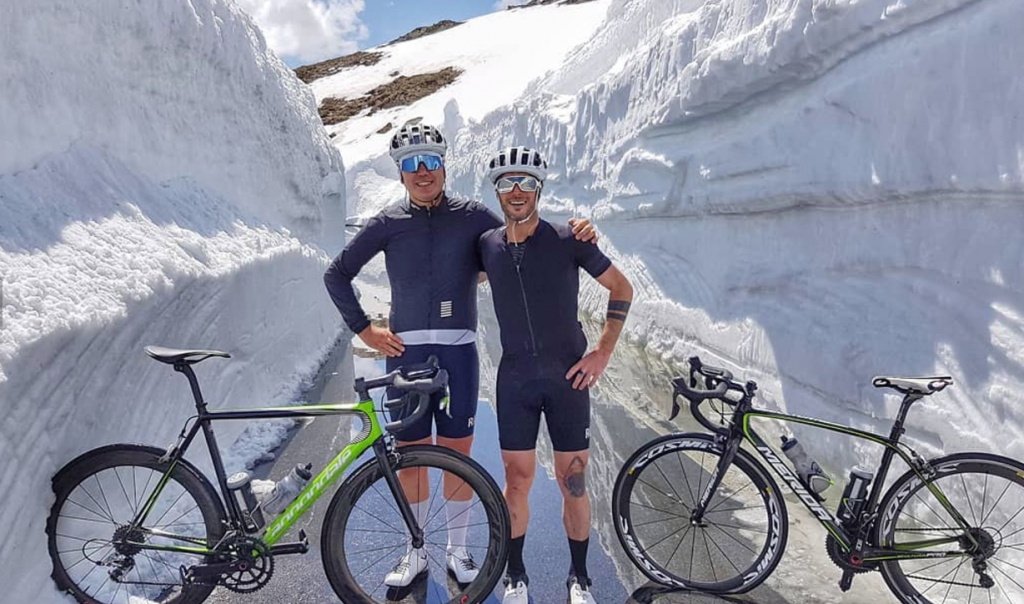
Io ancora non mi sono misurato con il passo Gavia nè con lo Stelvio (foto sopra), ma probabilmente lo farò durante questa estate, perché prima o poi la neve si scioglierà dato che un paio di settimane fa è arrivato il primo giorno caldo di questo lungo inverno. In quei giorni mi sono detto che dovevo affrontare una di quelle salite leggendarie, per chi ama fare sport ed andare in bici. Quel giorno inoltre decido di incontrarmi con altri amici per fare una sgambata di gruppo.
I haven’t yet measured myself with il passo Gavia nor with lo Stelvio (pictured above), but I will probably do it this summer, because sooner or later the snow will melt having the first hot day of this long winter arriveda couple of weeks ago. I told myself then that I had to tackle one of those climbs which are legendaryfor those who love sports and cycling. That day I also decided to meet with other friends to do a group ride.
Chilometro dopo chilometro capisco presto che abbiamo obiettivi diversi e la mia indole solitaria ottiene la meglio, ma in quei chilometri penso anche che quest’anno mi sono allenato poco e con la bici è meglio non esagerare. Avevo all’orizzonte il mio secondo Triathlon della stagione, quindi un allenamento in buona compagnia sarebbe stata una scelta saggia.
Kilometer after kilometer I soon understand that we have different objectives and my solitary nature prevails , but in those kilometers I also think that this year I have trained little, and it’s better not to overdo it with my bike. I had my second Triathlon of the season on the horizon, so a workout in good company would be a wise choice.
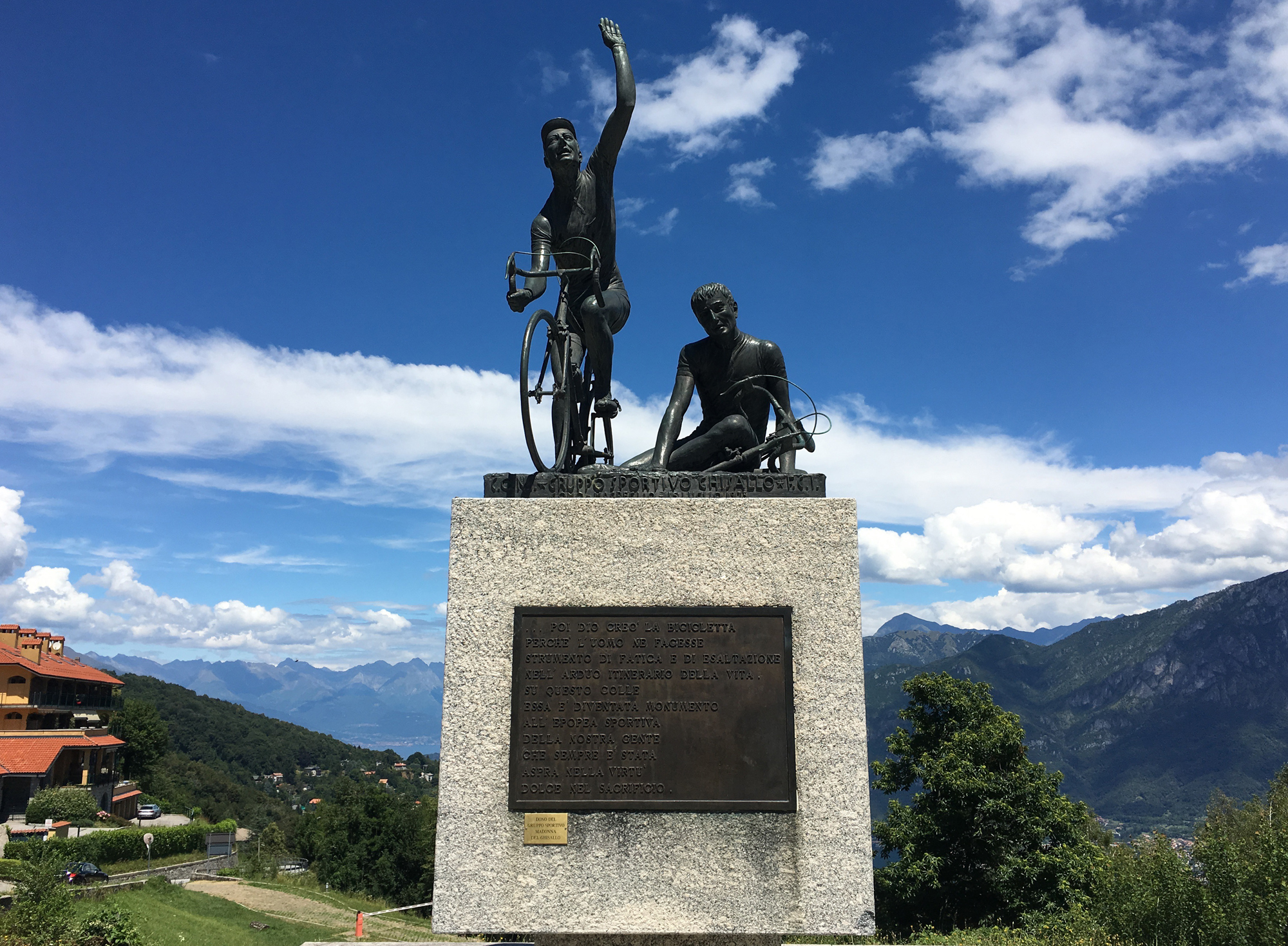
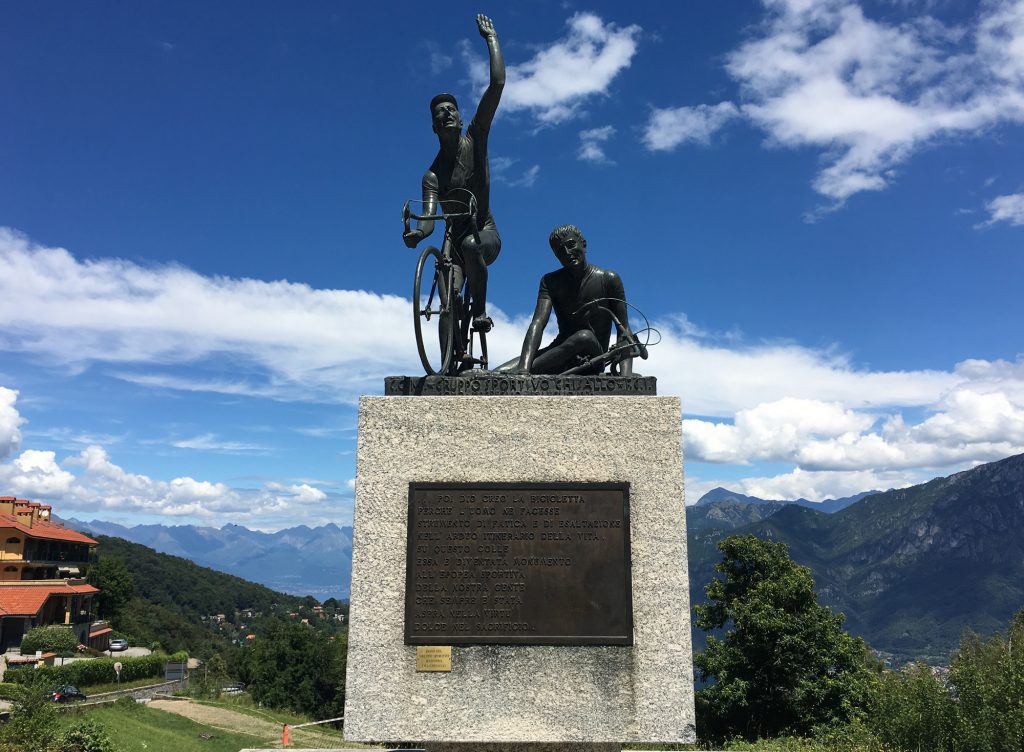
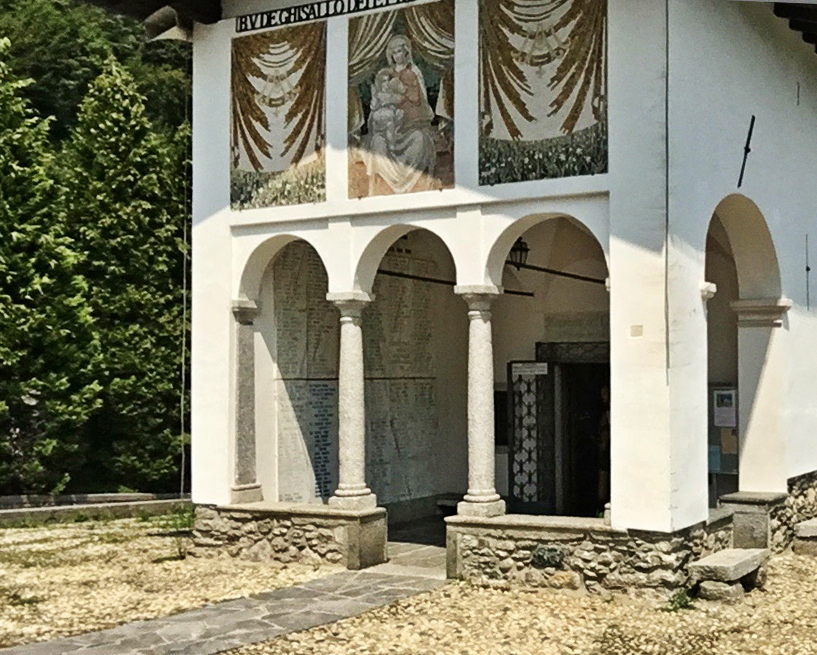
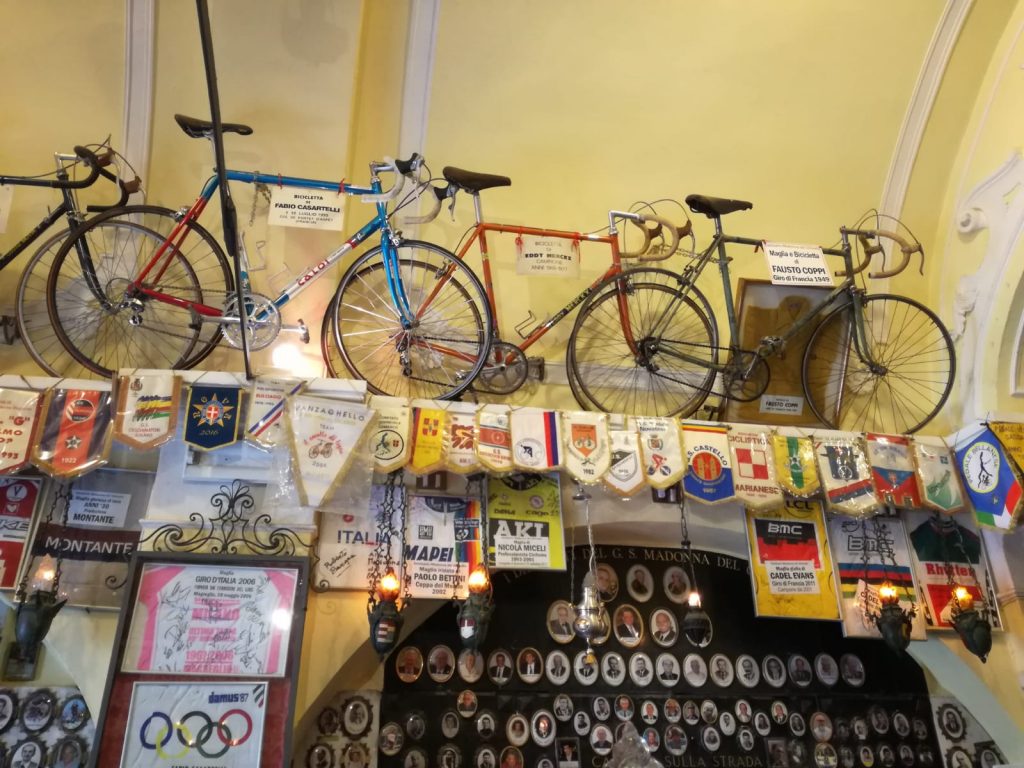
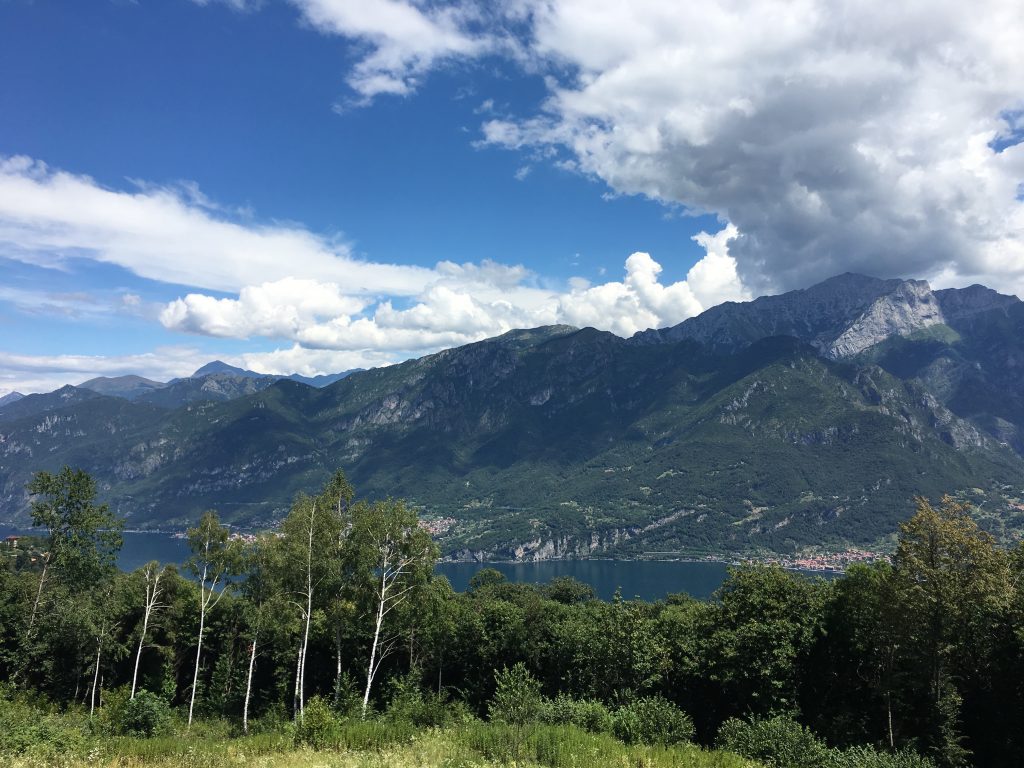
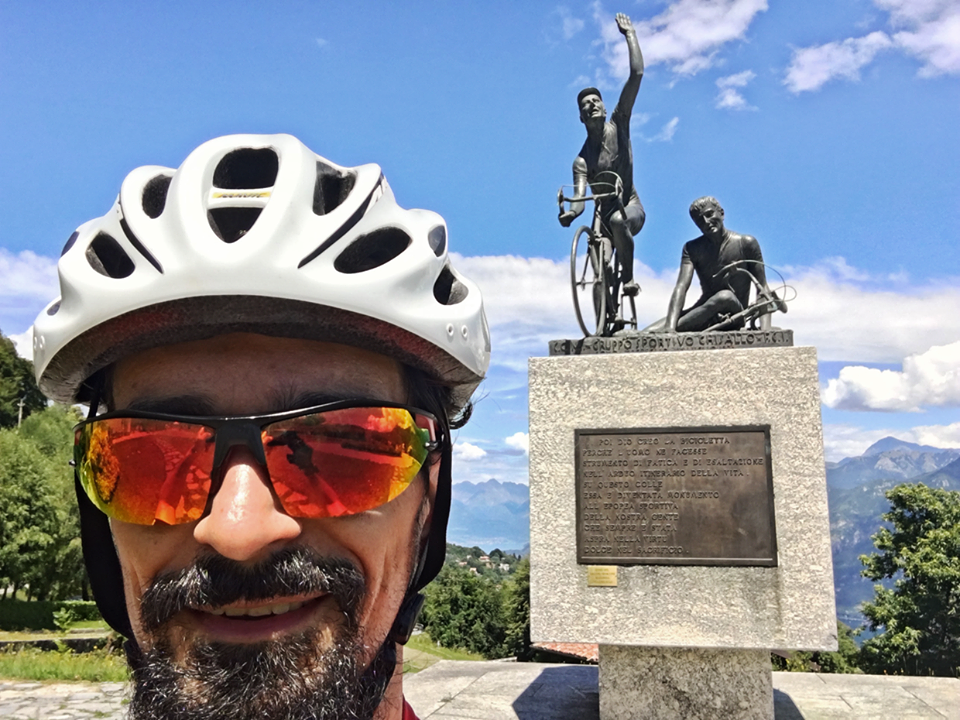
Ci dirigiamo come succede spesso in una zona dove molti ciclisti lombardi si allenano, il così detto Triangolo di Lariano, che è la penisola fra i due rami del lago di Como. Questa zona presenta strade un po’ per tutti i gusti e salite di difficoltà diverse, come il Ghisallo, tappa obbligata per i ciclisti e storica salita che ha reso celebre il Giro d’Italia. Qui si trova anche il Santuario della Madonna del Ghisallo, una piccola chiesa dove ai lati della cappella sono esposte le bici di leggende del ciclismo come Coppi, Bartali, Gimondi, ed altri.
We head as often happens in an area where many Lombard cyclists train, the so-called Triangolo di Lariano, which is the peninsula between the two branches of Lake Como. This area has roads for all tastes and slopes of different degrees, such as Ghisallo, a must for cyclists and a historic slope that made il Giro d’Italia famous. Here you will also find the Sanctuary of the Madonna del Ghisallo, a small church on the sides of the chapel where the bikes of cycling legends are exhibited such as Coppi, Bartali, Gimondi, and others.
Dunque siamo in una bellissima zona, fra verde e laghi e ci fermiamo tutti insieme dopo 40km per bere e ricaricare le borracce. Alla ripartenza dopo solo qualche km vedo un’insegna: c’è scritto Sormano. Non ero sicuro che saremmo passati di lì, mi guardo alle spalle poi guardo avanti e decido in pochi secondi di abbandonare il gruppo per proseguire in solitaria.
So we are in a beautiful area, between green landscapes and lakes and we all stop together after 40km to drink and recharge our water bottles. When we restart, after only a few km I see a sign: it says Sormano. I wasn’t sure we would have gone by there, I look over my shoulder and I look ahead and decide in a few seconds to leave the group to go on alone.
È da troppo tempo che voglio fare questo percorso famoso per la sua durezza e che conduce ad un mostro sacro, il Muro di Sormano, una delle salite più dure del mondo. Curva dopo curva salgo, la salita introduttiva, che porta al muro, mi sembra abbordabile, non è troppo difficile, basta tenere il passo giusto senza esagerare, ma ad un tratto vedo l’insegna che mi indica che da quella parte inizia il Muro di Sormano. Faccio una piccola pausa di riflessione per apprezzare anche l’insegna storica che indica il percorso, quindi inforco la bici e riparto. Dopo una brevissima discesa di qualche decina di metri, la salita del Muro mi viene incontro e si presenta già durissima. Per quanto i giorni prima ci avessi pensato non avevo pianificato di farla proprio in quel momento, quindi la mia preparazione non era adeguata, ma pedalata dopo pedalata vedo che riesco ad avanzare.
For too long I have wanted to undertake this route renowned for its difficulty and which leads to a sacred monster, il Muro di Sormano (the Wall of Sormano), one of the toughest slopes in the world. Curve after curve I climb the introductory slope, which leads to the wall and seems doable to me. It’s not too difficult, as long as I keep up the pace without exaggerating, but suddenly I see the sign that indicates that il Muro di Sormano starts over there. I take a little break to reflect and to appreciate the historical sign indicating the route, then I get on the bike and keep going. After a very short descent of a few metres, the slope of the wall comes towards me and it’s already very hard. Although I had thought about it days before , I hadn’t planned to do it right then, so my preparation wasn’t adequate, but after pedaling I see that I’m able move forward.
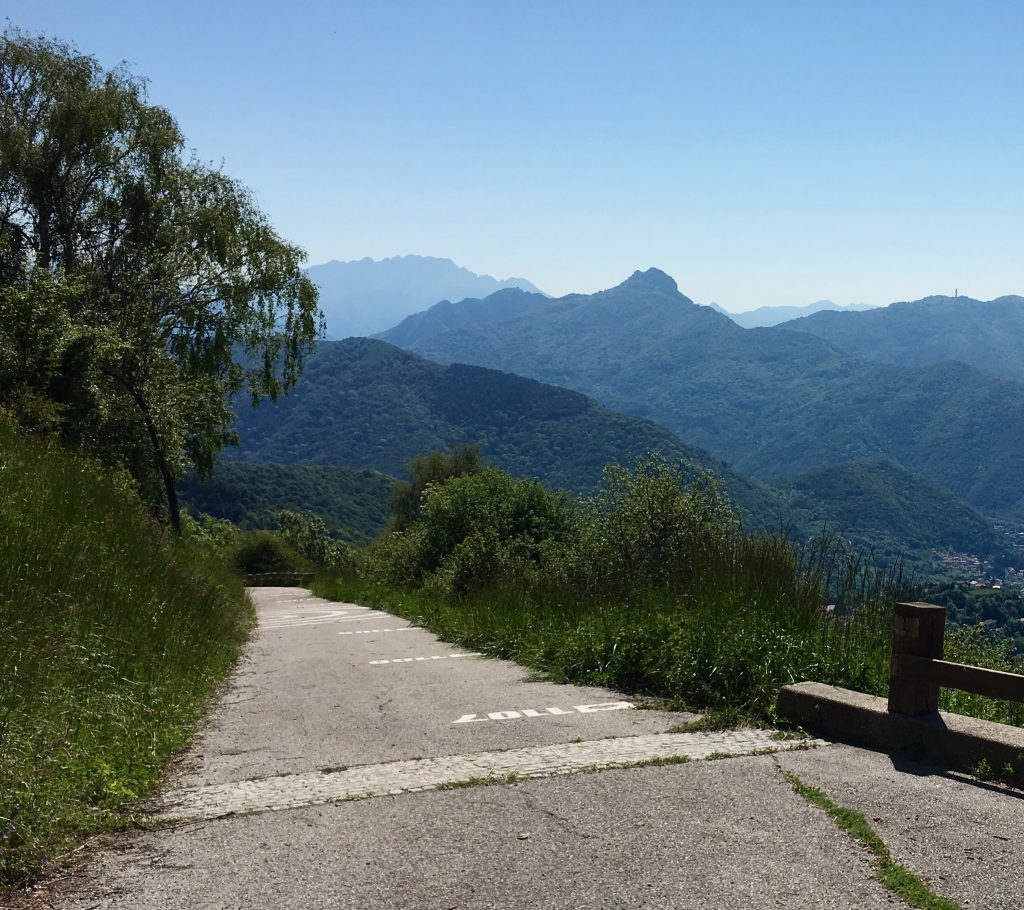
Il Muro di Sormano divenne famoso nel 1960 quando venne inserito nel Giro di Lombardia, infatti durante la salita sull’asfalto sono impresse frasi ed informazioni legate alla salita stessa. Negli ultimi anni tale salita fa parte anche del durissimo Giro del Demonio, evento annuale che si svolge sempre nel Triangolo di Lariano, che prevede le più dure salite della zona.
Il Muro di Sormano became famous in 1960 when it was included in il Giro di Lombardia, in fact during the climb you’ll see written on the asphalt sentences and information related to the climb itself. In the last few years this slope is also part of the very hard Giro del Demonio, an annual event that always takes place in the Triangolo di Lariano, which includes the toughest climbs in the area.
Mi fermo alcuni secondi per riprendere le energie e capire se quello sarà il giorno giusto per arrivare in cima. Con una certa caparbietà mi rimetto in sella e continuo. Date le pendenze, è molto difficile riprendere il ritmo senza rischiare di cadere. Gambe e fiato ci sono, ma la salita sembra lunghissima, non avendo pianificato nulla, non ricordavo esattamente quale fosse la lunghezza del Muro. Mi fermo ancora una volta e decido che è l’ultima pausa, intanto vedo i numeri segnati sull’asfalto e che indicano l’avvicinarsi della vetta, ma i picchi di oltre 20% di pendenza si facevano sentire e la bici scricchiola.
I stop a few seconds to regain my energy and understand if that will be the right day to reach the summit. With a certain stubbornness I get back in the saddle and continue. Given the gradients, it’s very difficult to pick up the pace without risking to fall. My legs and breath are keeping up, but the climb seems very long not having planned anything and not remembering exactly what the length of the Wall was. I stop once more and decide that it’s the last pause, meanwhile I see the numbers on the asphalt that indicate I’m approaching the summit, but I can feel the peaks of more than 20% gradient and the bike is creaking.
Dopo l’ultimo tornante vedo un cancello di legno e capisco che l’odissea di quasi 2km è finita. Sì, solo 2km che per i più allenati si percorrono in 15′-20′. Arrivo al cancello, scendo bevo, mangio e mi godo il panorama pensando alla salita appena affrontata, alle sensazioni e ai pensieri, capendo che questa non sarà l’ultima volta.
È solo un arrivederci!
After the last hairpin bend I see a wooden gate and I understand that the odyssey of almost 2km is over. Yes, it’s only 2km which for the more trained cyclists can be completed in 15′-20′. I reach the gate, I get off the bike, I drink, I eat, and I enjoy the landscape thinking of the climb I just confronted the sensations and thoughts, realizing that this will not be the last time.
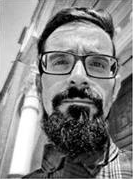
Leo Colalillo è un designer grafico laureato con la Lode all’Istituto Europeo del Design di Roma. Lavora tra Roma e Milano. I suoi lavori si trovano su MyFonts e sono pubblicati su Typodarium (2016, 2017, 2019). Web: http://leocolalillo.com/
Leo Colalillo is a graphic designer graduating with honors at the European Institute of Design in Rome. He works between Rome and Milan. His works can be found on MyFonts and are published on Typodarium (2016, 2017, 2019). Web: http://leocolalillo.com/
Scopri tutti i miei articoli recenti ~ discover all my recent articles:
Of the five hundred and
more active volcanoes in the world, there is only one that can be
trusted, because it has been erupting since the Sapiens crossed in
the Tyrrhenian Sea and because it rarely caused pain. Even when the
island became depopulated due to a stronger eruption than the others
in 1930, going from 3mil inhabitants to the current 400. That volcano
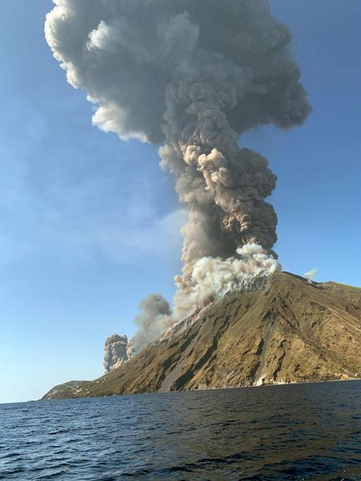
is Stromboli, the lighthouse of the Mediterranean. This time, though,
it’s one of those. And it is also why Stromboli can be very loved or
very hated, hardly its fault. It is enough to know its history, even
when, as in this case, the meticulous surveillance to which the
volcano is subjected has not given way to foresee a paroxysm which,
it’s believed, should remain isolated.
In Stromboli, on
average every 5-15 years, the paroxysmal explosive phenomena and the
landslides that trigger tsunamis cause damage to people and things.
Normally the Strombolian activity proceeds by modest jets of water
vapor (the gas columns are white, a sign that ash is not erupted)
that hurl into the air small incandescent fragments originated by the
gas bubbles that arrive at the top of the magmatic column every 20
minutes or so . Sometimes the lava fountains reach a thousand meters
in height and can be seen from far away, especially at night when
other landmarks are missing. For this reason Stromboli is the
lighthouse of the Mediterranean, known by Greeks and Phoenicians, by
Romans and Punic people, as a friend.
The volcano has been
more or less the same for at least ten thousand years, but its
history begins with the activity of Strombolicchio (the rock in front
of Stromboli, remnant of a volcanic chimney) about 200,000 years ago
and continues with four eruptive periods. One hundred thousand years
ago there was a Paleostromboli that erupted lavas, but above all
ashes, both fallen and from dangerous pyroclastic flows (burning and
fast aerosols), and mudslides: no man has observed their birth up
close. Subsequently the volcano produced more lavas than ashes, lavas
that continued in the period immediately preceding the so-called
recent Stromboli, namely that of the Sciara del Fuoco, the great
landslide escarpment on the side of the volcano, and of an activity
so typical that it gave its name to all similar eruptions in every
part of the world (precisely “Strombolian”). Also the lavas
have changed: initially they were much richer in silica, today they
are more similar to basalts with high potassium contents.
As in 1879, 1916 and
1919, and also as in 1944, in 1954 and 2002, Stromboli’s paroxysms
caused limited tsunamis. They are quite frequent phenomena also for
the history of men: nothing to do with the gigantic tsunamis that
could be caused by the collapse of the huge sub-Tyrrhenian submarine
volcanoes such as Marsili, linked however to completely different
dynamics and, at the moment, not dangerous. The history of Stromboli
is made up of huge landslides, some explosion and collapsing waves,
as well as lava fountains and gas clouds.
Stromboli concels its possible danger in its depths. If we lifted the thin superficial crust film, Stromboli would show us its heart of darkness: a superficial magma chamber brought to light by a tomography performed by the Ingv: a kind of fiery sphere of 150 meters of radius placed at about 700 m of altitude and fed by ducts that fish much deeper. What would happen if a large landslide took away an important slice of mountain and plunged it into the sea? The denudation of the hot heart of the volcano would have catastrophic consequences.
The volcanism of
Stromboli depends on a single cause, the clash that takes place in
the lower Tyrrhenian between Africa and Europe, two of the largest
geological plates on planet Earth. In reality the collision has
lasted for millions of years, but the collision processes between the
continents are discontinuous, and the crises are linked to the slow
“digestion”, on the part of the Earth’s mantle, of the
African plate that knee bends just below the Aeolian islands to be
reabsorbed under the European one. Efforts generated by friction
trigger earthquakes ranging from twenty to over four hundred
kilometers in depth. Not only: the plaque that bends finds deeper and
higher temperatures and therefore melts, generating the magmas that
feed the Aeolian volcanoes.
But anyone who knows Stromboli, knows that the top of the island (ie the volcano) is constantly affected by small explosions that make a lava pour out not too viscous nor too fluid along with a characteristic cloud of whitish vapor. When I climb Stromboli I trust it and we should continue to do so. Provided you do not forget that it is a volcano, a window open on the inside of the Earth. Never be afraid of a volcano, just have respect and love for Mother Earth. Despite the pain of today. –
Vocabolario – Vocabulary:
il vulcano: the volcano l’eruzione: the eruption i fenomeni esplosivi: the explosive phenomena la scarpata di frana: the landslide slope i maremoti: the tsunamis / agitated waters l’attività stromboliana: Strombolian activity i frammenti incandescenti: the glowing fragments le fontane di lava: the lava fountains le colate di fango: the mudslides le ceneri: the ashes le nubi di gas: the gas clouds la nube di vapore: the steam cloud il vapore acqueo: the water vapor le placche geologiche: the geological plates il mantello terrestre: the Earth mantle il terremoto: the earthquake fuoriuscire: to pour out la Madre Terra: the Mother Earth
Preparati per le vacanze in Italia con il mio libro!