google.com, pub-1205142185266664 , DIRECT, f08c47fec0942fa0

10 Ways to Laugh in Italian

What do you do when everything is going wrong? (quando tutto va storto) In Italy we laugh to keep from crying! (ridiamo per non piangere) Armed with a sense of humour, everything is easier even after the heavy storms that flooded many Italian cities this past week, among which the capital (la capitale), whose manholes (tombini) haven’t been cleaned since the Roman Times! (dai tempi dei Romani).

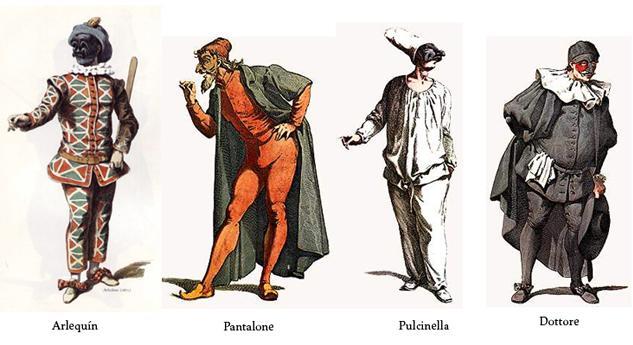
But with Carnevale approaching we are reminded that in Italy comedy and drama go hand in hand. An example of this is La Commedia dell’Arte, a colorful theatrical art form which began in the 16th century. What made it so special was that there was no need for spoken language (la lingua parlata), therefore all social classes, regions, dialects came together and enjoyed the comic plots based on skillful mime, stereotyped stock characters, masks, physical gestures, improvised dialogues and clowning. Some of the characters that reigned La Commedia dell’Arte are: Arlecchino, Columbina, Pulcinella, il Dottore, il Capitano and Pantalone.

However, if you’re lucky to be in Italy in February/March, don’t miss (non ti perdere) some of the most famous carnivals which are held in Venice, Viareggio, Ivrea, Cento, Gabettola and Acireale.

And don’t forget to carry some Italian expressions of laughter with you!

What’s your favourite expression? Try making a sentence!

1) morire dal ridere – laugh to death

2) ridere a crepapelle – laugh out loud

3) sbellicarsi dal ridere – crack up laughing

4) ridere sotto i baffi – to snigger

5) schiantarsi dal ridere – to knock yourself out laughing

6) ridere di cuore – laugh wholeheartedly

7) ridere alle spalle – laugh at someone’s back

8) ridere con gusto – laugh with gusto

9) ridere da pazzi – laugh like crazy

10) ridere per non piangere – laugh to keep from crying

_______________________________
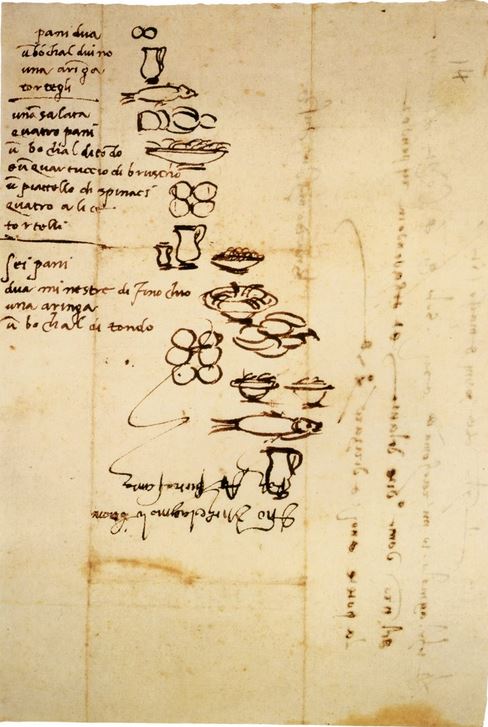
Michelangelo’s Visual Grocery List

How to communicate if you don’t speak or read a language? Draw it! (disegnalo) Michelangelo, of course, knew that well. It was actually a common practice in the old days to hand-draw (disegnare a mano) items for the illiterate, such as Michelangelo’s servant in this case.

I was still living in Florence when I embarked in an adventure to retrace Michelangelo’s steps while I was reading “The Agony and the Ecstasy” by Irving Stone. I learned much about il Grande Genio; that he was a humble and poor man (un uomo umile e povero), who only obtained wealth in his later years and that paper was a necessity but also a luxury (una necessità ma anche un lusso) for him; therefore, it would never go wasted. He would save and recycle scraps of paper to draw and write on. He would also destroy his sketches (i suoi schizzi) as he only wanted his polished works to be seen. I don’t think he would be happy to know that his grocery list has now gone viral on the internet! He had un caratteraccio, a temper, that’s for sure! But that is what made him great.

Casa Buonarroti in Florence, an important museum, often overlooked by tourists, is where this document is archived. It was my final emotional stop. It’s the house he built and died in after revolutionizing the world for 88 years!

Here are the 15 grocery items written in 16th century Florentine:pani dua (two loaves of bread)
un bochal di vino (a bottle of wine)
una aringa (a herring;a line like that over a letter or word stands in for an unwritten “n” or “m”)
tortegli (tortelli)

una salama (a salame)
quattro pani (four loaves of bread)
un bochal di tondo (a bottle of tondo, or full ‘rotund’ wine)
e un quartuccio di bruscho (a quarter of rough wine)
un piattello di spinaci (a plate of spinach)
quattro alice (four anchovies)
tortelli (tortelli)

sei pani (six loaves of bread)
due minestre di finocchio (two fennel soups)
una aringa (a herring)
un bochal di tondo (a bottle of tondo).

I find illustrations or drawing the vocabulary myself very useful to be able to memorize it better.

Are you a visual learner like me?


You cannot copy content of this page