
google.com, pub-1205142185266664 , DIRECT, f08c47fec0942fa0

Racconto italiano: La gita in montagna/B1

Italian Short Story: The mountain trip / B1


(English follows)

Ho avuto la fortuna di crescere ai piedi degli Appennini centro-meridionali. In ogni stagione offre colori, profumi e frutti vari. Mi diverte in particolare andare per castagne in autunno. A volte capita anche di fare delle belle scoperte, come nel racconto di questa settimana…buona lettura!

Questa storia è adatta al livello B1.

Il PDF include il testo italiano e la traduzione in inglese, e inoltre le domande e le risposte di comprensione e il vocabolario. Buona lettura!
———————————————

Il racconto di questa lezione ha 5 parti:

  1. Ascolta la storia senza il testo in italiano.
  2. Ascolta una seconda volta con il testo e ripeti.
  3. Studia il vocabolario della storia.
  4. Rispondi alle domande di comprensione.
  5. Ascolta e ripeti la storia con più velocità.

    Ascoltare la storia senza il testo è importante per imparare i suoni e parlare automaticamente.

Metti un “mi piace” (un like) alla storia se vuoi altre storie come questa!

Ripeti questa lezione ogni giorno per una settimana.
La ripetizione è importante per parlare e pensare in italiano.

English version:

I was fortunate to grow up at the foot of the central-southern Apennines. Every season it offers colors, scents, and a variety of fruits. I especially enjoy chestnut hunting in the fall. Sometimes you even make wonderful discoveries, like in this week’s story…enjoy!

This story is suitable for level B2.

The PDF includes the Italian text and the English translation, as well as comprehension questions and answers and vocabulary. Enjoy!
———————————————

The short story in this lesson has 5 parts:

  1. Listen to the story without the text in Italian.
  2. Listen a second time with the text and repeat.
  3. Study the vocabulary in the story.
  4. Answer the comprehension questions.
  5. Listen and repeat the story at a faster pace.

Listening to the story without the text is important for learning sounds and speaking automatically.

Repeat this lesson every day for a week.
Repetition is important for speaking and thinking in Italian.

With constant repetition you don’t translate words and you don’t think about grammar.
If you repeat the same sentences out loud they become natural when you speak Italian.

Download the PDF of the story with the text and vocabulary

Like the story if you want more stories like this!

Download the PDF of the story with the text and vocabulary:

Racconto italiano: Gli spaghetti al pomodoro/A2

Italian Short Story: Gli spaghetti al pomodoro /A2


(English follows)

Ho dedicato il racconto di questa settimana agli spaghetti al pomodoro, uno dei miei piatti preferiti. Li mangerei ogni giorno, se potessi! Fino al novecento solo in Sicilia e Campania si mangiavano gli spaghetti, anche chiamati maccheroni. Si mangiavano in bianco fino al settecento prima dell’arrivo del pomodoro in Italia. Sai che ll fascismo favoriva il riso invece degli spaghetti? Sono felice di poter mangiare liberamente gli spaghetti conditi con un buon sugo al pomodoro  fatto con aglio, olio e basilico! Buona lettura! 

Questa storia è adatta al livello A2.

Il PDF include il testo italiano e la traduzione in inglese, e inoltre le domande e le risposte di comprensione e il vocabolario. Buona lettura!
———————————————

Il racconto di questa lezione ha 5 parti:

  1. Ascolta la storia senza il testo in italiano.
  2. Ascolta una seconda volta con il testo e ripeti.
  3. Studia il vocabolario della storia.
  4. Rispondi alle domande di comprensione.
  5. Ascolta e ripeti la storia con più velocità.

    Ascoltare la storia senza il testo è importante per imparare i suoni e parlare automaticamente.

Metti un “mi piace” (un like) alla storia se vuoi altre storie come questa!

Ripeti questa lezione ogni giorno per una settimana.
La ripetizione è importante per parlare e pensare in italiano.


English version:

This week’s story is about spaghetti with tomato sauce, one of my favorite dishes. I’d eat them every day if I could! Until the 20th century, spaghetti, also called maccheroni (macaroni), were eaten only in Sicily and Campania. They were eaten plain until the 18th century, before tomatoes arrived in Italy. Did you know that Fascism favored rice over spaghetti? I’m happy to be able to freely enjoy spaghetti with a delicious sauce made with garlic, oil, and basil!

This story is suitable for level A2.

The PDF includes the Italian text and the English translation, as well as comprehension questions and answers and vocabulary. Enjoy!
———————————————

The short story in this lesson has 5 parts:

  1. Listen to the story without the text in Italian.
  2. Listen a second time with the text and repeat.
  3. Study the vocabulary in the story.
  4. Answer the comprehension questions.
  5. Listen and repeat the story at a faster pace.

Listening to the story without the text is important for learning sounds and speaking automatically.

Repeat this lesson every day for a week.
Repetition is important for speaking and thinking in Italian.

With constant repetition you don’t translate words and you don’t think about grammar.
If you repeat the same sentences out loud they become natural when you speak Italian.

Download the PDF of the story with the text and vocabulary

Like the story if you want more stories like this!

Download the PDF of the story with the text and vocabulary:

32 frasi ipotetiche del primo tipo in italiano
32 first-type hypothetical sentences in Italian


(English follows)

Quante volte durante la giornata iniziamo una frase con la parolina “se” per esprimere una ipotesi, una possibiltà, una realtà, una impossibiltà? Tante!

Per esempio:

“Se mangi troppi dolci, ti viene il mal di stomaco.”

Questa è una frase ipotetica del primo tipo della realtà che si costruisce con il presente indicativo + il presente indicativo ed esprime una ipotesi presentata come un fatto reale o plausibile.

In tutto ci sono 5 modi per formare una frase ipotetica del primo tipo della realtà.

Qualche esempio:

1. se + indicativo presente + indicativo presentese non mangi, hai fame;

2. se + indicativo presente + indicativo futuro se partiamo tardi, perderemo il treno;

3. se + indicativo futuro + indicativo futuro se verrai, ceneremo insieme.

4. se + indicativo passato + indicativo futurose hai portato il libro, lo leggerò.

5. se + indicativo presente + imperativo se avete sete, bevete!

Ci sono tre tipi di frasi ipotetiche oltre a quelle miste, ma ricordare quali verbi usare in ciascun caso rischia di diventare un gioco mnemonico poco pratico. La strategia migliore è di ricordare il suono attraverso la ripetizione orale.

Nel video potrai ascotare e ripetere 32 frasi ipotetiche del primo tipo.
Più le ripeti, più diventerà naturale formularle senza pensarci, in quanto svilupperai una memoria orale. Ti consiglio di ripeterle spesso e di esercitarti a scriverne altre nei commenti.


Scarica il PDF della lezione / Download the PDF of the lesson:

English version

How many times during the day do we start a sentence with the little word “if” to express a hypothesis, a possibility, a reality, an impossibility? Many!

For example:

“Se mangi troppi dolci, ti viene il mal di stomaco.”
(“If you eat to many sweets, you’ll get a stomach ache)

This is a hypothetical sentence of the first type of reality constructed with the present indicative + the present indicative and expresses a hypothesis presented as a real or plausible fact.

In total there are 5 ways to form a hypothetical sentence of the first type of reality.

Some examples:

1. se + indicativo presente + indicativo presentese non mangi, hai fame;

2. se + indicativo presente + indicativo futuro se partiamo tardi, perderemo il treno;

3. se + indicativo futuro + indicativo futuro se verrai, ceneremo insieme.

4. se + indicativo passato + indicativo futurose hai portato il libro, lo leggerò.

5. se + indicativo presente + imperativo se avete sete, bevete!

There are three types of hypothetical sentences in addition to mixed ones. Since remembering which verbs to use in each case risks becoming an impractical mnemonic game, the best strategy is to remember the sound with oral repetition.
In the video you will be able to listen to and repeat 32 first-type hypothetical sentences.
The more you repeat them, the more natural it will become to formulate them without thinking, as you will develop an oral memory. I recommend that you repeat them often and practice writing some in the comments.


Esercizio di pronuncia italiana: 20 scioglilingua

20 ITALIAN TONGUE TWISTERS / SCIOGLILINGUA | Ascolta e Ripeti

Gli scioglilingua: aiutano a migliorare la dizione e a parlare fluentemente.
/
Tongue Twisters: help improve diction and speak fluently.

Ascolta e ripeti ciascun scioglilingua alle 2 velocità. Ripeti questo esercizio un paio di volte ogni settimana.
/
Listen and repeat each tongue twister at the 2 speeds. Repeat this exercise a couple of times every week.

20 Scioglilingua – 20 Tongue twisters:

Scarica il PDF del video / Download the PDF of the video:


32 frasi ipotetiche del secondo tipo in italiano
32 second-type hypothetical sentences in Italian

(English follows)

Alcuni pensano che il congiuntivo abbia i giorni contati. Tuttavia, lo studio del congiuntivo e del condizionale aiuta a formulare in italiano delle frasi e dei concetti i più complessi.
Per esempio:
“Se studiassi il congiuntivo imperfetto, farei delle frasi ipotetiche del secondo tipo.”
Questa è una frase ipotetica del secondo tipo che si costruisce con il congiuntivo imperfetto e con il condizionale presente. Ci sono tre tipi di frasi ipotetiche oltre a quelle miste. Siccome ricordare quali verbi usare in ciascun caso rischia di diventare un gioco mnemonico poco pratico, la strategia migliore è di ricordarne il suono e la modulazione con la ripetizione orale.
Nel video potrai ascotare e ripetere 32 frasi ipotetiche del secondo tipo.
Più le ripeti, più diventerà naturale formularle senza pensarci, in quanto svilupperai una memoria orale. Ti consiglio di ripeterle spesso e di esercitarti a scriverne altre nei commenti.


Scarica il PDF della lezione / Download the PDF of the lesson:


Some people think that the subjunctive has its days numbered. However, studying the subjunctive and the conditional helps to formulate more complex sentences and concepts in Italian.
For example:
“Se studiassi il congiuntivo imperfetto, farei delle frasi ipotetiche del secondo tipo.”
(“If I studied the imperfect subjunctive, I would make second-type hypothetical sentences.”)
This is a second-type hypothetical sentence that is constructed with the imperfect subjunctive and the present conditional. There are three types of hypothetical sentences in addition to mixed ones. Since remembering which verbs to use in each case risks becoming an impractical mnemonic game, the best strategy is to remember the sound and modulation with oral repetition.
In the video you will be able to listen to and repeat 32 second-type hypothetical sentences.
The more you repeat them, the more natural it will become to formulate them without thinking, as you will develop an oral memory. I recommend that you repeat them often and practice writing some in the comments.

25 verbi riflessivi in italiano

25 reflexive verbs in Italian

25 verbi riflessivi comuni al passato prossimo per non dimenticare quale ausiliare usare….sempre lo stesso: ESSERE!
Latini dicevano che, “repetita iuvant”, ripetere le cose giova, fa bene. Infatti a scuola i professori ce lo ripetevano spesso. Quando si studia non bisogna fermarsi a capire e poi passare subito al prossimo argomento. Per quanto riguarda lo studio delle lingue, ripetere giova soprattutto oralmente.

25 reflexive verbs in passato prossimo to not forget which auxiliary ti use…always the same one: ESSERE! The Latins used to say that, “repetita iuvant”, repeating things is
beneficial, it does good. In fact, at school, teachers often repeated it
to us. When studying, you should not stop to understand
and then immediately move on to the next topic. As far as studying
languages ​​is concerned, repetition is especially beneficial orally.


Scarica il PDF della lezione / Download the PDF of the lesson:

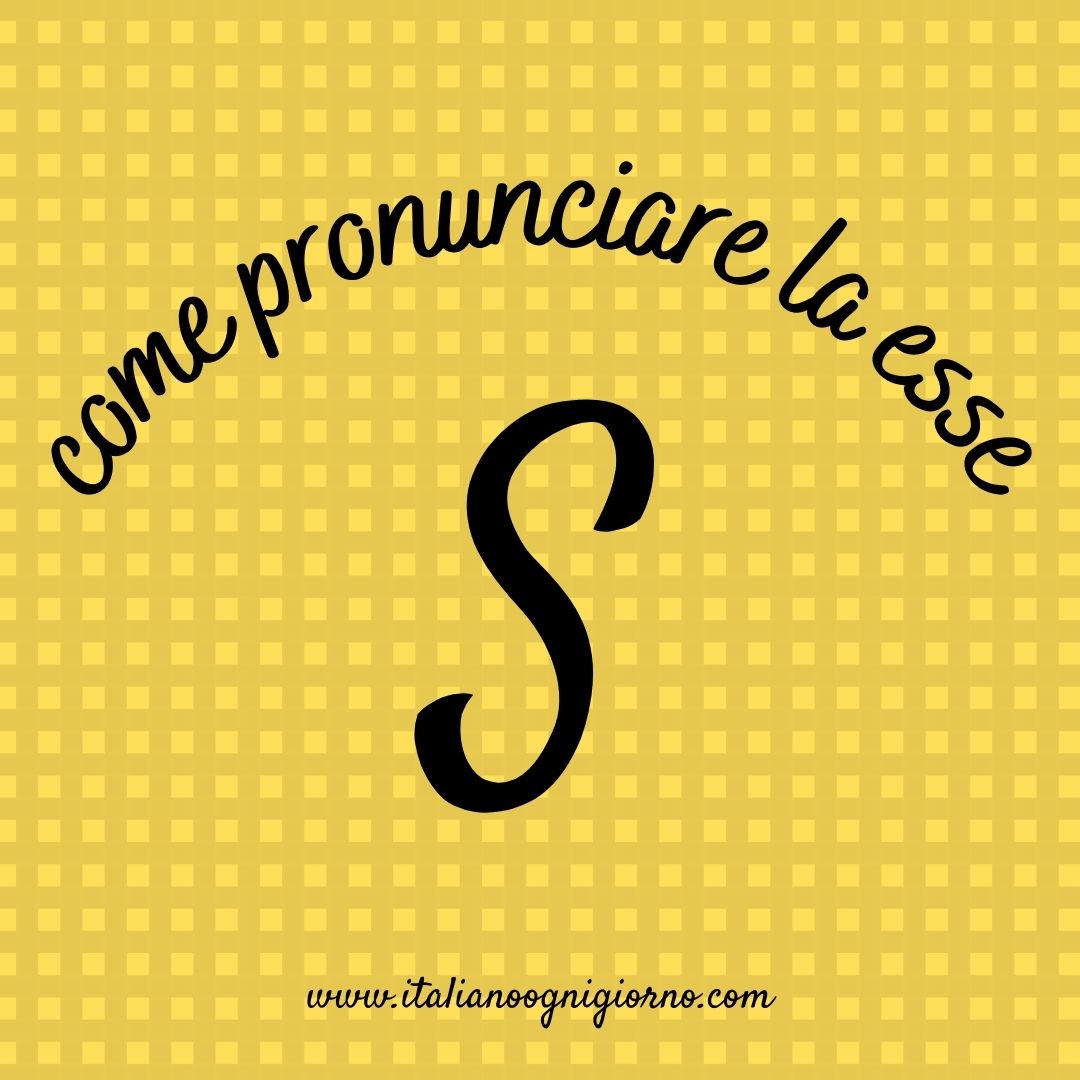
3 ways to pronounce the s in Italian

3 modi di pronunciare la s in italiano

A volte basta una sola lettera pronunciata in modo errato per cambiare il significato di una parola. Prendiamo come esempio le due parole “rosa” e “rossa”. Con la prima indichiamo il fiore e, trovandosi tra due vocali, la “s” ha un suono sibilante come una “z” dolce. Mentre la seconda è un aggettivo di colore in cui la doppia “s” ha un suono forte. Quindi quando sentiamo “rosa rossa” notiamo la differenza nel suono della “s” il che ci permette di capire che parliamo di un fiore di colore rosso.

La lettera “s” ha 3 suoni particolari:

  • la doppia “ss
  • la “s” che sembra “z”
  • la “s” normale (parole che iniziano con la “s” o la “s” è accanto ad una consonante

Ecco una lista di parole per esercitari.

Sometimes all it takes is one mispronounced letter to change the meaning of a word. Let’s take as an example, the two words “rosa” and “rossa”. With the first we indicate the flower and, being between two vowels, the “s” has a sibilant sound like a soft “z”. While the second is an adjective of color and the double “s” has a strong sound. So when we hear “rosa rossa” we notice the difference in the sound of the “s” which allows us to understand that we are talking about a red flower.

The letter “s” has 3 particular sounds:

  • la doppia “ss“/ the double “ss”
  • la “s” che sembra “z” / the “s” that sounds like “z”
  • la “s” normale (parole che iniziano con la “s” o la “s” è accanto ad una consonante / words starting with “s” or “s” is next to a consonant

Here’s a list of words to practice:

Parole con la doppia “ss

Words with double “ss

Ascolta e ripeti:

spesso, rilassarsi, assaporare, assoluta, eccesso,  assaggiare, passata, grosso, assurdità, stessi, smesso, interesse, assieme, bussare, impressione, rossissimi, benissimo, sussisstere,  successo, necessario, fissata

Parole con la “s” che sembra “z” (la “s” è tra due vocali)

Words with an “s” that sounds like “z”

Ascolta e ripeti:

paradiso, cose, religioso, sorriso, rosa, così, episodio, accesa, causato, famoso, muso, preso, bisogno, quasi, paese, desiderare, scusa, sposata, faticoso, presuntuoso, prezioso, vaso, qualcosa, mesi, sorpresa

Parole che iniziano con la “s” o la “s” è accanto ad una consonante

Words that start with an “s” or the “s” is next to a consonant

Ascolta e ripeti:

spaghetti, posta, sole, losco, senza, soluzione,  rospo, sogno, simile, svegliarsi, composto, Spagna, stella, arso, spiaggia, sedia, soggiorno, sereno, storia, crosta

Adesso prova a ripetere / Now try to repeat:

Assaggio una deliziosa crostata di mele saporita!

Esercitati regolarmente con queste liste per pronunciare perfettamente il suono della “s”.

Practice these lists regularly to pronounce the sound of the “s” perfectly.


You cannot copy content of this page